Kantha’s Journey from Jugaad to Haute Couture
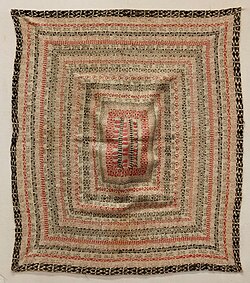
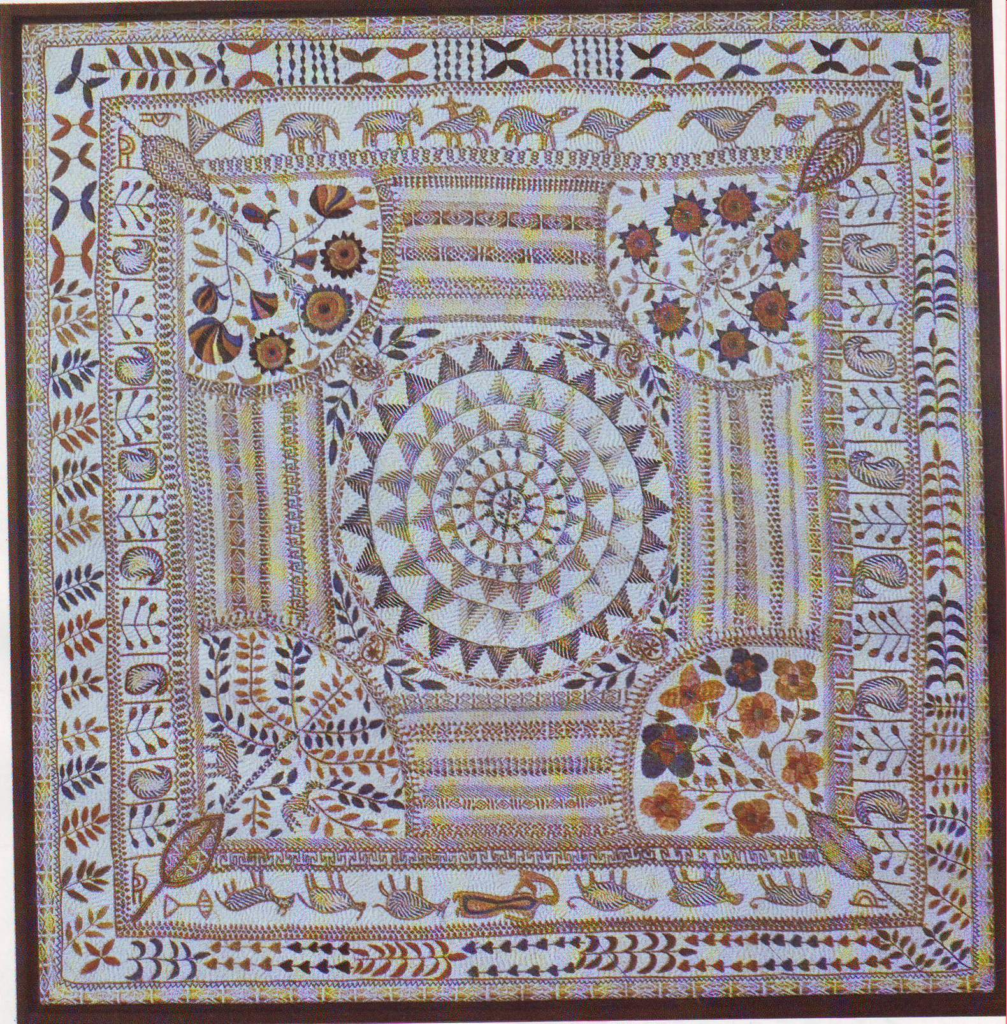
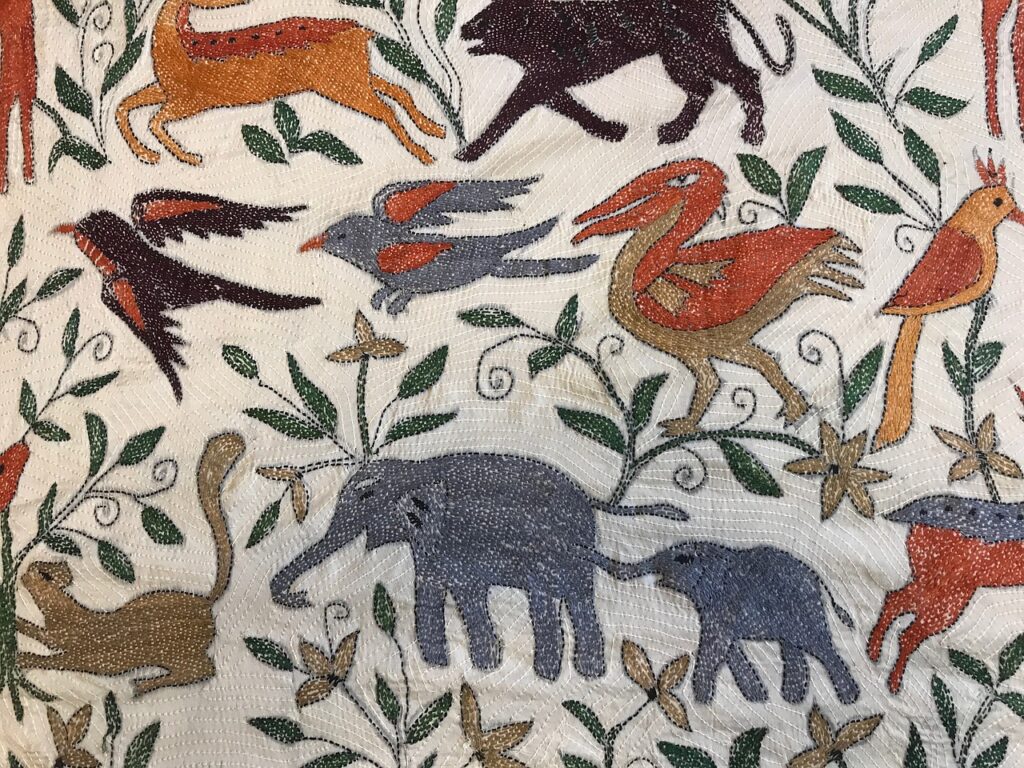
High on Derbyshire’s windswept hills, inside the stone walls of Hardwick Hall, lies a quiet marvel. Far from Bengal’s tropical humidity, this early seventeenth-century quilt testifies to centuries of devotion, artistry, and global exchange. Made when the Bay of Bengal was emerging as a major trade gateway, it came to England through Bess of Hardwick’s family, acquired by her son William Cavendish, First Earl of Devonshire and an early investor in the East India Company.
Rural women, like my aunt in Bengal, layered old cotton clothes together, binding them with simple running stitches to create warm wraps and blankets called lep kantha.
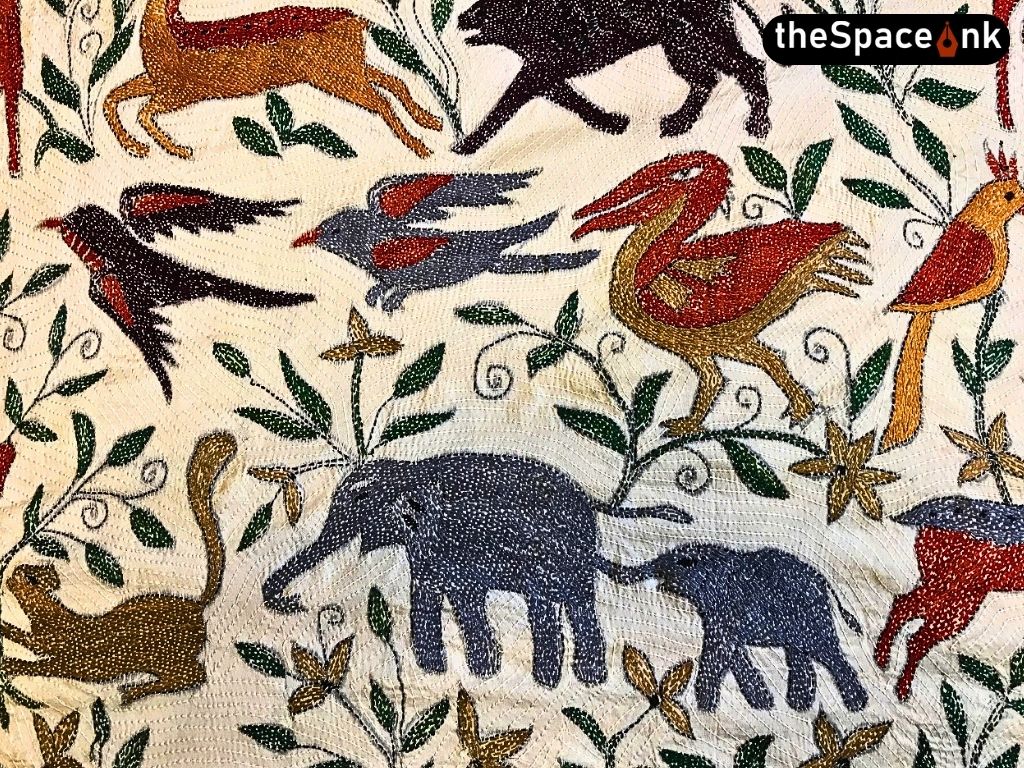
Its layered cotton, fine silk running stitches, central rosette, and lively figures, animals, birds, flowers, and geometric motifs connect it to the wider world of Indo-Portuguese Satgaon textiles and Bengal’s artistic influence. Yet its faded threads speak less of English nobility than of Bengal’s enduring heartbeat.
Long before kantha crossed oceans, it was born from survival, tenderness, and a woman’s imagination. Kanthas date back to the pre-Vedic period, before 1500 BCE. One written reference appears in Krishnadas Kaviraj’s Sri Chaitanya Charitamrita, which describes Chaitanya’s mother sending a homemade kantha to her son in Puri. In Bengal, worn saris and softened dhotis were not thrown away; they were gathered close, layered with care, and stitched back to life.
Across West Bengal and Bangladesh, each district has its own voice: Murshidabad’s dense stitching, Birbhum’s fluid designs, the wave-like patterns of Bangladesh’s Lohori kantha, the lotus-centered beauty of nakshi pieces.
With thread often pulled from old sari borders, women worked thousands of running stitches into frayed cloth, transforming it into warmth, memory, and inheritance. Their quilts blossomed with lotuses, birds, rivers, and fish; images drawn from the world they loved and lived in. More than bedding, a kantha became Bengal’s poetry written in thread, touch, and devotion.
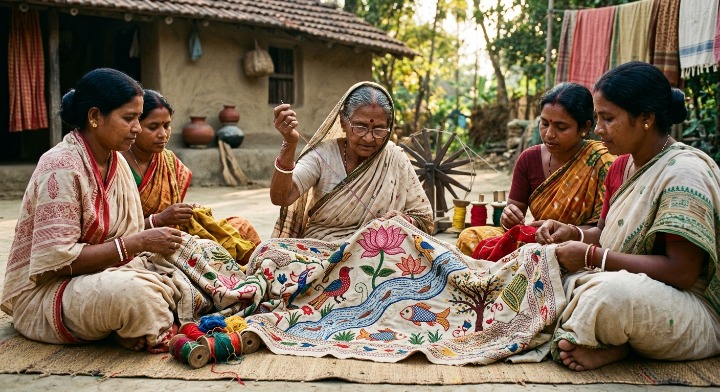
I remember my own childhood kantha, thin, soft, stitched by my aunt in Binodepur, Birbhum. She would collect old saris, sometimes even newer ones, and patiently sew them into spreads for the entire family. When I curled beneath it, I felt more than warmth. I felt the whispers of women who came before me, their stories preserved in thread. To hold that quilt was to hold history, to draw lineage close to the skin. Rural women, like my aunt in Bengal, layered old cotton clothes together, binding them with simple running stitches to create warm wraps and blankets called lep kantha.
Also Read: Bengal Sketches [1],[2],[3],[4],[5],[6],[7],[8],[9],[10],[11],[12],[13],[14],[15]
Kanthas were never just blankets. They were lullabies you could touch, diaries written without ink, silent songs passed down through generations. The women who made them never called it “upcycling” or “sustainable design.” They simply knew that nothing; no fabric, no thread, no gesture of care should ever be wasted. But traditions, like fabrics, fray with time.
As consumer culture swept across India, repair began to look unfashionable. The thrill of “new” replaced the value of reuse. Planned obsolescence, objects designed to be discarded, turned disposability into habit. And in this tide of modernity, the everyday kantha began to disappear from homes and courtyards.
Also Read: Bengal Sketches [16],[17],[18],[19],[20],[21],[22],[23],[24],[25],[26],[27],[28],[29]
Yet, like a half-forgotten song, kantha is returning. In today’s world, exhausted by fast fashion, endless consumption, and the cold precision of machines, there is a hunger for the handmade, the slow, the meaningful. Kantha, once dismissed as humble, is now celebrated as timeless. It graces fashion runways, gallery walls, and global design houses, carrying with it the dignity of its origins.
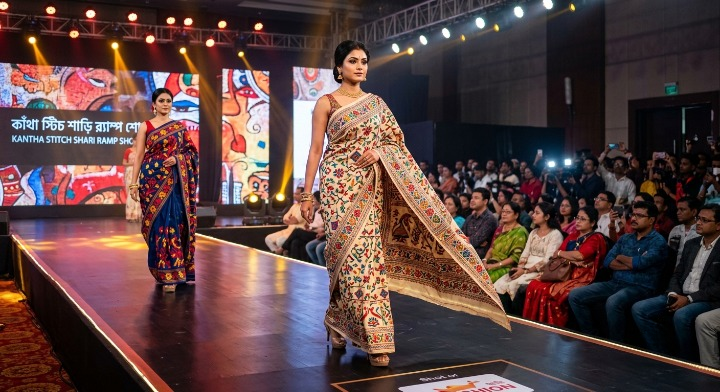
Not all kanthas are the same. The regular kantha is a companion for daily life: practical, unadorned, essential. The nakshi kantha, its ornate sister, is a canvas of artistry, alive with color, pattern, and narrative; a piece to be cherished, often stained over time with spilled tea and shared memory.
Across West Bengal and Bangladesh, each district has its own voice: Murshidabad’s dense stitching, Birbhum’s fluid designs, the wave-like patterns of Bangladesh’s Lohori kantha, the lotus-centered beauty of nakshi pieces. Hindu and Muslim women alike stitched their beliefs, their landscapes, their joys into fabric. No two kanthas were ever the same because no two lives were.
Kantha’s modern revival as an Indigenous craft began as early as 1922, when Rabindranath Tagore, and later Sushen Mukherjee, introduced kantha embroidery to rural women in Bolpur. In the 1940s at Shantiniketan, Pratima Devi, Tagore’s daughter-in-law, further promoted the craft through Karusangha to preserve rural traditions and create employment.
It teaches us that nothing is truly finished, nothing is worthless, and nothing touched by care is beyond saving. From the quiet courtyards of Bengal to the grand galleries of Derbyshire, Kantha carries an timeless truth: broken threads can be gathered back into meaning, and fragments can hold the power of rebirth.
After Bangladesh’s 1971 War of Independence, artists and organizations such as Zainul Abedin, BRAC, and Aarong expanded kantha-making as a means of supporting widowed and destitute women. Tripti Mukherjee of Suri, Birbhum, was awarded the prestigious Padma Shri for bringing traditional kantha embroidery to the global stage and empowering thousands of women through the art form. Over the past three decades, she has trained thousands of women in kantha stitching, helping many achieve financial independence.
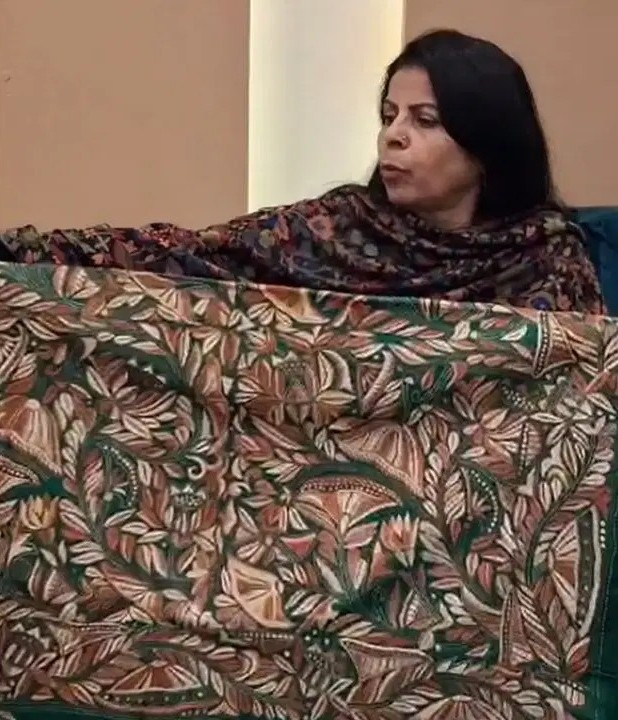
The recent revival of Kantha owes much to champions like Shamlu Dudeja and her daughter Malika, who brought the craft into haute couture, haute décor and stitch portraiture by dressing it in new light while honoring its roots. In Kolkata, Farah Khan carried this legacy forward after discovering rural artisans during her husband’s 2004 army posting. Her passion project became The Kantha Store on Loudon Street, a sustainable brand that now supports hundreds of local craftspeople through ethically made sarees, dupattas, stoles, and embroidered apparel. Today, kantha embroidery serves as a means for women to gain economic independence and social mobility.
Kantha’s current resurgence is driven partly by easier access to global goods through online shopping, along with growing enthusiasm for upcycling and environmental awareness. Another influence is the work of Krista Sartin of Kantha Bae, a Tennessee-based organization that sources kanthas from India and transforms them into beautiful clothing for the U.S. market.
But in villages, the reality is starker. Everyday kantha-making struggles to survive, as younger generations turn to more profitable work. “You can’t sew and watch television,” one artisan once remarked, “but you can tie bidis.” The bidi industry thrives; the humble kantha does not. Still, kantha endures, not merely as embroidery, but as a fierce philosophy of renewal.
It teaches us that nothing is truly finished, nothing is worthless, and nothing touched by care is beyond saving. From the quiet courtyards of Bengal to the grand galleries of Derbyshire, Kantha carries an timeless truth: broken threads can be gathered back into meaning, and fragments can hold the power of rebirth.
Images: Wikipedia, Wikipedia, TV9 Bangla, Needpix.com, AI

Dr. Jamil is a passionate oncology commercial leader whose two-decade journey has been driven by a deep commitment to improving the lives of people with cancer. As Head of the Early Commercial Team at Merck Oncology and an Adjunct Professor at Columbia Business School, he shapes innovative pipelines while mentoring and inspiring future healthcare leaders. Beyond work, he is a soulful armchair historian of Bengal, a devoted Manchester City fan, and someone whose heart is forever tied to the culture, stories, and spirit of Kolkata.