


Kohitur Mango
Murshidabad still dreams in the slow, golden cadence of a vanished afternoon. In its overgrown orchards, a tender hush lingers, as if the ancient mango trees are holding their breath over the fragile ghosts of the past. The damp air clings, perfumed with wet earth, ripening fruit, and the ghost-memory of courts once bright with diamond-studded sherwanis, Persian verse, and mythical delicacies. Amid weeping ruins and moss-kissed brick, one name still drifts through the humid silence like a half-forgotten evening raga: the ultra-premium mango, Kohitur.

They called it the “Mountain of Precious Value,” playing on the royal resonance of the legendary Koh-i-Noor diamond. Yet even that majestic title feels too rigid, too cold for what this fruit truly was. To speak of the Kohitur as merely a mango is to flatten a masterpiece into a grocery list, stripping away the weight of history that drapes over it like faded silk. It was never just sustenance. It was a brief, glowing rebellion against the cruelty of time.

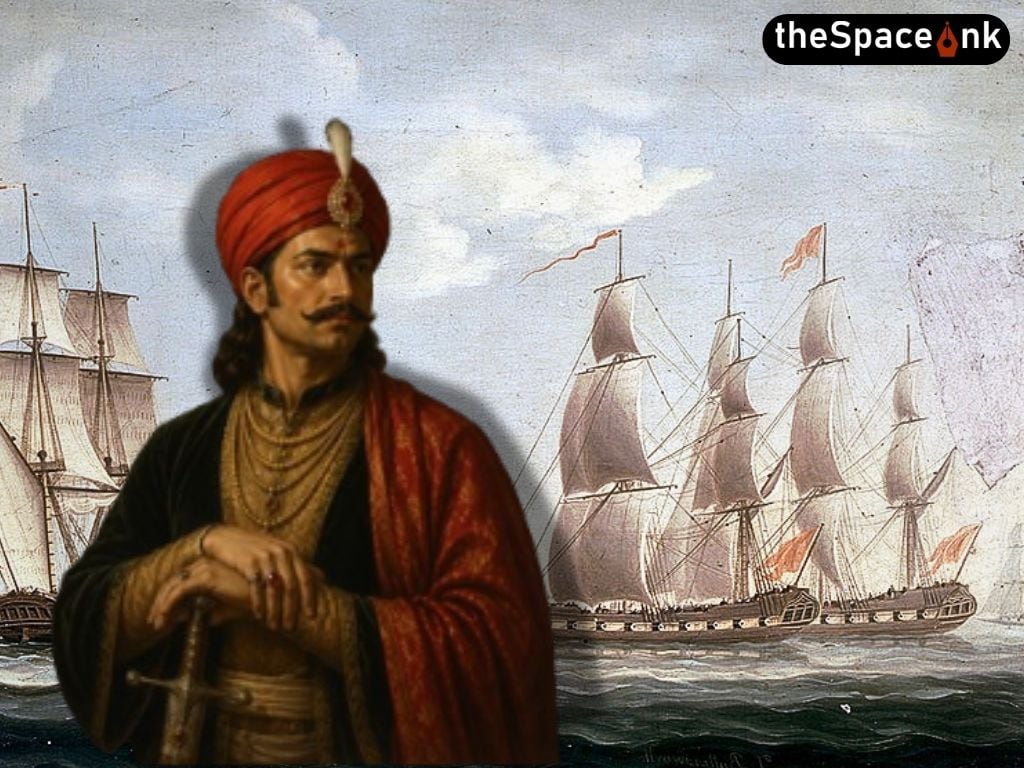
Created in eighteenth-century Murshidabad during Nawab Siraj-ud-Daulah’s reign, the Kohitur mango traces its roots to Bengal’s royal orchards. Historical accounts credit royal horticulturist Hakim Ada Mohammadi with breeding it from several varieties, including the rare Kalapahar. This was an era when Bengal did not merely farm; it worshipped the soil. In the royal orchards of the Nawabs, cultivation was a sacred act of devotion. Orchards were not measured in metric tons or market yields, but in the currency of pride, generational patience, and immaculate lineage. Under the warm, dying embers of Nawabi patronage, mangoes were coaxed into being with a reverence that bordered on religious ritual.
Also Read: Bengal Sketches [1],[2],[3],[4],[5],[6],[7],[8],[9],[10]
Among these botanical marvels, the Kohitur reigned as a whispered legend. Each fruit was treated as a priceless inheritance, fragile enough to demand near-obsessive care. While still on the branch, it was wrapped in soft cloth to shield it from the sun and monsoon winds. Once harvested, it was cut, cradled, cushioned in cotton wool, and carried to the Nawab’s table in palanquins. To taste it was to understand why such devotion was necessary.
To speak of the Kohitur is to reach back into an era that refuses to align with our fast-paced present. Because what this lost king of fruits represents is not merely a tree or a taste. It is a monument to the beauty of the fleeting.
For over two centuries, it remained reserved for the royal family and their circle, only spreading beyond the estates in the early 1970s. Revered as the “Kohinoor of Mangoes,” it was guarded by specialized mali sarkars and handled with ritual care. Its buttery, delicate pulp led connoisseurs to rotate the fruit constantly and cut it with wooden or bamboo splinters rather than metal knives.
A Flavor That Remembers You
Those rare voices who have tasted the Kohitur do not describe it so much as surrender to it. It arrives softly, like dawn over the Bhagirathi, its dusty green-gold skin hiding flesh that feels closer to memory than matter. It is silken and dense, yielding without resistance, melting on the tongue in a perfect disappearance. Its sweetness, with a Brix score of 26, is not a shout; it is a complete, immersive poem.
Also Read: Bengal Sketches [11],[12],[13],[14],[15],[16],[17],[18],[19]
Deeply concentrated and heartbreakingly intense, it is never cloying, saved from indulgence by the faint, ghostly whisper of acidity—just enough to anchor the dream to reality. It lingers in the mouth like the scent of expensive attar in an empty room, insisting that something extraordinary has just occurred, even when nothing remains to prove it. To taste a Kohitur is not to consume it, but to briefly inhabit a vanishing perfection.
The Orchards That Learned to Forget
But history is rarely kind to things that refuse to harden.
As the grand palaces crumbled, the Nawabs’ treasuries were emptied, and the old systems of royal patronage dissolved into the dust of the twentieth century, the modern world arrived. And the modern world favored what could survive it. Markets demanded endurance, not poetry. Fruit that could survive a bumpy truck ride to Calcutta or endure a week in a wooden crate mattered far more than fruit that could only astonish briefly and vanish.

So the delicate royal varieties quietly withdrew. Grand estates splintered through inheritance, were adapted for survival, or surrendered to weeds. Trees once guarded with care were left to dry seasons and neglect, while practical, thick-skinned, profitable fruits took their place. The world did not destroy the Kohitur in anger; it simply stopped making room for it. In that absence, a brilliant light began to dim.
Sunlight Held in Leaves
Today, the Kohitur exists on the periphery of reality, more like a phantom rumor than a tangible harvest. Only a handful of ancient trees still survive in the private, locked gardens of Murshidabad, tended by aging hands that understand exactly what is lost when we choose to forget. An individual Kohitur mango costs anywhere between $15 and $30. But you will find no bustling bazaar where these green-gold globes are piled high; there is no logistics network waiting to ship them across the seas. It lives on in tiny, highly secretive handoffs, shared quietly between those who still believe that taste can be a profound vessel of cultural memory.

To speak of the Kohitur is to reach back into an era that refuses to align with our fast-paced present. Because what this lost king of fruits represents is not merely a tree or a taste. It is a monument to the beauty of the fleeting. It belongs to a time when a thing did not need to last forever to possess infinite value—a stubborn belief that absolute perfection, however brief its lifespan, was worth any cost.
And somewhere in the humid shadows of Murshidabad’s forgotten orchards, that belief still clings to the green branches like late-afternoon sunlight caught in the leaves, refusing, for just a heartbeat longer, to fade away.
Images: Newness Plant, Greenlands Nursery, Wikimedia Commons, ChatGpt

Dr. Jamil is a passionate oncology commercial leader whose two-decade journey has been driven by a deep commitment to improving the lives of people with cancer. As Head of the Early Commercial Team at Merck Oncology and an Adjunct Professor at Columbia Business School, he shapes innovative pipelines while mentoring and inspiring future healthcare leaders. Beyond work, he is a soulful armchair historian of Bengal, a devoted Manchester City fan, and someone whose heart is forever tied to the culture, stories, and spirit of Kolkata.


One Response
Bravo! You created such a beautiful image of the Kohitur mango, along with its care and prestige!
Nostalgic.
Lost art of living.