

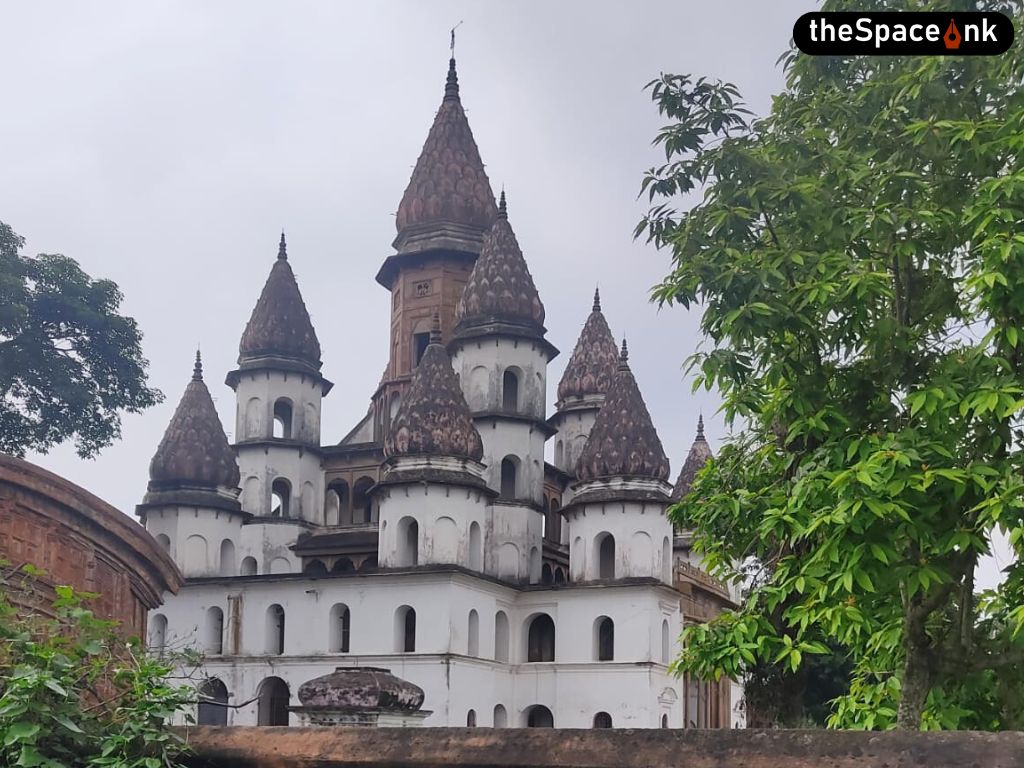
(Hangseshwari Temple)
Had I not read a Facebook post by a young friend of mine, Hangseshwari Temple would have remained hidden from my ‘must visit’ places. What caught my attention was the graceful uniqueness of the temple—Hangseshwari mandir—that formed the backdrop to the featured photograph. This temple’s architecture is mesmerisingly beautiful! (Hangseshwari Temple)
Located in Bansberia, about 45 kilometres from Kolkata, this suburban town, in the Hooghly district of West Bengal, is located close to the town of Bandel, famous for its church and for the very popular Bandel cheese. It was once a very important town and a part of Saptagram, a prominent port in Bengal. The origin of the name ‘Bansberia’ has its roots in an age-old legend. (Hangseshwari Temple)
Also Read: Devicraft Each Stitch Tells Her Story…by a woman for the women!
The imperator ship of an area including the present-day Bansberia was handed over to Raghab Dattaroy of Patuli by the Mughal emperor Shah Jahan in 1656. Raghab’s son, Rameshwar Ray, cleared a bamboo grove and built a fortress surrounded by a moat. Hence, inspiring the name of the town Bansabati (bansa meaning bamboo and bati home). It is believed that the Zamindars or the Rajas of Bansberia successfully thwarted the attacks by the Bargis from the Maharashtra around 1740-43. (Hangseshwari Temple)
Bansberia flourished as the commercial hub of Saptagram,a port city built by the Hindu rulers, and was famous for its inland and foreign trades with Europe since the 17th Century.
As the river Saraswati changed its course so did the fortunes of this port. Raja Rameshwar Rai was a devout Hindu and a devotee of Lord Vishnu, also known as Basudeb. It was in his honour that he built a beautiful terracotta temple in the year 1679, which is now known as the Ananta Basudeb temple and remains within the temple complex of Hanseshwari mandir. In fact, after settling in this region Raja Rameshwar Ray also opened many Sanskrit Tol (school) and even managed to get teachers from Banaras. (Hangseshwari Temple)
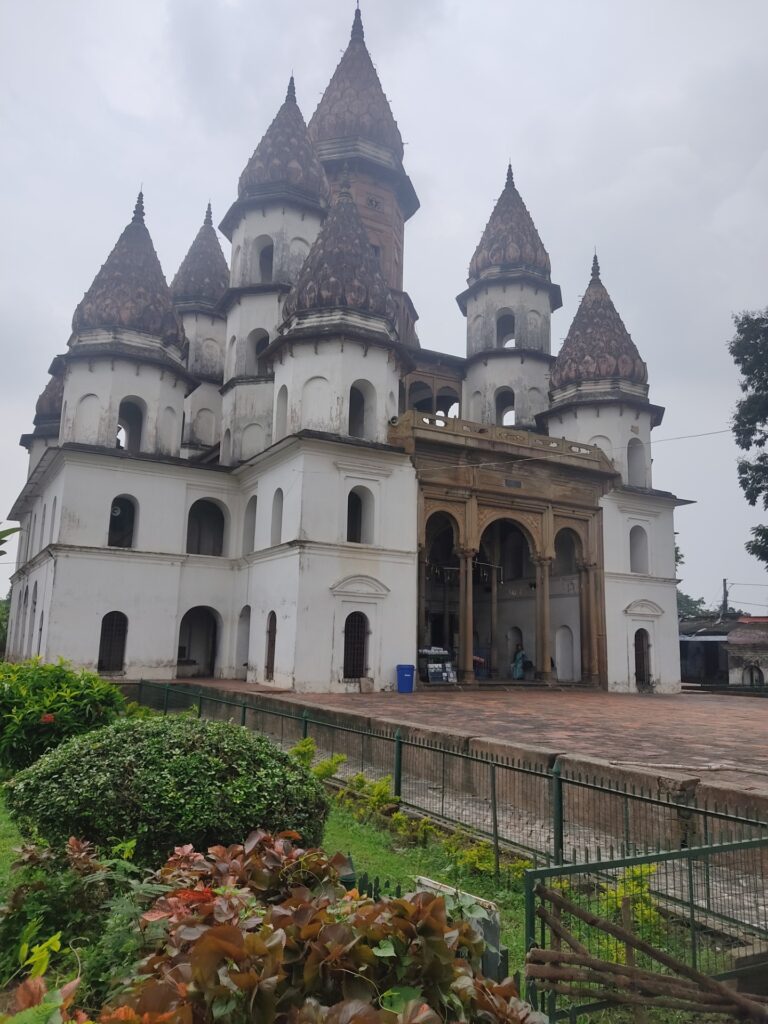
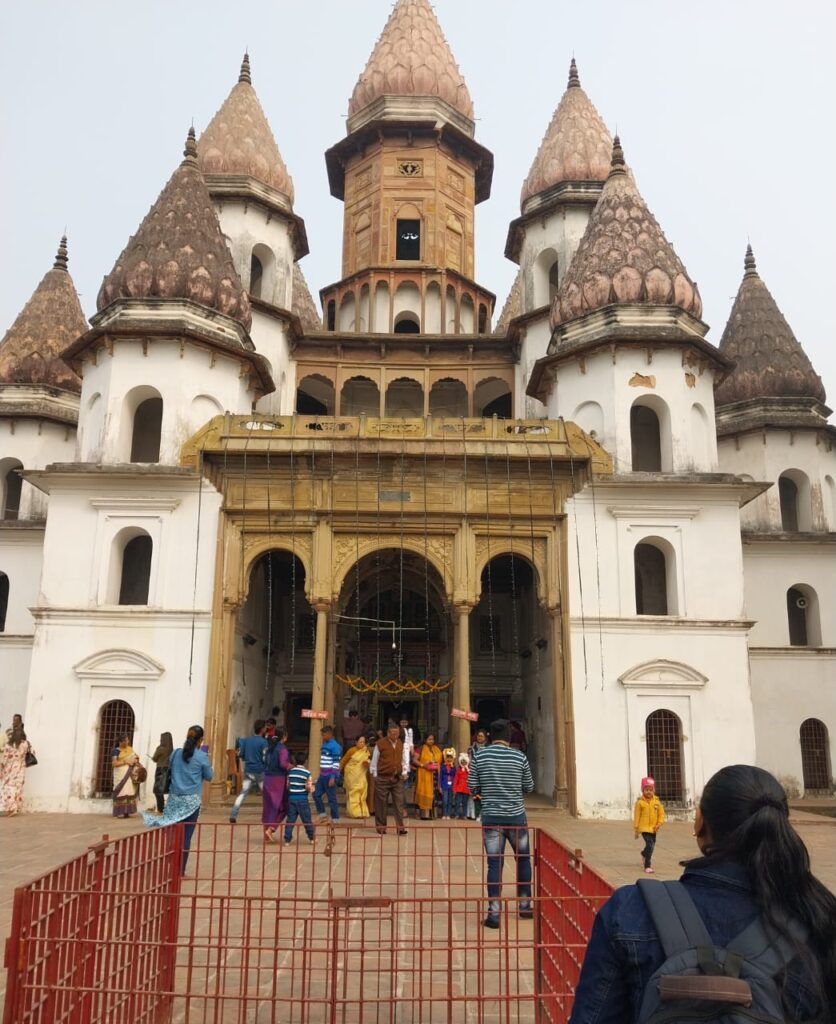
It took us almost two hours car to reach Bansberia, by car, from Kolkata. As we manoeuvred through the narrow lanes of this suburban town, the minarets peeped occasionally through rows of houses increasing our excitement further. They did not resemble any temple spires I had seen anywhere else in West Bengal or outside the state. As the entire temple complex came into view, we stood there staring in wonderment at the unusual architecture of Hanseshwari mandir. Who was its architect? How was this tall structure constructed and by how many people? Direct answers to these questions went unanswered by the temple purohit cum resident guide. (Hangseshwari Temple)
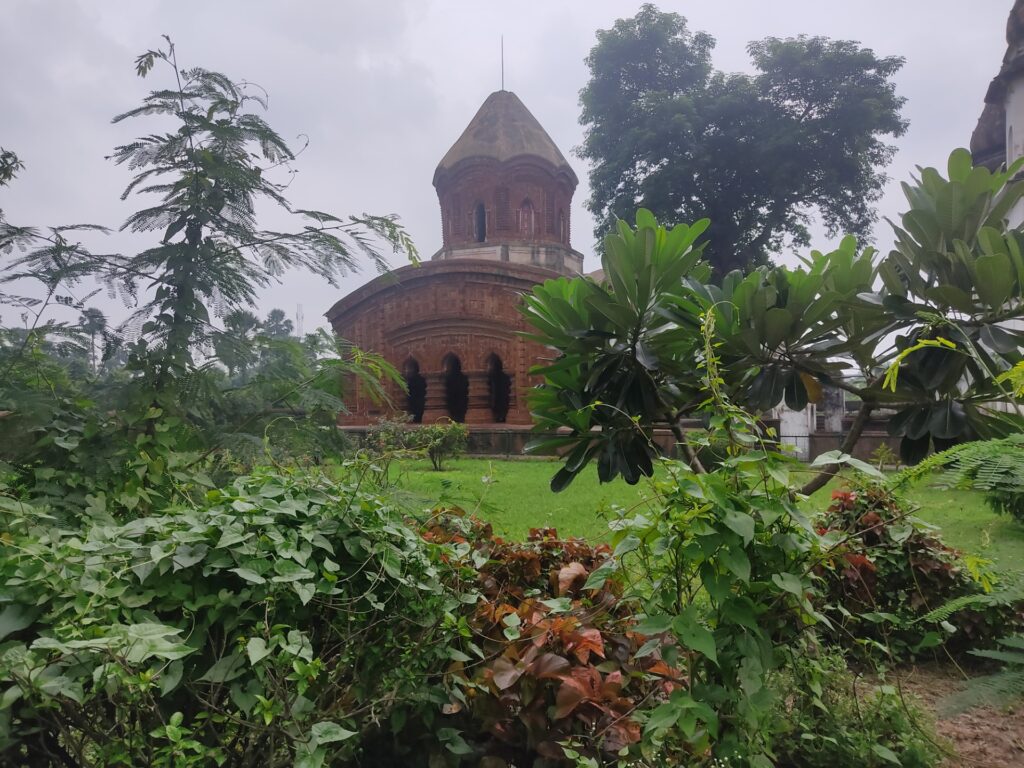
Its interesting architectural features sets it apart from others, and is often compared to an English castle and sometimes to the Russian Orthodox Church, its unique spires have been designed based on the tenets of Hindu Tantric philosophy. (Hangseshwari Temple)
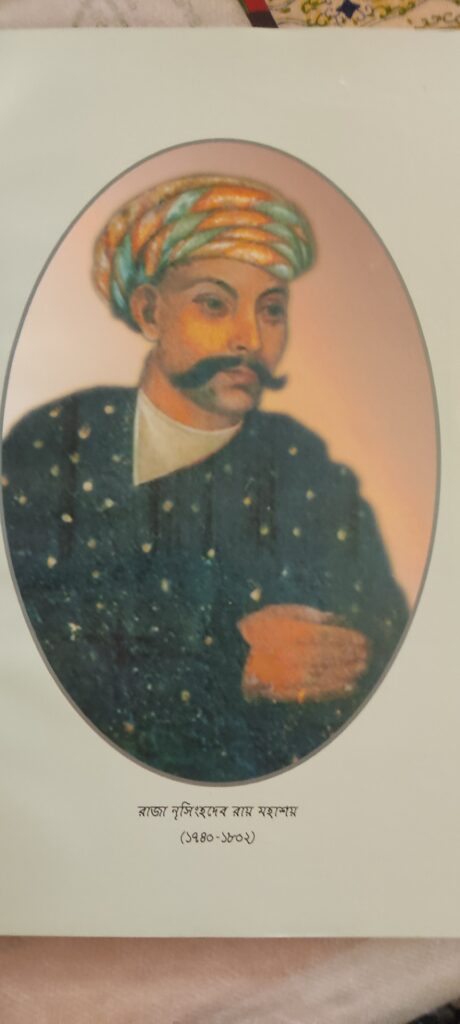
Construction of the Hangseshwari temple was started by Raja Nrisimhadeb Ray, the great grandson of Raja Rameshwar Ray. Built in the early 19th century, the temple is dedicated to Goddess Hangseshwari, (another form of Goddess Kali). The exceptional architecture of this temple has made it into a popular tourist destination. The main temple stands on an elevated platform, and is 27.5 meters in height and has a total number of 13 towers, with each peak representing a lotus flower. The blue idol of Goddess is made of neem-wood. It is a six-storey shrine that follows the structure of a human body consisting of Ira, Pingala, Bajraksha, Sushumna and Chitrini.
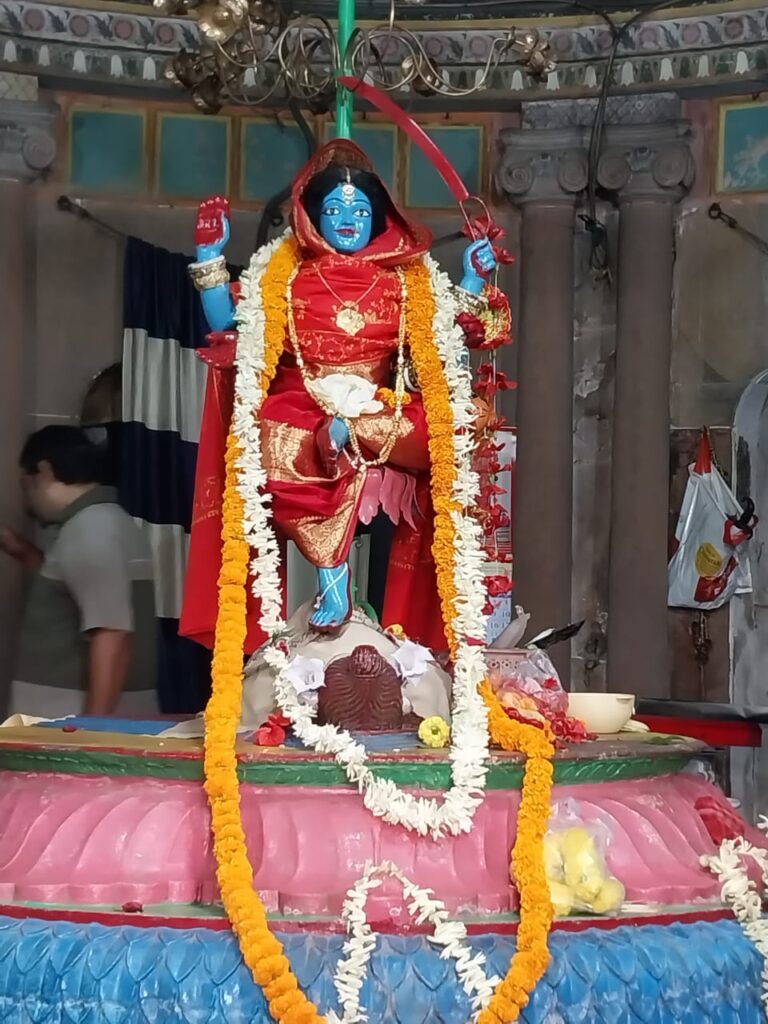
Raja Nrisinhadeb Ray was a Sanskrit scholar and had spent quite some time in Banaras learning the true meaning of life and practising Yoga and learnt deeply about Kundalini and the six cyclic centres (Six Chakras) in the human system. It is said that he got a chance to go to England to pursue higher studies but decided to come back to Bansberia. He wanted to build a temple in accordance with the Kundalini and yogic concepts.
He is believed to have spent, at that time, around rupees one lakh in procuring marbles from Chunar, near Benaras (Varanasi, U.P). Skilled artisans were also brought from this place to build the temple following the mystic formula of Shata-Chakra-Bheda, with five stone staircases to represent the five Narheis or vital channels in the spinal cord, namely, Era, Pingala, Susumna, Bajrakhya and Chitirni. And, central to this was Goddess Hanseshwari, representing the Kundalini Shakti or Para Saakti of Yoga.
The word Hong is pronounced at the time of breathing out, while the word S-a-a is uttered at the time of breathing in. Hong manifests Shiva and S-a-a represents Mother Shakti. Since the temple houses both the deities of Shiva and Shakti the name Hanseshwari, finds relevance.
Raja Nrisinhadeb Ray returned to Bansberia and laid the foundation stone in the year 1799, but unfortunately, he did not survive to see its completion and died in 1802. His younger wife (he had two wives) Rani Shankari took charge to oversee the construction of the temple. Finally, in the year 1814, the temple and its five-storied structure were completed with an estimated construction cost of nearly Rupees 5 Lacks! It was a huge amount during that time.
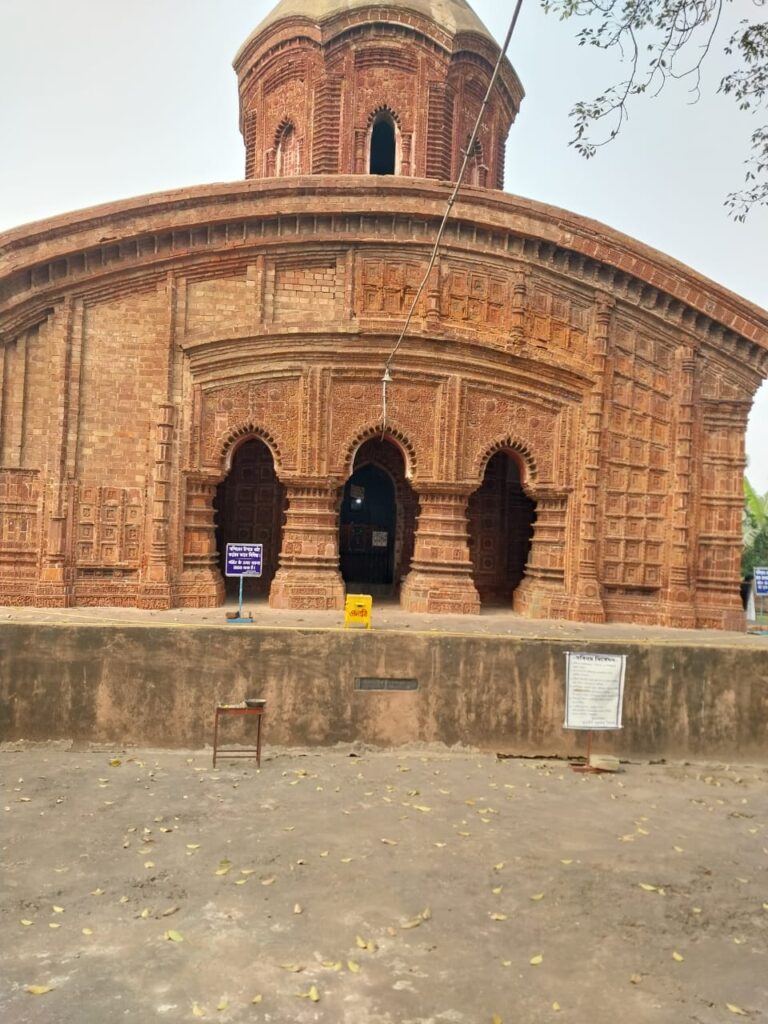
The unusual architecture of the Hangseshwari temple represents the Tantrik Satchakrabhed. The temple complex, besides Ananta Basedeb temple, houses another temple in its vicinity, called the Swanbhaba Kali Temple. Both of these temples have been exquisitely embellished with terracotta carvings. The Hangseshwari deity resides in the stalk of the sanctum (centre of the womb i.e. the temple) and symbolizes the strength of Kulakundalini Shakti.
Also Read: Dhanyakuria—a Village of Architectural Wonders!
The 13 pinnacles/towers symbolize the five sense organs, five work/activity organs, mind, intelligence and soul of a human being. On the highest storey in the central spire there is a white marble Shiva Linga that is the ultimate symbol of Param Purush (the source and essence of all existence, the ultimate goal of spiritual realization, and the divine consciousness that underlies and sustains the universe).
The temple complex has now been taken over by the Archaeological Survey of India as a heritage site. The complex is set amidst picturesque lush green surroundings of a sleepy semi-rural area. Not much remains of the fort or the main palace, but a part of the moat is still visible. Descendants of Raja Nrisinhadeb Ray still live near the temple complex, in a refurbished old building, but chooses to stay away from public interactions.
Photo Courtesy: Author

Arundhati Gupta is a Kolkata-based writer, editor and communications strategist. She has contributed reviews, essays, and features in leading national, regional and online publications. In addition to her writing, she serves on the executive committee of a non-profit organisation. Outside of work, she enjoys playing scrabble and cooking.

One Response
Very well written! Interesting tourist place 👍🏻 Will surely visit