Shyama Prasad Mookherjee: Nationalist, Institution Builder, and a Man of Contradictions
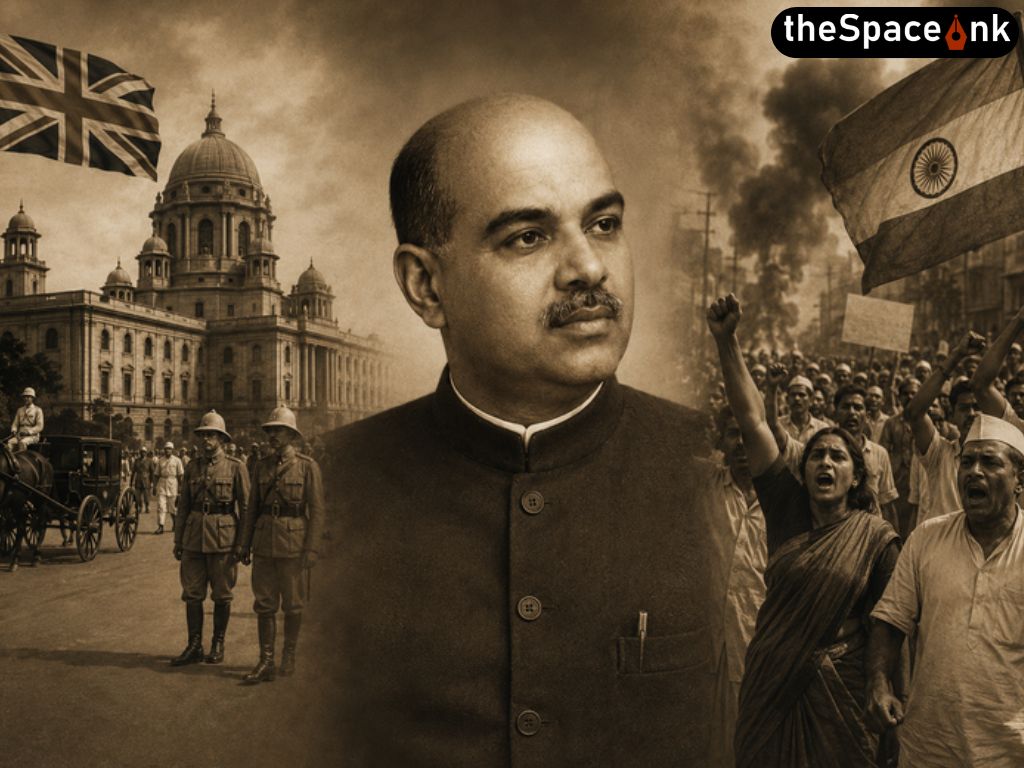
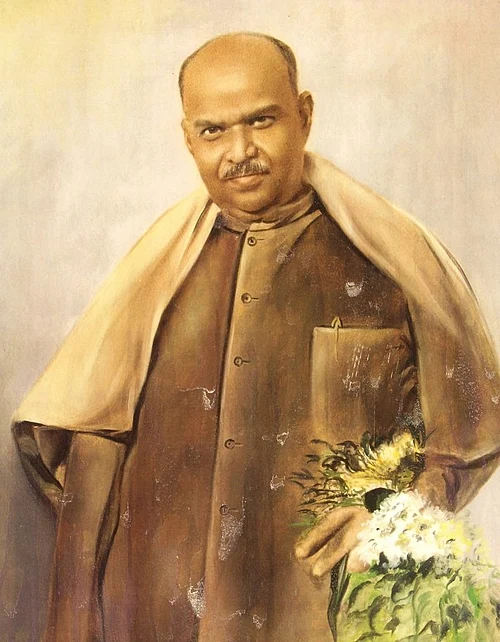
Every generation creates its own political icons and villains. In contemporary India, few figures spark as much polarized debate as Shyama Prasad Mookherjee. Some view him as a visionary nationalist, educationist, and founder of a political tradition that still shapes India; others see a conservative politician often on the wrong side of the anti-colonial struggle. Yet history is rarely so simple. Episodes from Bengal’s pre-independence past reveal a figure more complex than either admirers or detractors admit.
The Forgotten Relationship with Hassan Suhrawardy
This episode complicates common views of Mookherjee. Recent Bengal debates often frame the Suhrawardy family through Partition and communal violence, but decades earlier, his relationship with Hassan Suhrawardy told a different story. When Hassan Suhrawardy became Bageswari Professor at Calcutta University, Mookherjee welcomed the appointment, saying the university belonged not to one community or class but to all Bengal and India. His words were significant: “Through the appointment of a Muslim, the University is entering a new phase … it is the University of Bengal and the University of India.” The respect was mutual: as Vice-Chancellor, Hassan Suhrawardy later credited Mookherjee’s cooperation with helping him avoid major difficulties.
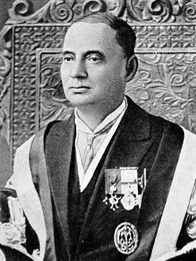
These exchanges challenge efforts to read later communal divisions into an earlier period. They show that before Partition, Bengal’s political and intellectual life often included collaboration across religious lines, and that judging families by later relatives’ actions obscures this more complex history.
The Union Jack Controversy of 1936
On 24 January 1936, during Calcutta University’s Foundation Day parade, University Training Corps students were expected to salute Union Jack. One Vidyasagar College student refused on anti-imperialist grounds and was publicly whipped, sparking outrage, protests at the college, and student agitation led by Dharitri Ganguly and Umapada Majumdar.
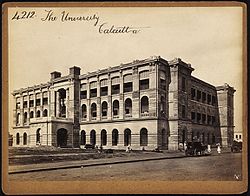
As Vice-Chancellor, Mookherjee responded not by endorsing the protest but by enforcing institutional discipline. He ordered the expulsion of the student leaders from both the college and the university. The move backfired. A campus dispute became a province-wide student movement as the Bengal Provincial Students’ Federation organized strikes and demonstrations, eventually forcing university authorities to reverse the expulsions and reinstate the students.
Also Read: Bengal Sketches [1],[2],[3],[4],[5],[6],[7],[8],[9]
Today, this incident is often cited as proof that Mookherjee sided with colonial authority over nationalist sentiment, and there is truth to that. He upheld rules requiring respect for imperial symbols and punished those who defied them. Yet the context matters: at thirty-three, as one of Calcutta University’s youngest Vice-Chancellors, he appears to have prioritized preserving a major educational institution’s functioning and autonomy under colonial rule, favoring careful administration over direct confrontation.
To radical anti-imperialist students, such pragmatism looked like submission. To Mookherjee, institutional stability was public service. The clash raised a central question of India’s freedom struggle: should colonial institutions be confronted at every turn, or strategically used and preserved in pursuit of self-government?
The Fazlul Huq Coalition: Pragmatism Over Political Purity
Another complicating episode was Mookherjee’s decision to join A. K. Fazlul Huq’s Bengal government during the Second World War. In a fragmented political landscape, where the Muslim League, Krishak Praja Party, Congress, Hindu Mahasabha, and regional forces competed for influence, he chose participation over opposition, serving as Finance Minister in the Huq–Shyama coalition. The significance of this decision is often overlooked. Mookherjee was a prominent leader of the Hindu Mahasabha, while Fazlul Huq was one of Bengal’s most influential Muslim politicians. Their partnership demonstrated that political cooperation across communal lines remained possible in Bengal even during a period of increasing polarization.
Also Read: Bengal Sketches [10],[11],[12],[13],[14],[15],[16],[17]
Supporters saw the coalition as responsible governance amid wartime strain, economic hardship, and instability. Mookherjee believed government participation let him shape policy and protect Bengal’s interests. Critics argued that serving under British authority sustained colonial rule, a charge sharpened during Quit India, when his commitment to stability led him to oppose mass anti-colonial revolt.
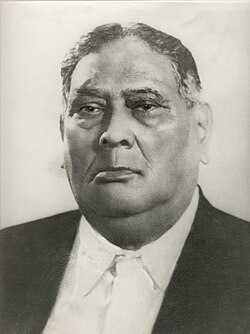
The coalition reveals a recurring pattern in Mookherjee’s career: he chose engagement over withdrawal. At Calcutta University, in provincial government, and later in national politics, he worked through power structures rather than resisting from outside them. Admirers saw this as statesmanship; critics saw accommodation. Either way, the Huq–Mookherjee partnership shows that Bengal’s Pre-Partition politics were far more fluid and complex than later ideological narratives suggest.
Quit India and the Limits of Mookherjee’s Nationalism
The tension between nationalism and pragmatism became clearest during the Quit India Movement of 1942. Then Finance Minister in A. K. Fazlul Huq’s Bengal government, Mookherjee took a sharply different stance from Congress’s mass resistance to British rule. In a confidential letter to Bengal Governor John Herbert, he urged the administration to prevent Quit India from gaining momentum in Bengal, warning that wartime agitation could cause disorder and threaten security. He also argued that Indians should cooperate with Britain during the Second World War.
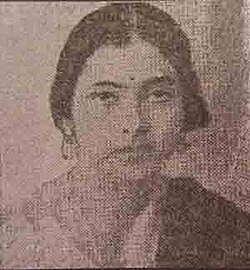
For Quit India supporters, Mookherjee’s stance is hard to defend while activists faced arrest and repression, he advised the provincial administration on containing the movement. The contrast is stark beside revolutionary Bina Das, who, after imprisonment for attempting to assassinate Governor Stanley Jackson in 1932, resumed activism and was arrested again during 1942 anti-colonial protests.
At a moment when many Indians saw direct confrontation with the Raj as a moral duty, Mookherjee prioritized stability and governance. This does not make him a British loyalist; he was a nationalist committed to self-government. But his nationalism differed from Congress revolutionaries and mass-movement leaders: he favored constitutional and administrative routes over confrontation and sacrifice. Critics call this cowardice; defenders call it wartime realism. History records both.
Debates over Mookherjee’s legacy are about larger political questions: when compromise is prudence or capitulation, when institutions should be preserved or challenged, and whether a nationalist who opposed a mass movement still belongs in the freedom struggle.
Beyond Heroes and Villains
Together, these episodes resist easy categorization. Mookherjee enforced colonial-era rules against student nationalists and opposed Quit India, yet also built educational institutions, backed inclusive academic appointments, and collaborated respectfully with Muslim colleagues. Some will see this negatively; others will view him as a pragmatic administrator in challenging times. Either way, history suffers when reduced to political mythology. Mookherjee was neither flawless patriot nor cartoon villain, but a nationalist who valued institutions, often chose order over agitation, and was shaped by late colonial India’s constraints.
Debates over Mookherjee’s legacy are about larger political questions: when compromise is prudence or capitulation, when institutions should be preserved or challenged, and whether a nationalist who opposed a mass movement still belongs in the freedom struggle. Long after disputes over statues, road names, and memorials fade, history’s task is not to comfort but to preserve complexity.
Images: Wikipedia, Wikipedia, Wikipedia, Wikipedia,Wikimedia Commons,ChatGpt

Dr. Jamil is a passionate oncology commercial leader whose two-decade journey has been driven by a deep commitment to improving the lives of people with cancer. As Head of the Early Commercial Team at Merck Oncology and an Adjunct Professor at Columbia Business School, he shapes innovative pipelines while mentoring and inspiring future healthcare leaders. Beyond work, he is a soulful armchair historian of Bengal, a devoted Manchester City fan, and someone whose heart is forever tied to the culture, stories, and spirit of Kolkata.