Alexander Pushkin: The King of Spades
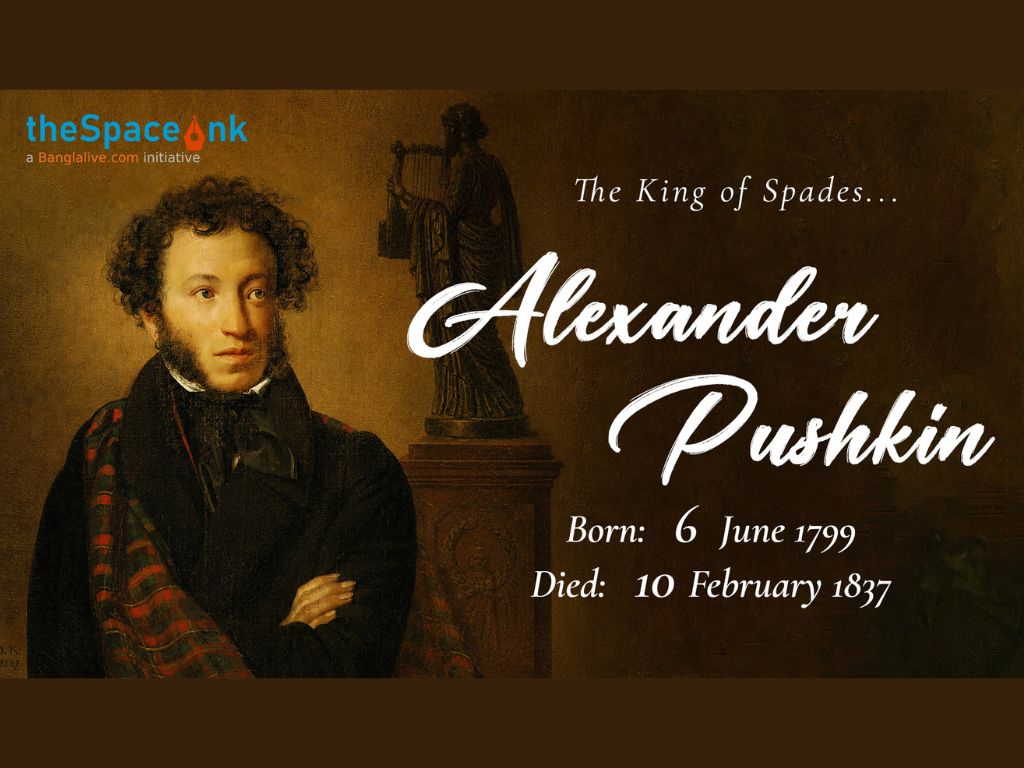
He challenged his brother-in-law over strawberries. That’s Alexander Pushkin for you – Russia’s greatest poet, a man who turned duels into a hobby and gossip into gold. He had a fiery temper, a genius for verse, and a mustache that looked suspiciously good in 19th-century portraits. By the end of this episode, you’ll understand why Russians don’t just read Pushkin – they name airports, chocolates, and even a crater on Mercury after him.
Let’s start with his wild family tree. Pushkin was born in Moscow on 6 June ,1799, into old but broke nobility. On his mother’s side, he was the great-grandson of Abram Gannibal – an African general brought to Russia as a gift for Peter the Great. That’s right: Russia’s national poet had African heritage, and he bragged about it in his writing.
Now picture teenage Pushkin. He wrote scandalous poems mocking the tsar and the church, and the authorities sent him into exile in 1820. But here’s the joke – his “exile” meant wandering the Caucasus and Crimea, falling in love, and writing brilliant poetry. He had more fun than most people have on a paid vacation.
So how did he spend that exile? He wrote Ruslan and Ludmila, a wild fairy-tale poem that opens with a talking cat walking around an oak tree on a golden chain. Russian schoolchildren still memorize those lines today. Pushkin basically invented modern Russian literature while being officially punished.
Video: Echoes of Empathy, Maxim Gorky – Voice of the people
But his real masterpiece came a few years later. Stuck on his mother’s estate in the 1820s, he wrote Eugene Onegin – a novel in verse that’s part romance, part satire, and part how-not-to-guide for aristocrats. The hero is so bored he kills his best friend in a duel, then flirts with the dead friend’s fiancée. Think Gossip Girl in winter coats, but with better rhymes.
Here’s where Pushkin gets truly ridiculous. He fought nearly thirty duels in his short life – over someone laughing at his hair, a bad card game, even a disagreement about a history book. Once, he challenged a man over a plate of strawberries at a dinner party. Pushkin rarely got hurt, but the tension followed him everywhere.
Unfortunately, the last duel was fatal. In 1837, he got anonymous letters hinting his wife Natalya was cheating with a French officer named d’Anthès. Instead of ignoring the gossip, Pushkin challenged the man to a duel. They met on a snowy riverbank. Pushkin was shot in the stomach and died two days later. He was 37 years old.
That death became a national tragedy, but here’s the irony. Pushkin had already predicted his own death in Eugene Onegin – right down to the snow and the grieving friends. He literally wrote his own goodbye. Russians said the sun of Russian poetry had set, and they weren’t exaggerating. He shaped the modern Russian language the way Shakespeare shaped English.
Video: Oscar Wilde — The Tragic Brilliance of a Dandy
So what’s his legacy today? You’ll find Pushkin on banknotes, metro stations, monuments, and a famous chocolate bar called “Pushkin’s Fables.” There’s even a crater on Mercury named after him. Taxi drivers and professors quote his lines. And the first statue ever built of a writer in Russia? A Pushkin statue, put up while his own grandmother was still alive.
If you only read one thing by Pushkin, make it The Queen of Spades. It’s a twenty-page creepfest about a man who learns a card trick from a dead countess and then loses his mind. It’ll stick with you longer than most novels. Or try his fairy tales – talking animals, evil witches, and sly humor everywhere.
So that’s Alexander Pushkin. Lover, fighter, exile, genius, and the man who taught Russians how to sound like themselves. He lived fast, died young, and left behind work so good that even his enemies quoted him. Until next time, keep reading dangerously.