(Khonoma)
I’ll admit it: until Khonoma appeared on our trip itinerary, I’d never heard it called “India’s greenest village.” (Some sources even claim Asia’s first.) For trekkers, it’s better known as the gateway to the breathtaking Dzukou valley trek. But this Angami Naga settlement, perched about 20 kilometers from Kohima, earned its eco-title the hard way: in 1998, the community banned hunting and logging outright, creating the Khonoma Nature Conservation and Tragopan Sanctuary.
The move came after a shocking wake-up call—300 endangered Blyth’s tragopans (also known as grey-bellied tragopans, vibrant members of the pheasant family and Nagaland’s state bird) were killed in a single week during a village hunt. Today, the sanctuary protects not just these elusive birds but clouded leopards, Asiatic black bears, hoolock gibbons, and over 300 avian species, all while channeling eco-tourism into sustainable livelihoods. The Angami people didn’t just sign a decree; they became active guardians, turning a warrior past into a model of community-led conservation.
Also Read: Timber and Time: Chatham Saw Mill, Port Blair
The village of Khonoma is about 20 kilometers from the capital city of Kohima and one can do a day trip to the village. That is what we did. There are homestays in the village too in case one to stay in the village.
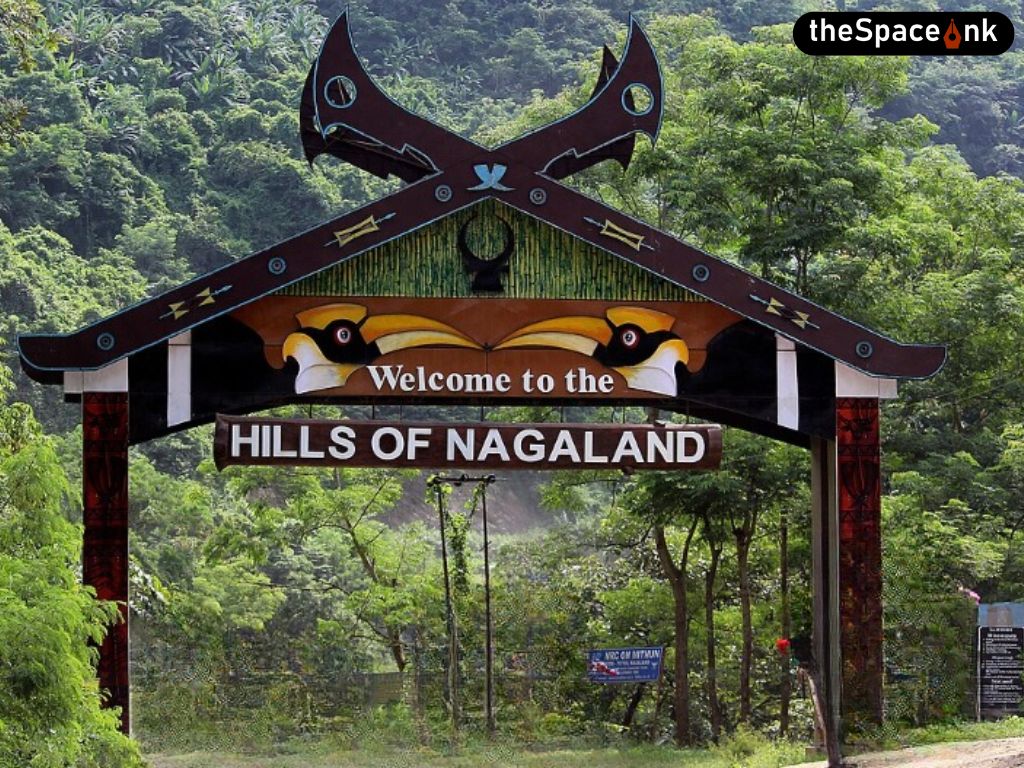
As our vehicle moved towards Khonoma we are greeted with a board that announces the Sanctuary and it is necessary to get tickets for all visitors entering the village. A large map points out the village and the sites of the forts in the area. These forts were built in the 19th century. Many of them were destroyed and rebuilt several times.
British troops began to make inroads in the area in the early 19th century and the first British expedition to the Naga hills took place in 1832. The reason for this was to secure access from Manipur into Assam. This expedition was thwarted by the Naga warriors who put up a brave front and several of the British outposts were destroyed by the Angami warriors. The British victory in the Battle of Khonoma (1879-1880) sealed its fate.
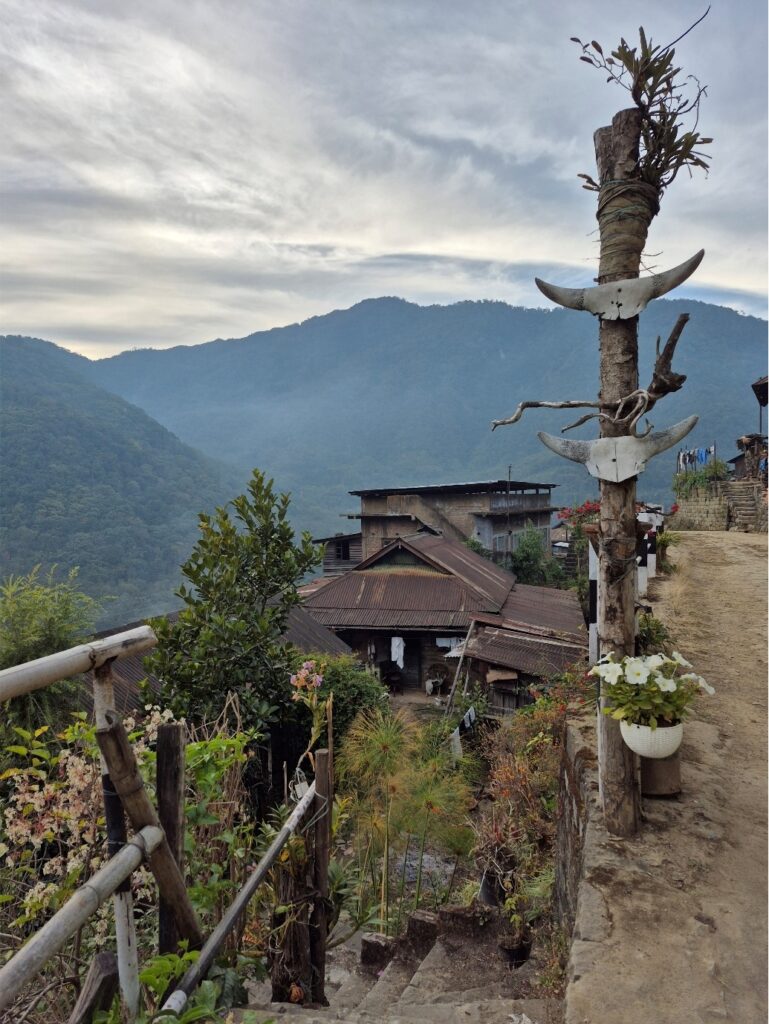
Along the path, a charming mini-library stood open—books neatly arranged, instructions pasted on the side for anyone to borrow and read. Just ahead, a raised platform honored villagers who’d shaped the community’s welfare.
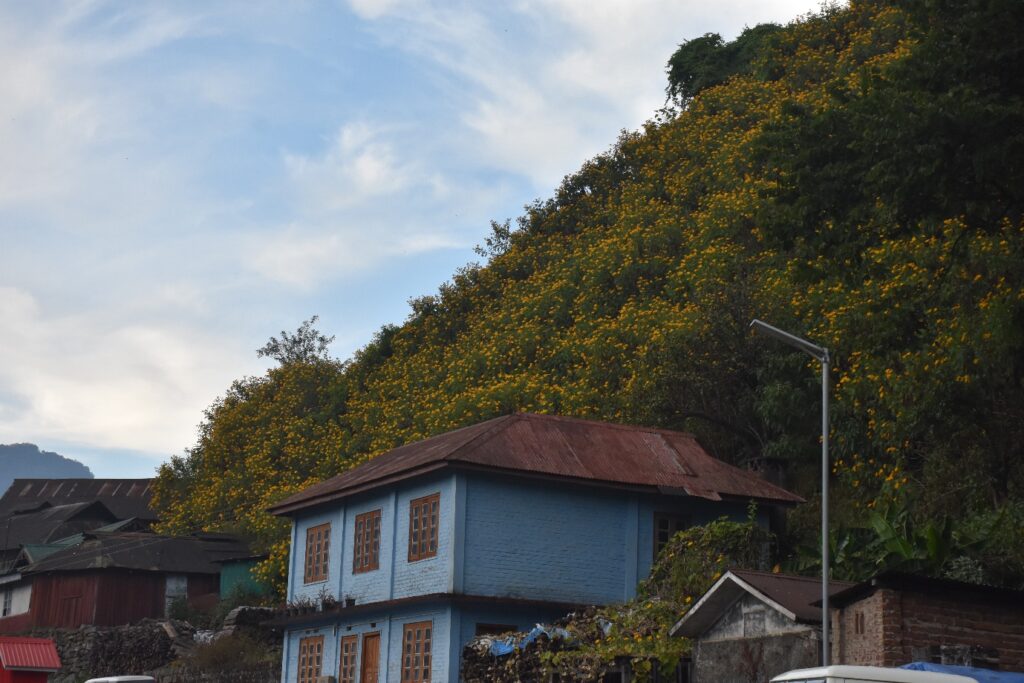
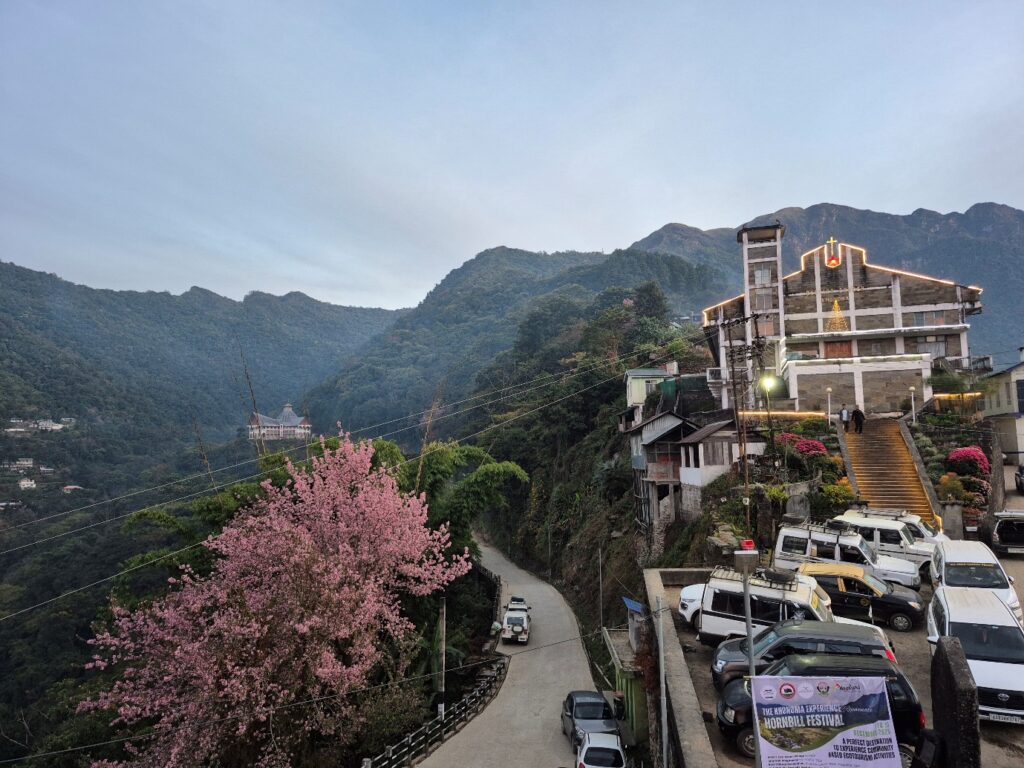
We set out on a crisp December morning from Mokokchung, bound for a day trip. The route detoured onto an untarred stretch that felt like it was leading nowhere—until the landscape took over. Rolling hills framed in cherry blossom pink, a solitary church crowning a distant ridge, Mexican wild sunflowers nodding in the breeze, terraced fields cascading like emerald steps. The long, bumpy ride dissolved into anticipation. As we climbed the final concrete switchback, Khonoma emerged: a green amphitheater of life, anchored by that grand church at the entrance. I stepped out into sharp, cold air laced with pine and woodsmoke—an instant antidote to the journey.
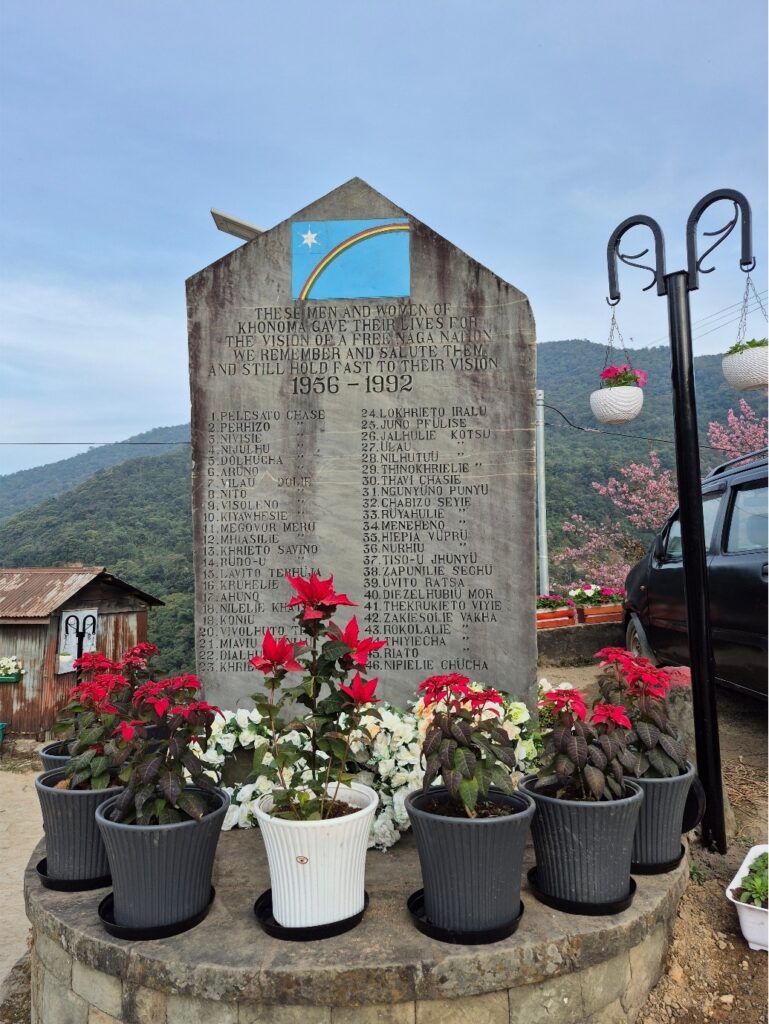
Visitors typically wander the village on foot, following a network of paths that invite slow discovery. A gateway beckons downhill; stone steps climb right; a forward trail opens to sweeping valley views. In the golden slant of late-afternoon sun, the terraces glowed green and gold, chimney smoke curled lazily upward, women arranged potted plants for sale beside tiny shops brimming with hand-knitted woolens, colorful mufflers, and trinkets. Yellow and pink blooms spilled everywhere. We paused for steaming noodles at a roadside stall, trading stories with locals and fellow travelers before setting off.
Along the path, a charming mini-library stood open—books neatly arranged, instructions pasted on the side for anyone to borrow and read. Just ahead, a raised platform honored villagers who’d shaped the community’s welfare. Nearby, morungs—traditional bachelor dormitories and learning halls exclusive to men—displayed tribal emblems: woven baskets, carved animal heads, and symbolic artifacts that speak of Angami heritage and craftsmanship passed down through generations.

What struck me most were the graves. Tucked just outside homes, they’re integrated into daily life—marked, tended, sometimes encircled by small gardens bursting with flowers. It feels as if the departed remain woven into the family’s rhythm: present, not absent. Tin-roofed houses line windows with flowerpots; memorial stones dot the paths and steps, quiet sentinels of history. Past and present coexist here without apology.
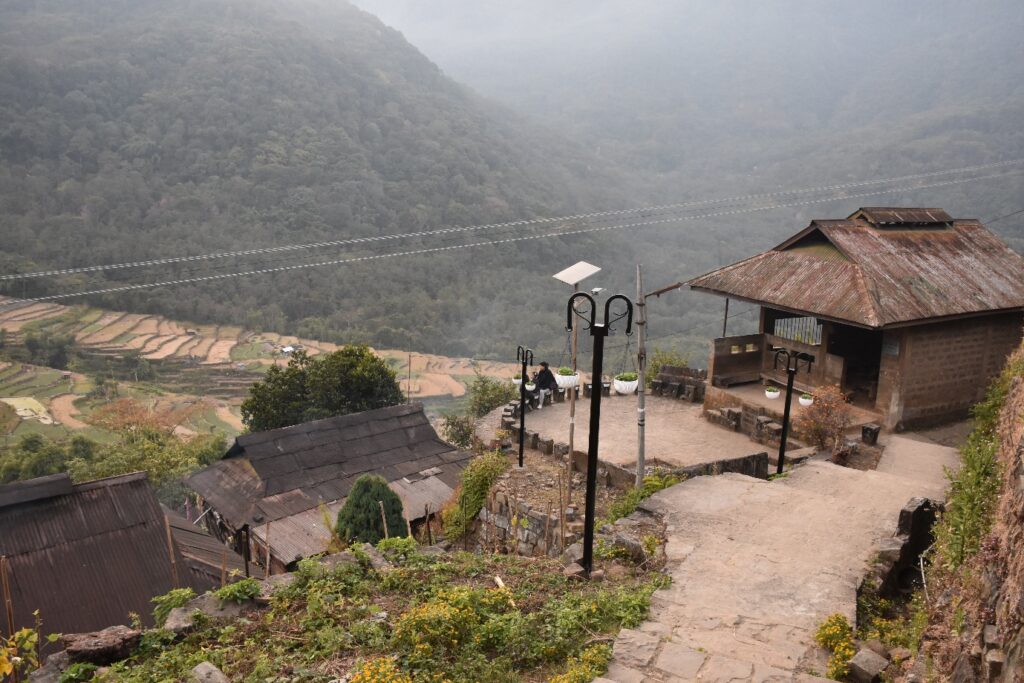
The looping trail circled the village like a gentle circumambulation, offering one panoramic valley vista after another. I returned to the starting point, then climbed the right-hand steps to a higher gateway and vantage—Khonoma unfolding below like a living tapestry.
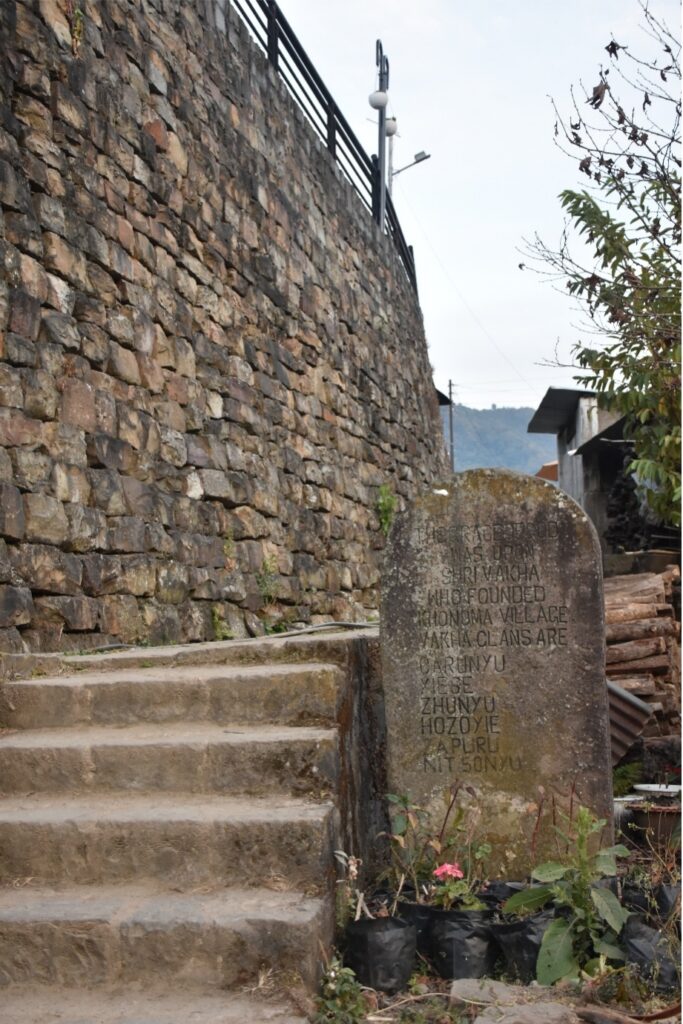
Dusk fell softly. The church blazed with Christmas lights, the air grew sharper, and a hazy moon rose just above the hill line. On a nearby terrace, three children paused their game to wave and grin. At the gate, women selling plants packed up, exchanging smiles as they headed home. In Khonoma, life moves at its own unhurried pace.
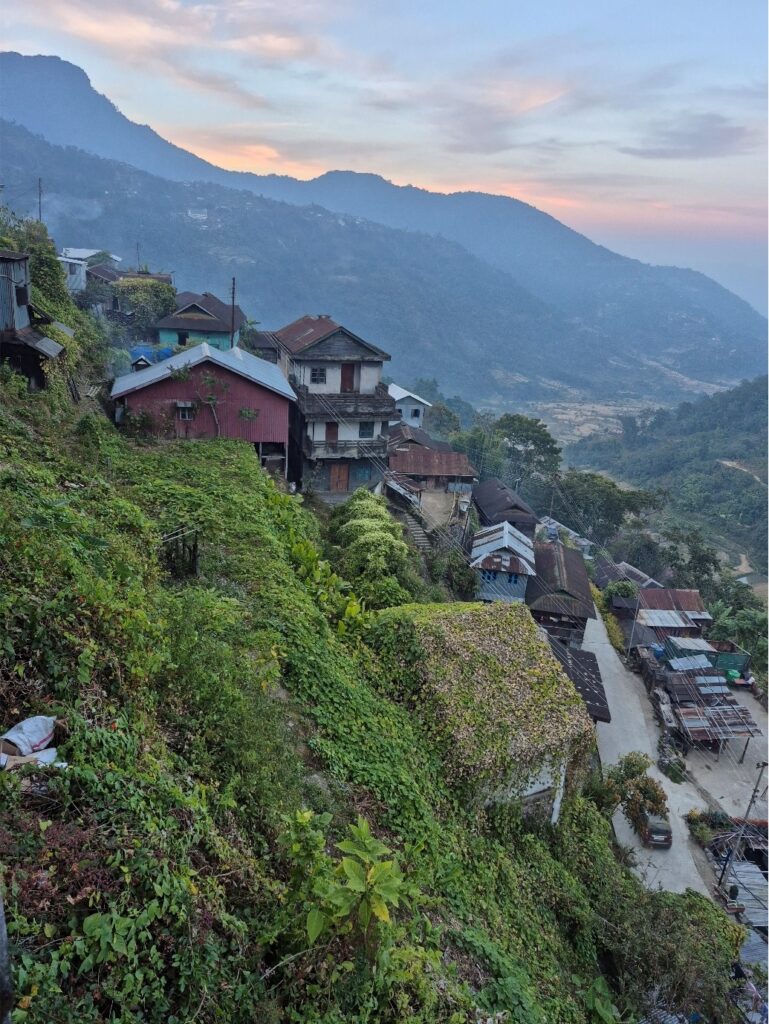
Days later, back from Nagaland’s hills, news broke of a fire sweeping Dzukou Valley. My Instagram feed filled with smoke plumes visible from Khonoma itself. Reports said it was contained quickly; I hope the fragile green that defines this place escaped serious harm.
Image Courtesy: Author

Nishi Pulugurtha is academic, author, poet, and translator with thirteen books to her credit apart from several academic writings. Her recent book is a co-edited volume of translated short stories written by women on the subject of mental health, Bandaged Moments. Her book on food, a volume of poems and a volume of translated stories are forthcoming.