
Durga Puja and Navratri: Two Festivals, One Divine Mother
The countdown has begun to the day we will finally hear the sound of ‘dhak’. A moment we have been waiting for throughout the year is finally knocking at our door. In a diverse country like India, the mother goddess is ushered in and worshipped in different ways. In northern India, Goddess Durga is worshipped in nine different forms for nine nights, while Durga Puja is celebrated with pomp in West Bengal, Bihar, Odisha, Assam, Tripura and other parts of eastern India.
Though both festivals centre around the supreme feminine energy steeped in Shakta traditions, their regional expressions have evolved differently through history and culture. Let us delve into how Durga Puja and Navratri evolved and shaped the way they are celebrated today, not just in India but across the world.

Though ceremonial Durga Puja calls for ten days of fasting and worship, it is the last four days of Saptami, Ashtami, Navami and Dashami that are celebrated with pomp. The ten-armed Goddess Durga is worshipped as Mahishasura Mardini, the slayer of the shape-shifting buffalo demon. As a warrior goddess, she represents the triumph of good over evil. Lord Ram invoked her before departing for Lanka to fight Ravana and rescue Sita. Therefore, the autumnal worship of Durga is also referred to as ‘Akal Bodhan’ or the untimely invocation of the mother goddess.

Navratri, as the name explains, is a festival spanning nine nights where Goddess Durga is celebrated in her nine forms—Shailaputri, Brahmacharini, Chandraghanta, Kushmanda, Skandamata, Katyayani, Kalaratri, Mahagauri and Siddhidatri. Each form represents a different aspect of the divine feminine, from asceticism and motherhood to strength, protection and spiritual fulfilment. The Sharad Navratri is popularly celebrated and coincides with Durga Puja in West Bengal.
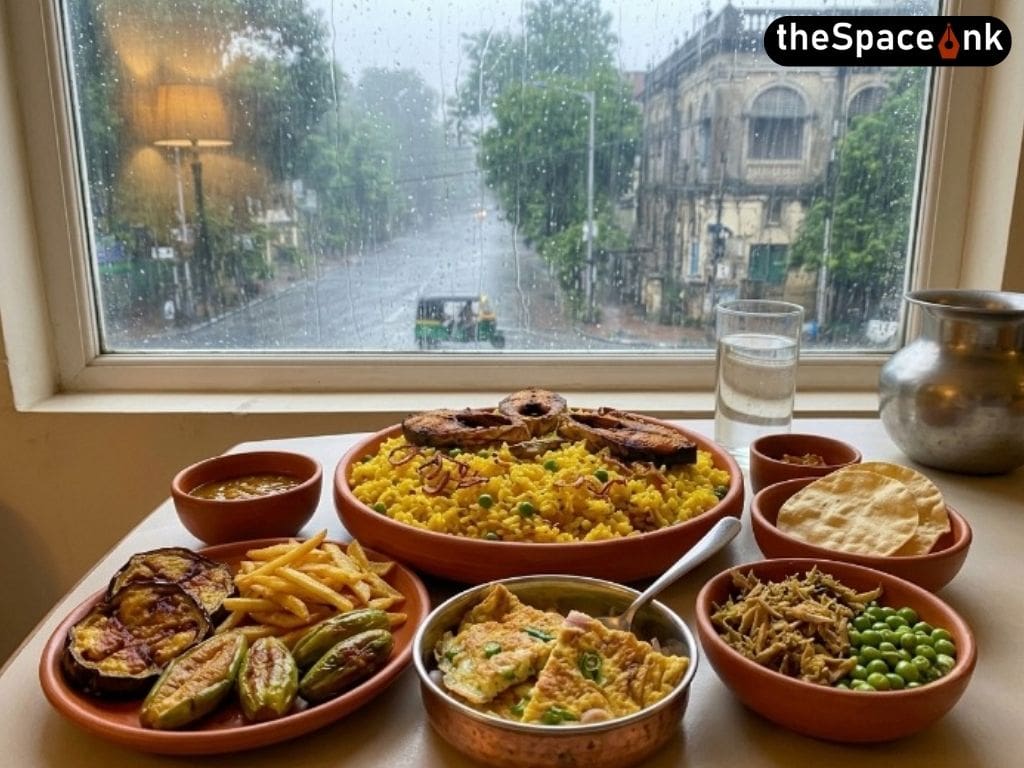
During the nine days of Navratri, people fast, pray, enjoy regional vegetarian delicacies and participate in community dances such as garba and dandiya. During Durga Puja, Bengali Hindus also fast before offering prayers. But it is the celebratory diet—a combination of vegetarian and non-vegetarian fare—that distinctly sets Durga Puja apart from Navratri. The coexistence of these two traditions is rooted in the historical evolution of Durga Puja.

Bengali Hindus believe Goddess Durga or Uma is a daughter who visits her maternal home for ten days with her sons and daughters—Saraswati, Lakshmi, Ganesh and Kartik. On Vijaya Dashami, she returns to Lord Shiva’s abode on Mount Kailash after immersion. The ritual of ‘sindoor khela’, where married women apply vermillion to the goddess during Vijaya Dashami, embraces her as a daughter. Just as daughters are welcomed into their maternal homes with lavish feasts of meat and fish, the goddess is treated in the same way. This emotional touch, combined with the mass-scale public celebration known as ‘Sarbojonin’ (benefit for all) or ‘Baro-yaari’ (Twelve Pal) Puja, makes Durga Puja more than a religious celebration.

The origin of ‘Baro-yaari’ Puja is attributed to twelve friends of Guptipara in Hooghly, West Bengal. The tradition was brought to Kolkata in 1832 by Raja Harinath of Cossimbazar (Kasim Bazar), who organised Durga Puja at his ancestral home in Murshidabad. This eventually paved the way for the first community or ‘sarbojonin’ Durga Puja, organised by the Sanatan Dharmotsahini Sabha at Bagbazar in 1910.
Open to the public and controlled by them, it laid the foundation for the public version of the puja we see today. Though Durga Puja continues to be celebrated in ‘bonedi baris’ according to their unique traditions, community puja has achieved universal appeal. It is no surprise that Durga Puja was inscribed on UNESCO’s Representative List of the Intangible Cultural Heritage of Humanity in 2021.

The tradition of decorating pandals and divine images through different themes is an offshoot of this public version. But what about the food? Can one really go pandal hopping without grabbing a quick bite of fish fry or mutton cutlet? Scriptures have even been cited in support of meat consumption during Shakta worship. The Devi Bhagavatam, an important text for followers of Shaktism along with the Devi Mahatmya, mentions animal sacrifice during worship of the goddess. The text states that animals offered before the Devi attain the heavenly regions and that such sacrifice is not considered sinful.

Animal sacrifice or ‘bali’ was later popularised by influential zamindari or ‘bonedi’ houses of Bengal. Meat cooked without onion or garlic, known as ‘niramish mangsho’, and fish were offered to the goddess alongside the quintessential vegetarian ‘khichuri’ and ‘labra bhog’. In the 21st century, animal sacrifice has stopped in many places, including some ‘bonedi baris’, with gourds sometimes used symbolically instead. Most non-vegetarian delicacies are now enjoyed during community meals outside the pandals.

The Shakta tradition also emphasises bringing the goddess to life through rituals. The sacred ritual of ‘Chokkhu Daan’, in which the eyes of Goddess Durga are painted onto her clay image at dawn on Mahalaya, beautifully reflects this belief. Following the same tradition, Ma Kali and Goddess Durga are offered traditional ‘pathar mangsho’ or goat meat as part of ritual offerings.
Today, Bengalis participate in garba and dandiya, just as people from other parts of India enjoy ‘dhunuchi naach’ and the energetic ‘visarjan’ dance to ‘dhak’ beats. The growing number of people travelling from across India to witness Durga Puja shows that there is no contradiction between Navratri and Durga Puja.
The Shakta tradition, the spread of Vaishnavism by Chaitanya Mahaprabhu and cultural exchanges with the Mughals and Europeans all influenced the evolution of Bengal’s cuisine. This unique combination shaped the dietary choices of 18th-century Bengal, many aspects of which continue to be visible in Bengali cuisine today.
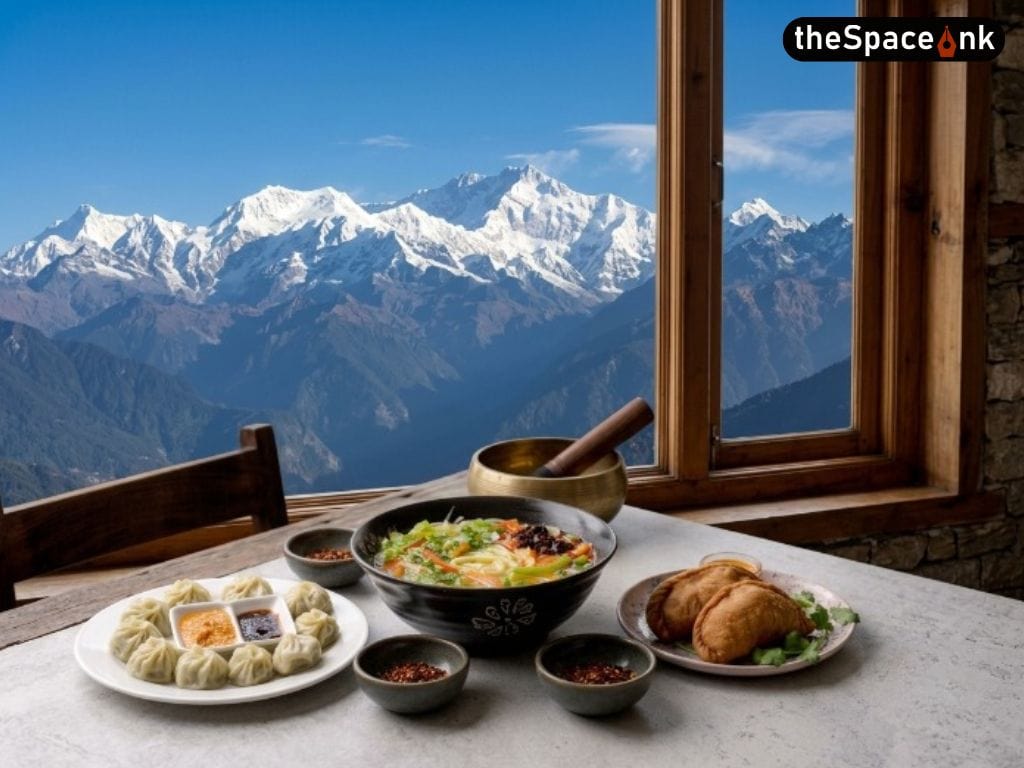
People who celebrate Navratri are often already vegetarian and follow ‘vrat’ food as part of their religious observance.

Today, Bengalis participate in garba and dandiya, just as people from other parts of India enjoy ‘dhunuchi naach’ and the energetic ‘visarjan’ dance to ‘dhak’ beats. The growing number of people travelling from across India to witness Durga Puja shows that there is no contradiction between Navratri and Durga Puja. Bollywood too celebrates both festivals through vibrant songs and dances, taking their spirit far beyond India.
These two festivals, though shaped differently by regional history and culture, remind us that India’s rich cultural diversity is not a contradiction but a celebration of the many ways in which devotion finds expression.
To Be Continued…
Source:
- https://www.learnreligions.com/the-history-and-origin-of-durga-puja-1770159
- https://www.downtoearth.org.in/food/why-the-shakta-tradition-of-bengal-differs-on-food-choices-from-the-rest-of-india
Image Courtesy: Internet, Adobe Stock, Adobe Stock, Adobe Stock, Pinterest, Wikimedia Commons, Chat Gpt

Surela Chakraborty is a freelance writer by profession and passion. Her works have been published in several print and digital media. She also loves to dabble with poetry, dance and music. As an avid traveler she seeks adventure and believes to live life that is bold and different. Nature, human emotions and life experiences inspire the poet in her.