
Pujo’s Fashion Calendar: Notes from the 70s, 80s and 90s
Once upon a time, in the Kolkata I grew up in, fashion meant only one thing: Pujo fashion.
You may have had a special outfit for your birthday and perhaps another for Poila Boishakh. But your wardrobe, reputation and future social standing depended entirely on what you wore over those five days of Pujo. Those clothes would then determine what you wore for the rest of the year.
Pujo was not merely a festival. It was our annual fashion census.
Mithun-da was ruling Bombay. Everything sparkled. Disco jeans. Disco shirts. Glitter. Shiny collars.
Just when I had graduated from Good Companion-dressed childhood, and had made a steadfast refusal to wear baby dresses ever again, the city discovered loadshedding fabrics.
There were clothes in shades ranging from very dark to very light, apparently reflecting the mood of the times and Kolkata’s famous power cuts.
It made complete sense to us then. The city was dark, the clothes were dark, the future was uncertain, but at least we had a new fabric.

All roads led to New Market. A few months before Pujo, material would be selected after much touching, comparing, rejecting and returning to the same shop. Then Dorji Moshai, or Tailor Master, would be summoned. The process of dress-making and shirt-making began slowly, ceremoniously and with great anxiety.
Measurements were taken. Patterns discussed. Necklines debated. Buttons selected. The tailor would promise delivery “definitely before Pujo”, a phrase that had no legal meaning whatsoever.
By the time loadshedding began to disappear, disco began to appear.

You entered New Market and, even before you reached the Cannon, Strawberry and other such shops would tempt you with their latest offerings. The clothes often came in individual cardboard boxes, which automatically made them feel international. Never mind that the shirt itself may have had a collar large enough to shade a family of four.
Mithun-da was ruling Bombay. Everything sparkled. Disco jeans. Disco shirts. Glitter. Shiny collars.
By the eighties, the world of readymade clothes was taking over.
Smash T-shirts and Avis jeans arrived along with Bata’s North Star shoes and Murjani jeans. And when the Italian brand Benetton opened on Free School Street, we genuinely felt that world-class fashion had finally reached Kolkata.

New Market had long been Kolkata’s great shopping destination, while Dakshinapan was becoming a recognisable place for clothing, crafts and ethnic wear, but Benetton felt like another kind of arrival.
Our clothes reduced in number to accommodate the price of one Benetton T-shirt, worth perhaps four or five tailored outfits. Aunts and uncles discussed the price with wonder, outrage and the careful arithmetic of middle-class disbelief.
“Ekta T-shirt-er eto daam?”
We felt guilty. Naturally, we also felt immensely superior.
Also Read: Thai Silk and Its Rapport with an Indian Epic
Of course, boutiques had already arrived in Kolkata. Gypsy and Guys and Dolls in Globe Gully had brought their own kind of fashion excitement.
There were also the famous Gokul Das creations, filling Thagaraja Hall on Southern Avenue with export-rejected clothes, at prices that made one feel both clever and stylish. But nothing quite measured up to the thrill of saying that your T-shirt came from an Italian brand.
In the years that followed, others arrived. Weekender improved the college journey. Our parents continued to complain about prices, which is the natural role of parents when their children begin buying branded clothes.

Gurjari in Dakshinapan brought Banjara-style kurtas and skirts into the Calcutta fashion scene.
Style was slowly moving out of the New Market area and travelling southwards, westwards and eventually into every neighbourhood.
While our mothers shopped for traditional sarees in the gullies of Gariahat or College Street, fashionable sarees came from Ananda and Kanishka.
For fashionable tradition, there was Kundahaar and Meera Basu. Vashdev Tolaram was for those who wanted something less traditional, while Priya Gopal Bishoyi and Benarasi Haat were for the serious traditionalist.

The reason I mix up children’s clothes and parents’ clothes is because there was a special Durga Pujo look that belonged to neither generation entirely: the teenager in her mother’s sari and ill-fitting blouse, determined to look grown-up and glamorous; and the male teenager in an itchy kurta.
By the early nineties, Park Street sari shops were appearing and expanding, and the Pujo fashion bill was never the same again. Later, men’s fashion shops in malls, Fabindia outlets, brand stores and designer boutiques changed Kolkata’s Pujo shopping habits.

They removed the tedium of dealing with tailors. No more endless fittings. No more waiting for a blouse that appeared on Panchami with one sleeve mysteriously tighter than the other.
But they also removed something else: the exclusivity of individual design.
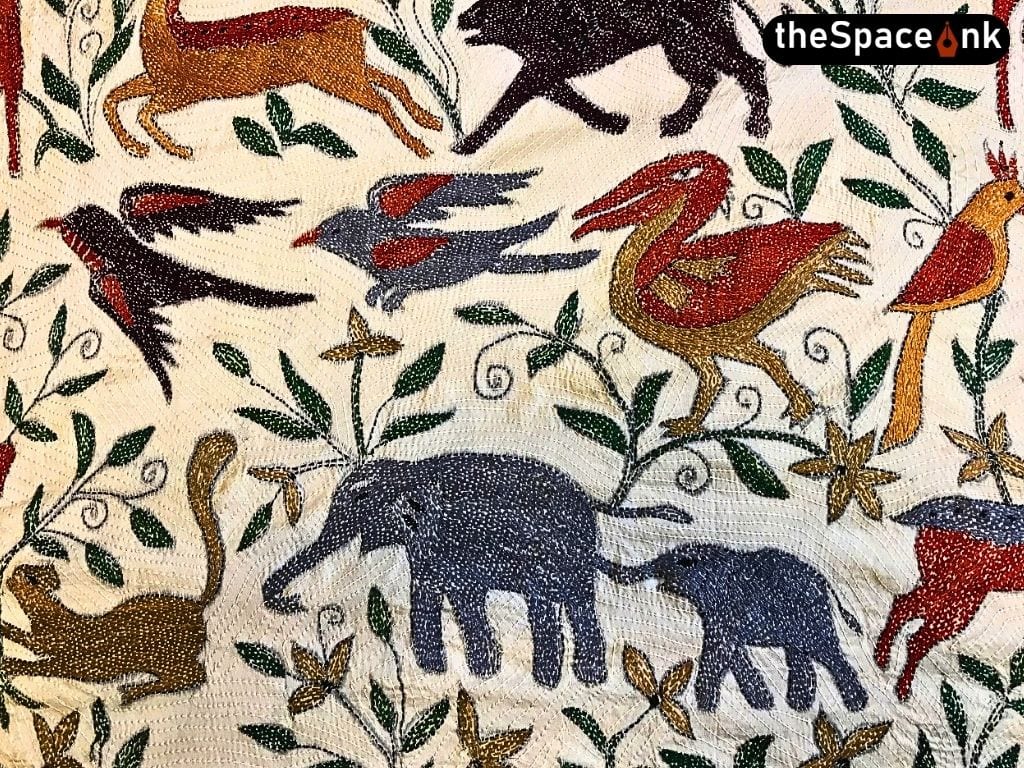
The crocheted dress an aunt had stitched for you. The unusual embroidery on your dress pocket. The fabric chosen after three trips to New Market. The absolute certainty that no one else at the pandal would be wearing exactly what you were wearing.
The pandals certainly became better dressed.
But they also became more uniform.
And somewhere between the tailor’s measuring tape and the branded shopping bag, Pujo fashion stopped being made for us, and started being bought by all of us.
Image Courtesy: Wikimedia Commons, Wikimedia Commons, Wikimedia Commons, cgtrader, AI

Reshom Majumdar has spent decades in advertising across Asia and Europe, trying to sell everything from tech to biryani.
She's a devoted follower of pop culture and moonlights as a guest columnist, turning coffee orders, curry politics and expat quirks into little essays.
Scratch the marketing polish, though, and you'll find a Calcutta "para" girl at heart, still writing about the fictional neighbourhood she never really left.