

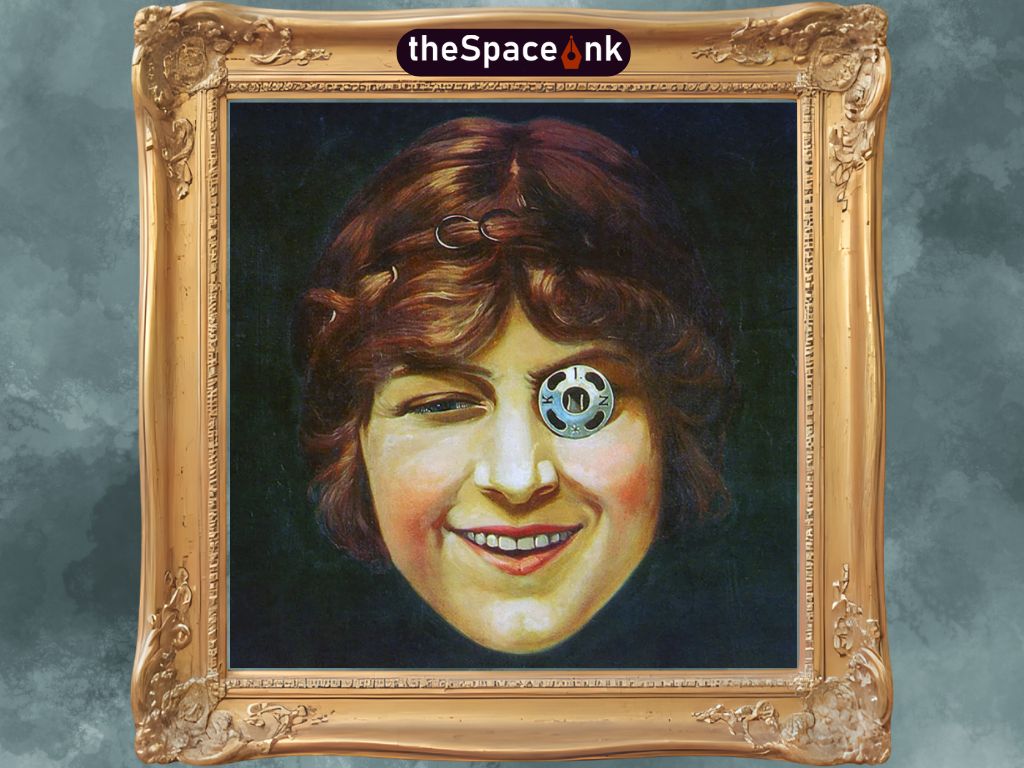
Hidden ‘Kohinoor’ in the Heart of Prague
Every city carries its own contradictions. Prague, the capital of the Czech Republic, is no exception. A city that has seen wars, occupations, broken empires, and brave uprisings. Prague stands today like a medieval castle-stone with socialist grey and modern glass.
For decades, we have demanded the return of our Kohinoor. It remains locked behind glass vault in the Tower of London — heavy with symbolism, history, and unresolved justice.
One of Prague’s everyday marvels is its public transport. Buy a monthly pass, and you become tier one privileged. Trams, buses, metros — all dash to a timetable, all of them are for you. The real soul of Prague, however, lives in its trams. Like Mumbai’s local trains or Kolkata’s beloved Metro, the tram network stitches the entire city together except for a tiny part of the Old Town.
Some time back, while living in Prague for a short research stay, I was sitting inside a tram, going to pick up some books I had ordered, half-dozing, half-watching the city slide past. Suddenly, a word cut through the Czech announcements like a desi drumbeat:
Also Read: The Tree that Grants Wishes: Legend of the Kalpataru
“Koh-i-Noor.”
I sat up straight.
Did I hear it right? Kohinoor — as in our Kohinoor? The diamond of legends, wars, greed, and imperial guilt?
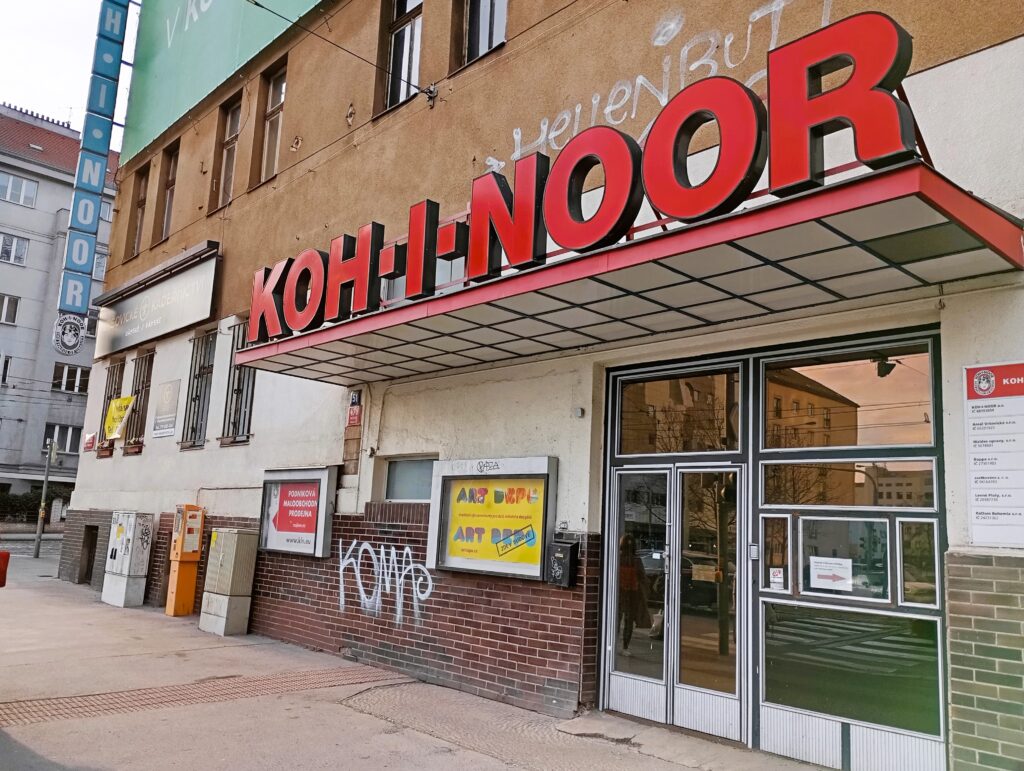
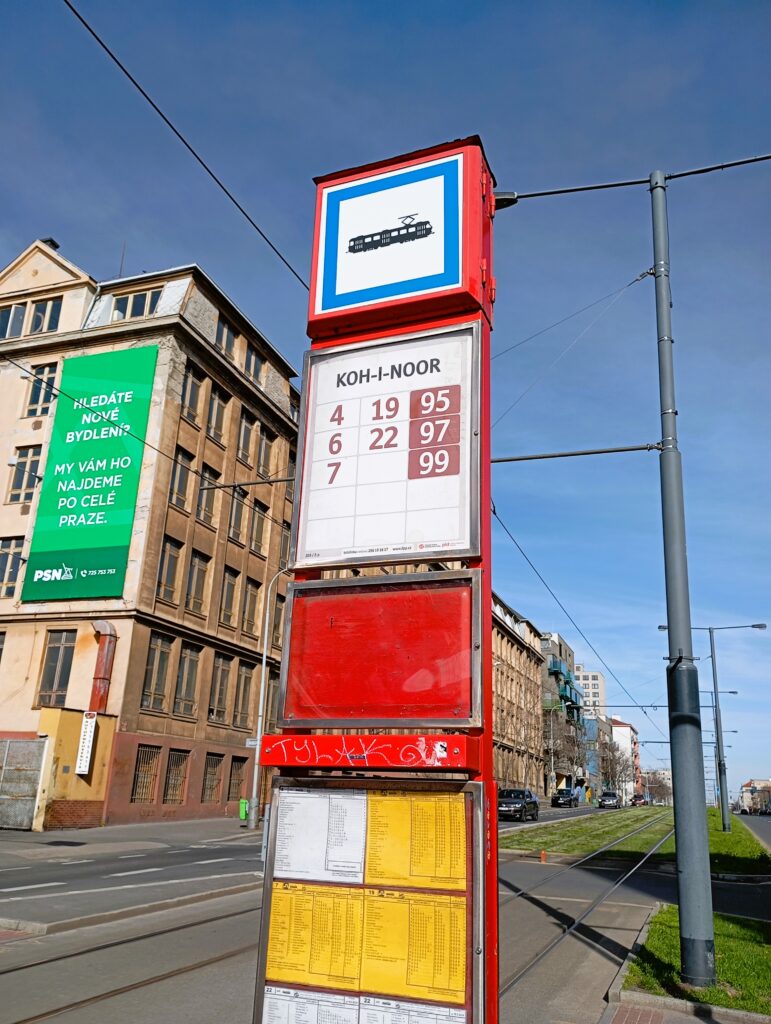
The digital display confirmed it. The next stop: Koh-i-Noor.
Books could wait. History was calling. I had to get off the tram then and there.
A Diamond Made of Buttons
The neighbourhood was calm, slightly worn, quietly dignified. Old brick houses, factory buildings, streets that whispered stories of industry, struggle, and survival. This was Vršovice — a district carrying the memory of the Second World War and the resilience of Czech manufacturing.
But what did Kohinoor have to do with all this?
The answer, I soon discovered, lay not in diamonds, but in buttons.
In 1902, two entrepreneurs — Jindřich Waldes and Hynek Puc — established a small factory here, producing haberdashery: needles, threads, safety pins, zippers. Their star invention was the snap fastener, what we casually call the press button.
Kupka, one of the pioneers of abstract art and Orphism, was moving rapidly toward pure abstraction at the time. Yet this painting stands as a bridge between realism and modern graphic design, decades before pop-art was discussed.
Waldes was not just an industrialist; he was a born storyteller and branding wizard. Waldes wanted his tiny button to become the “diamond of garments.” And so, boldly, he named his brand Koh-i-Noor.
Then came the logo.
During a voyage to America, an actress named Elisabeth Coyens playfully lifted one of Waldes’ oversized sample buttons and held it to her eye like a monocle. Waldes instantly saw magic. That playful moment became immortal.
He asked his close friend, the great Czech painter František Kupka, to paint the image.
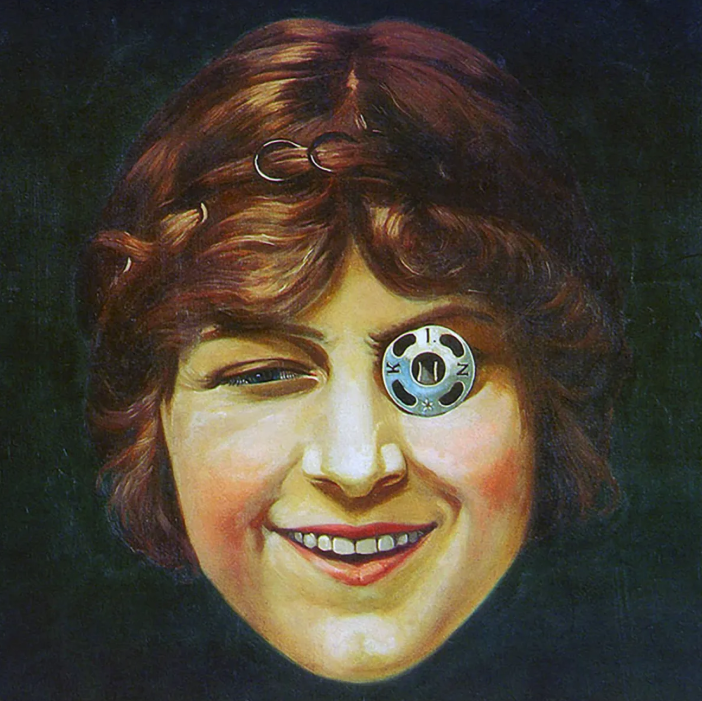
The result — Girl with a Koh-i-Noor Fastener (1912) — became one of the most iconic commercial artworks of the 20th century. The girl’s mischievous gaze, the tiny button, the half-smile — it was a genius bit of advertising.
Kupka, one of the pioneers of abstract art and Orphism, was moving rapidly toward pure abstraction at the time. Yet this painting stands as a bridge between realism and modern graphic design, decades before pop-art was discussed.
Today, Kupka’s abstract canvases sell for millions. But in Prague, his most loved “model” remains that smiling girl with a button. Not a bad afterlife for a humble fastener.
The Dark Side of History
But history rarely allows uninterrupted success.
The Waldes family was Jewish. When Nazi Germany invaded Czechoslovakia in 1939, their factory was confiscated. Jindřich Waldes, despite having escape routes, chose to stay back.
He was arrested and sent to the Buchenwald concentration camp.
His family managed to gather a staggering ransom of $250,000 — a fortune at that time — to buy his freedom. He was released and began his journey toward America. Tragically, he fell gravely ill during transit and died in Havana in 1941. Freedom was purchased but never reached.
After the war, the factory was nationalized under communist rule. Decades later, Waldes’ granddaughter Jiřina Nováková fought a long legal battle to reclaim her family legacy, including Kupka’s legendary painting. Victory came slowly, partially, imperfectly — as justice often does.
Yet the Koh-i-Noor spirit survived.
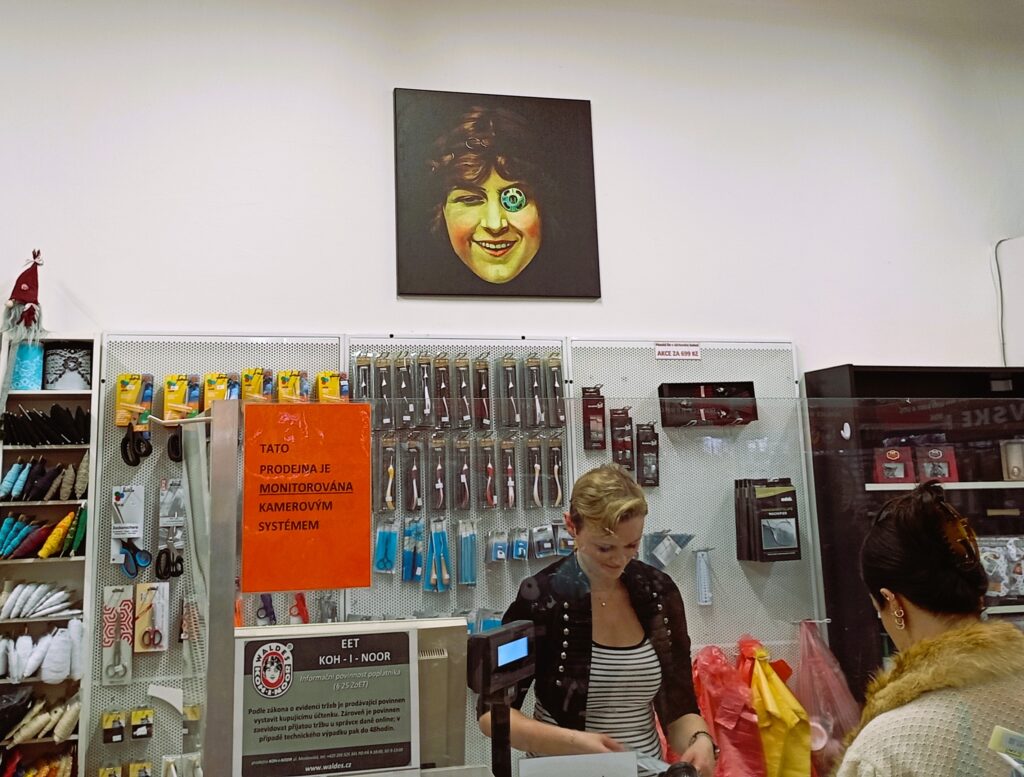
Near the old factory, I stumbled upon a tiny shop selling threads, zippers, and sewing tools. On the wall hung a reproduction of the famous painting. No museum lighting. No plaque. Just quiet dignity.
Sometimes heritage survives best in ordinary places.
The Pencil in Your Pocket
While wandering through Czech industrial history, I discovered there is another Kohinoor — and this one is likely sitting on your desk.
Koh-i-Noor Hardtmuth, the legendary pencil company.
In 1889, they launched the legendary 1500 series — painted bright yellow to signal premium quality. It became such a sensation that nearly every pencil manufacturer copied the colour.
Before the 1800s, pencils were luxury items made from pure graphite — rare and expensive. Then Joseph Hardtmuth cracked a revolutionary formula: powdered graphite mixed with clay, fired in a kiln. This allowed pencils of varying hardness and mass production.
His grandson Franz Hardtmuth refined the system and created the grading scale still used worldwide: H for Hard (and for Hardtmuth), B for Black/Soft (and for Budweis, their factory town), and F for Firm (and for Franz himself, modestly sneaking into history).
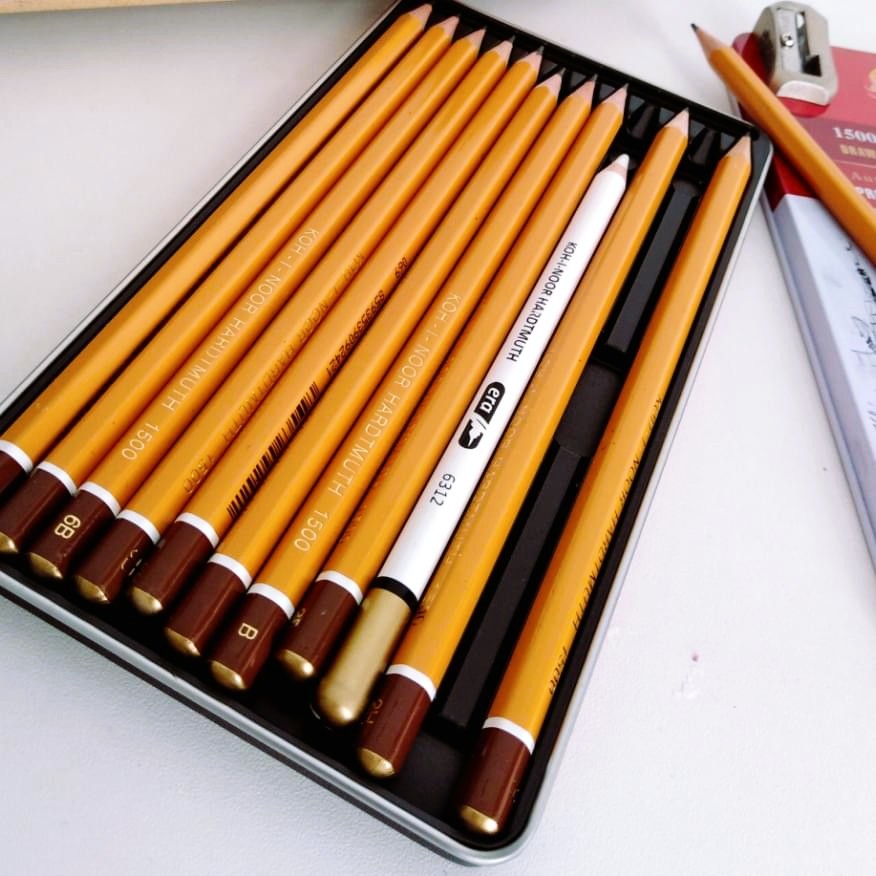
In 1889, they launched the legendary 1500 series — painted bright yellow to signal premium quality. It became such a sensation that nearly every pencil manufacturer copied the colour.
So yes, if you’ve ever used a yellow HB pencil, you are unknowingly paying tribute to a Czech chemist. So, Koh-i-Noor, through a small invention, lives on in a massive legacy.
A Memory and a Longing
Standing beneath the Koh-i-Noor tram stop sign, I couldn’t help drifting back to India.
For decades, we have demanded the return of our Kohinoor. It remains locked behind glass vault in the Tower of London — heavy with symbolism, history, and unresolved justice.
Watching how Jiřina Nováková fought relentlessly for her family’s Kohinoor made me wonder: do we, as a nation, carry that same stubborn persistence? Or have we learned to live with loss too comfortably?
In Prague, Koh-i-Noor stands for resilience, industry, art, and survival. In India, it still stands for memory and longing. If one day our own Kohinoor returns — not just as a jewel, but as restored dignity.
Also Read: The Disappearance of Agatha Christie: A Mystery more Intriguing Than Her Novels
Until then, Prague’s tram stop quietly carries its name, reminding me that sometimes the deepest histories hide inside the smallest objects — a button, a pencil, a word overheard in a foreign tram.
And suddenly, a city becomes a story — where we had our name stitched and marked.
Image Courtesy: Author, KOH-I-NOOR HARDTMUTH, Arthur

Pijus Ash is a freelance journalist with over two decades of experience. An avid reader by nature, he likes to pursue independent research. In addition to his passion for reading, Pijus enjoys traveling and frequently embarks on backpacking.


One Response
You are jast awesome