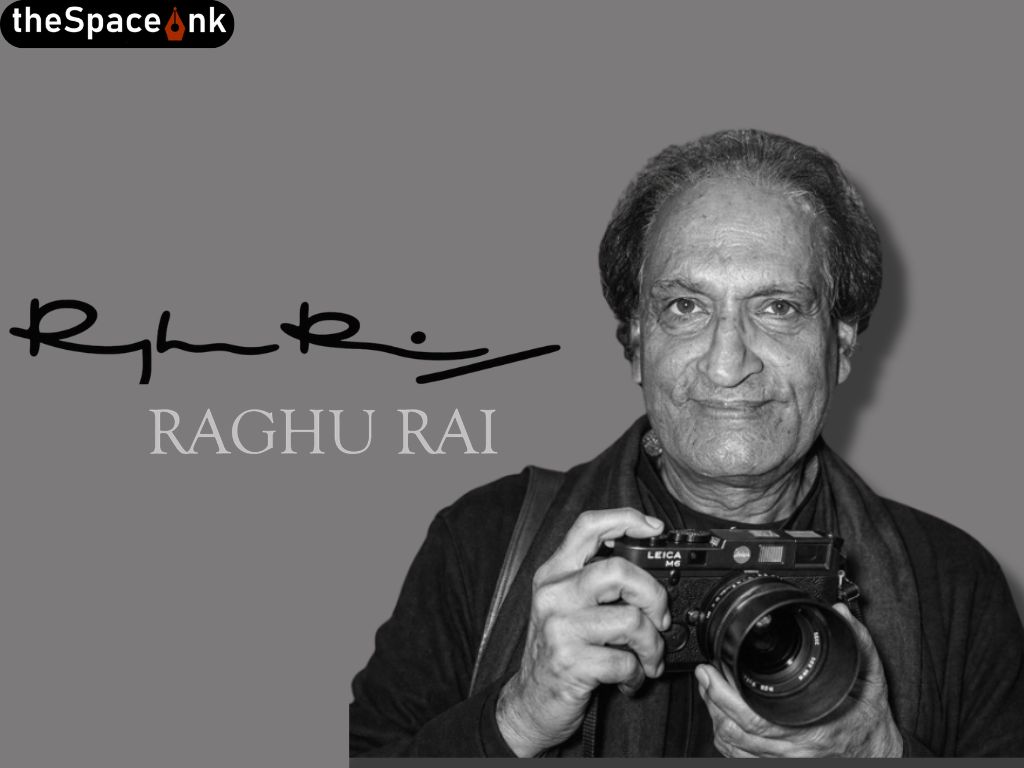
Tribute to Raghu Rai
Raghu Rai
December 18, 1942 – April 26, 2026
Padma Shri, 1972
Officier des Arts et des Lettres, France, 2009
Member, Magnum Photos
(nominated by Henri Cartier-Bresson)
Raghu Rai, one of India’s greatest photojournalists and a member of Magnum Photos, whose unflinching documentation of the 1984 Bhopal gas disaster became the most sustained visual record of the worst industrial crime in history, died on Sunday morning, April 26th, in New Delhi. He was eighty-three. He is survived by his wife, Gurmeet, his son Nitin, and three daughters — and an archive that will outlast every legal settlement, every corporate press release, and every attempt by time and institutional amnesia to reduce Bhopal to a footnote.
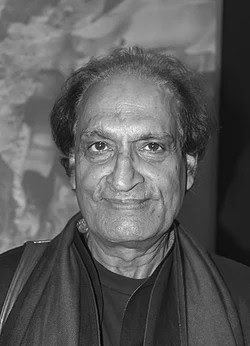
Social media was filled with tributes within hours. By tomorrow, something louder will arrive, and the tributes will be buried. This is the condition of our attention now: twenty-four-hour live streaming, wall-to-wall breaking news, and yet the actual work of the photojournalist — the months in the field, the returning, the years of insisting on a story the news cycle has already abandoned — remains almost entirely invisible to the public it serves. We know what photojournalism produces. We almost never see what it costs.
Also Read: A Life Well-Lived: Alice Munro (1931-2024)
We learn about that cost, when we learn about it at all, from cinema and documentaries. The Bang Bang Club (2010) reconstructed the South African photographers who documented the final years of apartheid and paid with trauma — Kevin Carter paid with his life. The Killing Fields (1984) showed us Dith Pran, the Cambodian photographer who went to document a catastrophe and became absorbed into it.
Minamata (2020) followed W. Eugene Smith into the mercury-poisoned Japanese fishing community he photographed and was eventually beaten within. A Private War (2018) traced Marie Colvin’s compulsion to return to the front, again and again, until it killed her. And Lee (2023), with Kate Winslet as Lee Miller — the Surrealist-turned-war-correspondent who walked into Dachau in 1945 and never entirely walked back out.
Documentaries have pressed further still. War Photographer (2001) stayed close to James Nachtwey in the field. McCullin (2012) excavated Don McCullin’s five decades of war photography and its interior cost. The Salt of the Earth (2014) sat with Sebastião Salgado as he reckoned with what it meant to have spent a career at the extremities of human suffering.
India makes more films than any country on earth. There is not a single major Indian film or documentary that treats its photojournalists the way these works treat theirs. When Raghu Rai dies, we get a day of Instagram tributes. We do not get the film. We do not get the full account of what it meant to drive to Bhopal in December 1984 with a camera while people were still dying in the streets, or what it meant to go back in 2001 and 2002, eighteen years later, when no editor was calling, because the story was not finished.
Rai’s photographs were already inside me by then, doing their slow work of conscience-formation. This is what serious photojournalism does: it transfers a portion of the witness’s knowledge to the viewer. Not all of it — you cannot fully know what Rai knew, standing in those streets. But enough that ignorance is no longer a comfortable option.
It was Henri Cartier-Bresson — the French master who gave the world the concept of the decisive moment, that sliver of time when form and meaning align into something irreducible — who saw in Rai a kindred sensibility and personally nominated him to Magnum Photos, the most prestigious collective in the history of the medium.
Theirs was a relationship of genuine artistic recognition across cultures: Cartier-Bresson, who had photographed India himself and understood its visual complexity, identified in Rai not merely technical excellence but the rarer quality of moral seriousness — the conviction that a photograph is not decoration but testimony. To be chosen by Cartier-Bresson was to be handed a particular inheritance, and Rai carried it faithfully, and then surpassed it on his own terms.
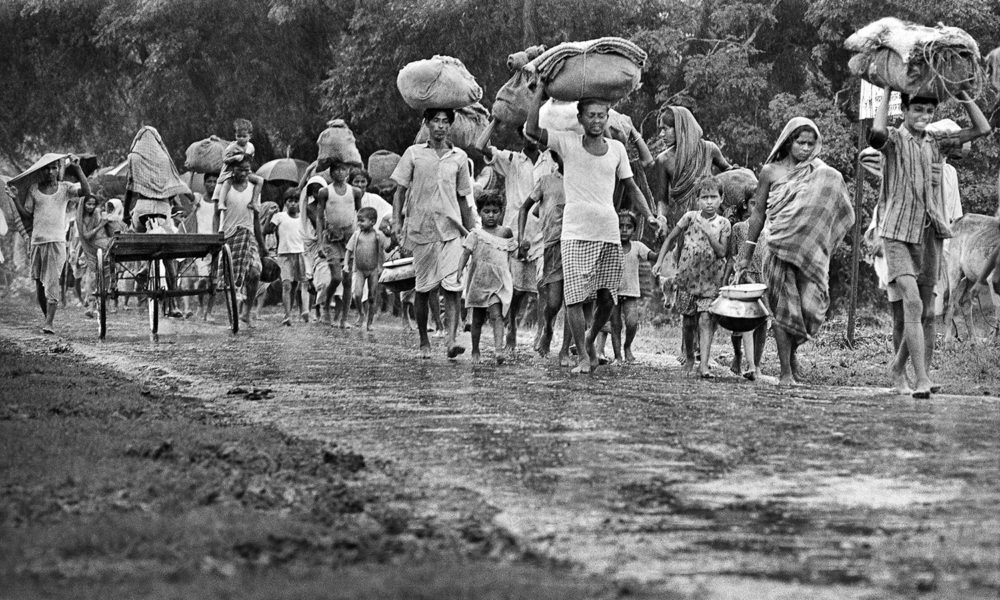
His formation as a photojournalist began with another chapter of subcontinental catastrophe. In 1971, he was in East Pakistan — soon to become Bangladesh — documenting the war of independence: the genocide, the displacement of millions, the birth of a nation out of extraordinary violence and extraordinary courage. His images from that war remain among the most important visual records of Bangladesh’s founding. He received the Padma Shri the following year — recognition that came fast, because what he had made was undeniable. But he already understood that an award is not an ending. It is the beginning of the next obligation.
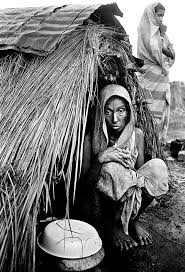
Bhopal became his longest and most tenacious story. On the night of December 2, 1984, forty tonnes of methyl isocyanate escaped the Union Carbide pesticide plant and moved through sleeping neighbourhoods without sound or colour. People woke choking, ran, and many ran until they ran into the earth. By the most careful estimates, twenty-five thousand died. The true number is larger. Rai reached Bhopal almost immediately — and then, crucially, he kept going back.
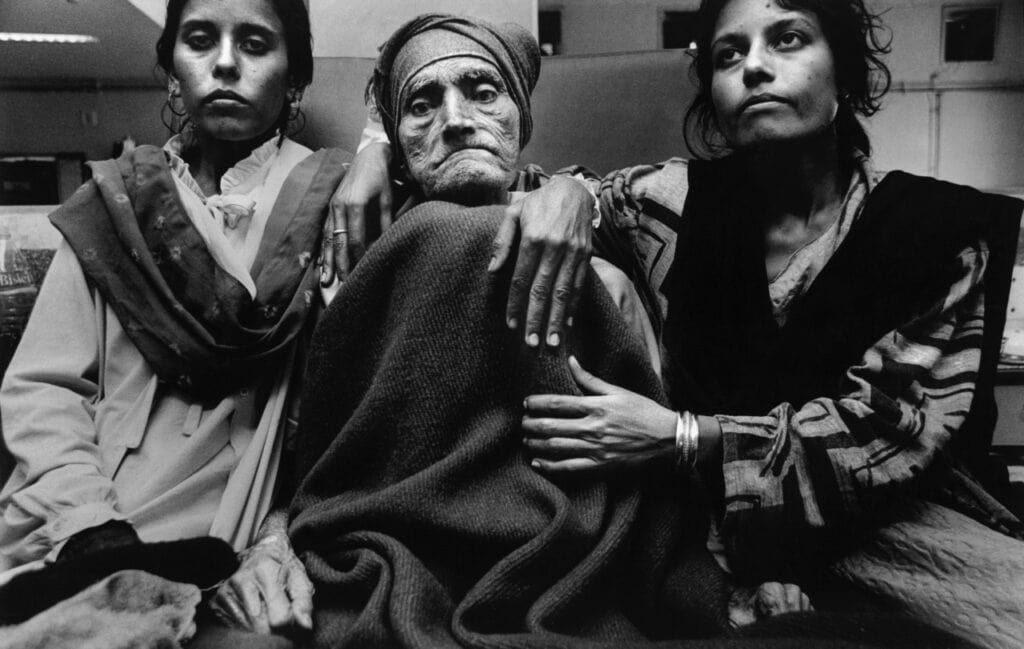
Hasan Ali, 70 years old, is a victim of the gas disaster. He suffers from multiple disorders. His seven grown-up daughters say that their education and marriages have suffered heavily from their father’s illness.
The Magnum archive of his Bhopal project, titled with prosecutorial precision Exposure: Portrait of a Corporate Crime, spans 1984, 2001, and 2002. In the later photographs, the captions carry names. Hasan Ali, seventy, whose seven daughters could not be educated or married because of their father’s chronic gas-related illness. Mohammad Rehan, eighteen, who had undergone two heart surgeries since being exposed to the gas at age one. Rubeda Banu and her three sons, all shorter than their age should allow, because 1984 is still present inside their bodies. Nanko, seventy-six, once self-sufficient, now a beggar.
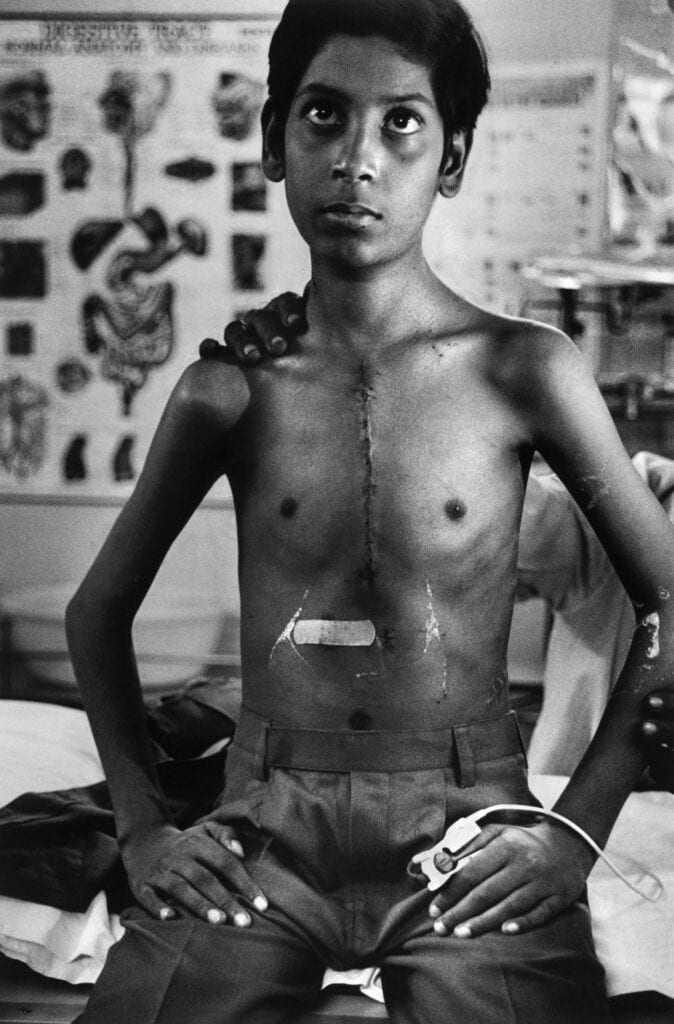
Mohammad Rehan, 18 years old, was one year old when he was exposed to the toxic gas. Since then, he has undergone two heart surgeries, and doctors say his lungs are severely damaged.
These are not symbols. They are people — specific names, specific ages, specific wounds. Rai understood that the caption is part of the photograph: to name someone is a political act, because the named can no longer be absorbed into a casualty figure. He was not making art in Bhopal, though art is what it became by the force of truth. He was building a case.
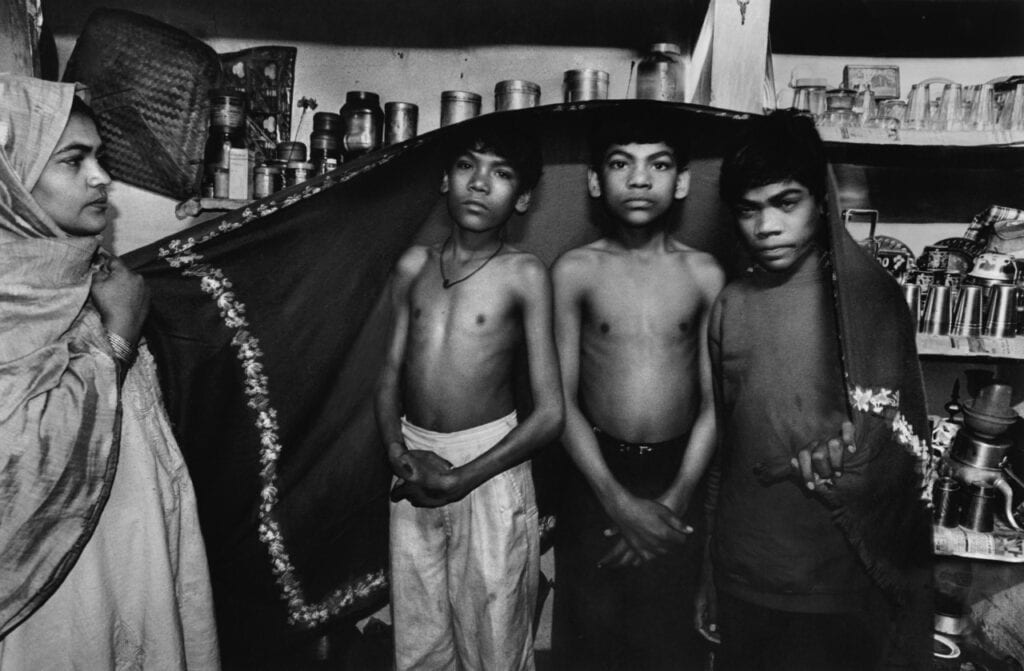
Rubeda Banu with her three sons. At the moment of the disaster, the two older boys were a week and 18 months old. The youngest was born one year after the disaster. They are all less than five feet tall.
Justice for Bhopal was not fair. Union Carbide’s management fled. The American CEO never appeared in an Indian court. The eventual settlement — $470 million divided among hundreds of thousands of claimants — amounted to sums so small they were closer to insult than restitution. The plant site remained contaminated for decades. But without Rai’s eighteen years of returning, without the visual evidence he built and kept building, even that inadequate compensation would have come later, or not at all. Photographs are evidence. They are the record that survives when official accounts are managed and corporate memory is strategically impaired.
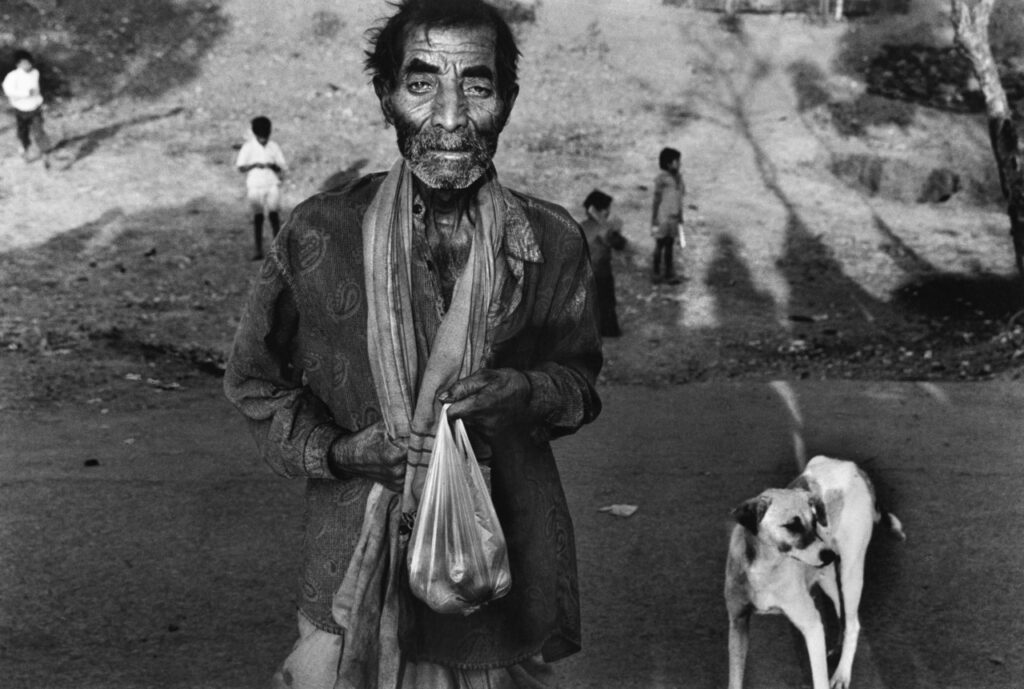
Until the 2nd December 1984, Nanko, now 76 years old, was independent and able to provide for his family. Since the disaster, he has become a beggar.
I was in school, a young mind, when those first photographs arrived on newsprint — a child’s eyes, open, asking a question I have spent forty years trying to answer. I am not a photojournalist. I am a writer, and an amateur photographer who works the streets of Manhattan in black and white, capturing moments that are not staged and cannot be repeated. I once taught at a university in Dunbar, West Virginia, beside a Union Carbide plant, where emergency chemical drills were a fact of campus life — and Bhopal was present to me every single day, because that campus had protocols the people of Bhopal never had.
Also Read: Woodland Still Life: Discovering Abraham Mignon of the Golden Dutch Era
Rai’s photographs were already inside me by then, doing their slow work of conscience-formation. This is what serious photojournalism does: it transfers a portion of the witness’s knowledge to the viewer. Not all of it — you cannot fully know what Rai knew, standing in those streets. But enough that ignorance is no longer a comfortable option.
Rahul Gandhi, a prominent Indian political leader, said on the morning of Rai’s death that “he had not merely taken photographs – he had preserved the nation’s memory.”
Special Thanks and Courtesy to
Image Courtesy: Raghu Rai Foundation, Wikipedia, Magnum Photos, Cover image generated by AI
All Rights Reserved

Mousumi was raised in Kolkata but now call New York her home. She pursued her PhD from Indiana University Bloomington and currently works as a Marketing & Consumer Data and Design Analytics professional. She is Co-founder and Director at MDRK Partners. She loves to read, cook, take photos on her phone and travel.