

Paro: A Handicraft Haven
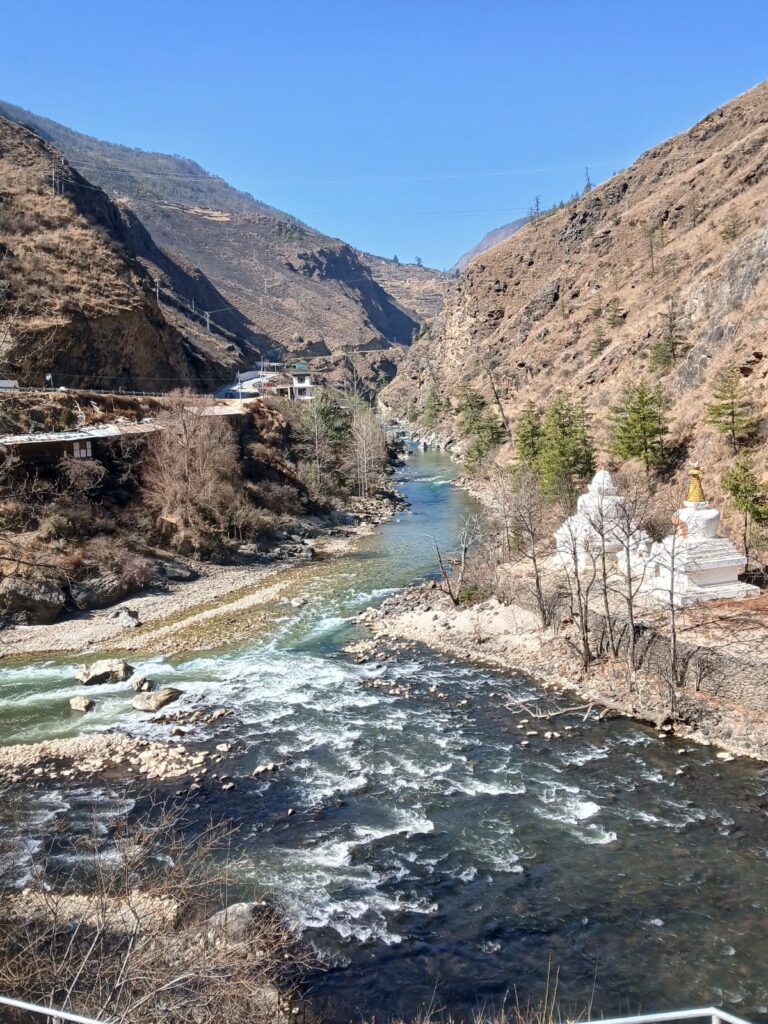
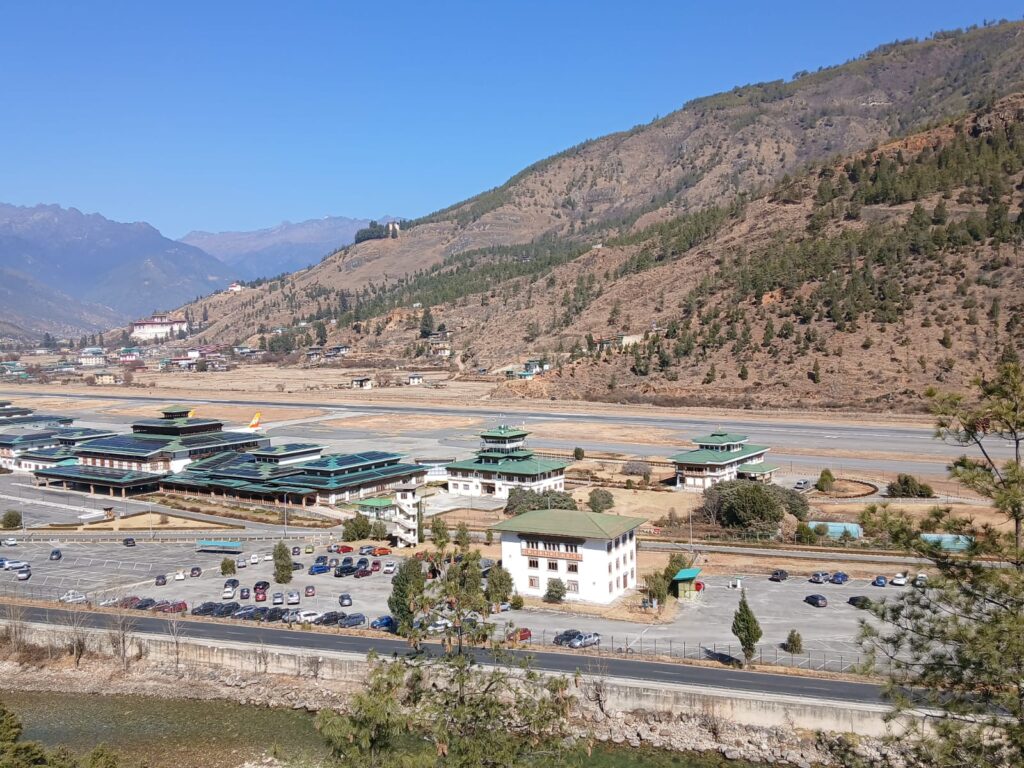
A short drive in our Hyundai Sanafee brought us to Paro, stopping briefly at the confluence of the Paro and Thimphu rivers and later viewing the famous Paro Airport, renowned for its narrow runway and challenging terrain.
Also Read: Blissful Bhutan: A Himalayan Secret – Part 1
Lunch was Kewa Datshi, potatoes in cheese curry. Decent, but no match for Ema Datshi.
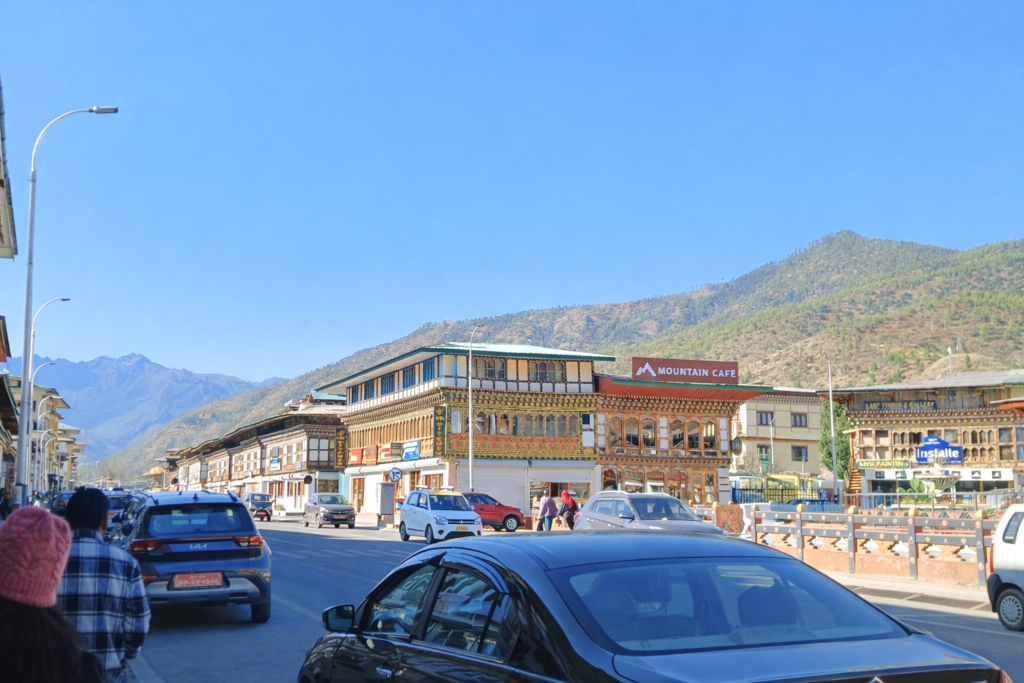
After checking into our centrally located hotel, my parents and I explored Paro’s compact downtown—two parallel, walkable streets lined with cafés, grocery stores, restaurants, and a plethora of handicraft shops selling both authentic and imported souvenirs.
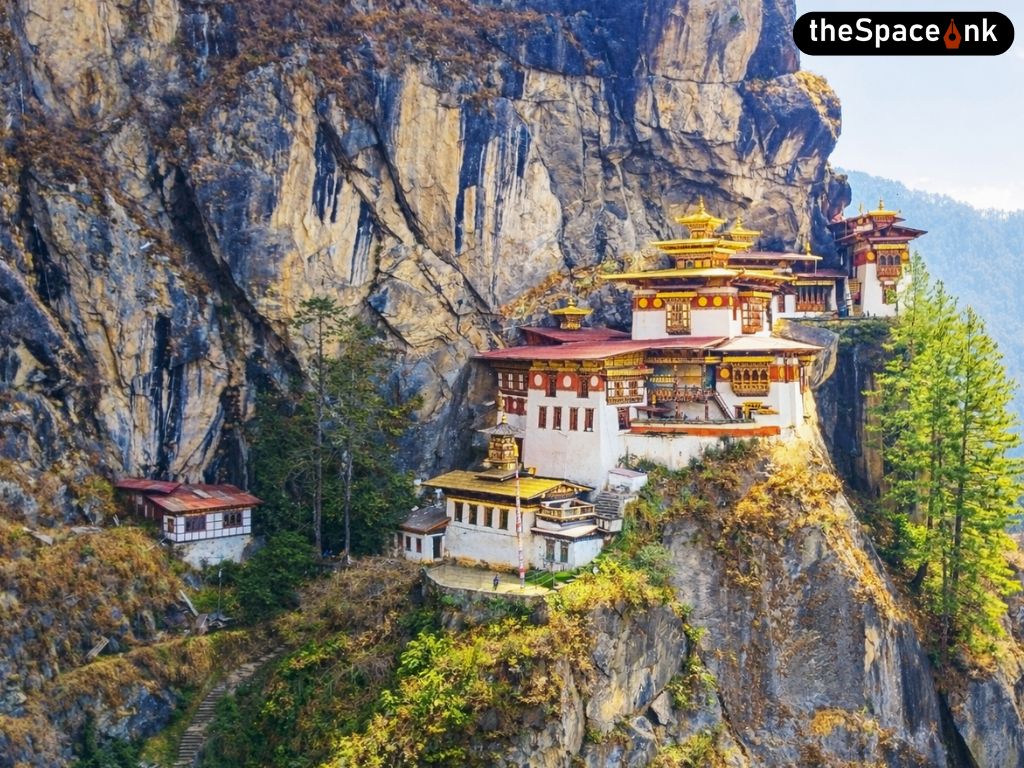
Conquering the Tiger’s Nest: Once in a Lifetime Memory!
While my parents explored Paro’s local sightseeing at leisure, my Guide, Yenten, and I left for Tiger’s Nest/Taktshang’s base at around 7:50 AM in freezing weather. We started our ascent at around 8:15, of course I had to rent a bamboo walking stick. Ponies are available as well for hiking till the first half of the hike; however, I didn’t avail it as it’s risky.
The first half of the hike till the cafeteria was extremely steep and difficult. The first half till the cafeteria was brutally steep, dusty steps, sharp bends, and thin air. Being off-season, there were fewer tourists but many locals on pilgrimage, some carrying children and heavy offerings. The temperature hovered around 8°C. The cold gradually gave way to an unforgiving sun, testing both stamina and patience.
What Bhutan taught me is this: slow living is beautiful, but economic sustainability matters. During the off-season, tourism workers return to their villages. Even our guide politely declined working beyond 9–5. While Gross National Happiness works for a small population, it cannot be the sole measure of economic health. Rising import costs burden locals, and long-term reliance on aid is unsustainable. Still, policies like free education and healthcare deserve admiration.
Upon reaching the cafeteria, we took a short break for the restroom, and I bought a bottle of lemonade. Mr. Yenten had a cup of tea. Then we headed for some more steep climbing to reach the viewpoint. After having asked innumerable “How much more?” to Yenten, and taking short-sitting-breaks, I had decided I’ll be shallow, take some pictures for Instagram upon reaching the viewpoint and head back.
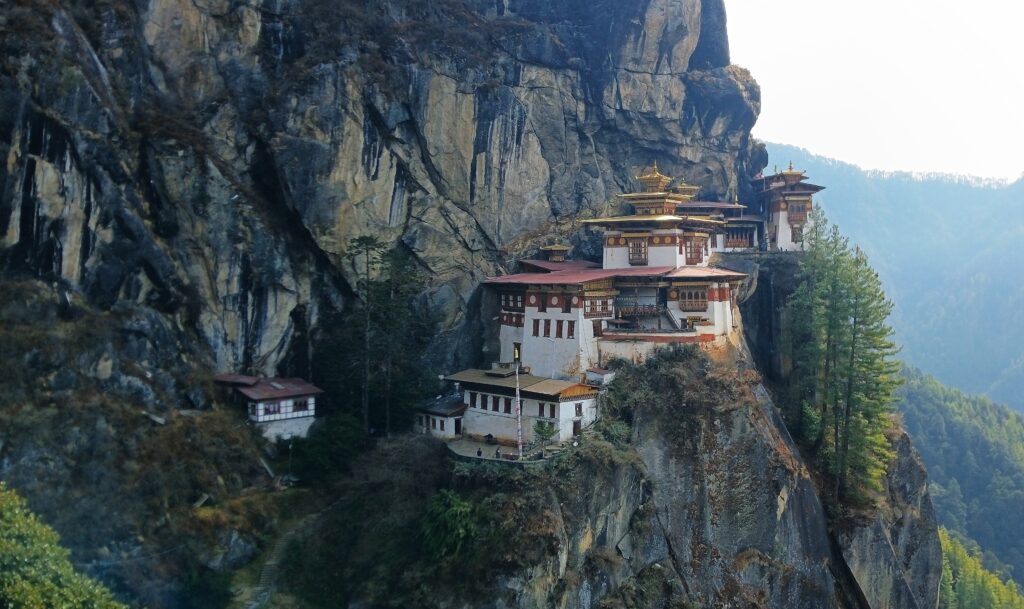
On the way, I spoke with some Indian and Bangladeshi tourists, all in almost the same breathless conditions. It was the white people who were at par with the locals in speed and stamina. Once I reached the viewpoint, I was so mesmerised by the sight of the temple and the view atop the hill, I gained some more willpower and decided to take on 300 more rocky steps, about 45 minutes more to the top.
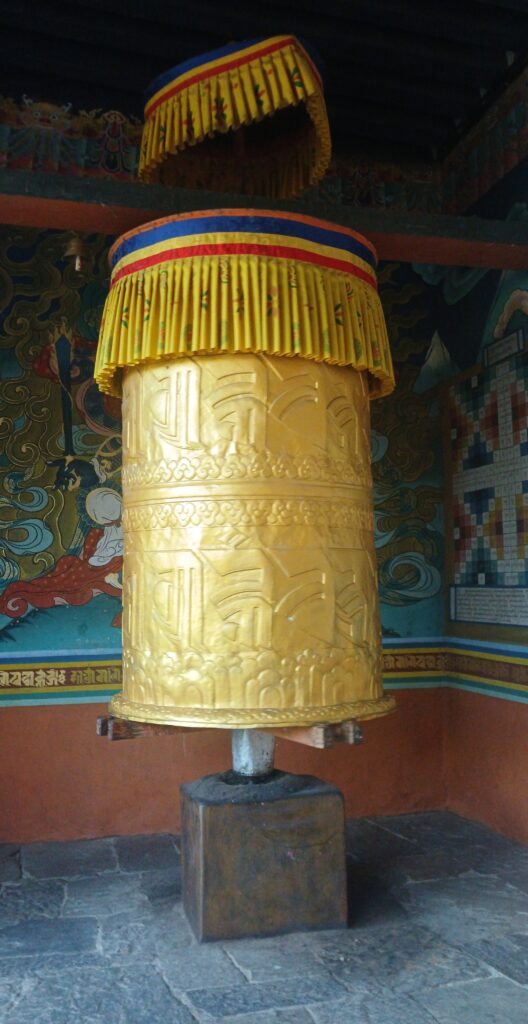
The final stretch, shaded and icy cold, led to the temple complex. Phones and bags were deposited; shoes removed. Climbing freezing stone steps in woollen socks, I entered multiple shrine rooms housing golden statues of Guru Rinpoche and various Buddhas. Legend says Guru Rinpoche arrived here on the back of a tigress and meditated for 3 years, 3 months, 3 days, and 3 hours, making it the holiest site in Bhutan, Paro Taktsang, the “Tiger’s Lair.”
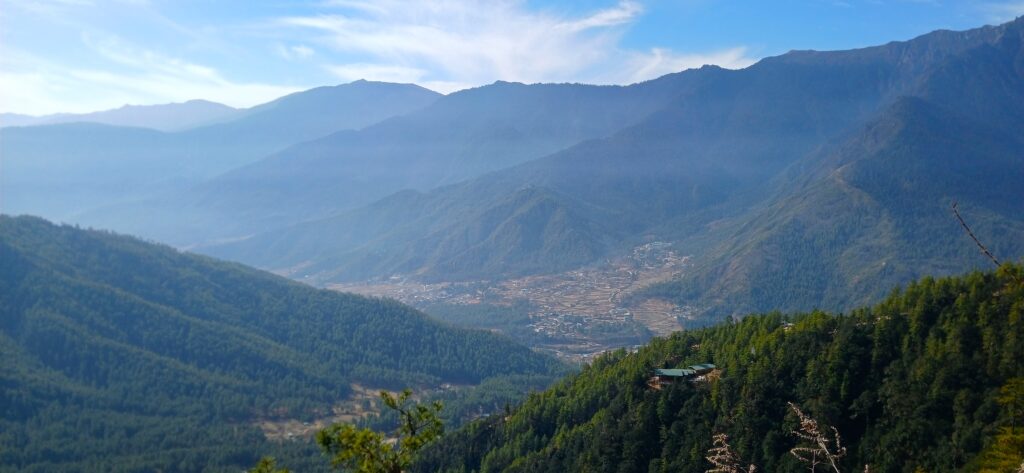
Though I am not a practising Buddhist, the place stirred something profound, whether spiritual or the sheer triumph of mind over body, I cannot say. Perhaps both.
My ascent took 3 hours 45 minutes, including breaks. I spent about 30 minutes at the top and descended in 1 hour 45 minutes, moving almost non-stop like a mountain goat.
Kadrin Chhe La Druk: Thank you, Bhutan
What Bhutan ultimately offers is perspective. Life here moves slowly. Perhaps too slowly. Bhutan is still cocooned away from the rest of the world – two examples being the rule of seat belts were introduced, but since people were not happy with it, the rule was lifted; and, no animals are cut inside the country, hence all non-veg food items are imported.
Yet, Bhutan is very much in touch with the affairs of India and rightly so because of the bilateral relations. Almost all stores play Bollywood music, almost all people know and speak Hindi, Indian rupees are accepted everywhere, and many students migrate to India for studies. India too has a stronghold over the external affairs and even to some extent the defence policies of Bhutan, more so because of the imminent threat from a neighbouring giant.
What Bhutan taught me is this: slow living is beautiful, but economic sustainability matters. During the off-season, tourism workers return to their villages. Even our guide politely declined working beyond 9–5. While Gross National Happiness works for a small population, it cannot be the sole measure of economic health. Rising import costs burden locals, and long-term reliance on aid is unsustainable. Still, policies like free education and healthcare deserve admiration.
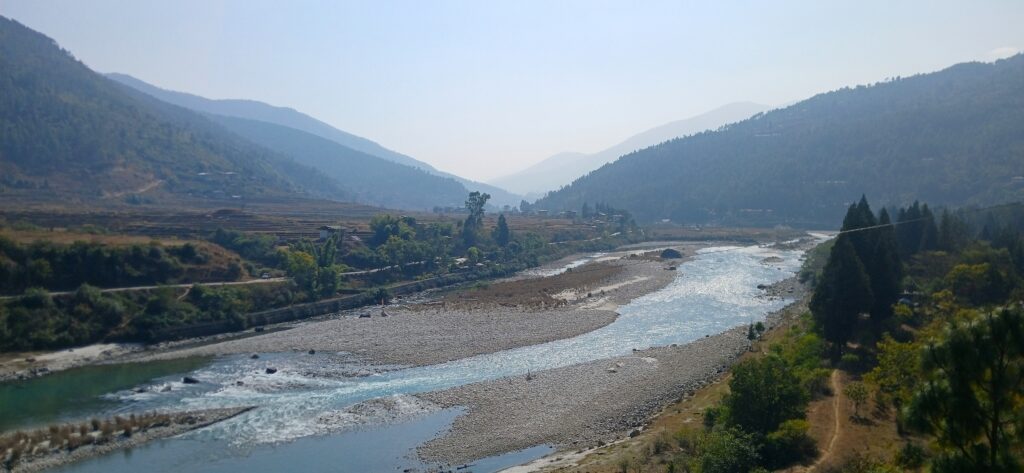
Despite my critiques, Bhutan has succeeded in resisting homogenised modernity. Its isolation preserves its unique soul. It remains a well-kept Himalayan secret: raw, untouched, underrated, and magical.
Thanks to Bhutan, I could escape into the lap of nature and the peace of Buddhism in a much-needed long-weekend gateway. My eyes have been blessed by the beauty of nature, and the mastery of the pagodas, and my lungs have been purified by the clean air. Fewer tourists in winter were a blessing. And while I looked comically layered in woollens, I cherished every moment of the cold in a country that dares to live differently, even if imperfectly.
Image Courtesy: Author

Aradhita Banerjee is an Advocate, practicing primarily at the Calcutta High Court. She has pursued law from Symbiosis Law School, Pune, after completing her under graduation in Political Science (Hons) from St. Xavier's College, Kolkata. She hails from a musical Bengali family in Kolkata. When she is not delving into legal texts, she is exploring new destinations, reading new books, and appreciating cinema and fine arts.

3 Responses
Storytelling for what is already beautiful
Reading your short escapade rivets the traveller’s spirit, transporting the reader into Bhutan’s gentle effervescence and abundant tranquility.
Brilliant travelogue. Keep writing more about your journeys. Please share your next.