Memories of Poila Boisakh
Two weeks before Poila Boisakh, frenzied activities would begin at home. Scrubbing, cleaning and decorating our home topped the list of things to do; the kitchen was the first to receive the treatment… old and broken utensils and containers were discarded, the gas stove cleaned to sparkling brightness, while the clay chulha received a new look with a fresh clay cover. Once it sparkled to my mother’s satisfaction, preparation of delectable Bengali delicacies started, both savoury and sweet… jibey goja, kucho nimki, narkeler nadu, narkeler tokhti, darbesh, bondey, and many more.

Outside the kitchen, her action began with the sewing machine, mostly post-lunch. A skilled seamstress, she stitched frocks for her daughters and pyjamas for her husband and son. Our frocks would often be embellished with colourful thread embroidery. Besides our wearables, Maa would also sew all the window and door curtains! This was after trips to the furnishing stores and the cloth merchants, from where several metres of material were purchased.

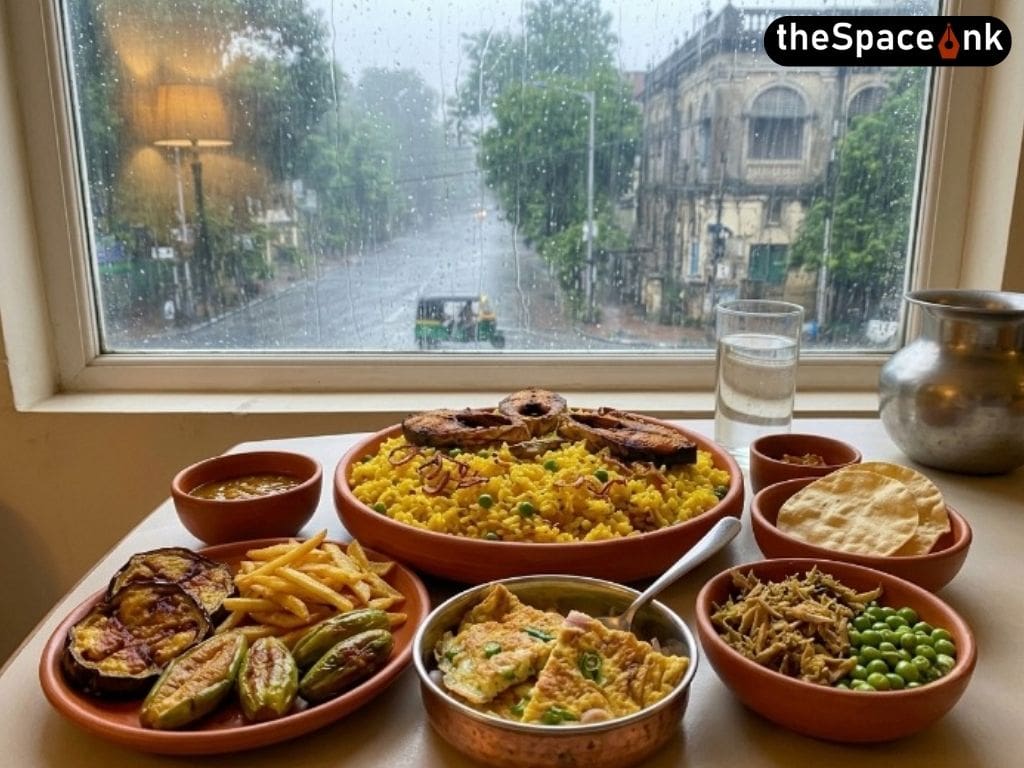
When the day arrived… the first (Poila) day of Boisakh, we had to be awake by the break of dawn to bathe, change and head for the Darbhanga Kali Mandir to pay our obeisance to Maa Kali. Those were my childhood days in Patna. No restaurant hopping or queuing up for a darshan of the Goddess. We would come back home and sit down for a lavish breakfast of phulko luchi, sada aloor tarkari, omelette, darbesh and tokhti. On Poila Boishakh, food is far more than just a festive indulgence; it is a meaningful memory laid carefully on a plate. Every dish served carried the warmth of love.

Lunch and dinner time too saw a fabulous spread… mutton for dinner was a must, as was fish for lunch. In the evening, we would change into our new clothes, sit down for tea and be served a variety of homemade savouries and sweets. But those days are gone; the little pleasures are being outsourced now. Click on an app on your smartphone, choose what you like, and all will be delivered at your doorstep… your branded clothes, breakfast, lunch and dinner. The excitement of watching food being prepared, clothes being stitched and fresh new curtains going up added a different kind of high.
Also Read: ‘Pithes and Pulis’ and All That’s Delicious!
To understand the roots of Poila Boishakh, it is imperative to study how deeply it has evolved over the years. What, as it is believed, began just as an agrarian celebration has seamlessly blended into Bengal’s rich cultural fabric and has now gained a ‘festival’ spirit, where identity, history and memory meet. The celebrations are no longer confined within the quiet four walls of our homes; they have spilled outside, as restaurants, shops and hotels up their marketing strategies to woo customers.
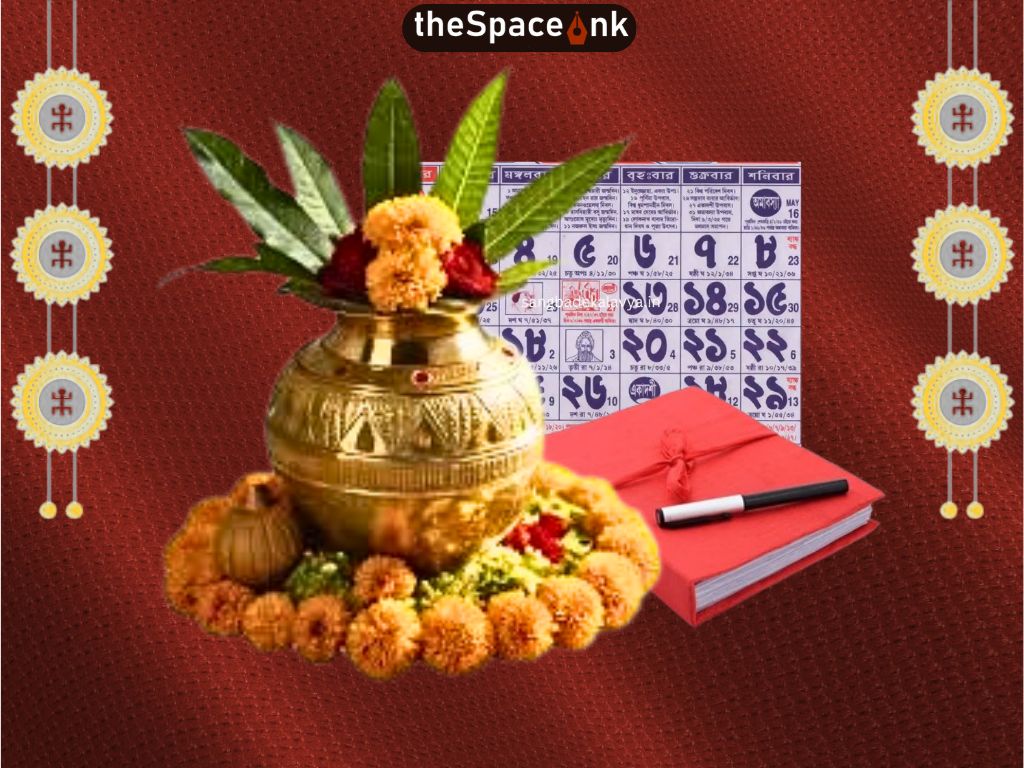
In Kolkata, the Poila Boisakh celebrations are much more overt. Jewellery stores and other top retailers send out richly designed Haal Khata (new accounts ledger) invitations to their loyal customers and wear a festive look with colourful decorations and alpanas.

In fact, Poila Boishakh is closely associated with the tradition of Haal Khata. The custom dates back to the Mughal period, when traders and shopkeepers would close the accounts of the previous year and open a new ledger for the new year.
In most Bengali homes, the day begins in the kitchen. The ladle strikes the kadhai and the new year announces itself not through words, but through the aroma wafting out of the kitchen door.
The word “haal” means current or new and “khata” means ledger. Bengali traders, merchants and businessmen consider this an auspicious occasion. Customers are invited to settle their old dues, after which a new ledger is ceremonially opened. Sweets are distributed, and prayers are offered for prosperity in the coming year. This practice is believed to have evolved from Akbar’s system of tax collection, which has continued for more than four hundred years. However, some historians trace the Bengali calendar to King Shashanka, who is believed to have introduced the Bengali era around 594 AD.

Beyond the questions of origin, Poila Boishakh has always carried the promise of renewal. It arrived with the harvest season, when the granaries were full, old accounts had been settled, and the soil stood ready for sowing. For farmers, it marked more than the turning of a page on the calendar. It was a moment to lay aside the burdens of the year gone by and step, with quiet faith, into one yet to come.
Also Read: Celebrating Hilsa: Bengal’s Favourite Fish
Over time, Poila Boishakh has come to represent not only the beginning of a new year but also the celebration of our Bengali identity. Today, the festival is observed not only in Bengal and Bangladesh but also by Bengali communities across the world. The Bengali diaspora celebrates the day with cultural programmes and traditional food.
These celebrations help preserve our heritage. Family gatherings are an essential part of Poila Boisakh celebrations… relatives come together to share a special meal consisting of traditional dishes and sweets. The meal symbolises abundance, togetherness and the hope for a prosperous year ahead. Food is central to the observation of this special and most important date on the Bengali calendar.
In Bengal, on Poila Boishakh, we do not merely witness the turning of the year… it is kneaded into dough, rolled into luchis and fried in oil, fish folded into shorshe paste and served with love. It is a feast shaped by memory! The past sits by our side like an old companion, lingering quietly through the meal, and no one asks it to leave.
In most Bengali homes, the day begins in the kitchen. The ladle strikes the kadhai and the new year announces itself not through words, but through the aroma wafting out of the kitchen door. In fact, that is how we remember the day… mothers silently moving through the rooms, their saris tied firmly, measuring mustard by instinct and salt by a knowledge older than language itself. These are the recipes that have survived in our memory, rather than in books, in spite of the pressures of today’s life.

Outside the kitchen, the house would fill with the sounds of the day… friends and relatives arriving, the laughter, the chitter-chatter, and the clinking of glasses and crockery being laid on the dining table. The visual memory too remains… all of us in new clothes, mangsho, pulao, rui maacher posto paturi, chingri maacher malai curry, begun bhaja, aamer chutney and payesh. Everything was served with love, without any price tag attached.
In Bengal, on Poila Boishakh, we do not merely witness the turning of the year… it is kneaded into dough, rolled into luchis and fried in oil, fish folded into shorshe paste and served with love. It is a feast shaped by memory! The past sits by our side like an old companion, lingering quietly through the meal, and no one asks it to leave.
Photo Courtesy: AI

Arundhati Gupta is a Kolkata-based writer, editor and communications strategist. She has contributed reviews, essays, and features in leading national, regional and online publications. In addition to her writing, she serves on the executive committee of a non-profit organisation. Outside of work, she enjoys playing scrabble and cooking.