

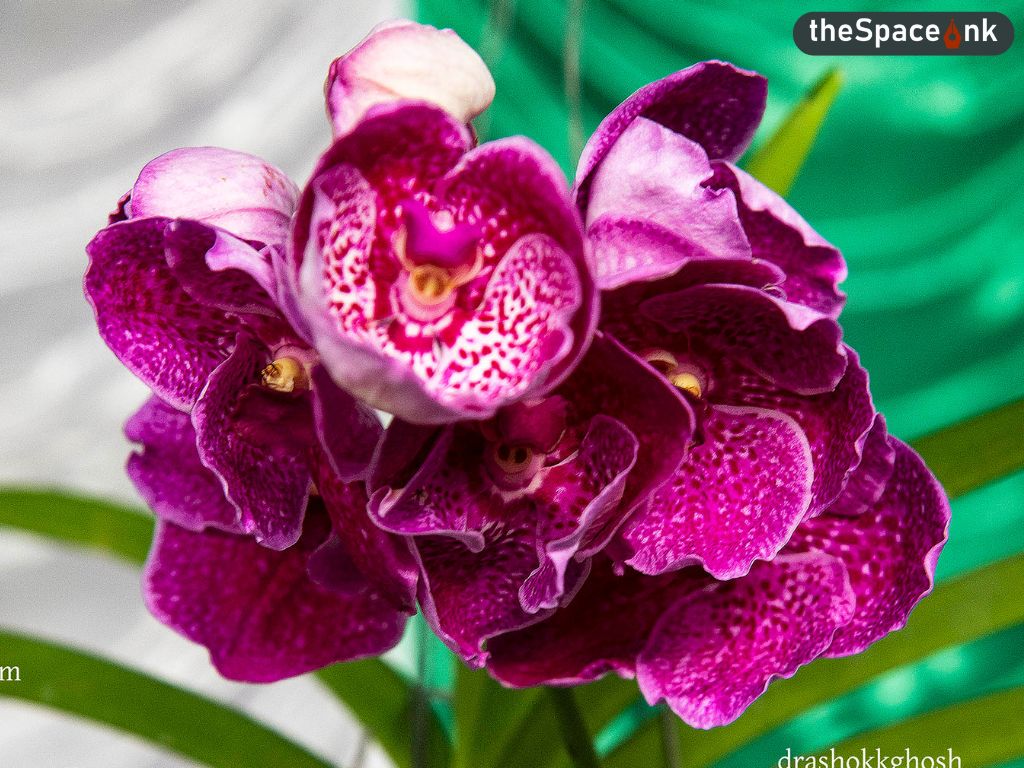
(Orchid)
Sundays in most cases appear to be special in my present life. It’s only because of frequent visits by my acquaintances. This particular morning was no exception. The doorbell rang and on opening Kanchan, one of my junior followers, came inside with a smile on his face. His left hand was at his back, as if hiding something from our view.
“Are you going to give us a surprise?” I asked and instantly the hidden hand flashed out and I could see a huge hilsa fish dangling in his hand. A joyous smile beamed on his face and he said, “Babuda, this one is from the Padma river. Genuine and authentic. Exclusively for you.”
Also Read: Rose – What’s in a Name?
- “How come, you got this in Kolkata?”
– “Actually, my son-in-law is now posted in Lalgola sub-division of Murshidabad district. He has some close friends residing residing there and lalgola is on the border of River Padma. When he came to know that I would visit you this Sunday he procured this for you through his friends there.”
– “I know he is fond of me, but…”
– “Not only that, he has also sent me this orchid from his place. Have a look at it and tell me whether it will survive and grow here?”
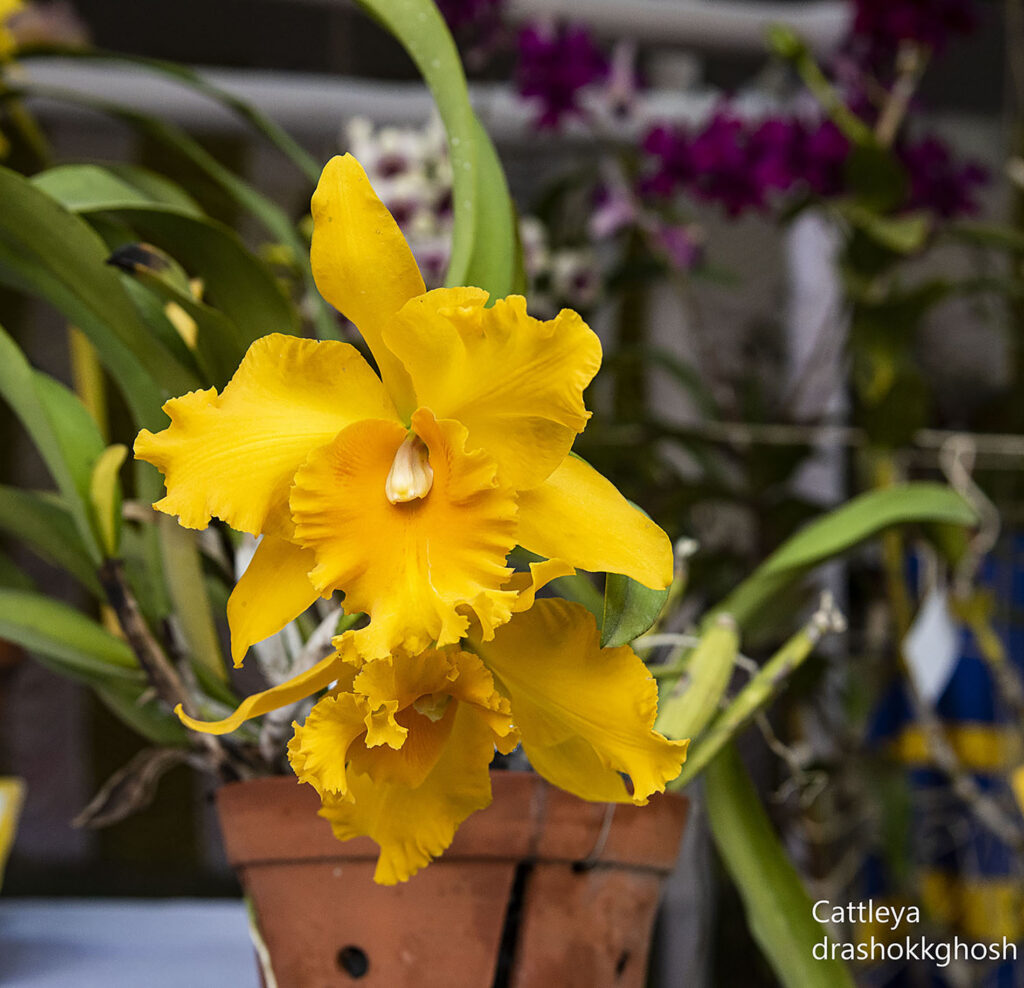
I had a close look at it and responded, “It is Vanda roxburgghii, generally grows on mango boughs. As the climatic condition here is not much different from that of Murshidabad, you can very much expect that it has every chance to thrive and bloom here also.”
– “Feeling relieved to know this from you. Babuda, please tell me more about orchids.”
– “In India Arunachal Pradesh, North East Assam, Meghalaya and Sikkim are the natural habitats of orchids. Apart from these places you can find orchids in West Bengal and some other states also. There are about 30,000 varieties of natural orchids available worldwide. In addition about 2,00,000 artificial hybrid varieties are also there.”
Meanwhile, the hilsa fish, the priceless gift from Kanchan, found its right place in our kitchen for gastrnomical treatment. We sat over a cup of tea with freshly fried hot ‘beguni’ (fried brinjal slices dipped in a paste of pulse) and continued our discussion. Kanchan started, “I’ve come to know that there are many varieties of orchid. Can those be grown in our house? They are so beautiful.”
– “Not only beautiful, the flowers last long, for about 30 to 45 days. “
At this point Suman, yet another visitor, took his entry and I introduced him to Kanchan.
“He is Suman, an experet orchid grower. Here is Kanchan, a good old friend of mine and also a keen flower enthusiast. He has come up with some questions about orchid and for both of us it’s a boon that you are here at the right time.” When the mutual introduction was over, it was Kanchan who initiated the conversation.
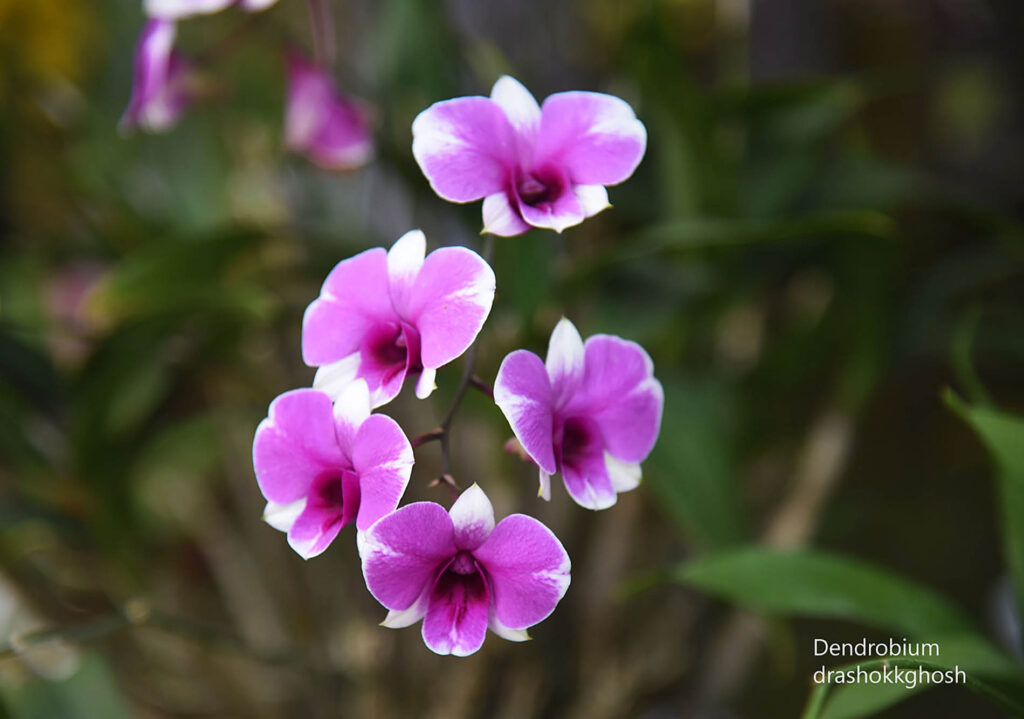
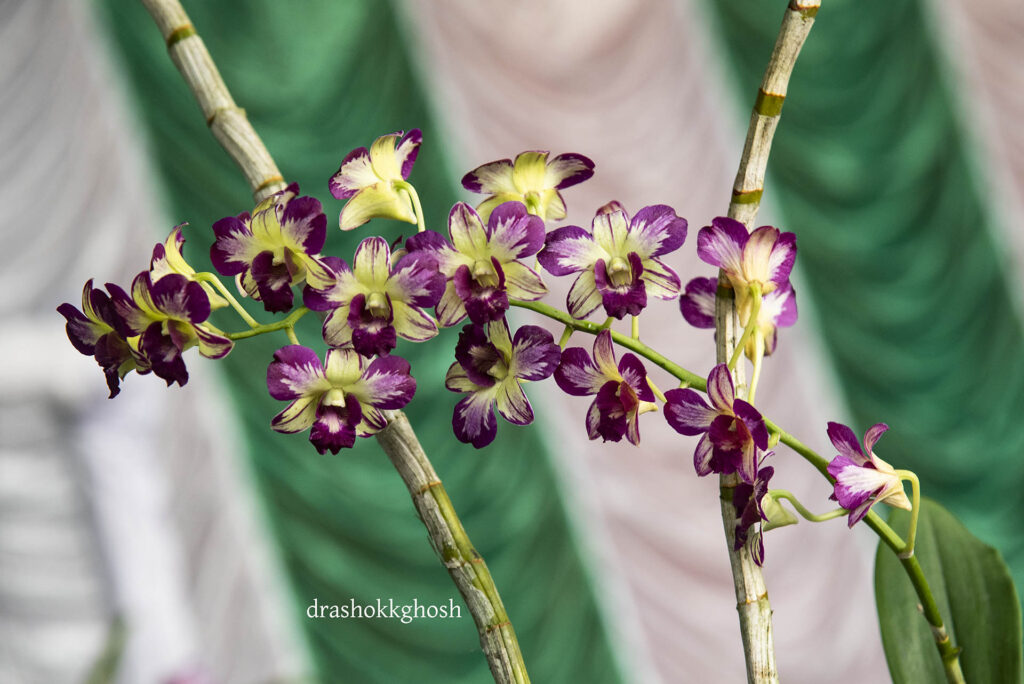
“Most of the orchids including Dendrobiums, Cattleyas, Phalaenopsis, Oncidiums are epiphytic orchids. They absorb moisture from air through their special velementous roots, which are spongy.”
_ “Sumanda, a friend of mine has gifted this Vanda orchid. Can I grow some other varieties here ?
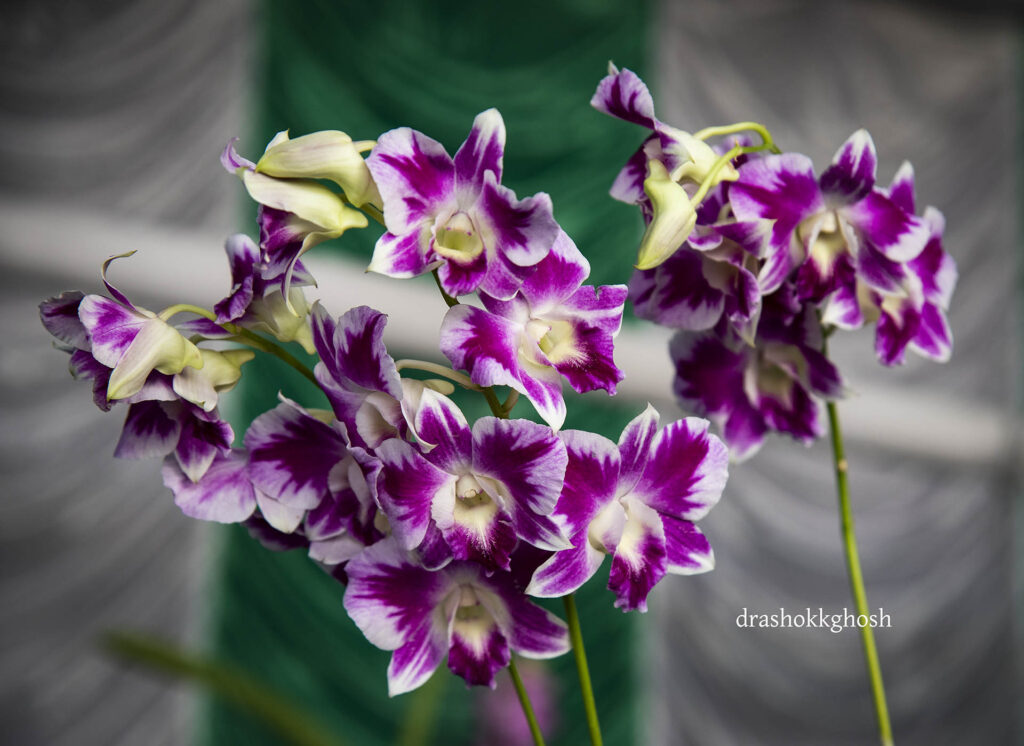
– “Surely you can. Dendrobiums grow very nicely in this climate and they bloom profusely if properly cared for.”
– “What do you mean by proper care and where to plant them?”
– “Now listen Kanchan. Most of the orchids including Dendrobiums, Cattleyas, Phalaenopsis, Oncidiums are epiphytic orchids. They absorb moisture from air through their special velementous roots, which are spongy. It is for this factor they don’t need soil as their growing medium.”
– “Then where should I plant those?”
– “That’s a good question. You need perforated flower-pots to prevent any water stagnation and charcoal and ‘jhama’ (hard burnt bricks) are generally used as ideal potting medium so that those can hold the plant in place.”
Also Read: Photo Story: Little Gods of Rural Purulia
– “Sumanda, someone told me that there are people who use coconut husks as the medium…
– “Yes, you are correct. Some people do that but I would suggest you to stay away from using that medium as those invite fungus.”
– “In that event should I use the medium you prescribed for this Vanda orchid also?
– “Of course you can use that. Also keep it in mind that Vandas generally grow better when only hung in the air. Their roots are thick and grow downward like locks of hair.”
– “Where should we keep them?
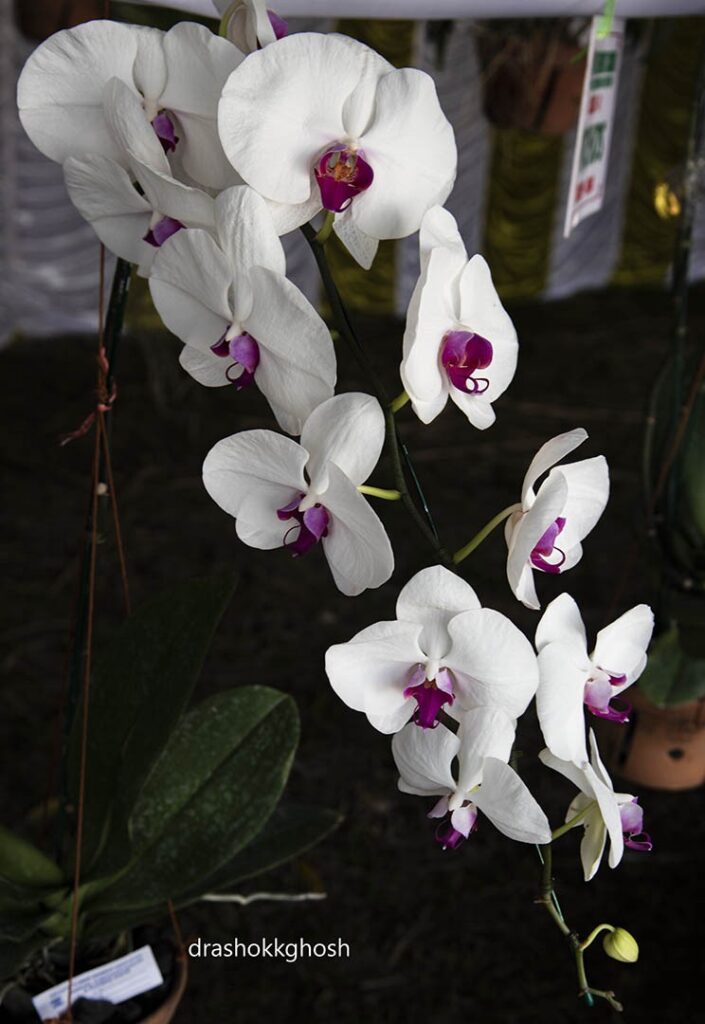
– “They grow better when they get sunlight in the morning and subdued sunlight for rest of the day. Cattleyas need a little more sunlight and Phalaenopsis prefers a relatively cool place.”
– “Ok. Now tell me when to water?”
– “Water in the morning; drench the whole plant with ordinary water…”
At this point of conversation there occurred a brief pause as Bandana, our cook entered carrying a big serving plate filled with freshly fried hilsa, fuming and exuding a heavenly aroma. She spoke, “Have a taste of fried…”
It was really delicious and mouth watering. Suman quipped, “I am too lucky today, tasting such a tasty hilsa after a long time.”
Kanchan was glad to have this compliment from Suman and responded emphatically,
– “Quite natural, because it is a large-sized special product of the Padma river.”
– “Thank you Kanchan for this extraordinary treat, Now that we have devoured a good amount of protein, I must mention that orchids also need nutrients for their survival and growth.. In wild areas they procure it from decaying barks and bird droppings, but here, when we plant them in our houses, we have to provide them. Mix half a teaspoonful of N:P:K: 15:15:15 in 2 litres of water and spray this solution at weekly intervals.”
– “Do they need to be repotted?”
_ “Surely, when they outgrow the pot, generally after a time span of about 2 years. The plant has to be removed from the old pot, the old and decayed roots and flowering stems need to be cut back and repotted.”
– “Sumanda, now tell me where do you grow your orchids, in verandah or elsewhere?
- “You see Kanchan, as I have developed a keen passion towards orchid my collection has also gradully increased quite a lot. The space in my verandah or balcony has become totally insufficient. So, I grow them on my rooftop garden. I have built a metallic super structure, the top of which is covered with black coloured net to ward off direct sunlight.
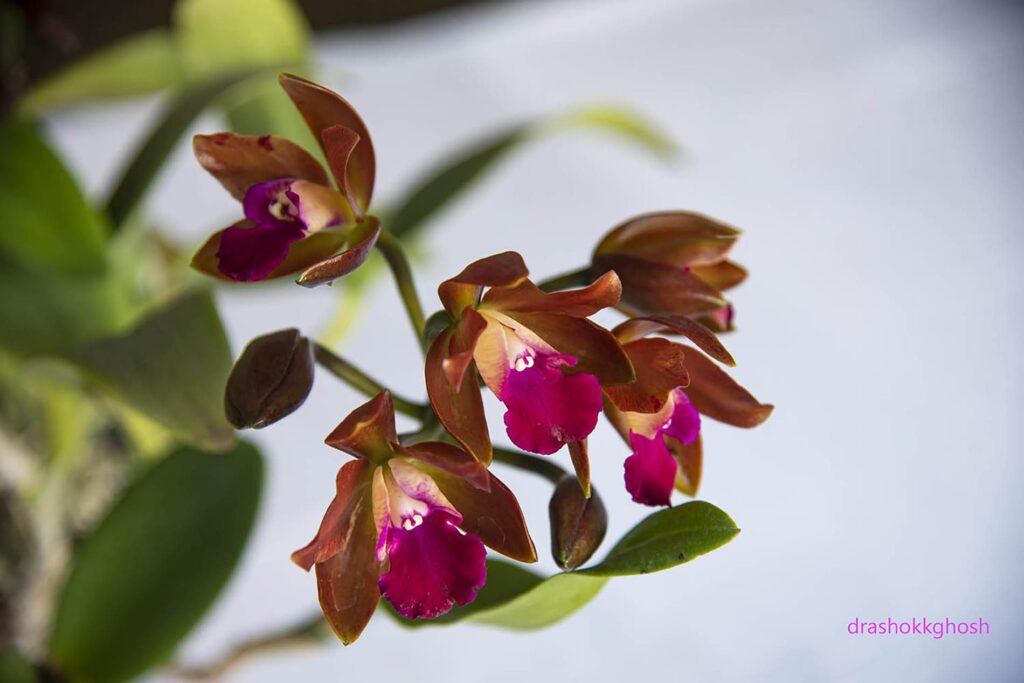
But if you face space-crunch, you can grow those in your balcony also. Soma, one of my known flower enthusiasts, grows orchids in her balcony alongwith other plants.”
– “Do you keep your plants hanging?”
– “Yes, they love to hang, dangle and sway.”
While we were busy in discussing everything about orchid I could see Amarnathda entering the drawing room tilting his head left and right and sniffing all the way. An interruption occured and his queer gesture prompted me to ask, “Dada, are you feeling uneasy?”
“And there are some orchids which look like female counterpart of some insects and when the male of that insect tries to make love, they pollinate the flowers in the process.”
– “Not at all. My olfactory organ is too sensitive and it now smells hilsa inside this house and I’m sure that it’s not an ordinary one, must be something special, may be a hilsa from the Padma.”
I wondered how sharp his olfactory organs are, so that he could smell it immediately after entering my house. Before I could react Amarnathda continued,
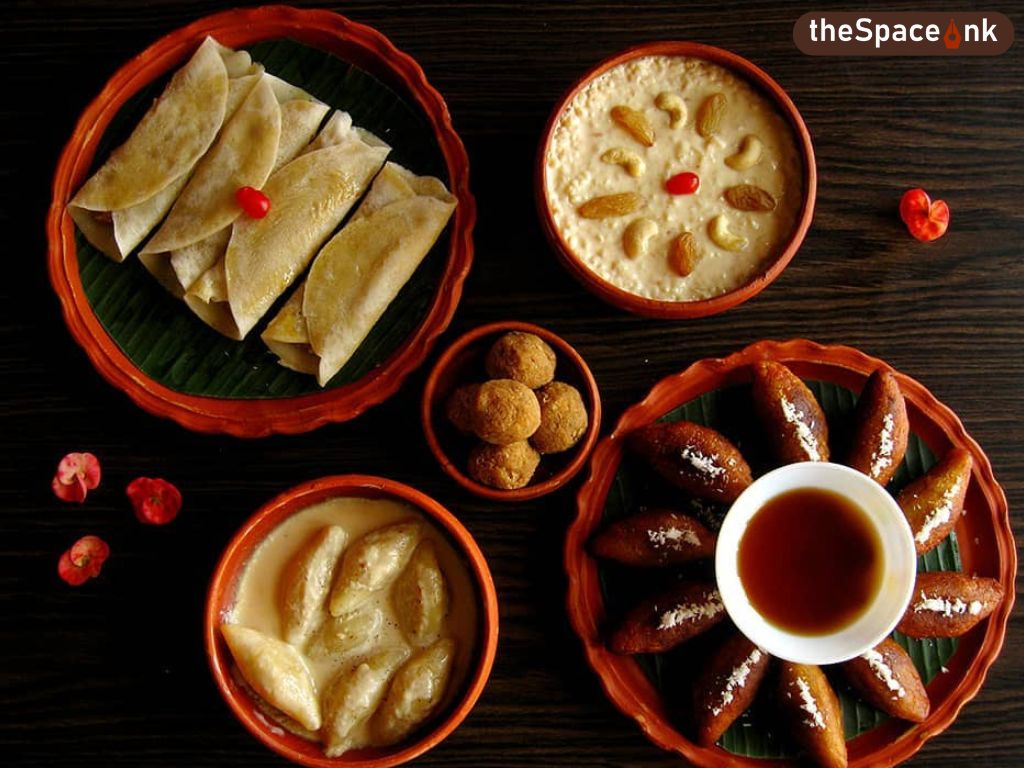
– “Why did you stop? Proceed with your discussion. When Suman is here I hope the topic must be orchid. Now let that be enjoyed with something indigenous – Joynagorer Moa (a mound-shaped sweet made of puffed rice and nolen gur, a special jaggery prepared after boiling the liquid extracts collected from date palm tree). A sweet having an authentic pedigree.”
– “You’ve guessed it right. We were talking about orchids. A fascinating discussion ornated initially by fried hilsa and now going to be decorated further by the ‘moa’ you brought.”
- “Ah, orchids, the romantic beautiful flowers with labellium, a modified petal which differentiates it from other flowers. Do you know that labelium of a particular variety of Paphiopedalum, is shaped like a shoe hence fondly called ‘Lady’s Slipper’ or ‘Venus Slipper’?”
Suman added, “And there are some orchids which look like female counterpart of some insects and when the male of that insect tries to make love, they pollinate the flowers in the process.”
– “Yes, Mother Nature is full of wonders. Take the example of hilsa. They swim thousands of miles purposefully to enter river water and in the process develop the extraordinary aroma emanating from their body and …”
– “Amarnathda, everytime you write an essay, whatever be its subject, it ends with something related to taste buds.”
Amarnathda retorted with fake anger, “I will not tolerate such a remark. Just tell me how can I refrain from mentioning hilsa when its alluring aroma is pervading the air all around? Have you ever thought of that? At the same time let me allow to add something pertinent. The term ‘orchid’ has its origin in Greek language and is related to love, fertility and romance.
Now listen Babu and Kanchan, as both of you have much interest in growing orchids, may your home be filled with love and empathy. I shall also be happy to visit your places to taste the essence of it and I firmly believe that both of you would never disappoint me and everytime I would surely be treated royally with delicious dishes also.
Photo Courtesy: Author

Ashok Kr Ghosh is a Gynecologist by profession. He is also a Mountaineer and Traveler and amateur photo artist. He is the recipient of several awards including Honourable Mention, Lalit Kala Academy Award, Excellence Honors from ‘Federation International de la Arte Photograhoque’.
Dr Ghosh is also a Naturalist specialising in Ornamental Floriculture and appears as Judge in horticulture exhibitions. His articles are frequently published in leading Bengali periodicals and magazines.



12 Responses
Excellent writing with fabulous picture.
Thank you Arindam.
Wonderful and captivating read
Thank you Avisekh.
Dr Ashok Ghosh is a perfect picture of a noble person in a noble profession. He is a ardent nature lover , photography is his passion , travel writer above all makes time for adda.
Thank you Bacchuda for your kind words.
দারুণ! বৈঠকখানার এই বৈঠকে অর্কিডের সঙ্গে পরিচিত হলাম।বিশেষ করে cattleya.নাম অনেক শুনেছি, এবার খানিকটা পরিচিত হলাম। ধন্যবাদ অশোক।
মনে মনে আমিও যেন একজন বৈঠকি হয়ে গেছিলাম।
The write up is rich in information, but very interesting because it is presented in the form of a story. Really a wonderful blending of friendship, food and flowers.
Thank you Papri for your kind words.
Excellent write up with beautiful pictures. Nice guidelines also.
Thank you C. Ghosh.
Thank you Arindam.