
Listen to Nature’s Heartbeat
As a child I remember my mum telling me a story about a bird that forgot its song and it had made me wonder how silent nature would be if birds ever happen to lose their ability to sing. Birdsong is one of the most soothing sounds of nature. Since most of us have grown up listening to birds sing, our mind automatically perceives the melody as reassuring and safe, and author Julian Treasure of the book titled Sound Business, who believes birdsong relaxes the body and stimulates the mind, feels people should be concerned when birds stop singing.
Earlier this year a worrisome report was published in the journal Proceedings of the Royal Society B, a study regarding the regent honeyeater, a critically endangered species. In the study it was noted that, owing to their dwindling numbers, a few male birds of this species of songbird were found to be in danger of losing their song, since this seriously impedes them from listening to their ancestors or other birds of their species sing. To imagine a world devoid of birdsong is a frightful prospect, not only for people like me who wake up early just to listen to nature’s music. Birdsong is an integral part of the human psyche.
On the other hand the Romans dreaded the hoots of owls and considered it to be a sign of death after an owl had supposedly foretold the death of emperors Julius Caesar and Augustus. However, the same bird is regarded as a symbol of wisdom and luck in some other cultures, including Hindu mythology where it’s the vehicle of goddess Lakshmi.
People closely relate to the melody of birdsongs and respond in many different ways depending upon their association with the bird species. While a certain bird call can remind someone of their carefree childhood days or a visit to a particular wildlife park where they sighted the lifer and heard it sing for the first time, it can also have deeper cultural implications, ones that stir the human soul.
Also Read: The Precious Bond Between Grandparents and Grandchildren
Folklore passed down to an individual by family elders can leave an indelible mark upon the mind regarding how they perceive a bird’s song. As a result of this perception, one can feel a range of emotions when one hears a familiar bird sing.
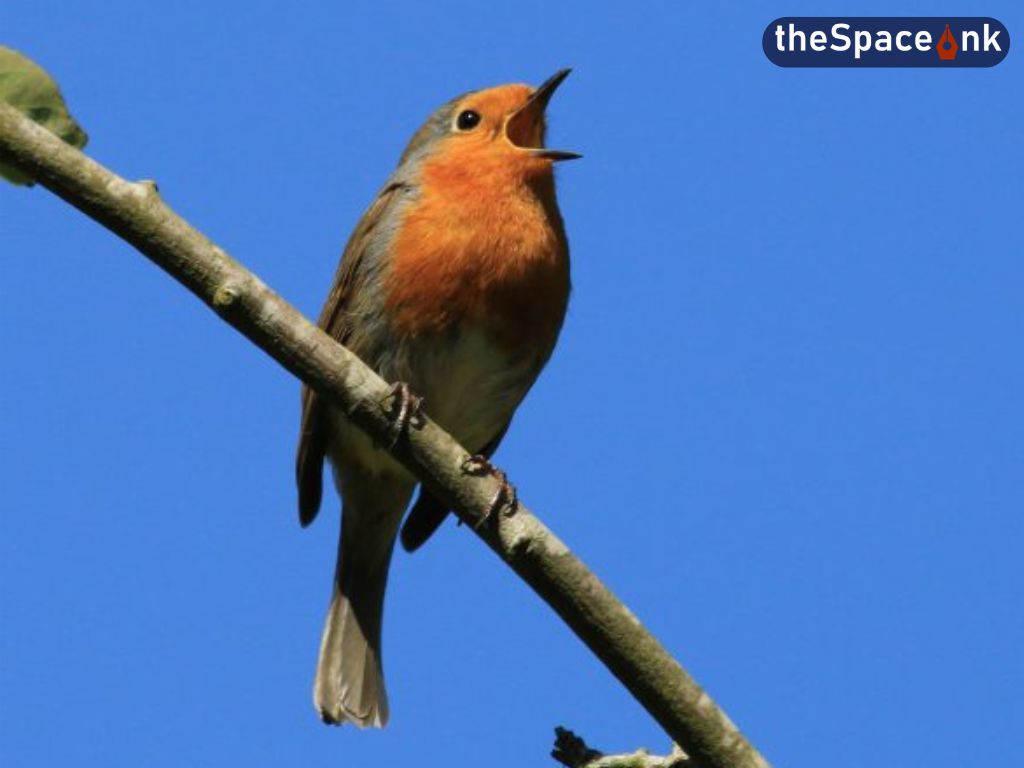
For instance, the way the British perceive the robin dates back many centuries to a tale about how the little bird, then brown in colour, helped baby Jesus stay warm. As the bird fanned a dying fire with its wings to keep the flames alive, its breast got scorched and turned red. As a result of this selfless act, the coming generations began to associate the robin and its presence with happiness, peace, and sacrifice.

On the other hand, the Romans dreaded the hoots of owls and considered them to be a sign of death after an owl had supposedly foretold the deaths of emperors Julius Caesar and Augustus. However, the same bird is regarded as a symbol of wisdom and luck in some other cultures, including Hindu mythology, where it is the vehicle of the goddess Lakshmi.
The relationship between the arrival of the pied cuckoo and the onset of the monsoon season in the Indian subcontinent is well known, as farmers delight in hearing this bird’s call. And thanks to the popular fairy tale The Nightingale by Hans Christian Andersen, in which the nightingale’s song saves the emperor from imminent death, the nightingale’s song is regarded as pleasing and rejuvenating.
For humans, mellifluous birdsongs are well documented to have multiple health benefits, from boosting well-being and reducing stress to helping people rejuvenate by restoring their focus and attention. No wonder Schiphol Airport in Amsterdam plays birdsong in its lounge to help travellers relax. Birdsongs connect us with nature and give us a welcome break from urban trappings. And for me, birdsong is nature’s heartbeat.
The outcome of a bird’s song on the human mind also depends upon the kind of bird. While musical and melodious calls are found to be soothing, loud and raucous calls can be annoying. When it comes to how birds produce their song, it’s interesting to note that melodious birdsong is highly structured, unlike the short and less rhythmic bird call. Birds can produce two notes at once, and it’s also fascinating how they alter their singing to impress mates.
Ornithologists observed a distinct change in the male white-throated sparrow’s song a few decades ago, and it was found to have developed a new tune and changed its beat. A few years down the line, the new song caught on with the younger males of the species as these birds flew to newer territories, making the new version hugely popular.
Just like with humans, noise too impacts birds’ singing. Birds are known to adjust their pitch to overcome traffic noise and other background sounds, so when noise levels dropped during the pandemic, a study suggested that birds also changed their vocal repertoire. An article published in Forbes reporting the findings of researchers from the University of Tennessee, Knoxville, who studied the impact of noise on birdsong, revealed some interesting facts. According to the report, white-crowned sparrows were found to sing at a lower amplitude and with a distinct improvement in the quality of their singing, as they no longer had to compete with traffic noise and could sing more softly.
Also Read: Food: The Universal Unifier
Birds sing for various reasons, but the main purpose of a bird’s song is to define territory and attract a mate, which is why it does not come as a surprise that most singing is done by the male of the species. This disparity is more evident in the temperate zones, while in the tropics one can find female birds that are as vocal as the males, with some even duetting. Regardless of who sings and for what reason, the loss of birdsong can be fatal for a species, as it is proving to be with the regent honeyeater, making it difficult for these birds to find mates.
For humans, mellifluous birdsongs are well documented to have multiple health benefits, from boosting well-being and reducing stress to helping people rejuvenate by restoring their focus and attention. No wonder Schiphol Airport in Amsterdam plays birdsong in its lounge to help travellers relax. Birdsongs connect us with nature and give us a welcome break from urban trappings. And for me, birdsong is nature’s heartbeat.

Lesley D. Biswas is a freelance writer and children’s author based in Kolkata. Her interests include nature, bird photography and cricket.