Johann Wolfgang von Goethe: Life, Literature, and the Art of Becoming
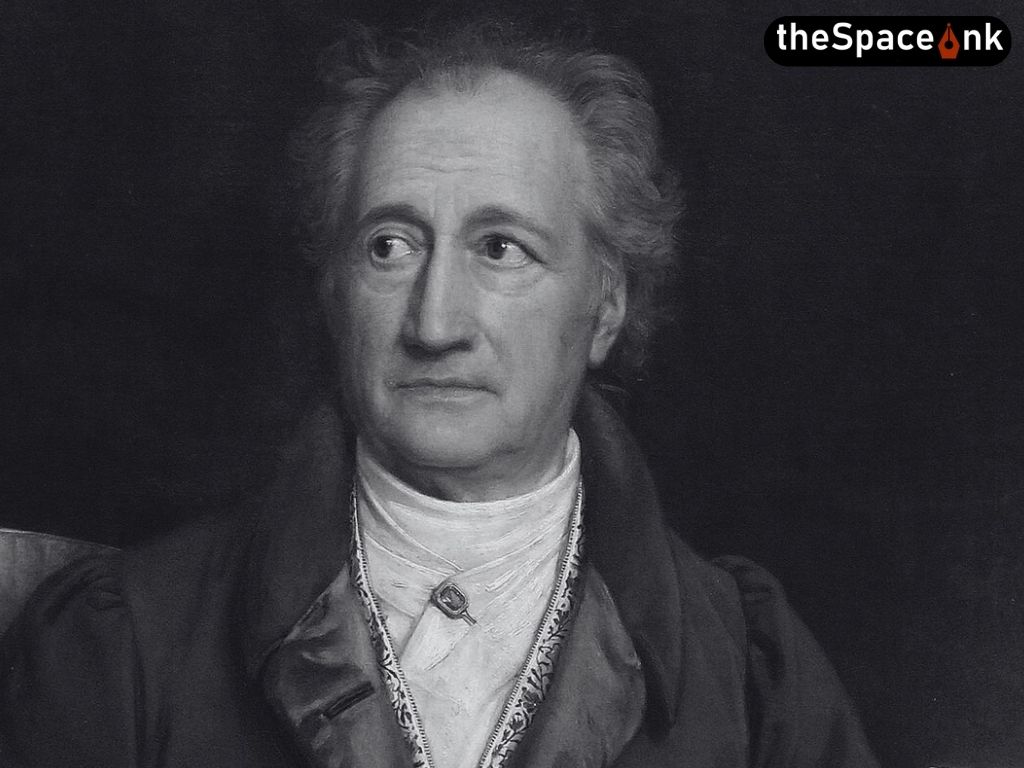
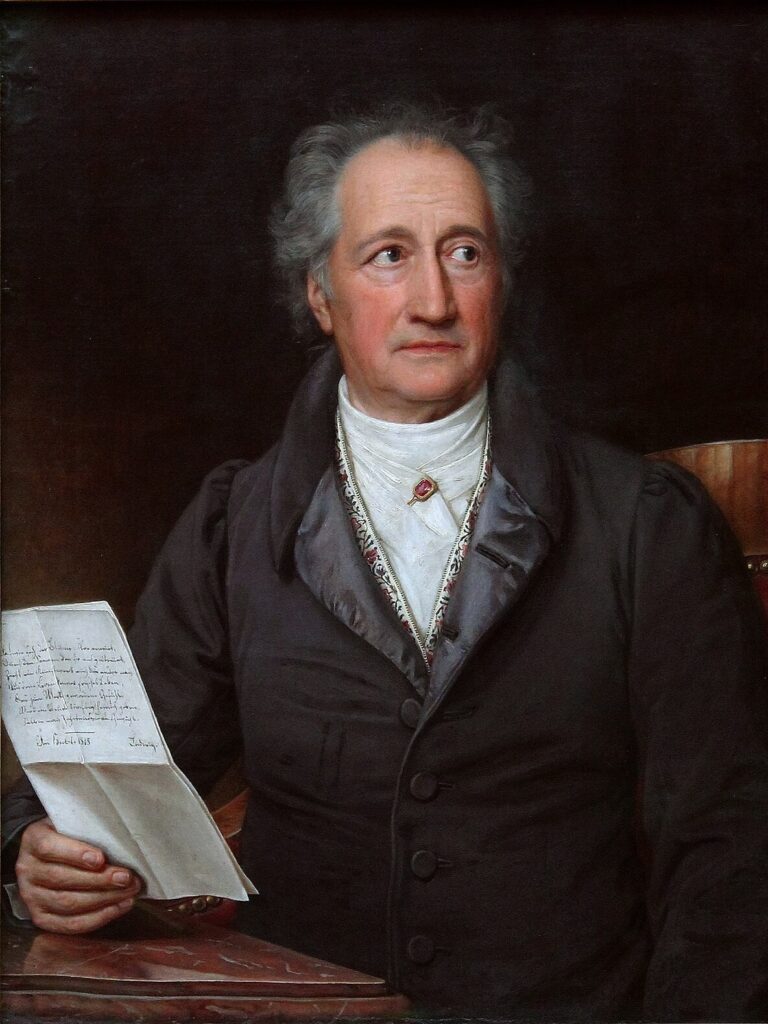
Johann Wolfgang von Goethe (1749–1832) remains the towering figure of German literature and one of the defining minds of European culture — a poet, dramatist, novelist, autobiographer, statesman, and natural scientist. Living through the Enlightenment, the French Revolution, and the Napoleonic era, he absorbed the intellectual and cultural upheavals of his age and transformed them into literature of extraordinary range.
At the centre of Goethe’s work lies a recurring question: how can a human being develop fully while remaining open to a world that never stops changing? Nature, for Goethe, was endlessly productive; the self, likewise, was formed through experience and encounter rather than fixed from birth. This idea of becoming connects the rebellious young poet, the classical humanist, the scientist of organic transformation, and the later advocate of Weltliteratur, or ‘world literature.’
Formation: Frankfurt, Leipzig, and Strasbourg
Born in Frankfurt on 28 August 1749 into a prosperous family, Goethe received a broad education in languages, literature, and the arts. He went to Leipzig in 1765 to study law, but literature increasingly occupied his imagination. After illness interrupted his studies, he resumed them at Strasbourg in 1770, where his encounter with Johann Gottfried Herder decisively reshaped his artistic outlook.
Also Read: India’s Quadruple Ascent: Economy, Technology, Defence and Climate
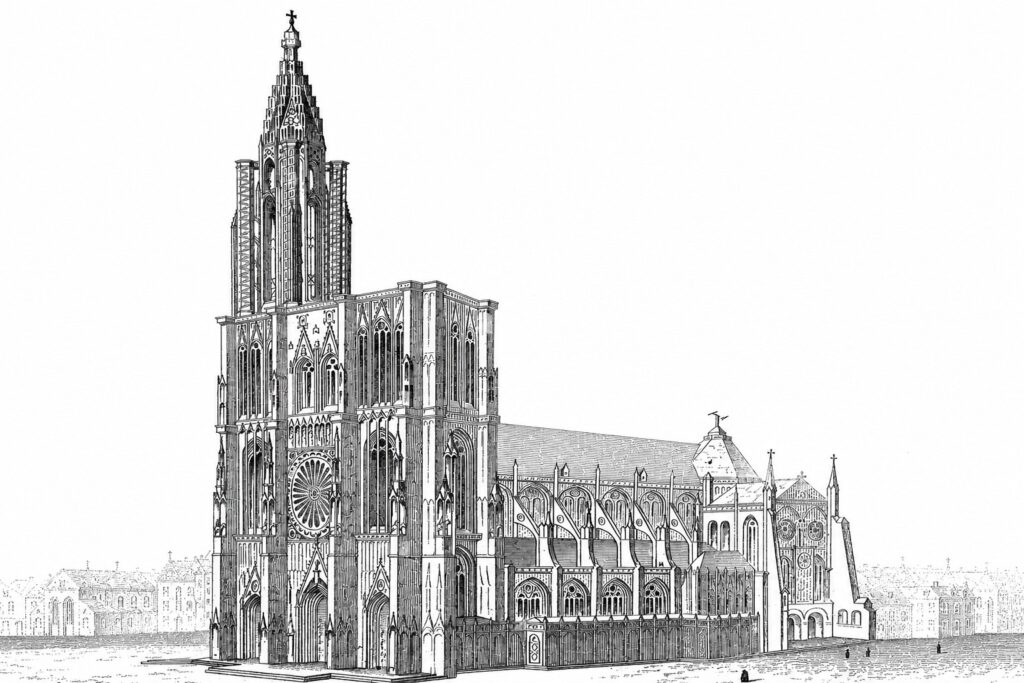
Herder directed Goethe away from French-influenced neoclassical conventions toward Shakespeare, folk poetry, the Bible, and forms of art that seemed to grow organically from the creative imagination. This new perspective also transformed Goethe’s response to Strasbourg Cathedral. At a time when Gothic architecture was often dismissed as crude and disorderly because it failed to conform to classical ideals of symmetry and proportion, Goethe discovered in the cathedral a vital inner unity. Art, he came to believe, should be judged not merely by external rules but by the creative force that gives it organic form.
From this intellectual climate emerged Sturm und Drang (Storm and Stress), the literary movement associated with Goethe, Herder, Friedrich Maximilian Klinger, and J. M. R. Lenz. Rejecting rigid conventions and excessive rationalism, it celebrated intense emotion, individual genius, and creative freedom. Goethe’s drama Götz von Berlichingen (1773), with its Shakespearean freedom of form and fiercely independent hero, became one of its defining works.
Werther and the Crisis of the Self
The Sorrows of Young Werther (1774) transformed the twenty-five-year-old Goethe into a European literary sensation. Drawing partly on his unrequited love for Charlotte Buff and the suicide of his acquaintance Karl Wilhelm Jerusalem, Goethe created an epistolary novel about a young man whose emotional absolutism cannot reconcile itself with the limitations of reality.
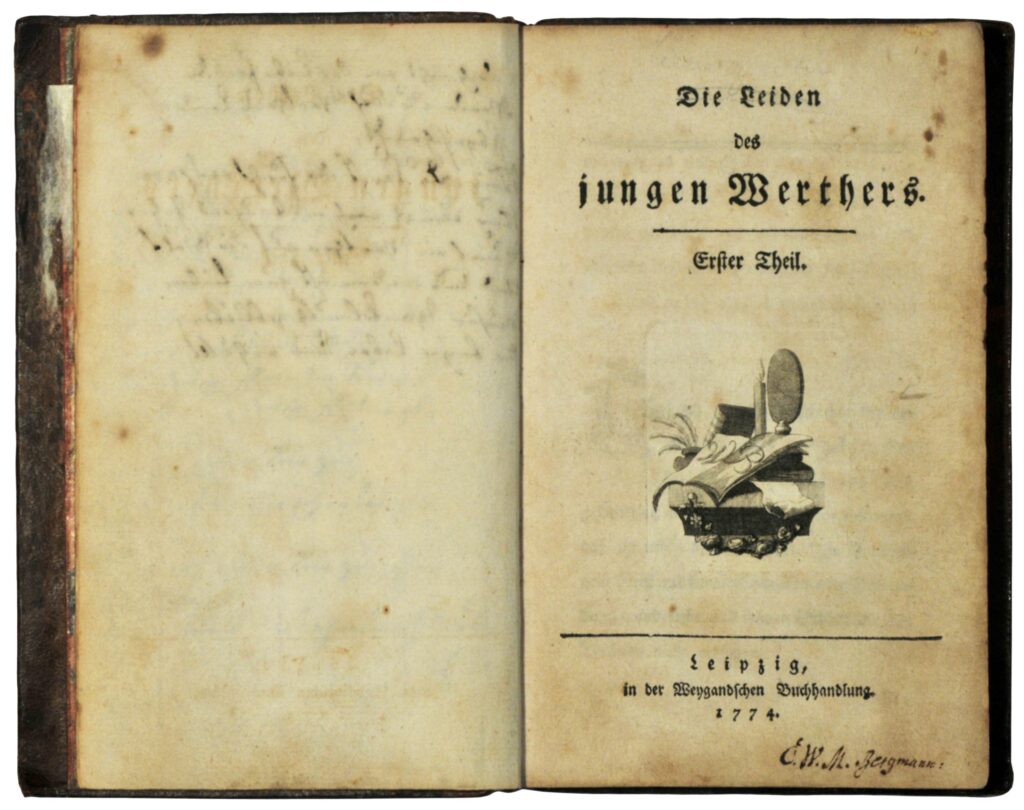
Nature initially reflects Werther’s ecstatic sense of harmony but gradually darkens with his growing anguish. His destruction reveals the danger of making subjective feeling an absolute law: the self shatters against a world it refuses to accommodate. The novel’s impact was extraordinary. Readers imitated Werther’s clothing and emotional manner, while reports of imitative suicides generated controversy and eventually contributed to the psychological expression “Werther effect.”
Weimar, Italy, and the Turn to Form
In 1775, Duke Carl August invited Goethe to Weimar, where he would spend most of the remainder of his life. His involvement in government — dealing with finance, mining, roads, and administration — confronted him with practical realities and gradually moderated the radical individualism of his youth. His close relationship with Charlotte von Stein likewise encouraged emotional restraint, reflection, and self-mastery.
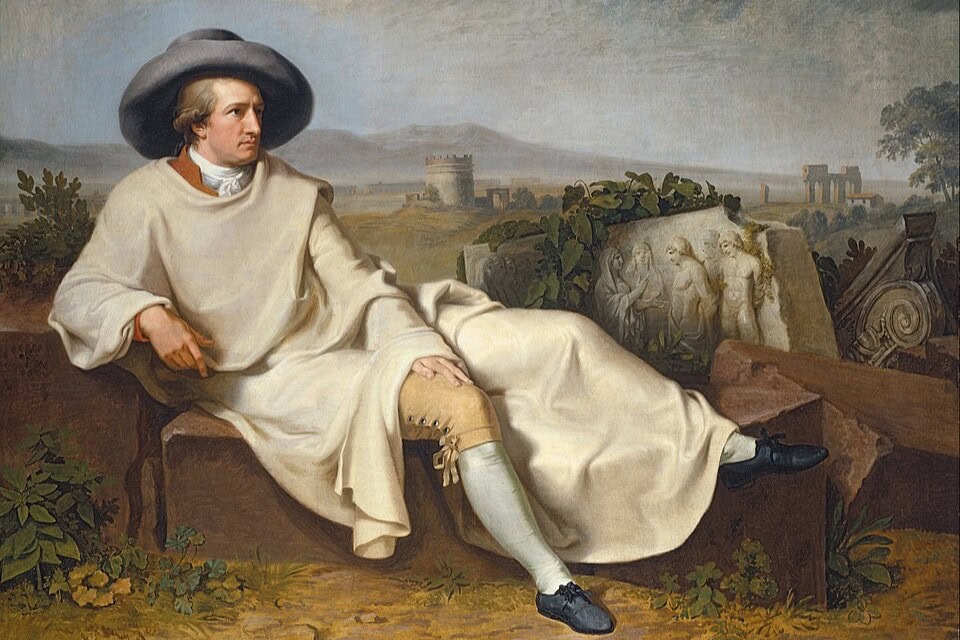
Seeking creative renewal, Goethe left for Italy in 1786 and remained there until 1788. His encounter with classical antiquity, Renaissance art, and the Mediterranean world deepened his movement away from the turbulence of Sturm und Drang toward clarity, proportion, discipline, and form. Dramas such as Iphigenie auf Tauris (1787) and Torquato Tasso (1790) express this emerging classical ideal: civilization becomes an ethical achievement in which passion is transformed through truthfulness, restraint, and humanity.
This vision matured through Goethe’s friendship and collaboration with Friedrich Schiller from 1794. Together they shaped Weimar Classicism, seeking not merely to imitate antiquity but to cultivate human wholeness through art and aesthetic education. Schiller also encouraged Goethe to return to unfinished projects, especially Faust. His death in 1805 was a devastating personal and intellectual loss.
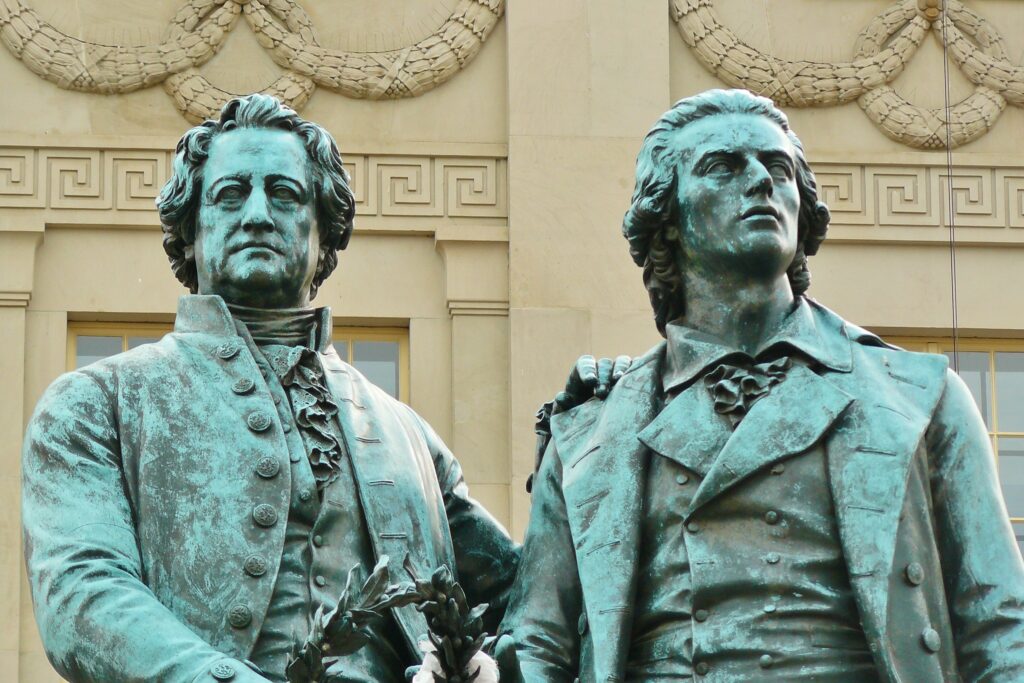
Goethe also found domestic stability with Christiane Vulpius, whom he met in 1788. Despite Weimar society’s disapproval of her modest origins, their relationship lasted nearly three decades; they married in 1806.
Wilhelm Meister and the Ideal of Bildung
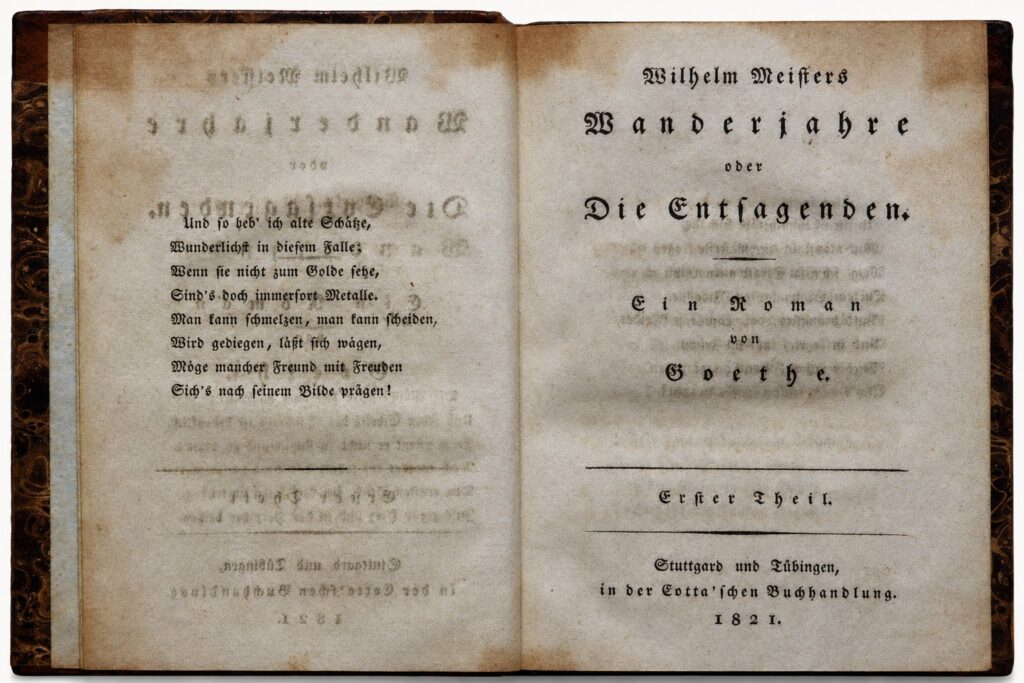
Where Werther portrays a self unable to accommodate reality, Wilhelm Meister’s Apprenticeship (1795–1796) asks how an individual might learn to live creatively within it. The novel became a foundational model of the Bildungsroman, the novel of personal formation.
Wilhelm initially believes the theatre will provide complete self-realization, but through relationships, mistakes, and disillusionments he acquires a more socially integrated understanding of himself. Goethe’s concept of Bildung therefore means much more than education: it is the lifelong cultivation of the person through active engagement with the world. Identity is not simply discovered within; it is formed through experience.
Faust: The Drama of Human Striving
Goethe’s deepest exploration of human development appears in Faust, a work composed over nearly sixty years. Part One appeared in 1808; Part Two was completed shortly before Goethe’s death in 1832. Transforming the traditional story of a scholar who bargains with the devil, Goethe created a drama about desire, knowledge, action, and the possibilities and dangers of human striving.
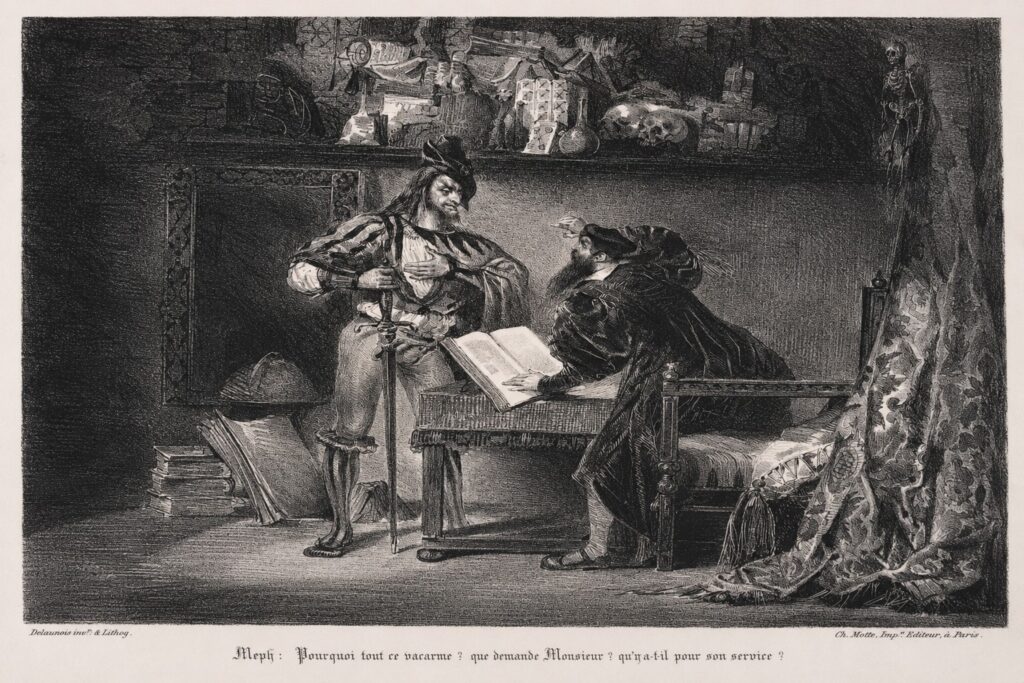
Faust’s wager with Mephistopheles is crucial: he will lose himself only if he reaches a moment of such complete satisfaction that he wishes it to remain forever. His defining characteristic is therefore his inability to stop striving.
Part One concentrates on the tragedy of Gretchen, whose destruction reveals the human cost of Faust’s restless desire. Part Two expands dramatically into mythology, politics, economics, technology, and humanity’s transformation of nature. Faust consequently becomes an emblem of modern civilization itself—restlessly creative and transformative, yet capable of immense destruction. This moral ambiguity gives the work its continuing modernity and has made the “Faustian bargain” one of world culture’s enduring metaphors.
He refused to isolate literature from science, art from lived experience, the individual from society, or national culture from other civilizations.
The Lyric Poet
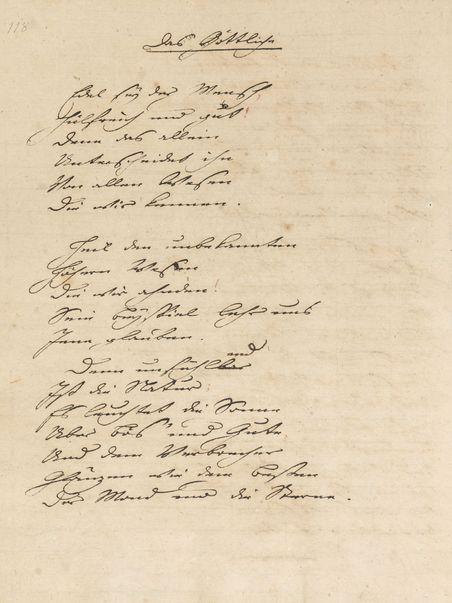
Poetry remained Goethe’s most continuous form of expression, ranging from youthful love lyrics and rebellious hymns to ballads, elegies, philosophical verse, and the cosmopolitan poetry of the West-Eastern Divan. Prometheus and Ganymed embody the passionate engagement with nature characteristic of his youth; Erlkönig turns supernatural terror into a haunting drama of conflicting perceptions; and Wanderers Nachtlied brings landscape, inward peace, mortality, and stillness into remarkable concentration.
Throughout his poetry, personal experiences of love, loss, memory, and nature acquire universal resonance. The lyric thus becomes perhaps the most immediate expression of Goethe’s lifelong concern with the changing relationship between self, nature, and time.
Science, Nature, and Metamorphosis
Goethe refused to separate poetic imagination from scientific observation. His botanical studies sought an underlying pattern through which different plant forms might be understood as transformations of a common principle. His Theory of Colours (1810) challenged Newtonian optics by emphasizing the role of human perception in the experience of colour.
Although modern physics rejected important aspects of his optical theory, Goethe’s search for organic patterns of transformation illuminates his literary imagination. Plants metamorphose; individuals undergo Bildung; Faust continually strives; cultures develop through encounter. Becoming rather than static being is the fundamental principle connecting Goethe’s science, literature, and understanding of life.
From Bildung to Weltliteratur
In his later years, Goethe’s vision expanded beyond the formation of individuals toward encounters among cultures. He read French, English, Serbian, Persian, Chinese, and other literatures with remarkable curiosity. His West-Eastern Divan (1819), inspired particularly by the Persian poet Hafez, creates an imaginative dialogue between European and Persian poetic traditions.
From this cosmopolitan engagement emerged Goethe’s influential idea of Weltliteratur, or “world literature.” He did not conceive it simply as a collection of universally great books, but as a dynamic process through which literary works circulate, are translated, received, and transformed across cultural boundaries. In conversation with Johann Peter Eckermann in 1827, Goethe famously announced that the epoch of world literature was approaching and encouraged writers to hasten its arrival. The idea anticipated important principles of comparative and global literary studies.
Also Read: I Write, Therefore We Exist: Anne Frank and the Architecture of Rebellion
Goethe’s influence consequently reaches far beyond Germany. Wilhelm Meister helped establish the Bildungsroman as a major form of the modern novel, while Faust became one of modernity’s defining literary myths, repeatedly reimagined in literature, philosophy, music, theatre, and visual art. Writers and thinkers ranging from Thomas Carlyle and Ralph Waldo Emerson to Friedrich Nietzsche, Thomas Mann, and Hermann Hesse engaged deeply with his works and ideas.
What ultimately unites this enormous achievement is not a single doctrine but Goethe’s vision of life as an unending process of formation, encounter, striving, and transformation. He refused to isolate literature from science, art from lived experience, the individual from society, or national culture from other civilizations. The ideal of Bildung therefore resonates far beyond Wilhelm Meister: it becomes a principle underlying Goethe’s entire intellectual world. For Goethe, the individual — like nature, literature, and culture — is never finally complete but always in the process of becoming.
Image Courtesy: Wikimedia Commons, Alamy, Wikipedia, Wikipedia, Wallpaper Flare, Wikipedia, archive.org

Sacaria Joseph is an Assistant Professor in the Department of English at St. Xavier’s College, Kolkata. Having pursued his undergraduate studies at St. Xavier’s College, he furthered his academic journey by obtaining a Master of Arts degree in English Literature from Pune University, a Master of Philosophy from Jadavpur University, Kolkata, and a PhD from Visva-Bharati University, West Bengal. In addition to his academic pursuits, he writes on a wide array of subjects encompassing literature, philosophy, religion, culture, cinema, politics, and the environment.