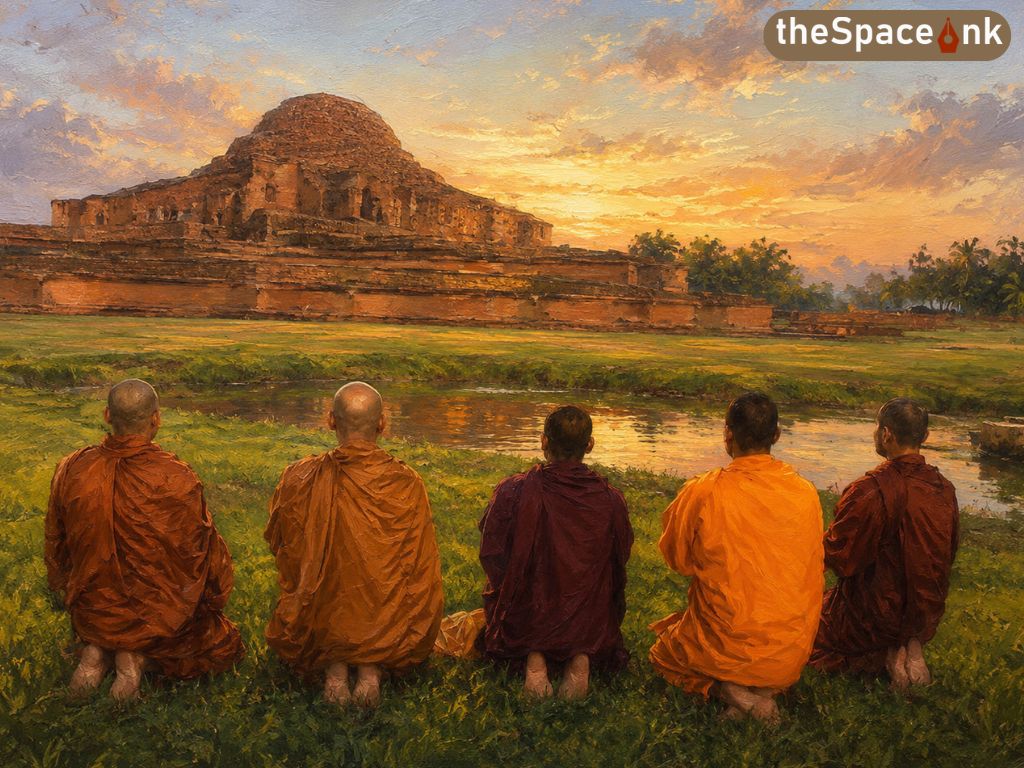
A Buddhist Stronghold a Millennium Ago
Bengal was far more than a peripheral chapter in Buddhist history or a neglected edge of India’s sacred geography. It was a major center of Buddhist civilization, where scholarship, tantra, poetry, and spiritual experimentation thrived. Even as empires elsewhere rose and fell, Bengal and Bihar remained among the subcontinent’s last great strongholds of Mahayana and Vajrayana Buddhism.
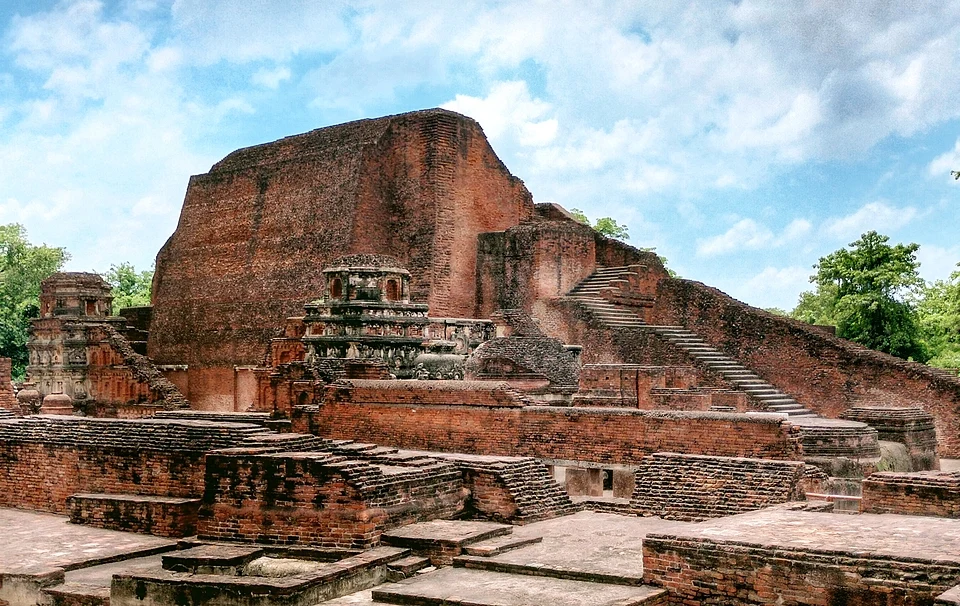
Under the formidable Pala Empire (750–1161 CE), who ruled from Mudgagri, Pataliputra and Gauda, Bengal and Bihar transformed into one of Asia’s most significant Buddhist centers. The Pala kings were not merely local rulers; they were patrons of one of the most intellectually stimulating Buddhist worlds ever conceived. Massive monasteries and universities flourished, including Nalanda Mahavihara, Vikramashila, and Somapura Mahavihara. These ruins still resonate with the whispers of monks, philosophers, astronomers, and tantric masters engaged in profound debates about the nature of reality beneath oil lamps centuries ago.
Bengal’s contribution to Buddhism transcended mere preservation; it transcended borders and significantly influenced religious life beyond India. From the rivers of Bengal emerged Atisha Dipankar, born in Bikrampur in 982 CE. His journey across Asia led him to become one of the most revered figures in Tibetan Buddhism. At a time when Tibetan Buddhism was experiencing fragmentation and institutional decline following the collapse of the Tibetan Empire, Atisha played a crucial role in revitalizing monastic discipline, philosophy, and spiritual practice. Even today, centuries later, Tibetan Buddhists continue to honor him with immense reverence.
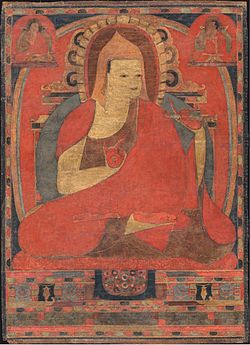
Bengal, deeply connected to the broader Buddhist world through maritime trade and scholarship, served as a vibrant intellectual hub. Its monks and merchants facilitated connections between eastern India and the Srivijaya Empire of Sumatra, Southeast Asia, and beyond. Ships carried not only spices and textiles but also manuscripts, rituals, philosophies, and monks, fostering a rich exchange of ideas.

The Charyapada, often considered the earliest known work associated with the Bengali literary tradition, emerged from the pens of Buddhist tantric mystics known as Siddhacharyas. Unlike traditions rooted primarily in royal courts or war epics, Bengali literature began with cryptic spiritual songs laden with symbolism, longing, paradox, and mystical emotion. Some of the earliest surviving expressions of the Bengali literary tradition emerged through mystical Buddhist songs about enlightenment.
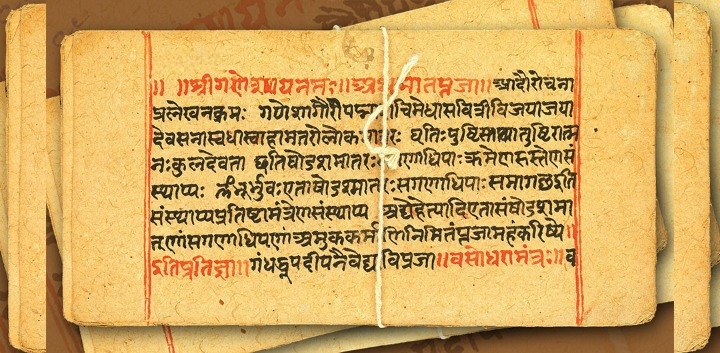
This emotional and mystical current persisted throughout the ages. Over centuries, Buddhist ideas, symbols, and practices gradually blended into Bengali life. This integration was particularly evident in the rise of Shaktism, which became one of Bengal’s defining religious traditions. Shakta and Vajrayana traditions in Bengal developed through deep mutual interaction, often sharing tantric vocabulary, ritual forms, symbolism, and meditative practices. Historians continue to debate the exact boundaries between the two.

During the short-lived Sena dynasty (1095–1207 CE), Bengal saw a strong revival of orthodox Brahmanical social and religious norms, marking a clear departure from the broader Buddhist patronage of the earlier Pala rulers. Unlike their predecessors, the Sena kings, who traced their origins to the Deccan region, promoted Vaishnavism and Shaivism as major state-supported traditions. They provided substantial patronage to Brahmins, granting them large tax-free land grants known as agraharas or brahmadeya and significant political influence. To further strengthen Brahmanical authority in Bengal, they invited many Brahmins from northern India, who were integrated into key social and administrative roles.
Also Read: Bengal Sketches [1],[2],[3],[4],[5],[6]
The Senas also introduced Kulinism, a system that rigidly ranked upper-caste lineages and reinforced social hierarchy, while marginalizing lower castes. Some historians argue that sections of the remaining Buddhist population were gradually absorbed into emerging caste hierarchies, contributing to the decline of institutional Buddhism in the region. As a result, Bengal’s society became more rigidly structured along caste lines, establishing patterns of conservative social organization that persisted in the medieval period. The Sena court also became a major center of Sanskrit learning and literary activity, contributing to a broader religious and cultural transformation in Bengal.
This contributed to distinctive features within Bengali Hindu religious culture, including strong tantric and goddess-centered traditions, deep currents of mysticism, folk spirituality, ecstatic devotion, and emotional intensity.
Still, this shift was not entirely abrupt. In many parts of India, Buddhism declined rapidly due to political instability and conquest. In Bengal, by contrast, the process was slower and more complex. Rather than vanishing altogether, Buddhism gradually merged into Bengali society and culture through subtle changes, leaving a lasting mark on the region’s traditions and beliefs.
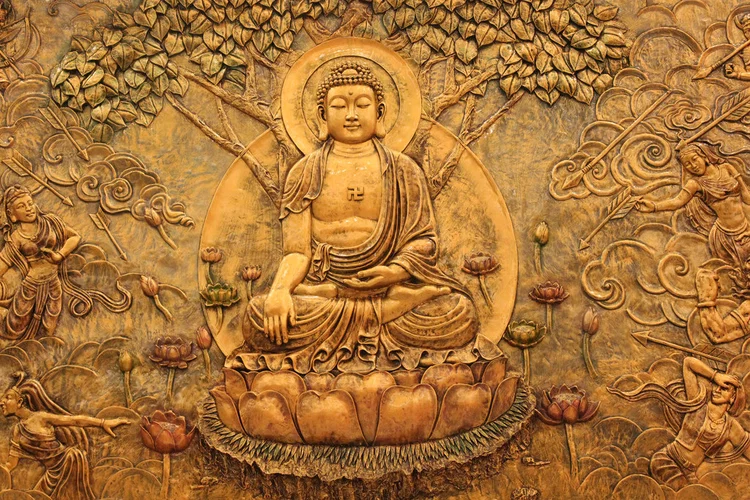
Interestingly, Bengal seemed content with this blurring of distinctions. Religion in Bengal rarely remained neatly separated into distinct categories. Buddha and Kali could coexist in the same cultural imagination without anyone feeling compelled to resolve every theological contradiction. The goddess Tara gained significant importance in both Buddhist and Hindu traditions. Certain forms of Kali and Durga incorporated tantric imagery also found in Buddhist esoteric traditions. Furthermore, Buddha himself was absorbed into Hindu thought as an avatar of Vishnu.
Also Read: Bengal Sketches [7],[8],[9],[10],[11],[12]
Bengal’s genius lay in its fearless synthesis, rather than rigid separation. This contributed to distinctive features within Bengali Hindu religious culture, including strong tantric and goddess-centered traditions, deep currents of mysticism, folk spirituality, ecstatic devotion, and emotional intensity. While some traditions emphasized hierarchy and ritual correctness, Bengal often leaned toward poetry, symbolism, music, devotion, and spiritual experience. Bengal preferred its religion to be emotional, dramatic, mystical, and slightly dangerous.

Even historians observed this unique religious landscape. William Wilson Hunter, a colonial historian, noted that eastern India endured a protracted struggle between Buddhism and Brahmanical Hinduism long before the advent of Islam. He characterized Buddhism as “one of two hostile creeds” vying for supremacy in India. While modern historians might approach the relationship with greater nuance, Hunter’s observation captured a significant aspect: even as Brahmanism gradually regained its prominence between the 10th and 12th centuries, it absorbed Buddhist practices, imagery, and philosophical influences so thoroughly that the distinction between victor and vanquished became blurred.

The Shunya Purana, also called the Sunya Purana, is a medieval Bengali religious text traditionally attributed to the twelfth-century poet-saint Ramai Pandit. It blends folk Hindu traditions, Shaiva beliefs, and ideas shaped by Buddhism, especially the concept of śūnya, or “void”/“emptiness.” Intricately linked to the worship of Dharma Thakur in rural Bengal, the text explores creation myths, agriculture, rituals, and village religious life.
Bengal transformed into a place where Buddha, Kali, poetry, Tantra, devotion, and rebellion coexisted harmoniously within the same spiritual atmosphere. This unique blend perfectly explains Bengal.
Some scholars read parts of it as reflecting the marginalization of Buddhists in medieval Bengal during the decline of Buddhism after the Pala dynasty and the rise of Brahmanical power under the Senas. In particular, the chapter “Niranjaner Rusma” (“The Anger of Niranjan”) depicts Buddhists suffering under Brahmanical dominance and finding protection from Muslim pirs and gazis. Historians, however, still debate whether those passages were later additions rather than part of the original work.
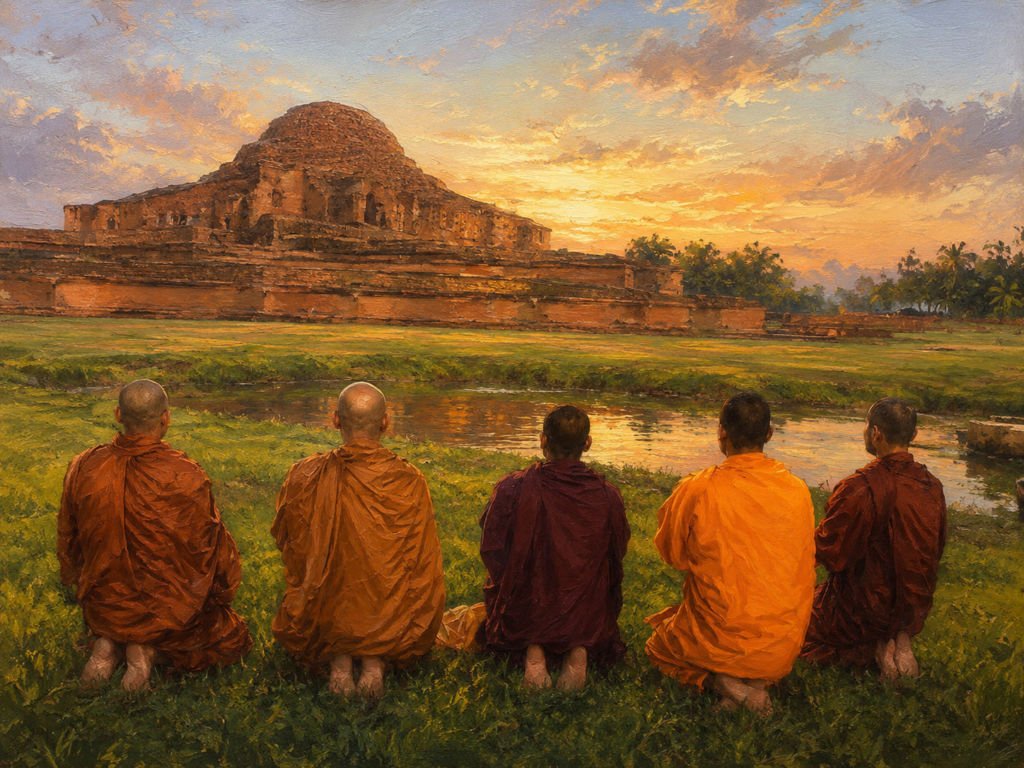
Unlike some regions that erected barriers between religions, Bengal embraced a more inclusive approach. It did not simply abandon Buddhism; instead, it integrated its ideas, symbols, rituals, and spiritual sensibilities into Bengali Hindu and folk traditions. Bengal transformed into a place where Buddha, Kali, poetry, Tantra, devotion, and rebellion coexisted harmoniously within the same spiritual atmosphere. This unique blend perfectly explains Bengal.
Images: Wikipedia, Wikimedia Commons, Wikipedia, World History Encyclopedia, Wikipedia, Facebook, Wikipedia Chat GPT

Dr. Jamil is a passionate oncology commercial leader whose two-decade journey has been driven by a deep commitment to improving the lives of people with cancer. As Head of the Early Commercial Team at Merck Oncology and an Adjunct Professor at Columbia Business School, he shapes innovative pipelines while mentoring and inspiring future healthcare leaders. Beyond work, he is a soulful armchair historian of Bengal, a devoted Manchester City fan, and someone whose heart is forever tied to the culture, stories, and spirit of Kolkata.