
From Panipat to Paratha: A Very Persistent Past – Mughal Legacy
Five centuries after the First Battle at Panipat (21 April 1526), it is time to revisit the Mughal legacy—not as a civilizational rupture, but as a vibrant, porous world of cross-cultural exchange. Bengal subah was ruled by the Mughals from 1576 till the early eighteenth century. Mughal rule was shaped by Sufi tariqas, Bhakti sadhus, Jain financiers, European traders, Jesuit priests, artisans, and peasants who shared roads, markets, and imaginations.

Transregional Persianate and Indic networks anchored governance, ethics, and literature, while multilingual poetry, diversity of practices, and everyday conversation linked Persian, Urdu, Hindavi, and more. Trade, craft, and courtly culture interwove distant regions of Hindustan into a cosmopolis where ideas about faith, power, love, and belonging were continuously negotiated. This was a world in motion—a vast cosmopolis stretching from Central Asia to Europe.
Also Read: Bengal Sketches [1],[2],[3],[4],[5],[6]
Colonial, nationalist, and nostalgic narratives have each recast the Mughal past: portraying it as despotic foreign rule, a civilizational threat, or a lost golden age. Today, amid rising populism and partisan politics, these memories are weaponized as tools—to draw lines of belonging, to justify exclusion, and to quietly usher in authoritarian drift. We need a braver reckoning, not to glorify empire, but to free the past from myth and narrow nationalism. We must rethink Mughal history as an entry point into plural and democratic futures across the subcontinent.

The arrival of the Mughal Empire reshaped North Indian and Bengali cooking by blending Central Asian and Persian techniques with local ingredients to create rich, refined Mughlai cuisine. The Mughals introduced fruits such as melons, grapes, and apples, and enriched the spice palette with cardamom, cinnamon, cloves, saffron, and nutmeg. Nuts like almonds and pistachios, along with luxurious ingredients such as cream and rosewater, became courtly staples.

Persian-derived preparations—biryani’s layered, slow-cooked rice and meat; korma’s delicate, braised gravies; and firni’s chilled, saffron-scented milk-rice—were perfected in imperial kitchens. Innovations like kulfi (a slow-cooked frozen milk dessert), Mughlai paratha, and khameeri roti reflected advances in fermentation and tandoor baking. Mughal tastes favored aromatic marinades, yogurt-based tenderizing, and elaborate presentation, turning humble foods like khichri, paratha, and bread into opulent dishes fit for feasts. Royal patronage, orchard cultivation (notably of mangoes), and the exchange of goods and techniques across the empire made Mughlai food both a symbol of courtly luxury and a lasting influence on regional and street cuisines across South and Southeast Asia.

The Mughal court left a lasting mark on sartorial taste, favoring luxurious fabrics like muslin, silk, velvet, and brocade, alongside ornate techniques that transformed Central Asian and Persian garments into distinctively Indianized styles. Men wore jama coats, paijama trousers, turbans, and kamarband, while women adopted shalwar, churidar, gharara, and peshwaz robes paired with heavy jewelry. Elaborate gold-work embroidery, rich dyes, and opulent patterns defined court attire, and cold-weather textiles such as jamawar and Kashmiri shawls became prized luxuries.
The Mughal Empire deserves to be understood with honesty, not filtered through bias or modern agendas. Streets may be renamed and textbooks rewritten, but the cultural imprint remains. One cannot un-spice the gravy or un-stitch the sherwani.
The salwar kameez was refined under Mughal patronage into an elegant, status-bearing ensemble, while garments like the angarkha evolved into the sherwani, retaining associations with nobility even as styles adapted over time. The Persian-derived kamarband later influenced the European cummerbund, showing how Mughal sartorial forms shaped both regional and global fashion. During this period, attar evolved from a medicinal curiosity into a prized cultural marker, supported by royal patrons like Nur Jahan and Jahangir, with Kannauj becoming the “Grasse of the East.”

The Mughals transformed landscape and architecture across the subcontinent through perfect symmetry, axial planning, and refined ornamentation. The Charbagh garden—a four-part “paradise” divided by water channels—was exemplified by the Taj Mahal. Architectural features like chhatris (domed pavilions) and jharokhas (overhanging balconies) enriched both skyline and façade.

This design language spread into regional forms such as the terraced Pinjore Gardens and Deeg Palace, later influencing colonial planning, including Lutyens’ Delhi and Amrit Udyan. It continues to shape modern sites like Raj Ghat, the Lotus Temple, and Akshardham, demonstrating the enduring legacy of Mughal spatial harmony.
India’s revenue systems still reflect Mughal foundations such as zabt and dahsala, later adapted by the British. The zabt system, developed by Todar Mal, standardized land measurement and taxation, while the dahsala system improved accuracy by averaging production and prices over ten years.

The Mughal era also reshaped culture. Courtly festivals from Akbar’s reign popularized grand fireworks displays at places like Agra Fort. Sher Shah Suri’s rupiya evolved into the modern rupee. Persian blended with local dialects to form Urdu/Hindustani, influencing poetry, cinema, and everyday speech. Mughal miniature painting, combining Persian technique with Indian realism, established artistic traditions that continue to inspire contemporary art.

The Mughal Empire deserves to be understood with honesty, not filtered through bias or modern agendas. Streets may be renamed and textbooks rewritten, but the cultural imprint remains. One cannot un-spice the gravy or un-stitch the sherwani.
Studying the Mughals is not about romanticizing an empire; it is about recognizing how centuries of exchange have shaped a syncretic India. History does not disappear—it evolves and becomes part of who we are.
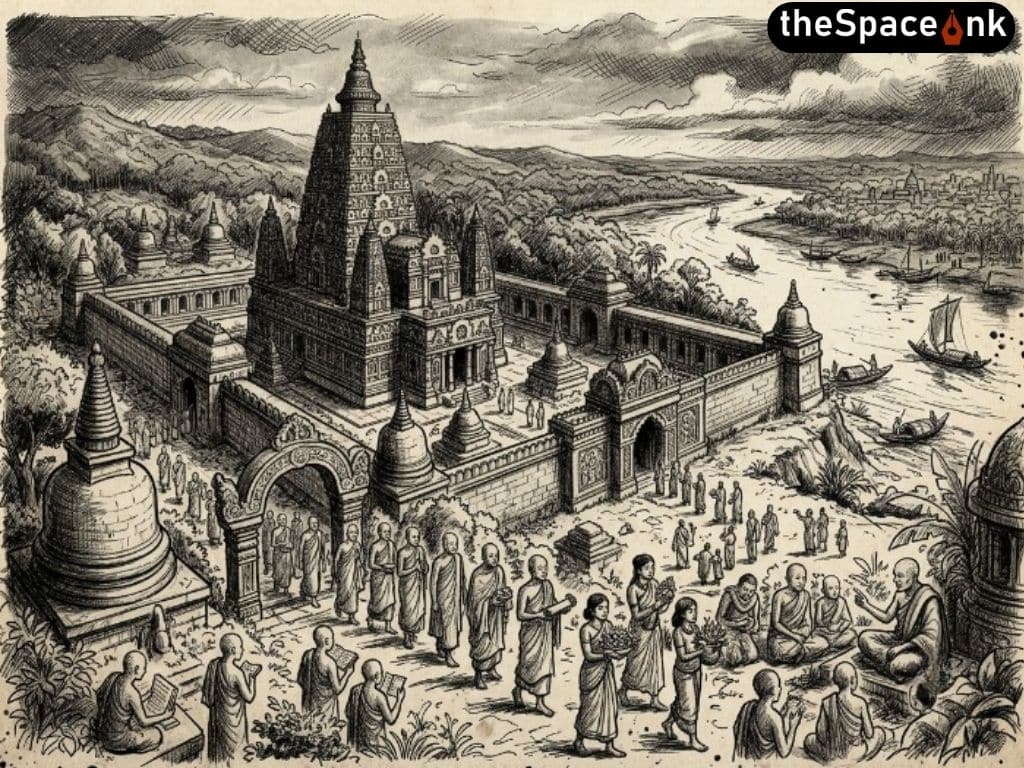
Images are generated by AI

Dr. Jamil is a passionate oncology commercial leader whose two-decade journey has been driven by a deep commitment to improving the lives of people with cancer. As Head of the Early Commercial Team at Merck Oncology and an Adjunct Professor at Columbia Business School, he shapes innovative pipelines while mentoring and inspiring future healthcare leaders. Beyond work, he is a soulful armchair historian of Bengal, a devoted Manchester City fan, and someone whose heart is forever tied to the culture, stories, and spirit of Kolkata.