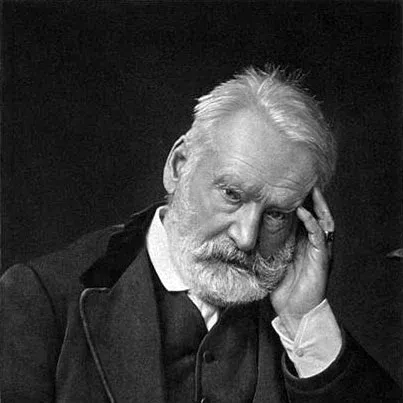
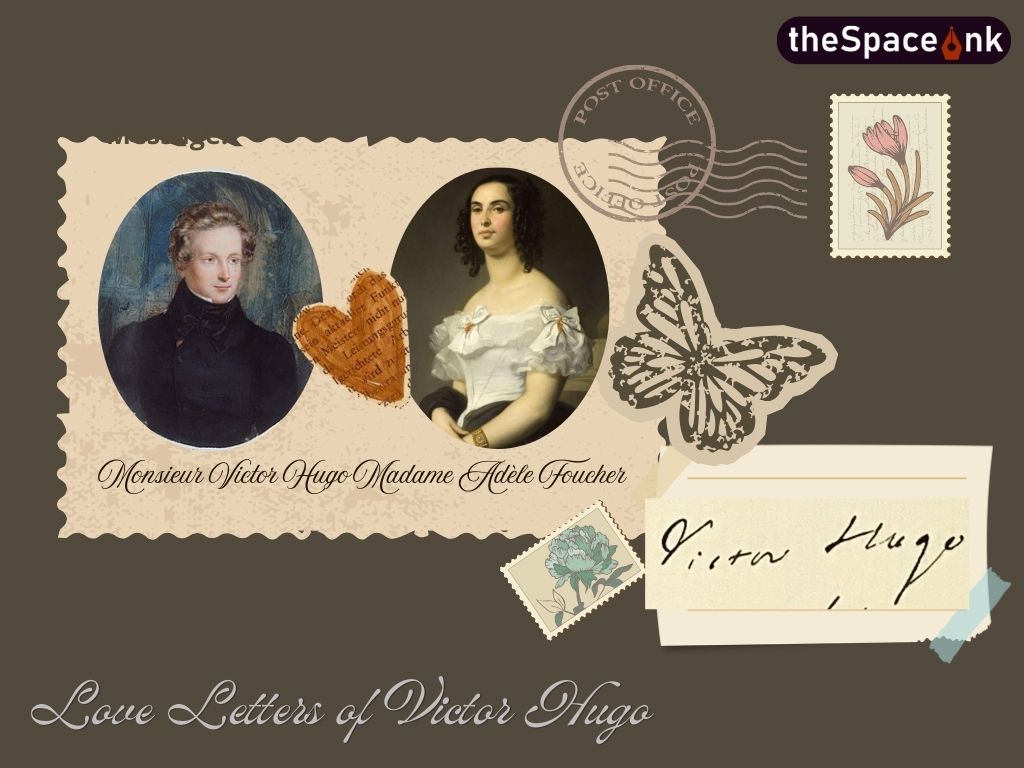
Letters to Adèle Foucher from Victor Hugo
In letters from St. Goar and Bingen am Rhein, Victor Hugo writes lovingly to Adèle Foucher and their children, blending affectionate longing with artistic observation. He delights in Rhine landscapes, anticipates letters at Mainz, humorously notes his incognito, and reveals himself as devoted husband, father, and reflective traveller.
To *Mme. Victor Hugo
St. Goar, Sixth September, 1840
I am continuing my journey up the Rhine slowly, as you see, dearest. Here is the continuation of my diary.
I try to see everything, so as to have a complete and distinct idea of this beautiful country.
I cannot remember the date of Marie de Medici’s death, nor that of Rubens’ birth. Your father is sure to know them. Ask him to fill in the spaces I have left blank. If he were with me, which would be a delight to me, I should not leave any.
Good-bye, dearest; good-bye, my Adèle. Think of me and love me. I will soon write again. Go on writing to Mayence. I will write to you all from Mayence, for I hope you will all have written to me.
I have made a sketch of Andernach for my little Didine, but it is too large to go into a letter. It would have to be folded. I am keeping it in my album to give you in Paris, my darling Didine.
I have left Andernach, and am now at St. Goar, a wonderful place, of which I will send you a drawing of some sort.
I travel slowly because I must do so, and yet I am sorry to do so, for I long to reach Mayence, where your letters are awaiting me, my dearest Adèle, my darling children; I hope they will bring me only what is sweet and good.
I am always thinking tenderly of you; you are with me everywhere, in my expeditions and in my work.
Good-bye, dearest; good-bye, my Adèle. Think of me and love me. I will soon write again. Go on writing to Mayence. I will write to you all from Mayence, for I hope you will all have written to me.
Fondest love to you, and also to your kind father. Kisses for you, dearest; for you, my Didine; for you, my Charles; to you both, my Toto and Dede.
You must all think of your father, who loves you so dearly.
**********
Also Read: A Letter to Sara Chapman Thorp Bull
To Mme. Victor Hugo
Bingen, 28th September, 1840
Good-morning, my darling Adèle; my fondest love to you.
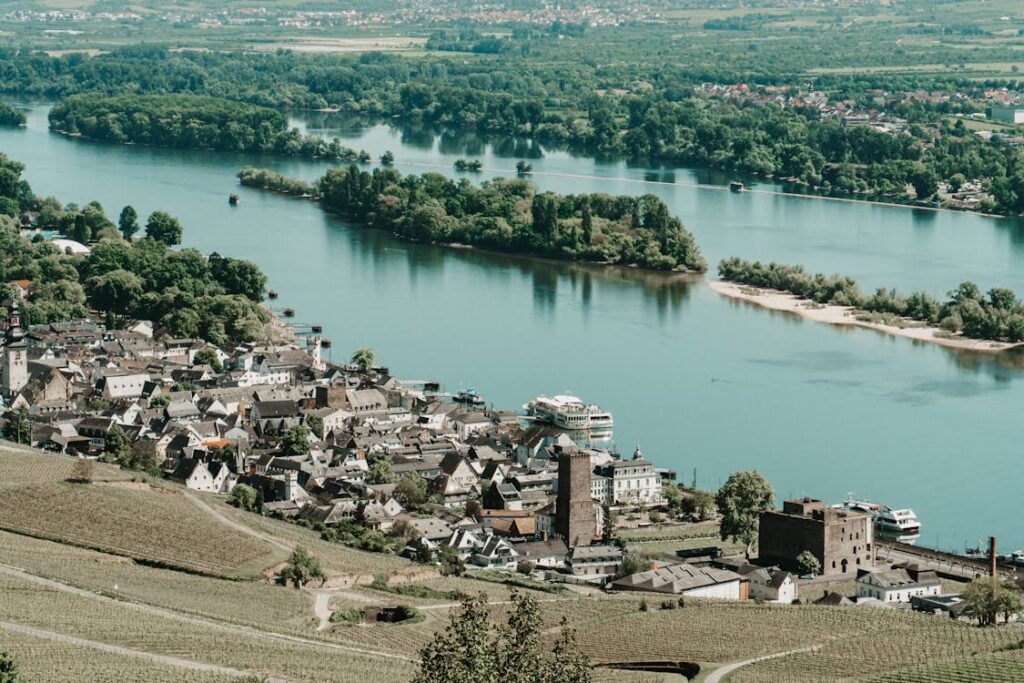
I am now at Bingen. To-morrow I shall be at Mayence, and I shall get your letters; I shall get letters from all of you, my beloved ones. It will be like seeing you all again. I am quite joyful. You and the others must write to Treves in future.
If time allows, I think of writing the same work on the Moselle, a beautiful and little-known river, that I am now finishing on the Rhine.
“On the 14th of September M. Jules Janin, author, and M. Victor Hugo, id., passed through Bingen”—the names are entered there in the visitors’ book of the Victoria Hotel, by Jules Janin himself, whose handwriting I think I recognized.
My darling Dede, just now I hear a little girl of your age chattering in the room next mine, who reminds me of you, dear child. Be very good to your mother, your sister, and your brother, and your daddy will love you very much.
M. Victor Hugo, the landlord informs me, did not look very like his portraits, and had mustaches. The two gentlemen were in high spirits, and had three charming ladies with them. They made all the excursions in the neighbourhood. Their arrival upset the whole town. They were very good fellows, however.
The landlord asked me if I knew them. I said yes, slightly, but only by name. Now strangers are shown their names written in the visitors’ book. It has made quite a stir in the little Roman town of Bingen, which, however, was once visited by Charlemagne.
As for me, I travel quite incognito and unrecognized, and I am glad of it.
I hope to find nice letters from everybody at Mayence, and to hear that you are all well, and that the holidays, which, alas! are drawing to a close, have been well spent in much pleasure and a little work.
My darling Dede, just now I hear a little girl of your age chattering in the room next mine, who reminds me of you, dear child. Be very good to your mother, your sister, and your brother, and your daddy will love you very much.
My Didine, my Charles, my Toto, I will write to each of you from Mayence, where I shall find all your letters.
I send you all a thousand kisses, as well as to your dear mother, my children, my joy, my life. Think of me, and pray for me night and morning. You are continually in my thoughts.
My kind regards to your good father. I hope all my scribblings amuse and interest him, and that he will correct me when necessary.
One more kiss for you, dearest. You see there is room for it.
**********
*Madame in French
Image Courtesy: AI, Wikipedia, Wikimedia Commons, Pexels
Victor Hugo (February 26, 1802 — May 22, 1885) was a poet, novelist, and dramatist who was the most important of the French Romantic writers. Though regarded in France as one of that country’s greatest poets, he is better known abroad for such novels as Notre-Dame de Paris (1831; The Hunchback of Notre-Dame) and Les Misérables (1862).