(Walt Disney)
Walt Disney loved to draw.But long before Mickey, Disneyland, or billion-dollar studios, young Walter Elias Disney was sketching farm animals on the walls of his family home, driving his parents slightly mad. He once sold his drawings to neighbors at age seven, and later drove an ambulance in France as a teen after lying about his age. Few creative legends begin with doodles on barn walls and teenage wartime adventures, but his did.
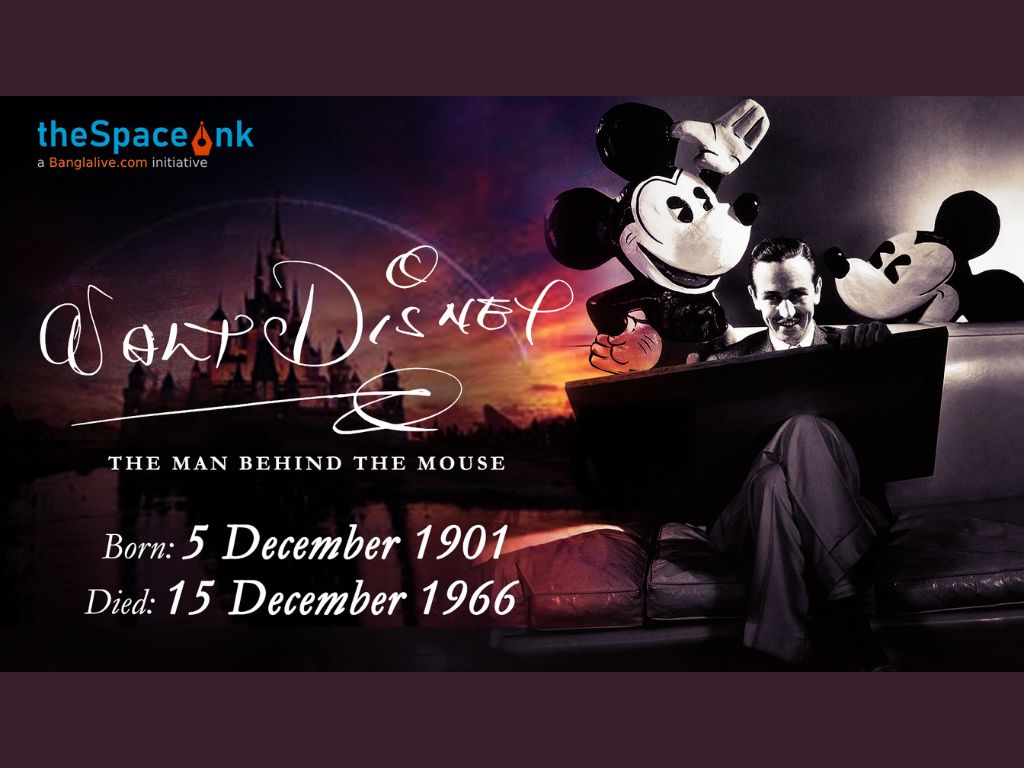
Walt Disney grew up in the Midwest. Born n 5 December in Chicago in 1901 and raised in Missouri, Disney’s small-town upbringing shaped his lifelong affection for Main Street America. The rhythms, values, and imagery of the Midwest would later become the emotional blueprint for Disneyland itself.
He struggled early in his career. In his twenties, Disney opened his first animation studio in Kansas City – and it went bankrupt. But that failure hardened his resolve and sharpened his instincts. It pushed him to move to Hollywood, where his true creative breakthrough awaited.
Mickey Mouse came from a crisis. After losing the rights to his earlier cartoon character Oswald the Lucky Rabbit, Disney needed something new. On a train ride back from New York, he sketched a lively little mouse originally named Mortimer before his wife convinced him to choose the friendlier name Mickey.
Video: Tales from the Quill of the Dark Genius: The Life of Edgar Allan Poe
Sound changed everything. In 1928, Disney released “Steamboat Willie,” one of the first cartoons with synchronized sound. It made Mickey a star and transformed animation into a global phenomenon. Walt himself provided Mickey’s original voice.
Walt Disney aimed higher than anyone expected. When he proposed the first full-length animated feature film, critics mocked it as “Disney’s Folly.” But in 1937, Snow White and the Seven Dwarfs became a massive critical and commercial success. It proved animation could tell emotionally powerful stories.
Innovation became his obsession. Disney’s studio pioneered the multiplane camera, color techniques, storyboarding, and new forms of sound design. For Walt, creativity wasn’t just artistic – it was technological. He believed imagination needed engineering to stand on its feet.
Disneyland began as a dream. Walt wanted a place where parents and children could have fun together in a clean, imaginative environment. In 1955, Disneyland opened in California to enormous crowds, unexpected malfunctions, and instant cultural impact. It marked the birth of modern themed entertainment.
Video: Victor Hugo – Ocean Man of Words
He built stories into physical space. From Tomorrowland to Adventureland, Disney turned narrative into architecture and experience. He wanted fans to “step into the world they had seen on screen,” a revolutionary idea that shaped theme parks around the world.
Walt was always planning the future. Even in his final years, he was sketching ideas for EPCOT – a city of the future powered by innovation, design, and community. Although the project changed after his death, the spirit of his experimental vision still echoes through the Disney brand.
His influence spans generations. Walt Disney won 22 Academy Awards – more than any individual in history. His films, characters, and parks continue to shape global childhoods and shared cultural memory.
Walt Disney left a legacy of imagination. He believed that “laughter is timeless, imagination has no age, and dreams are forever”. The worlds he built remain reminders that creativity can start anywhere – even on a barn wall in Missouri.