Babi Guling and Other Tales from the Balinese Table
Looking back, my second trip to Bali in 2023 feels less like a return and more like a continuation. The first visit had left me with unfinished frames underwater, but it also planted quieter memories — of flavours, street food, and meals I never quite had the time to chase. This essay was written soon after that second journey, when the salt was still in my hair and the taste of sambal hadn’t yet faded. Somewhere between dives and destinations, Bali had begun telling another story — one that unfolded not underwater, but across plates, roadside warungs, and smoky grills.
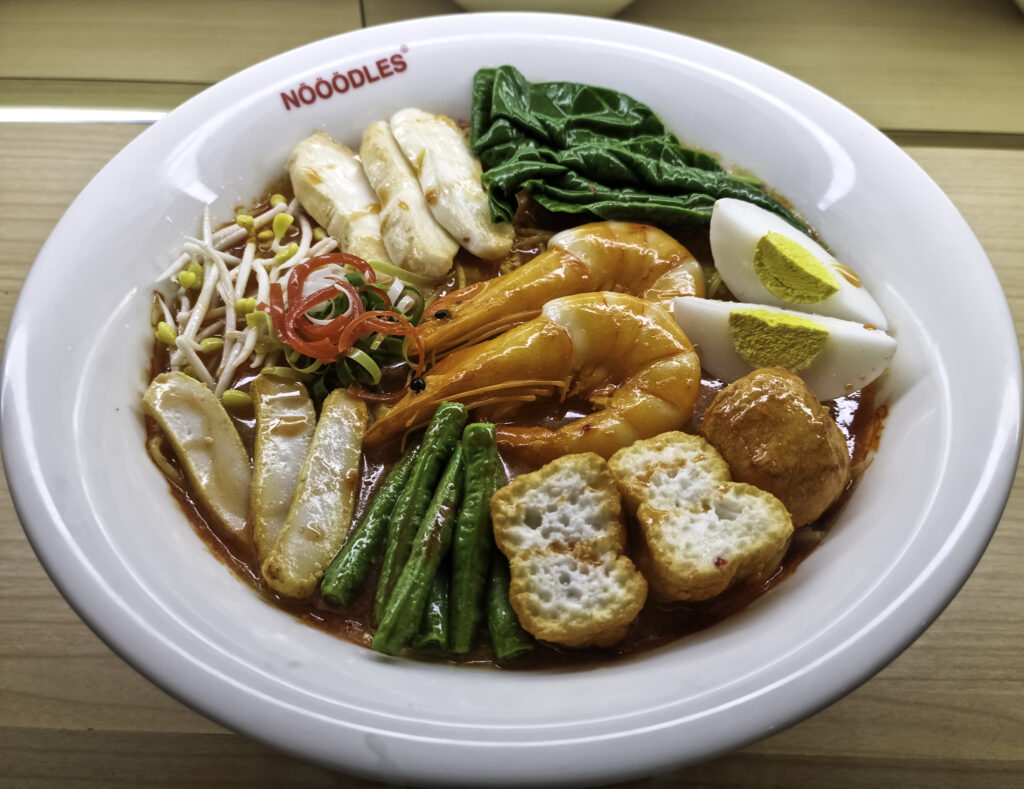
For readers new to my writing — I photograph the underwater world for a living, which means I travel widely. And every dive trip comes with a delicious bonus: local food. Indonesia, in that sense, is a culinary archipelago of its own. With more than three hundred recognised cuisines and at least thirty iconic ones, each island tastes like a different country. Java, Sumatra, Bali — same nation, wildly different plates. Much like how Kolkata biryani and Andhra biryani share a name but little else.
To understand Balinese food, you need a pinch of history. Genetic studies suggest that Balinese people are largely Austronesian with a touch of Indian ancestry. Hinduism may have arrived from India, but over centuries it has evolved into something uniquely Balinese — layered, syncretic, deeply local. Like their cuisine, it borrowed, blended, and became its own thing.
It reminded me of a Marwari friend who insists on bhujia with every meal. I’ve seen him smuggle packets into wedding banquets like contraband joy.
The Austronesians, believed to have travelled from southern China through Taiwan and Southeast Asia, brought with them two culinary revolutions: rice and roasted pork. Hard to imagine today, in a land where life revolves around rice terraces that look like sculpted emerald staircases. Yet there was a time when paddy cultivation didn’t exist here.
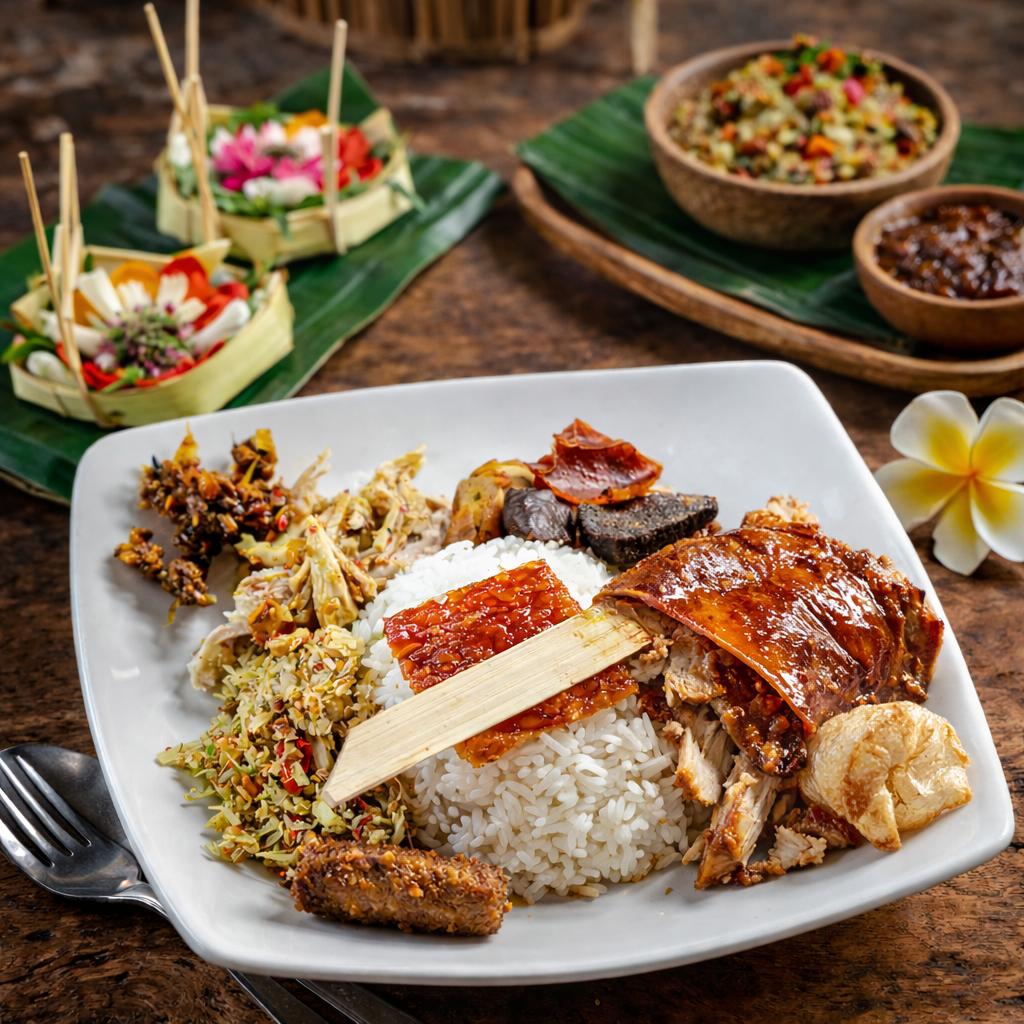
And then there was pork. The Philippines has lechon. Bali has Babi Guling — literally, the “turning pig.” A whole pig slowly rotated over fire until the skin crackles and the meat yields. Traditionally made with suckling pigs, though modern demand has upsized the star performer.
In Bali, there are eateries devoted entirely to this dish — temples of pork, if you will – equal parts kitchen and pilgrimage. The smell alone — smoke, spice, and caramelised fat — can pull you off the road long before the signboard does. A classic Babi Guling platter is less a meal and more a symphony: white meat, red meat, greens, fried bits, satay, soup, blood sausage, and crackling, all marching onto a plate beside hot rice. Spicy, complex, unapologetically bold. If Indian palates had a passport, they would feel at home here.
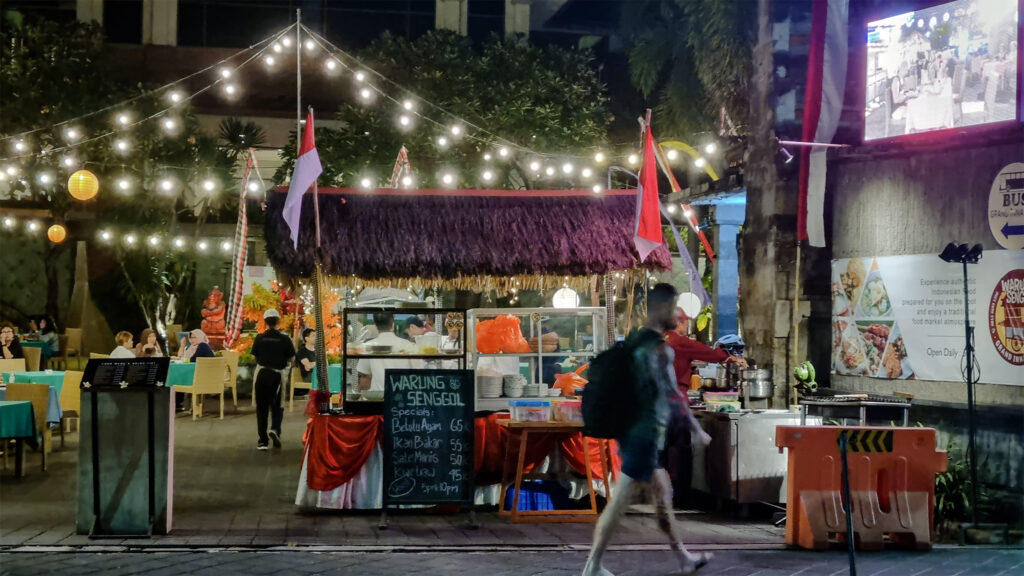
Soon after landing, I set off from Jimbaran towards Tulamben. No forex exchanged yet, just leftover rupiah in my pocket. I asked the driver to stop at a roadside warung — preferably one serving Babi Guling. Fate, or perhaps pork destiny, intervened. He stopped at the exact same place I had eaten at the previous year.
I showed the staff my old photos. Hospitality tripled instantly. Repeat customers, it seems, are a universal love language.
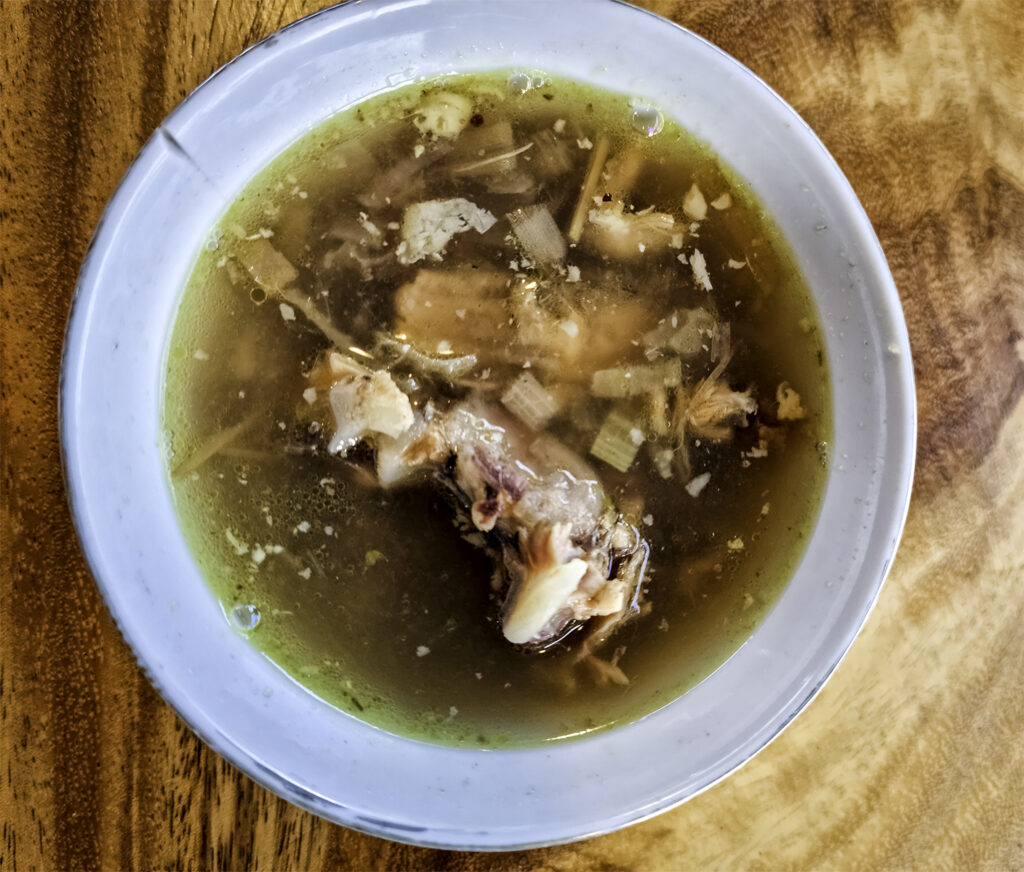
Complimentary iced tea arrived (though my heart was quietly negotiating with beer). Alongside the pork came lawar — a spicy vegetable mix — and generous helpings of crackling. No blood sausage, sadly, but both heart and stomach left satisfied. I made a quiet pact with myself: this trip would be powered by local food.
Tulamben became home for a while — specifically Matahari Resort, a haven for underwater photographers. The restaurant overlooked the sea and served everything from Balinese to Thai, continental to Indian. Yet the local flavours kept calling me back.
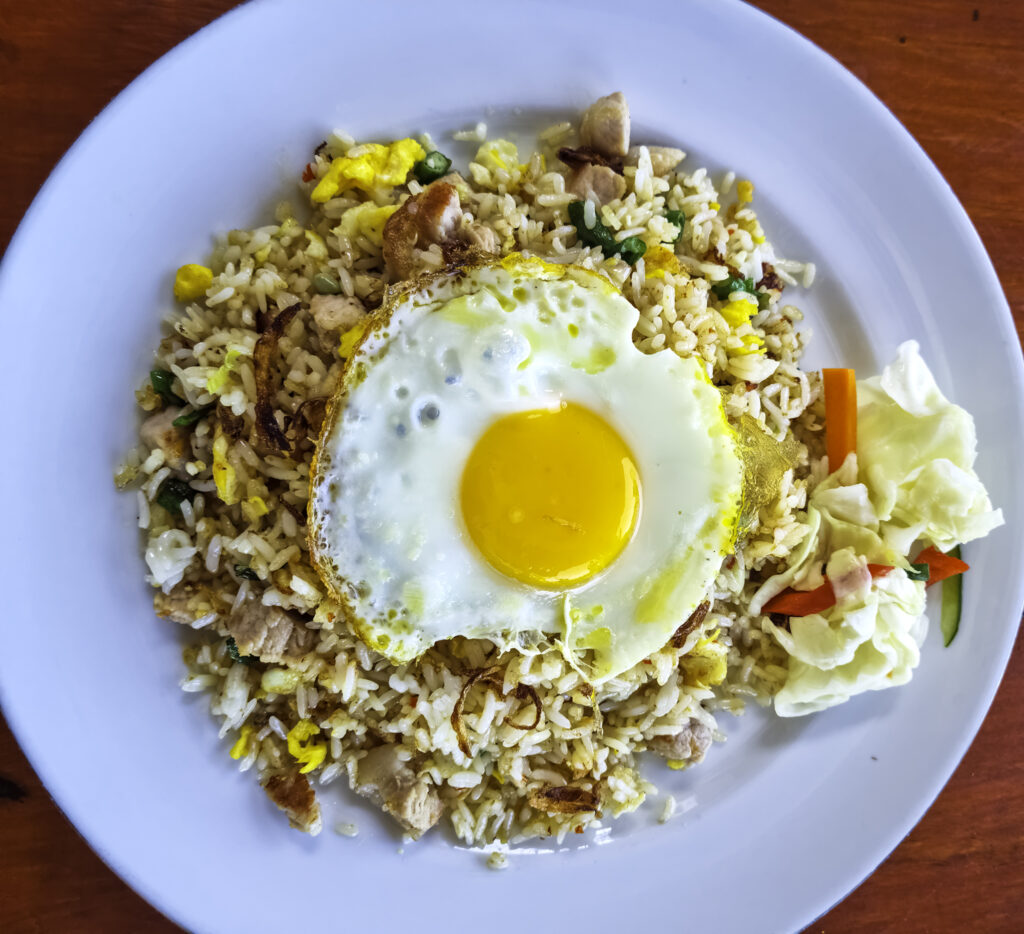
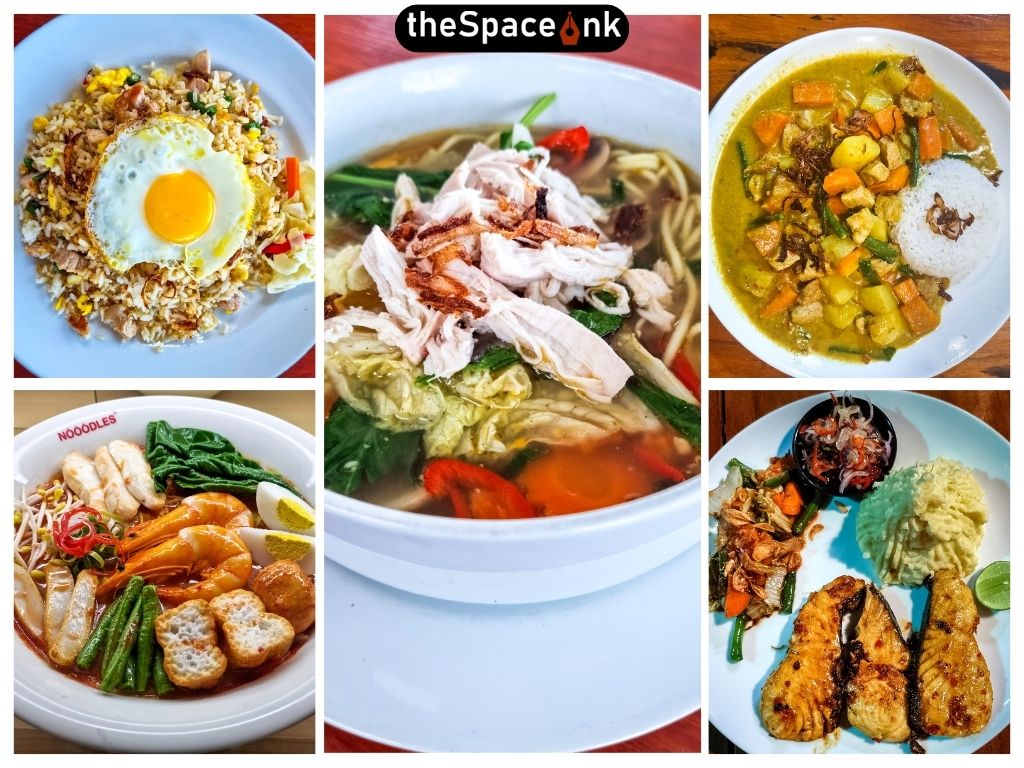
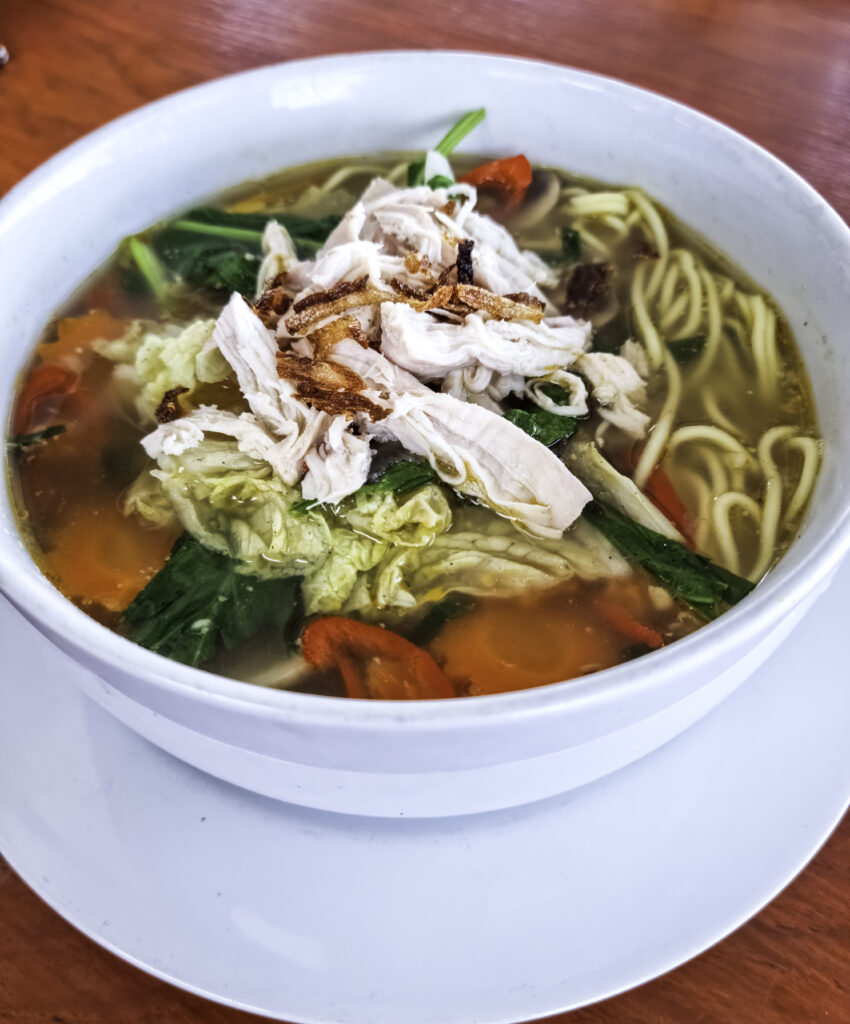
Take Nasi Goreng. In Bali, it becomes Nasi Goreng Bali — fried rice crowned with pork and a sunny-side-up egg. Simple, satisfying, and sneakily addictive. On other days, lunches swung between poached chicken and Thai-style crispy pork belly. But dip anything into Balinese sambal and it stops belonging to any one cuisine. Sambal is the great equaliser — the diplomatic passport of flavour.
It reminded me of a Marwari friend who insists on bhujia with every meal. I’ve seen him smuggle packets into wedding banquets like contraband joy.
Balinese homes are poetry in brick and stone. Shrines everywhere — at gates, corners, pathways — each carrying offerings of flowers, incense, and tiny woven trays filled with sweets or candies. Often, it feels less like people living in houses and more like gods renting out space to humans.
Rituals are constant companions in Bali. Full moon, half moon, black moon — ceremonies bloom like seasons. And where there are ceremonies, there is food. Always food.
That was Babi Satay — grilled pork in its most honest form. No garnish, no pretence. Just fire, fat, and flavour. It tasted oddly familiar, like food cooked by a grandmother who lives in a different country but understands your soul.
Offerings usually fall into four edible philosophies: rice meals, satay skewers, coconut sweets, or modern junk food. Faith, it seems, has evolved with fast food.
One morning, I watched resort staff open brown paper packets, offer small portions to the gods, and then eat. That quiet ritual stirred a mild envy in me. Toast suddenly felt like a betrayal.
A few days later, I found redemption. On the way to Amed, I stumbled upon a tiny roadside stall selling pork satay wrapped in brown paper parcels. People were eating like they had discovered immortality.
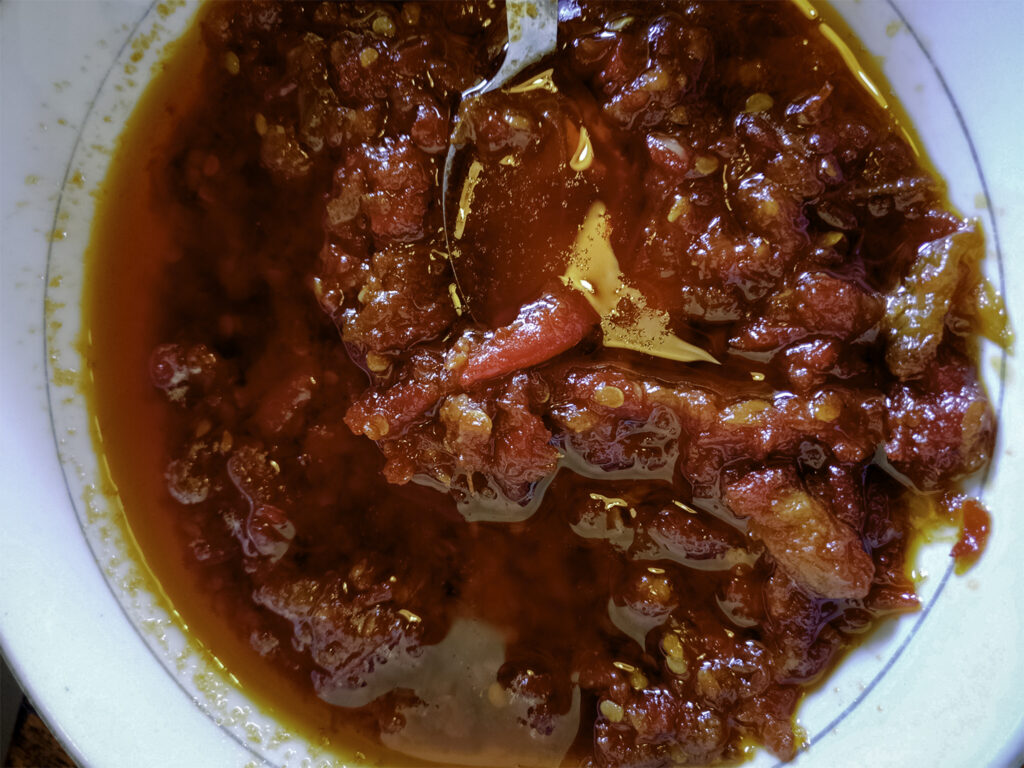
I demanded a taste. They handed me a single skewer dipped in volcanic sambal. One bite, and diplomacy ended. “One piece won’t do — pack the whole thing!” I declared in gloriously broken English-Hindi. My spice tolerance earned respectful nods. Growing up on bhut jolokia has its advantages.
Also Read: Shwe Yin Aye- A Summer Delicacy from Myanmar
That was Babi Satay — grilled pork in its most honest form. No garnish, no pretence. Just fire, fat, and flavour. It tasted oddly familiar, like food cooked by a grandmother who lives in a different country but understands your soul.
Then came Nusa Penida — a rugged island where cliffs meet coral and sunsets flirt shamelessly with the sea. A place where beauty doesn’t knock — it barges in.
The hilltop resort I stayed in cost a fraction of what a similar view would cost elsewhere. A staircase led straight from my room into a pool that looked like it was poured into the sky. Time felt suspended, like a diver hovering mid-water.
But the underwater reality was bit cold — literally. Temperatures dropped to 14–15°C. After shivering through dives, I was handed vegan lunches. My stomach staged a rebellion. The solution, predictably, involved pork satay again.
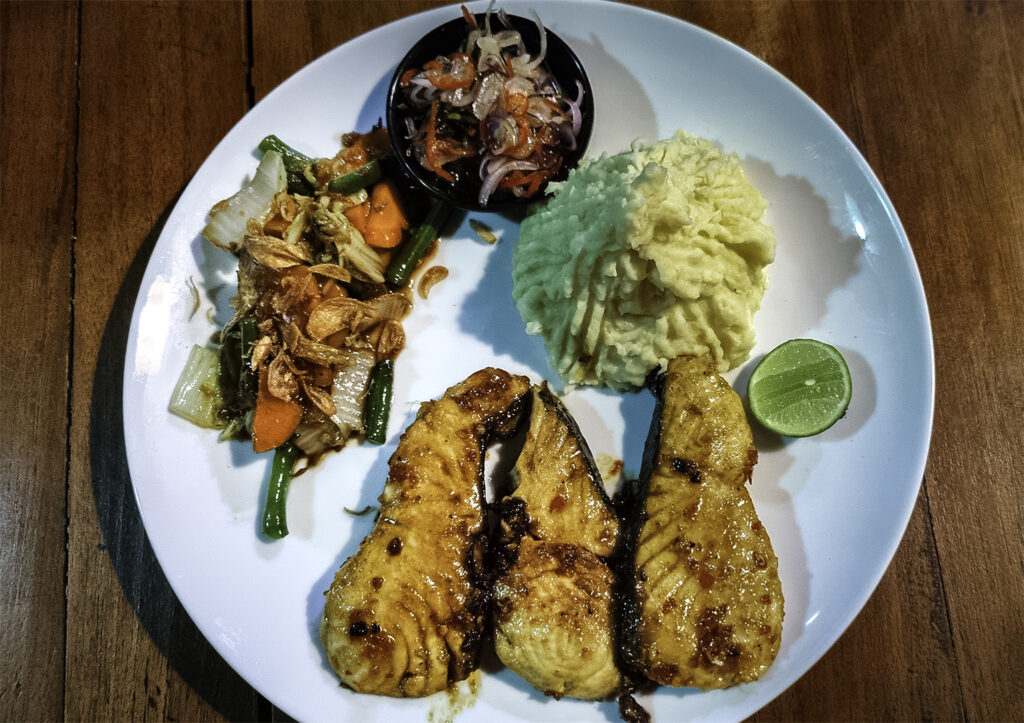
Near Banjar pier, a stall perfumed the air with smoky sweetness. The skewers here had a reddish hue. The secret? A hint of kidney paste in the marinade. The taste was surreal — cinematic, almost gothic. If flavours could wear capes, this one would.
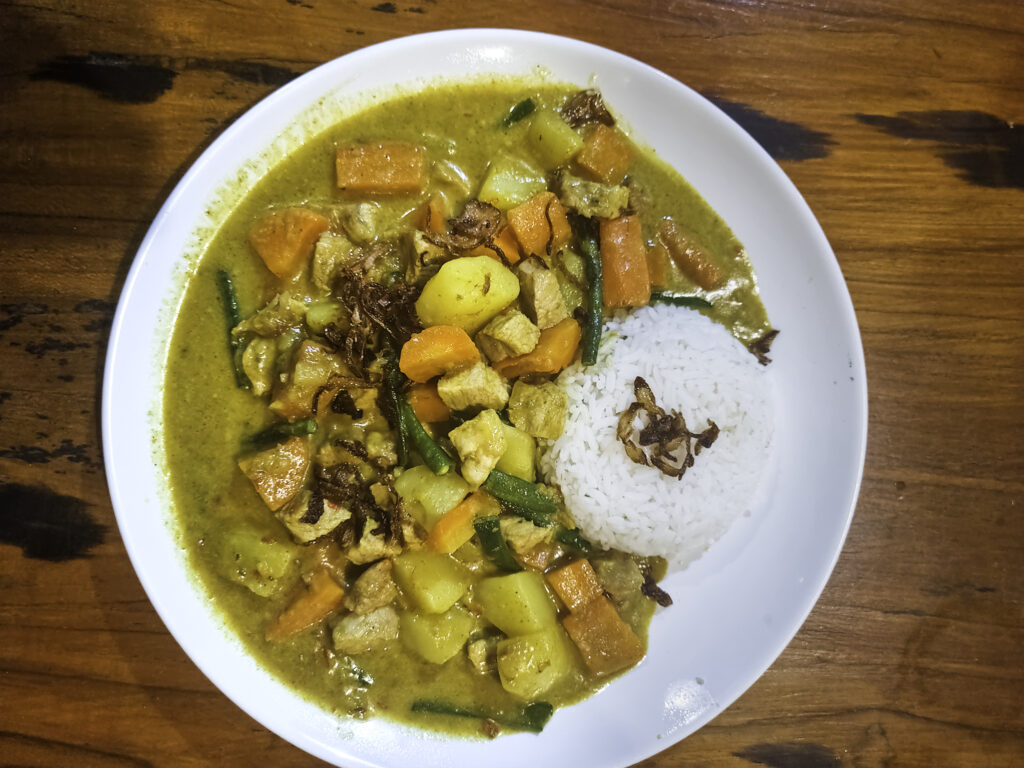
Dinner that night was at a local warung where dishes were laid out buffet-style. Vegan on one side, carnivore on the other. After weeks away from home, I instinctively piled up jackfruit curry and greens — and then quietly added eggs and fried chicken. Strict vegetarianism, with flexible footnotes.
And here’s the thing about Bali — I have never seen an angry face here. Not this time, not the last. Everything feels gently enchanted. That quiet magic seems to seep into the food too.
The crisp sparkle of Bintang beer, the delayed warmth of soju, the salt-laced breath of the sea — Bali is often called the “Land of the Gods.” Perhaps it’s not only because of the temples. Perhaps it’s because everything here — even a meal — feels quietly sacred.
And if that’s true, then perhaps every plate in Bali is a small prayer answered.
Image Courtesy: Author

Samya Sengupta is an adventurer, photographer, Trekker Traveller and a certified scuba diver.
He is a travel and underwater photographer, his interests also include environment and underwater fashion. He loves to share lesser-known stories of the beautiful World, impact of human behaviour on the environment. He has carried out photographic assignments for various International NGOs including CARE International, Water For People, UNICEF and others. INHP – III was launched in West Bengal with his photographs. The Indian gallery and the theme poster of India at WTM London Fair 2013 were decorated with his photographs. By profession Samya is a practicing Chartered Accountant.