Raja Sen: The Man Who Made Me Believe I Could Make Films
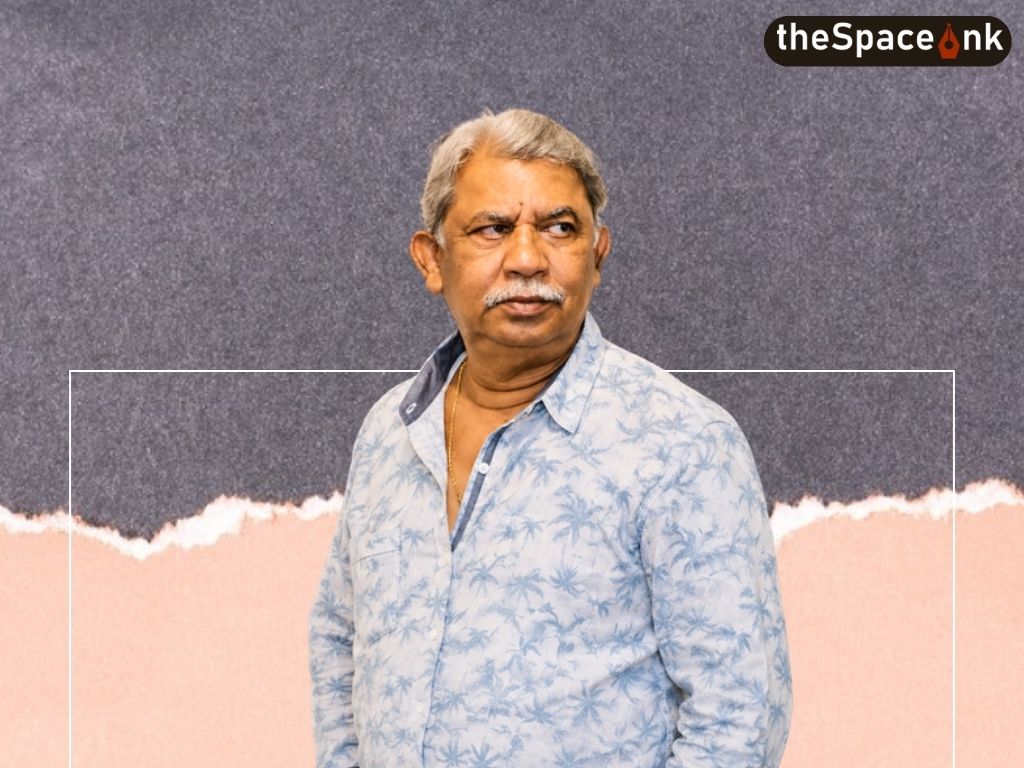
Raja Sen- a name perhaps not heard as often today, but once the undisputed king of Bengali television serials and a three-time National Award winner—found himself becoming a struggler almost overnight.
When the cultural landscape took a sharp plunge and the industry changed its language, its tastes and, most painfully, its consumers, Raja could never quite find his way back to the place he had once occupied so effortlessly. Damu could not perform the same magic again.

Time does not always take away your skill. Sometimes, it does something far more cruel: it changes the people who once understood, valued and consumed that skill. The audience you created moves on, and suddenly what was once your strength begins to feel unfamiliar to the world.
That, perhaps, was Raja Sen’s tragedy.
He did not necessarily lose his talent. The world around him changed—and it stopped knowing what to do with the talent it had once celebrated.
Yet to me, Raja Sen was never simply a filmmaker whose career rose and fell with the changing fortunes of an industry. He was the first person associated with the film industry whom I ever met. And, in many ways, he was the person who made me believe that I too could become a filmmaker.
I had wanted to meet him after watching Adarsha Hindu Hotel on television. My anticipation was, perhaps, a little biased. I knew almost nothing about the film industry then. I imagined that a director might come with a certain showmanship, perhaps even a little snobbery about cinema and television.
Surprise would be an understatement.
When I finally met him through a friend, I was almost mesmerised by how grounded, accessible and completely unassuming he was. We became close. We became friends. And Mr. Raja Sen gradually became my Raja Da.
You might not always have been impressed by his casual manner when he spoke about cinema, literature or modern art. But spend some time with him personally, and another Raja Sen emerged. His knowledge of literature was immense. He had instinctively absorbed Bengal’s artistic traditions and possessed a rare ability to bring those influences into contemporary life and cinema.
He was, in the truest sense, a connoisseur of Bengali life.
That sensibility ran through his work. Damu, beautifully adapted from Narayan Gangopadhyay, was one expression of it. Atmiyo Swajan, based on Samaresh Majumdar, explored the gradual intrusion of negativity into modern family life and the ways in which people can slowly lose their capacity for happiness. His films observed human relationships without constantly announcing what they meant.
Damu and Atmiyo Swajan both won National Awards—Damu as Best Children’s Film and Atmiyo Swajan in the Best Family Welfare Film category. But the awards were almost incidental to what mattered more: Raja Da had an extraordinary understanding of people, families and the changing texture of Bengali society.
Joint families, their everyday conflicts, small joys, disappointments, relationships and fractures—whether in a village, a town or a city—were his natural territory. His love for Bengal was never decorative. It was the impulse behind much of his cinema and television.
And television was where he became a phenomenon.
In the late 1990s, he was among the finest creators of Bengali television serials. Adarsha Hindu Hotel and Kolkata Kolkata remain deeply etched in my memory. I watched them even during my examination days. I simply could not bear to miss an episode.
There was no unnecessary jugglery, no desperate effort to appear “different”, no pretension. Simplicity was not a limitation for Raja Sen. It was his aesthetic.
And because it came from such immense knowledge and observation, that simplicity became his signature.
His career also contained experiments and imperfections, as every serious creative life does. Abhishek Bachchan made his Bengali film debut under his direction in Desh. Raja Da experimented with filters in the film—an experiment which, by his own admission, did not quite work. He told me so himself, with the same disarming honesty with which he discussed everything else.
He never needed to pretend that every choice he made was perfect.
But for me, Raja Sen’s greatest contribution cannot be measured by any film, serial or award.
Without Raja Da, I don’t think I would have become a filmmaker.
When I met him, he was trying to make Krishnakanter Will, based on Bankim Chandra Chattopadhyay. I accompanied him on location searches. We discussed the script, dialogues and characters. I was a complete novice. I knew virtually nothing about the technical craft of filmmaking.
And yet he would ask for my opinion.
He would listen.
He would take my thoughts seriously.
Sometimes he accepted an idea. Sometimes he rejected it. Sometimes we argued. But every conversation left something behind.
Slowly, without my even realising it, those conversations created a possibility in my mind: perhaps I could think about films. Perhaps, one day, I could make one.
That was Raja Da’s greatest gift to me.
He made me believe that I could.
Every film I made afterwards, he watched. Almost invariably, he would call me the next day to discuss it. He had an immense confidence in me. Sometimes he praised me, sometimes he questioned me, sometimes he disagreed with me. But he always engaged.
That engagement mattered.
Also Read: The Eye That Stayed Open: Raghu Rai
Then came time.
And time can be cruel to artists.
The cultural landscape changed. New generations arrived, new equations were formed, new circles emerged. The industry that had once made Raja Sen a household name gradually had less space for the very sensibility that had made him special.
He was no longer in the front row.
But he never stopped trying.

Organised by Eisenstein Cine Club
He continued to think. He remained curious about contemporary cinema. He wanted to make films again. He was familiar with the changing language of filmmaking and, despite everything, still had stories to tell.
But very few people seemed interested.
And I know how painful that can be.
I know what it means to keep trying when the world has already decided that your moment has passed. It is especially cruel for an artist because talent does not come with an expiry date. What changes is the ecosystem around it—the people who finance, produce, distribute, watch and decide whom they want to hear.
The audience you once created moves on. The industry moves on. And suddenly, you are expected to prove yourself all over again.
Raja Da faced that fate.
Your films will remain. Your stories will remain. The Bengal you saw, understood and preserved through your cinema will remain.
Perhaps that is the saddest chapter of his life—not that he stopped being an artist, but that the world gradually stopped making room for the artist he remained.
Neither was I able to meet him as often as I should have. I became consumed by my own work, my own struggles, my own films. That distance is something I will carry with me.
Yet his cinema remained.
And perhaps it will outlive all the circles that once ignored him.
His films will remain with those who understand and cherish an older Bengal—the traditions, culture and rhythms of ordinary lives; the daily existence of people who may appear insignificant to society but whose lives contain extraordinary stories.
Lately, one of his finest works, for me, was Maya Mridanga, where he entered the subaltern world of Alkap, based on the work of Syed Mustafa Siraj.
Watching it, I could see the Raja Sen I had always known: a filmmaker who understood darkness not merely as an absence of light, but as something that can descend upon an entire community, a group of people, a generation of secluded souls searching for a better tomorrow.
Raja Da was less interested in the destination than in the struggle to reach it.
That was his cinema.
He observed people trying to fulfil their dreams. He gave their struggles time, space and dignity. And perhaps nowhere was that more deeply expressed than in Maya Mridanga.
Also Read: The Clinking of Twin Glasses
Today, what remains with me most strongly are the regrets.
I am sorry, Raja Da, that I did not meet you for such a long time.
I am sorry that I could not cast you in my film, although you had personally asked me to let you act.
And I am especially sorry that I could not fulfil one small dream of mine: to put you behind the camera of one of my films. I wanted you to direct a scene, perhaps even a single shot. I wanted the man who had helped me evolve as a filmmaker to stand behind the camera of one of my films, if only for a moment.
I wanted to give you that tribute while you were here.
I didn’t.
And now I cannot.

I don’t know how many more films I will make. I don’t know how long this journey will continue. But every film I make from now on will carry your absence somewhere within it.
Perhaps in a phone call I will no longer receive.
Perhaps in a suggestion I will never hear.
Perhaps in that familiar voice calling the morning after a screening and asking:
“So, how did you make the film?”
Raja Da, you were not merely a filmmaker I knew.
You were one of the reasons I became one.
And that is a debt no obituary can repay.
Your films will remain. Your stories will remain. The Bengal you saw, understood and preserved through your cinema will remain.
And somewhere within every filmmaker who was fortunate enough to learn from you, a little of Raja Sen will remain too.
Aideu, Raja Da.
Image Courtesy: Author, Wikipedia

Indrasis Acharya is a highly acclaimed and sensitive filmmaker who delves deeply into human relationships, loneliness, and the inner world of individuals through his films. His notable works include Billu Rakkhosh, Pupa, Parcel, and Niharika.
At the same time, he works in the corporate world, where professional discipline and real-world experience further enrich his creative vision.