From Bengal to Bristol: Tracing Raja Rammohan Roy’s Final Days
Raja Rammohan Roy’s name still lives in the city of Bristol. Far away from India, this old English city quietly preserves the memory of one of the greatest social reformers of modern India. His statue stands before a cathedral, his grave rests in a peaceful cemetery, and every year admirers visit the city to remember the man who fought against social injustice and dreamed of a modern India.
On a cloudy autumn morning in 2023, I travelled to Bristol from London by a Great Western Railway train. The journey itself felt like a slow passage through English history. Green fields stretched endlessly outside the window. Small villages with red-brick houses appeared and disappeared like scenes from an old painting. Rain clouds floated lazily across the sky. The soft rhythm of the train and the misty countryside created a strange calmness.
Also Read: Norway-1: An Exhilarating Fairytale Adventure through Fjord Land
I arrived at Bristol Temple Meads railway station, one of the oldest railway stations in Britain. The station looked like an architectural relic from another age. Its arched roof, old stone walls, and Victorian design carried the memory of the Industrial Revolution. The name “Temple Meads” comes from the nearby Temple Church and the water meadows beside the River Avon. During the Second World War, the church was heavily damaged by bombing, but the stories of the past still remain alive in the neighbourhood.
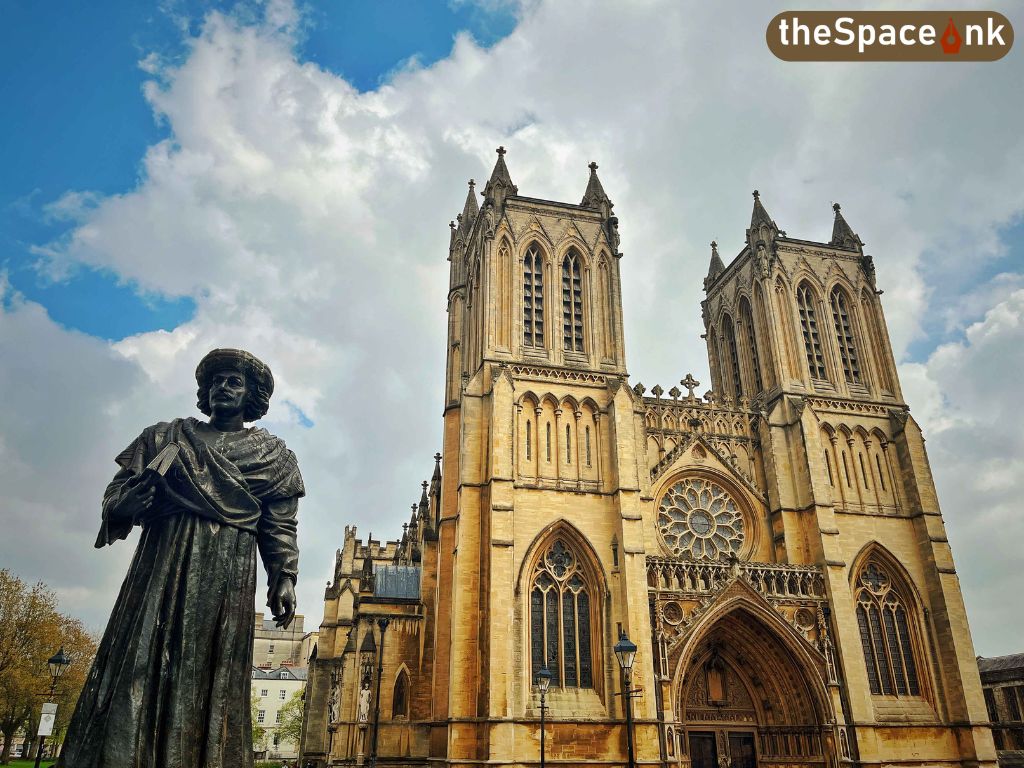
Outside the station, Bristol appeared both modern and ancient at the same time. Young students hurried along the roads with coffee cups in hand, while centuries-old churches stood silently nearby. I boarded a city bus and got down at the bustling city centre. From there, after walking barely a hundred metres, I reached the magnificent Bristol Cathedral.
Standing before his statue, I felt a strange sadness. History often celebrates great victories, but rarely speaks about loneliness. Roy died in a foreign land, away from the Ganges, away from Bengal, and away from the people for whom he had struggled all his life.
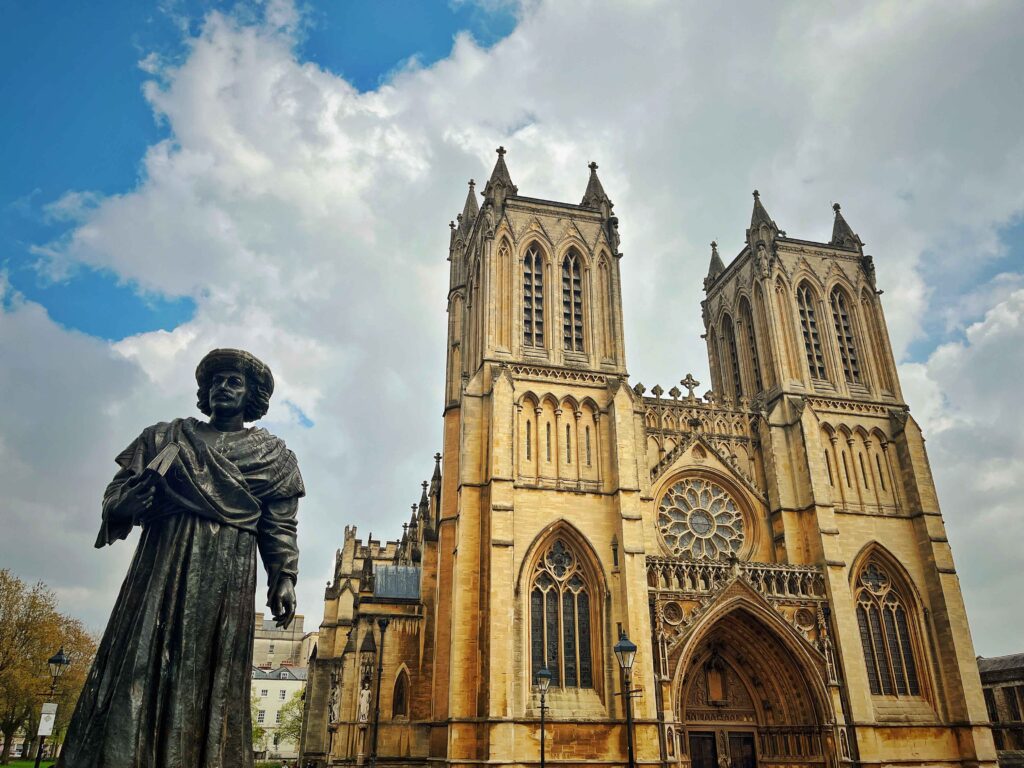
The cathedral immediately captured my attention. Dating back to the twelfth century, it was originally the Abbey of St Augustine. The giant stone building rose proudly against the grey sky. Its tall windows, vaulted ceilings, and Gothic arches gave it an atmosphere of timelessness.
Inside, the silence felt sacred. A few visitors walked quietly across the stone floor while candles flickered near the altar. Since no guided tour was available, I collected a small leaflet and explored the cathedral on my own.
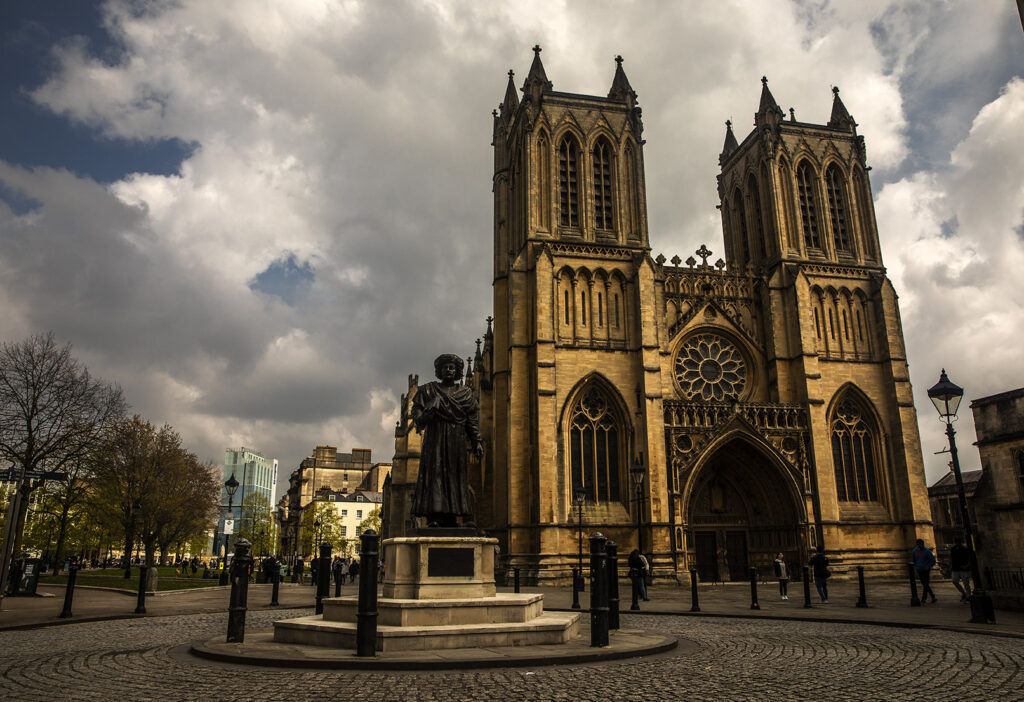
As I stepped outside, I saw the bronze statue of Raja Rammohan Roy standing in front of the cathedral. At that moment, the distance between India and England suddenly disappeared. Here, in this old English city, stood the memory of a Bengali reformer who challenged blind customs and argued for human dignity nearly two centuries ago.
Raja Rammohan Roy came to England in 1831. By then he had already become famous in India for his campaign against sati, the cruel practice in which Hindu widows were forced to burn themselves on their husbands’ funeral pyres. His efforts greatly influenced Governor-General Lord William Bentinck, who finally outlawed sati in 1829. Orthodox groups strongly opposed the decision and appealed for the law to be cancelled. Roy travelled to England partly to defend the abolition of sati before British authorities.
But his mission in England was larger than that. He also represented the Mughal Emperor Akbar II and argued for the emperor’s pension rights before the East India Company. During his stay in London, Roy interacted with intellectuals, politicians, reformers, and Unitarians. His sharp mind, elegant manners, and knowledge of several languages impressed British society. Some even believed he could have become a member of the British Parliament if circumstances had allowed.
Also Read: Norway (Part – 2): Bergen: Norway’s Storybook City by the Fjords
Roy spent much of his time in London attending meetings and discussions. He observed British democracy closely and wrote about governance and education. Yet the endless social engagements and constant travel slowly damaged his health.
In 1833, he travelled to Bristol with his adopted son Rajaram to visit his close Unitarian friends, Reverend Lant Carpenter and his daughter Mary Carpenter. Bristol at that time was a thriving port city connected to trade across the world. Roy stayed at Beech House in Stapleton, a quiet suburb away from the crowded streets of London.
Unfortunately, he soon fell seriously ill with meningitis. On 27 September 1833, Raja Rammohan Roy passed away there, far from his homeland.
Standing before his statue, I felt a strange sadness. History often celebrates great victories, but rarely speaks about loneliness. Roy died in a foreign land, away from the Ganges, away from Bengal, and away from the people for whom he had struggled all his life.
At that moment, I had two choices. I could continue towards Bristol Harbour, famous for its lively cafés and colourful streets, or I could visit Arnos Vale Cemetery, where Raja Rammohan Roy rests. I chose the latter.
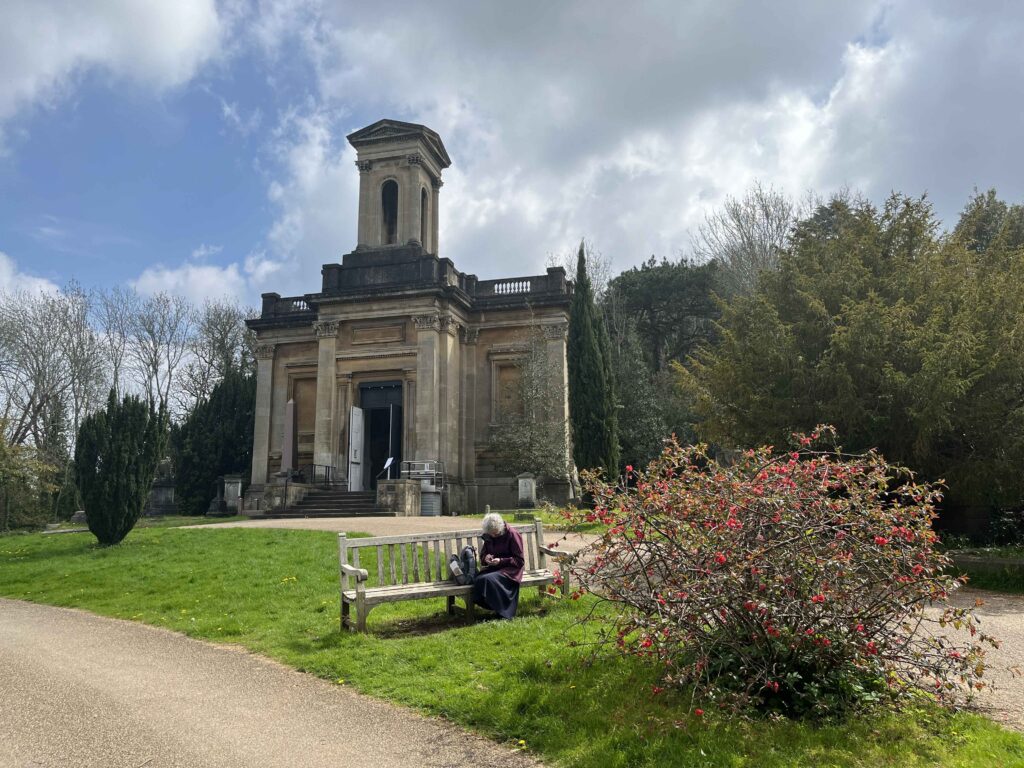
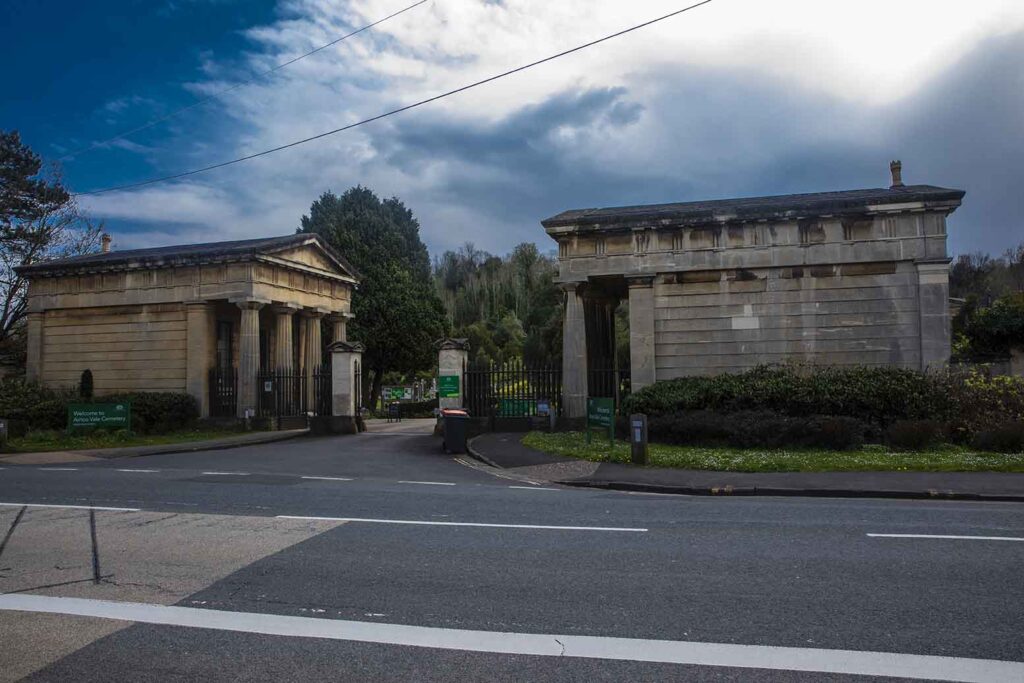
The bus ride to Arnos Vale passed through quiet residential roads lined with autumn trees. Fallen leaves covered the pavements in shades of yellow and brown. The cemetery itself felt more like a peaceful woodland than a graveyard. Birds chirped softly among tall trees, and old gravestones stood silently beneath the cloudy sky.
A friendly supervisor handed me a booklet explaining the history of the cemetery. He spoke warmly about Raja Rammohan Roy and proudly mentioned how visitors from India still come there every year.
Roy was first buried in the garden of Stapleton Grove according to his wishes. Later, in 1843, his remains were reinterred at Arnos Vale Cemetery. A beautiful chhatri-style monument was built over his grave with financial support from Dwarkanath Tagore. The structure combines Indian and European architectural styles, symbolising the bridge Roy tried to build between East and West.
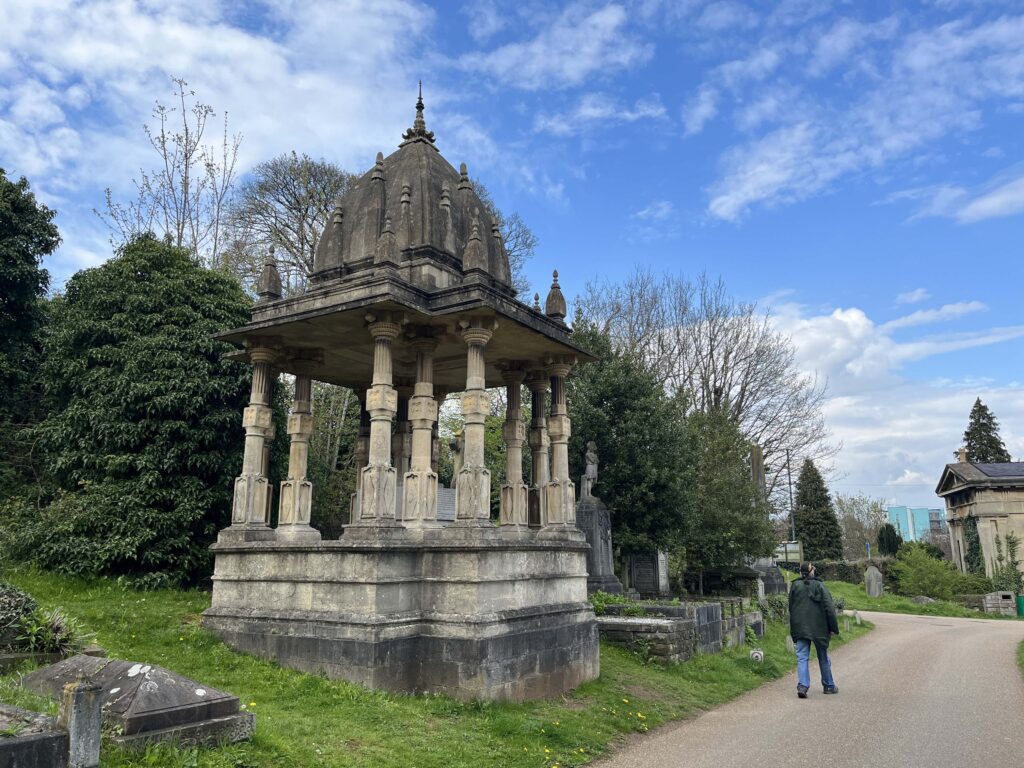
Nearby lies the grave of Mary Carpenter, the famous social reformer who later worked closely with India and campaigned for education and prison reform. Walking among these graves, I realised how deeply Bristol and India had become connected through history.
After offering my silent respect, I slowly walked out of the cemetery. The cloudy sky remained unchanged, but my thoughts were heavy with memory. Bristol was no longer just another English city for me. It had become a place where history, reform, exile, and remembrance quietly meet.
Image Courtesy: Author
Aurora Borealis

By day, Amlan Chakraborty a technical architect in IT; by passion, he's an explorer, travel writer and photographer. During his travels, he savors the journey on foot or via public transport, immersing himself in the local culture at street food joints and book corners. Through his lens, he captures and shares the essence of nature, humanity, and cultural and socio-political moments.