

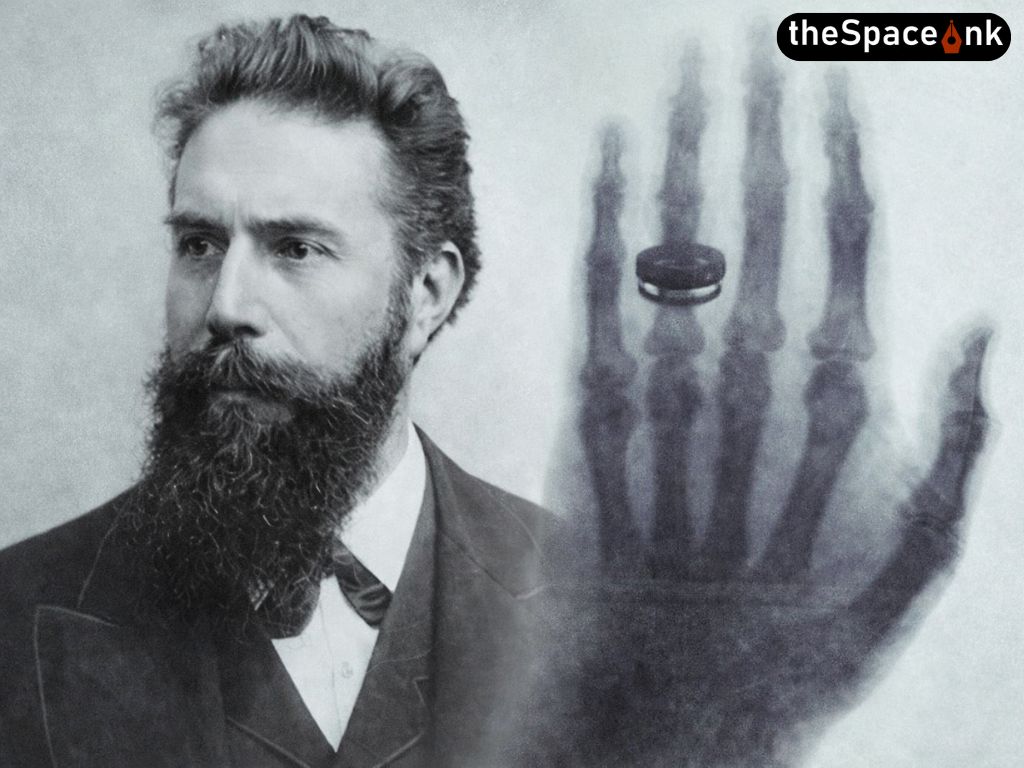
Wilhelm Conrad Röntgen: That ‘Unknown’ Ray
In the early weeks of November 1895, Wilhelm Conrad Röntgen, Professor at the Physics Department of the University of Würzburg, who has become a German citizen only seven years earlier after being stateless for forty years, was experimenting with vacuum tubes and studying phenomena at very high voltages. That was an era of vacuum tubes and high voltages in Physics. Stalwarts like Heinrich Hertz, Nikola Tesla, William Crookes, Johann Hittorf, and Philipp Lenard, all had their own designs for their particular lines of research.
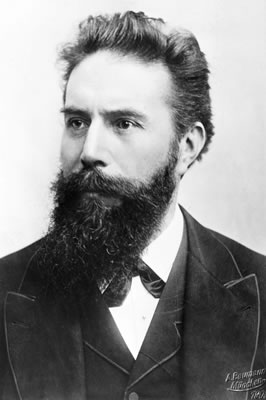
Basically they were all glass tubes with two metal plates inserted and their ends sticking out to apply the high voltage across the gap between the plates. Of course an excellent sealing of the ends to the glass was accomplished so that the inside of the tube could be evacuated and maintained at high vacuum. The plate at positive voltage was called the anode and that at negative voltage was called the cathode.
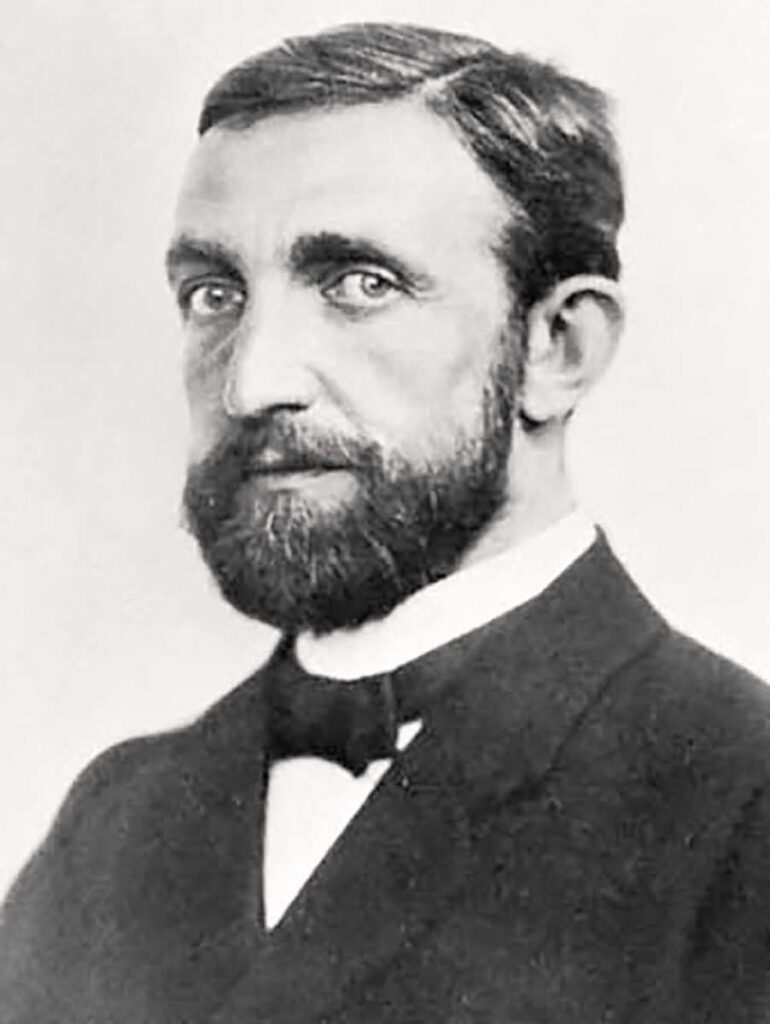
Crookes had noticed in 1874 that a beam of some radiation or ‘ray’ would come from the cathode and hit the opposite glass wall if the anode is not placed directly in front of the cathode and the glass would glow. If something is placed in front of the wall, a shadow is cast on the wall. This ray was named ‘cathode ray’. It became the rage among physicists. Lennard in 1888 put an aluminium window on the glass wall and could take the cathode rays out of the tube, as evident by the glow they produced on papers coated with fluorescent materials.
Also Read: Yuri Gagarin: Off He Went!
Röntgen was working with Lennard’s tube. He covered the aluminium window from outside with cardboard essentially to protect it from the impact of the high voltage but was surprised to find a fluorescent paper placed after the cardboard to be glowing. He repeated this experiment on 8 November 1895, this time covering the entire tube with thick black cardboard. Amazingly, a fluorescent paper placed quite accidentally a distance away glowed, a distance much more than the range of cathode rays. After a few more experiments Röntgen realised them to be a new kind of rays.
Röntgen was not sure about the nature of these rays so he went on testing their properties. While placing a lead sheet in their path he suddenly saw the image of the bones of his hand on the fluorescence plate. These rays could ‘see’ the inside of things including the human body without causing any feelings whatsoever! Very shortly he understood that the images caused by these rays could be captured on photo-plates similarly as light.
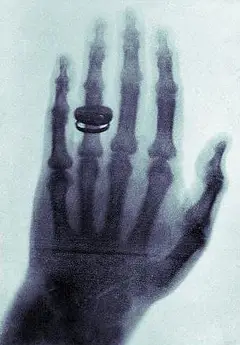
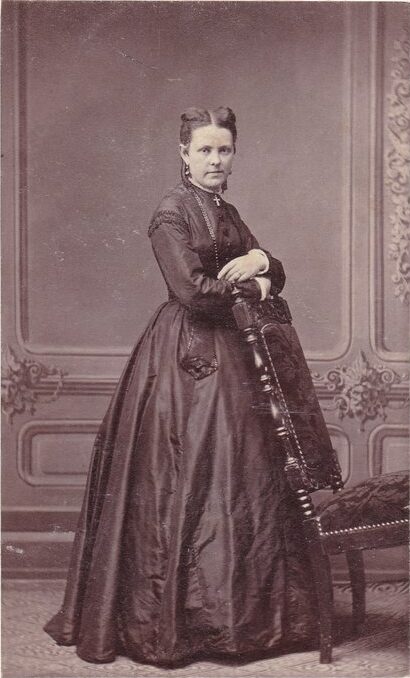
He used this property to take photos of bones of the hands of his wife Anna Bertha wearing their wedding ring, which gave her the shock of her life! However, as soon as the results of these studies were published they created a sensation throughout the scientific world as everyone came to understand that these mysterious rays are allowing us to look inside our bodies without any painful surgery or dissection at all. Medical science would never be the same anymore.
Also Read: Unsung Women In Science: Victims Of Matilda Effect
By 1897 J.J. Thompson has shown that cathode rays consist of negatively charged particles which he named ‘electrons’. Röntgen’s rays were found to be uncharged and somewhat like light. He did not give them any name and preferred to call them ‘X’ or ‘unknown’ rays. That name has stuck even after the rays were understood to be just another ‘light’ of much higher energy which makes them so penetrative. The only exceptions are Germans who call them Röntgen rays.
The pioneers in India in this area were Sir Jagadish Chandra Bose and Sir Nilratan Sircar, the former building the first X-ray machine in 1897 and latter using it for the clinical diagnosis of broken bones.
X-rays became the newest fad all over the world. People thronged to public exhibitions and lectures, volunteered to have their hands or purses X-rayed in the fluoroscope, invented in 1896 where the insides of an object placed between the generator and a fluorescent screen could be viewed on the screen. X-ray machines could be bought or built at home.
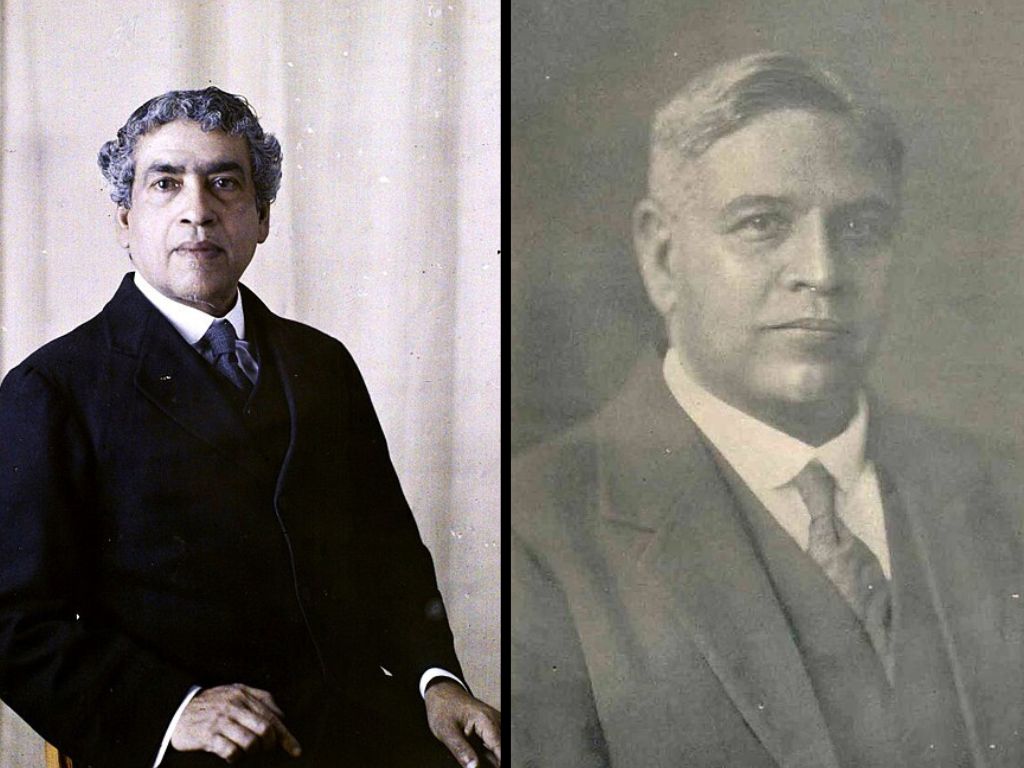
However, within a few years, the craze died out as all crazes do and more serious applications, first in medical diagnoses and then in determining the structure of materials at the atomic scale, came to the fore. The pioneers in India in this area were Sir Jagadish Chandra Bose and Sir Nilratan Sircar, the former building the first X-ray machine in 1897 and latter using it for the clinical diagnosis of broken bones.
Also Read: Karl Benz: The Man Who Got the World Rolling
Discovery of X-rays changed the life of Röntgen, too. Born on 27 March 1845 in Prussia, Germany, the only child of a merchant and cloth manufacturer Friedrich and Charlotte, he was expelled from school under false accusations and could not complete formal schooling. Due to his shift to Netherlands in 1848 he missed registration in either nation and became stateless.
In absence of a high school certificate he could attend Utrecht University only as an irregular student. Fortunately, he then moved to Switzerland and got admitted to Federal Polytechnic School in Zurich, where he received an engineering degree and finally got his PhD from Zurich University.
When the first Nobel Prize for Physics was awarded in 1901, there was no doubt that Röntgen should be the rightful recipient. But the strange life of this reclusive man, who declined to deliver a speech while receiving the first Nobel Prize in history, did not end without the final irony.
He had appointments successively at Strassbourg, Hohenheim, Giessen, Würzburg and finally in Munich after his discovery. Right after his discovery, he was awarded the Rumford medal in 1896 by the British Royal Academy, the Matteucci Medal in the same year by the Italian Academy of Science, and the Elliott Cresson Medal in 1898 by the Franklin Institute of USA. However, he best was yet to come.
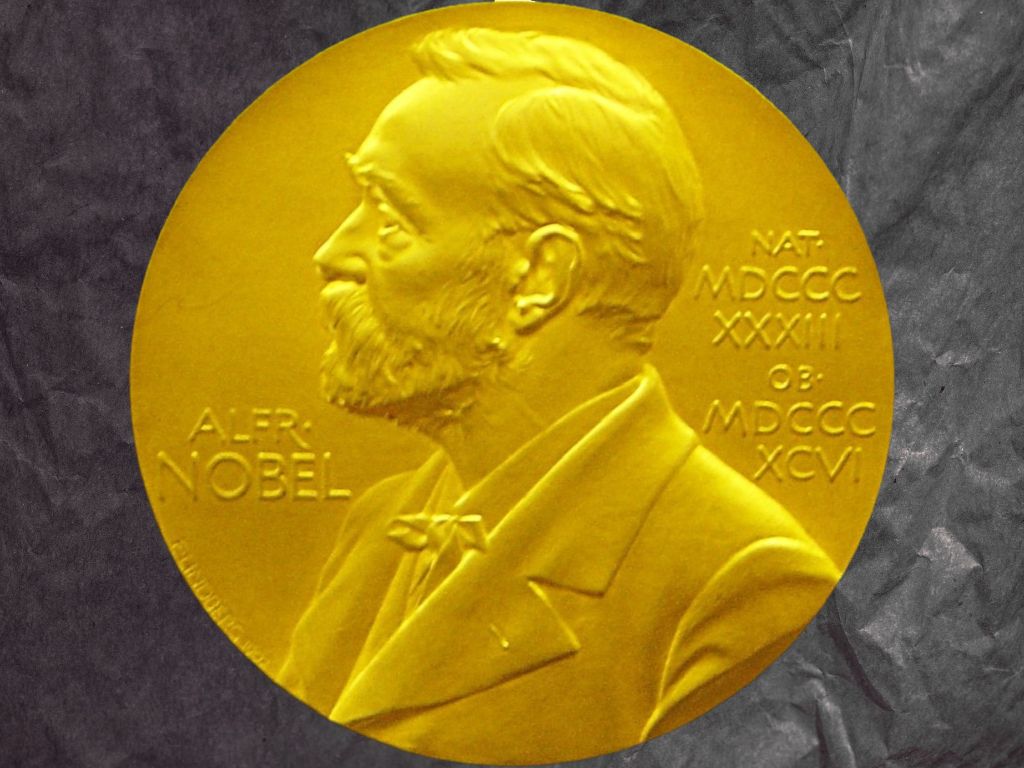
Alfred Nobel, in his will, bequeathed the Prize to those who “conferred the greatest benefit to mankind”. The Prize was to be given for Physics, Chemistry, Physiology and Medicine, Literature and Peace. When the first Nobel Prize for Physics was awarded in 1901, there was no doubt that Röntgen should be the rightful recipient. But the strange life of this reclusive man, who declined to deliver a speech while receiving the first Nobel Prize in history, did not end without the final irony.
He was offered a professorship in USA but could not join due to the first World War. Thus he could not escape the terrible inflation that engulfed Germany after its defeat in that War. Röntgen lost all his wealth including the Prize money and died a bankrupt on 10 February 1923 in Würzburg.
Image Courtesy: Wikimedia Commons, Store Norske Leksikon, Wikimedia Commons, Picryl.com, Picryl.com,

Alokmay Datta was a Senior Professor at Saha Institute of Nuclear Physics, then a Raja Ramanna Fellow at the Central Glass and Ceramic Research Institute and finally an Emeritus Scientist at Department of Physics, Calcutta University. However, his interests lie beyond Physics or even beyond Science.

One Response
Thank you Dr Alokmoy Datta for educating us about the life of the man behind the discovery of X – rays – the commonest investigation we advise for our patients
Amazing story !