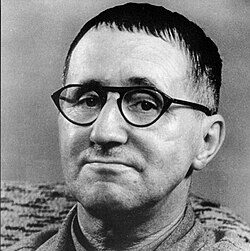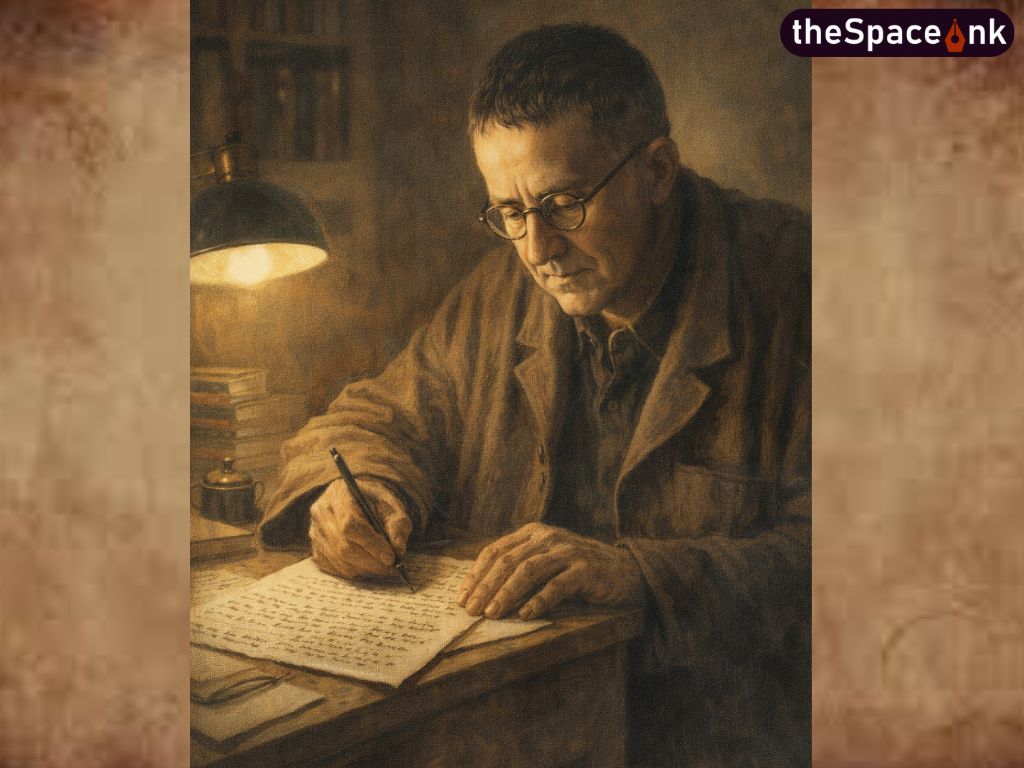
Bertolt Brecht’s (February 10, 1898, Augsburg, Germany—died August 14, 1956, East Berlin) poems challenge authority, question official history, and expose the hidden labor behind celebrated victories. With sharp irony and direct language, he dismantles heroic myths and foregrounds ordinary people. Political yet humane, his poetry urges critical thinking, resisting illusion while demanding social awareness, justice, and responsibility from readers.
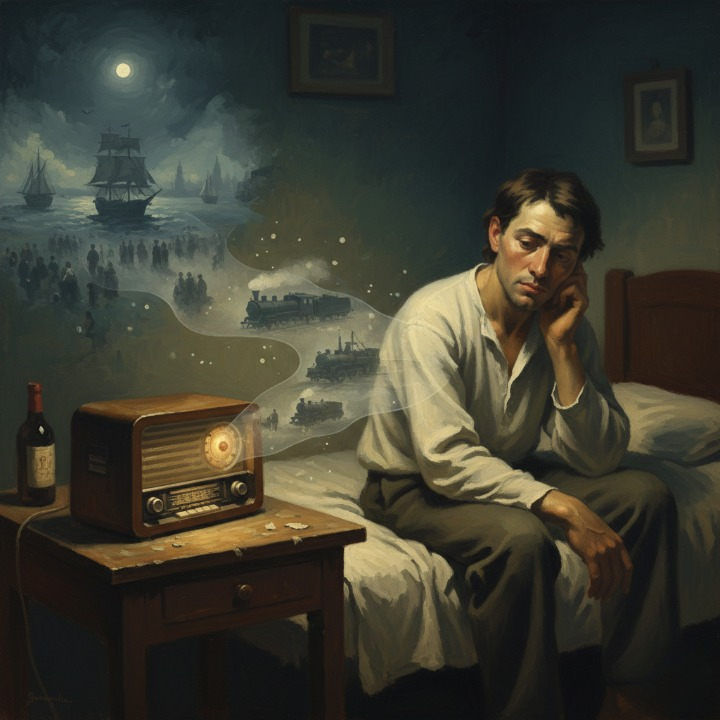
Radio Poem
You little box, held to me escaping
So that your valves should not break
Carried from house to house to ship from sail to train,
So that my enemies might go on talking to me,
Near my bed, to my pain
The last thing at night, the first thing in the morning,
Of their victories and of my cares,
Promise me not to go silent all of a sudden.
Joyce)
Also read: Two Poems by Dorothy Parker
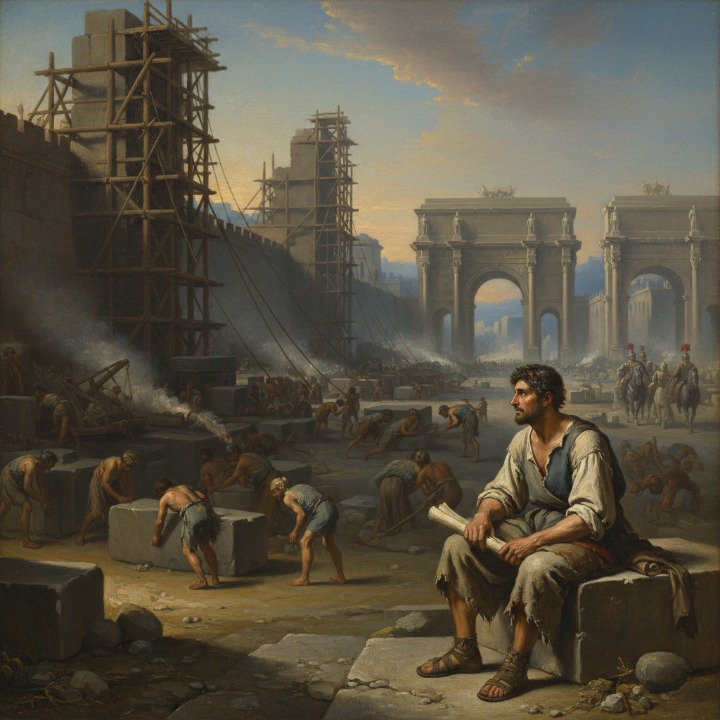
A Worker Reads History
Who built the seven gates of Thebes?
The books are filled with names of kings.
Was it the kings who hauled the craggy blocks of stone?
And Babylon, so many times destroyed.
Who built the city up each time? In which of Lima’s houses,
That city glittering with gold, lived those who built it?
In the evening when the Chinese wall was finished
Where did the masons go? Imperial Rome
Is full of arcs of triumph. Who reared them up? Over whom
Did the Caesars triumph? Byzantium lives in song.
Were all her dwellings palaces? And even in Atlantis of the legend
The night the seas rushed in,
The drowning men still bellowed for their slaves.
Young Alexander conquered India.
He alone?
Caesar beat the Gauls.
Was there not even a cook in his army?
Phillip of Spain wept as his fleet
was sunk and destroyed. Were there no other tears?
Frederick the Great triumphed in the Seven Years War.
Who triumphed with him?
Each page a victory
At whose expense the victory ball?
Every ten years a great man,
Who paid the piper?
So many particulars.
So many questions.
The Solution
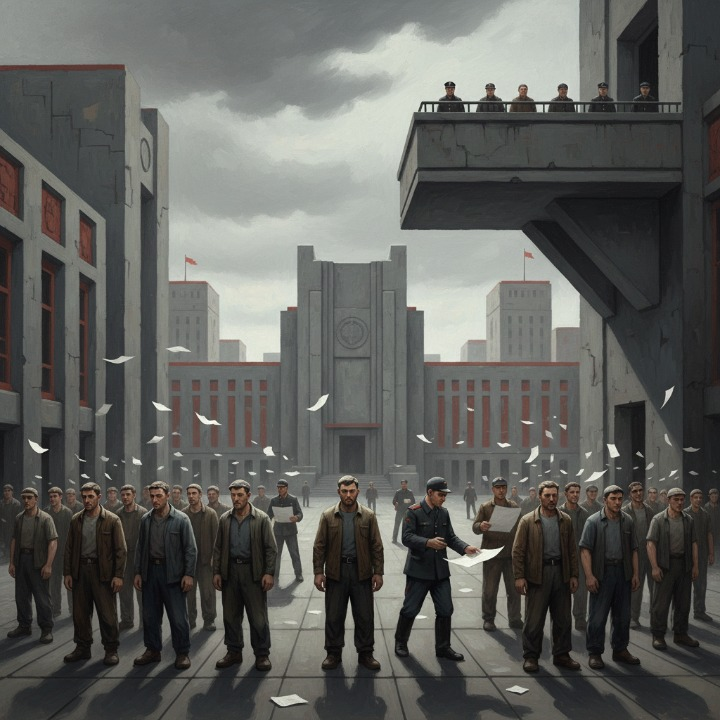
After the uprising of the 17th June
The Secretary of the Writers Union
Had leaflets distributed in the Stalinallee
Stating that the people
Had forfeited the confidence of the government
And could win it back only
By redoubled efforts. Would it not be easier
In that case for the government
To dissolve the people
And elect another?
Images Generated by AI (James Joyce)
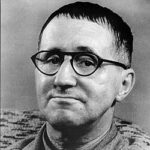
Bertolt Brecht (born February 10, 1898, Augsburg, Germany - died August 14, 1956, East Berlin) was a German poet, playwright, and theatrical reformer whose epic theatre departed from the conventions of theatrical illusion and developed the drama as a social and ideological forum for leftist causes.