Review of The Loneliness of Sunny and Sonia by Kiran Desai
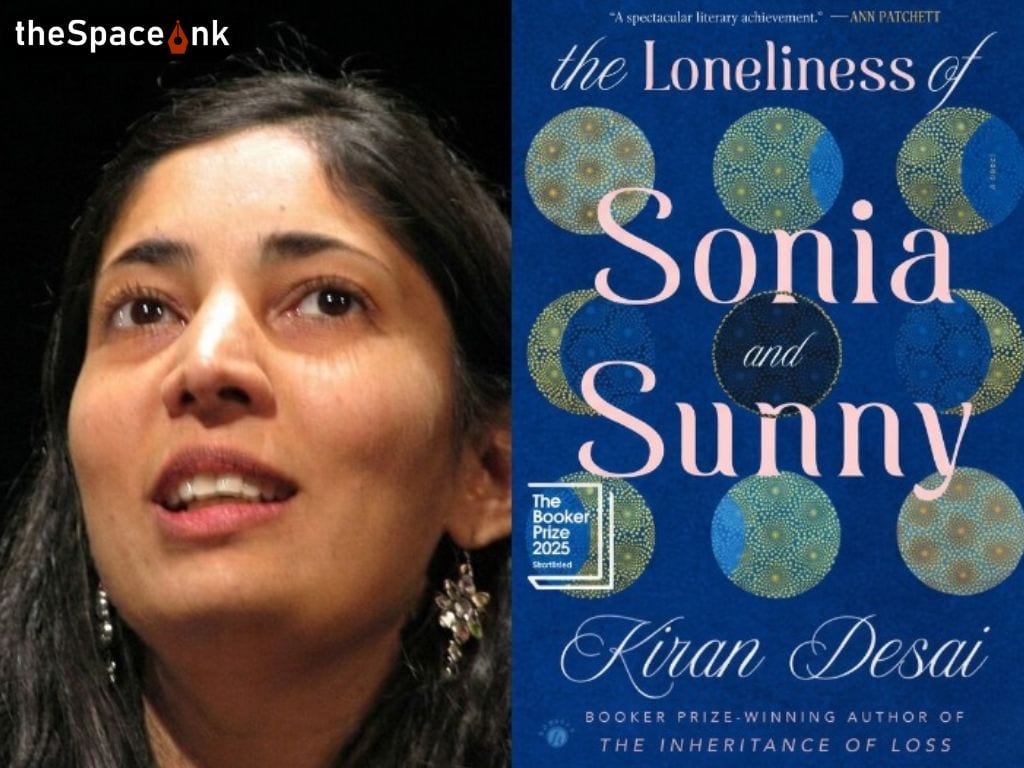
Title: The Loneliness of Sunny and Sonia
Author: Kiran Desai
Language: English
Publisher: Hogarth
No. of Pages: 688
Format: Hardcover
Price: Rs 2694
One of the first questions that struck me as I embarked upon reading Kiran Desai was: how real were these lives? Not very real, Desai would say disingenuously. It’s a work of fiction, something contrived from start to finish. Nevertheless, the female protagonist, Sonia Shah, has a German grandfather and a Bengali mother, just like Kiran. Besides which, the work places itself solidly in the tradition of realism in the novel, which means that the novel’s fictive world erects a parallel world resembling the real, so that, at least for the duration of the reading, the imaginary world takes the place of the real one such that the reader does not notice the difference. That’s what verisimilitude is all about.

In the first place, you have Ilan de Toorjen Voss, an emerging name on the international art scene who is violent, possessive, jealous, and totally paranoid. So far, so good—there are many people like that in the world, among artists and outside of them. No problem. What is improbable is that he should have a relationship with Sonia Shah, a beautiful but very ordinary Gujarati girl whose roots go all the way to Allahabad—hardly the kind of woman who would retain Toorjen Voss’s interest, let alone passion, for any length of time.
Why Goa? Because it is one of the few places in this country where the Westernised Indian feels at home, where love, in the Western sense of the word, is possible. Goa is also one of the only places where the white backpacker can find decent accommodation outside of specially designated touristy ghettos—Sudder Street, Calcutta; Paharganj, New Delhi; and Colaba, Bombay.
Sex, maybe. But love? I don’t know. Sonia, on the other hand, shows no signs of existing as an independent person within this relationship; she comes across as a passive receptacle of abuse. De Toorjen Voss dumps copious amounts of waste—thoughts, feelings, deeds—and never does she betray a sign that she is ever going to be a creative person with a personality of her own. Maybe she is in a contemplative mood, but there is no denouement to it.
Sunny Bhatia gives all signs of being real. He has an American girlfriend, Ulla, a Midwesterner of Swedish origin who has apparently laid down red lines for Sunny to respect while dealing with her or her parents. Sunny writes for the Associated Press at the desk, but he also churns out articles such as one on the Indian who has the longest nails in the world.
Also Read: Window With a Train Attached by C P Surendran: A Review
This is real. I have a relative in the BBC who, in his time, would regularly post little notes about bizarre and grotesque happenings in the country, as if there was nothing else happening of note, and probably because his white masters thought that was what real India looked like—“asli Bharat,” as Mark Tully was fond of saying. So anyway, Sunny has a steady, middle-class situation in New York.

The plot is set in motion when Sonia’s grandfather—the paternal one—learns of his granddaughter’s loneliness in Hewitt College, Vermont, and immediately proposes arranging a marriage between her and his neighbour’s grandson in New York, Sunny. The couple meet desultorily in Allahabad on the occasion of the funeral of Sonia’s grandfather. They meet desultorily, talk dispiritedly of this and that, each having the marriage proposal on the horizon but neither willing to address the issue head-on.
So they ultimately land up in an old colonial mansion in the Goan countryside, which has been turned into a boutique hotel, and they spend a few torrid days having sex, spied upon by the masturbating caretaker of the property. When two young people from the West are together without their families, can the sordid be far behind? The NRI has a knowing smile on his face; he wears his patriotism on his sleeve, but he knows the real India all right.
The novel eventually winds down to some kind of climax, as Sunny, holidaying in Mexico after getting his green card, goes after Voss with the intention of retrieving the amulet given to Sonia’s maternal grandfather by Badal Baba—on whom the author wastes some pseudo-mystic exaltation—and which Sonia has left behind with the artist amid the chaos of their final parting.
Similarly, when Sonia goes to Rajasthan to do a story, she is almost raped by her tour guide. I know there are tour guides who rape foreign visitors to this country—one reads about it in the papers—and that is where Kiran Desai gets a lot of information about her country. I doubt whether she has ever been attacked by one of these people or knows somebody who has been.
But then, if you are looking for simplicity, you will find it in Indian newspapers.
Why Goa? Because it is one of the few places in this country where the Westernised Indian feels at home, where love, in the Western sense of the word, is possible. Goa is also one of the only places where the white backpacker can find decent accommodation outside of specially designated touristy ghettos—Sudder Street, Calcutta; Paharganj, New Delhi; and Colaba, Bombay. It is perhaps the only place where the white youth is not treated like a mlechha.
Also Read: Revisiting the Kargil War in ‘Despatches from Kargil’ by Srinjoy Chowdhury
Sunny and Sonia meet once more in Venice, where the city and its dazzling physical aspect enhance the romance between the two—until they decide to visit a gallery to see some paintings by—who else?—Toorjen Voss. Here there is a moment of truth for Sonia, as she sees that the mysterious dog that had emerged from the sea and vanished into it after seemingly trying to attack her actually figures in a painting by de Toorjen Voss, which also shows Sonia lying naked and prone, with de Toorjen Voss lying on her, equally naked and prone.
Sonia has a nervous breakdown, and she tells Sunny that she has been murdered by Toorjen Voss. And they go back to their respective loneliness.
Desai rightly characterizes Salman Rushdie as an Orientalist, but in her own case, magic is not a substitute for realistic depiction; it is real magic, to which she says art can connect us.
In between the love story, such as it is, other things happen—funerals, weddings, and so forth—none of which I remember distinctly. It shows you glimpses of the real India as perceived by the non-resident Indian. Desai never seems to be able to rise above the level of petty details in talking about life in India. She is very obviously a foreigner in this country. The impression one carries away is one of inane meditation on the nothingness of Indian middle-class life that may, however, have titillated some of the Booker jury.

The novel eventually winds down to some kind of climax, as Sunny, holidaying in Mexico after getting his green card, goes after Voss with the intention of retrieving the amulet given to Sonia’s maternal grandfather by Badal Baba—on whom the author wastes some pseudo-mystic exaltation—and which Sonia has left behind with the artist amid the chaos of their final parting.
Eventually, Sunny retrieves the amulet and comes back to India, to his mother’s place in Goa, where he finds Sonia sheltering from ghost hounds, among other things.
Desai rightly characterizes Salman Rushdie as an Orientalist, but in her own case, magic is not a substitute for realistic depiction; it is real magic, to which she says art can connect us.
Image: AI, Wikimedia Commons

Soumitro Das has been educated in Delhi, Bombay, Calcutta and Paris. He is the author of Bombay - a novel and has recently translated 8 short stories by Rabindranath Tagore in a book titled Tales of Modern India.