The Pharaoh, the Phone, and the First Trip
Misti stretched herself on the sofa and asked, “Where are you planning your first trip with your college friends?”
Musoon, her nineteen-year-old niece, smiled and replied, “Jabalpur.” She was visibly excited about the upcoming trip.
“Wonderful. You’ll love the breathtaking Marble Rocks at Bhedaghat and the roaring Dhuandhar Falls on the Narmada.”
“Yes, our first trip without the boring seniors!” Musoon’s smile broadened.
Misti laughed. “So, we elders are all boring now?”
“Not you, Misti Masi!” She rushed over and hugged her aunt warmly.
Misti kissed her forehead.
Also Read: The Future Remembers
“Masi, you’re a globetrotter — when do you think tourism began?”
Misti looked up, closed her eyes, and began.
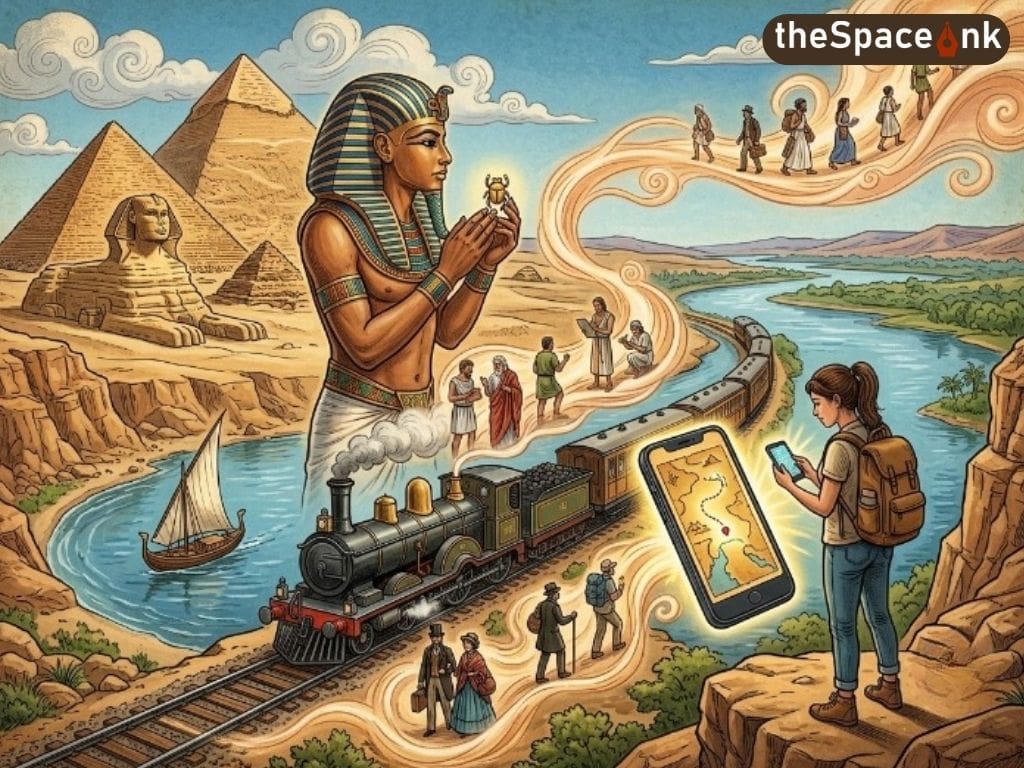
“Once upon a time, there lived a young Pharaoh. His grandfather had been one of the greatest rulers the world had ever seen; the kingdom then stretched far and wide, and riches poured in through agriculture, trade and commerce.
“After the Great Pharaoh died, the coffers dwindled. During the reign of the Great Pharaoh’s son (a man of vices and little administrative sense), local chiefs seized large parts of the kingdom. By the time the young Pharaoh took the throne, the nation was sliding into anarchy, famine had struck thrice in four years, and the treasury lay empty. Desperate, he summoned his ministers and shared a plan.

“He proposed opening his grandfather’s (the Great Pharaoh) tomb to the public — people from far and near would come to pay homage to the great soul and marvel at the riches of his afterlife. The ministers were horrified. This would insult the dignity of the dead, they said, and that too for the greatest ruler the country had ever known.”
Misti paused and reached for her glass of water.
“Masi, is that really how tourism started?” Musoon’s eyes had widened.
Misti only smiled. “Could be…”
It began in 1980, marking the anniversary of 1970, when the UNWTO’s founding statutes came into force. The idea was — and still is — to remind the world what tourism means: to economies, to cultures, even to peace between nations.
Still unconvinced, Musoon opened her phone. “AI says tourism wasn’t started by one pharaoh — though ancient Egypt did see some of the earliest recorded leisure travel: river cruises and sightseeing by rulers and pilgrims. Queen Hatshepsut organized grand expeditions around 1480 BCE, but mainly for trade, diplomacy or ritual. What’s your source, Masi?”
“Imagination, my darling. Though I’d bet visitors from later eras — the Greeks, the Romans — did travel to gaze at the pyramids.”
“Hmm, that part checks out.” Musoon was hooked now. “What happens next in your story?”
“A great debate, I imagine. The Pharaoh would have argued that wealthy visitors could revive a failing economy. The priests would have protested, citing centuries of sacred custom.”

Musoon’s thumbs were still moving. “Here AI says — the modern package tour began one September morning in 1841. A preacher named Thomas Cook chartered a train to carry 570 temperance campaigners eleven miles, from Leicester to Loughborough, for a shilling each, with a brass band and a picnic thrown in.
“Within a generation, ordinary clerks and shopkeepers who’d never left their county were crossing the Alps.”
“I love that.” Misti reached for her own phone. “And look at this — tourism added a record $11.6 trillion to the world economy in 2025, nearly a tenth of global GDP, and supported 366 million jobs — one in every three new jobs created that year, anywhere on the planet.
“About 1.5 billion international trips were taken; on an average day, that’s over four million people somewhere in the sky, at a border, or checking into a room that didn’t exist a decade ago.”
“Massive numbers, Masi!”
“But it’s worth isn’t only in dollars. Tourism makes strangers briefly, genuinely curious about each other’s lives — one of the few real bridges left in a world not short of walls.
A beach drowns in plastic, a historic town loses itself to construction, a mountain trail erodes under too many boots. Travel is powerful — but that freedom comes with a duty to care.
“A Rajasthani puppeteer, a Balinese woodcarver, a Sundarbans boatman, a Kyoto weaver — for each, a visitor’s curiosity is often the one thread keeping a dying craft alive another generation.”
Musoon’s mother called out to say dinner was ready.
“Two minutes, Ma!” Musoon turned back to her aunt. “Masi, can you call Dibyendu Kaku, your friend? He’s a senior executive with MP Tourism, right? I need his advice.”
“Of course.” Misti dialed. “Dibyendu da? My niece needs some guidance for a trip to Jabalpur.”
“Wonderful — when’s she coming?” Misti put the call on speaker.
“Kaku, we’re arriving on the 26th of September. Five of us, three nights, at the MP Tourism hotel.”
“Then I’ll be there too — the 27th is World Tourism Day! We’ll celebrate together.”
“I had no idea the date meant anything,” Misti admitted.
“Most people don’t. It began in 1980, marking the anniversary of 1970, when the UNWTO’s founding statutes came into force. The idea was — and still is — to remind the world what tourism means: to economies, to cultures, even to peace between nations.
“There’s a neat seasonal logic to it too — late September sits at the tail of the northern hemisphere’s season, just as the south is heading into its own.”

“So Musoon and her friends get special treatment!” Misti teased.
“Naturally,” Dibyendu laughed. “And this year’s theme is rather timely — ‘Digital Agenda and Artificial Intelligence to Redesign Tourism.’ El Salvador is hosting the global celebrations in San Salvador.
“You’ve already felt it — the flight-price alert before you book, the chatbot answering a visa query at 2 a.m., the algorithm nudging you toward a quieter temple instead of a crowded one.”
“I hope sustainability isn’t forgotten in all this,” said Misti.
“It won’t be — it’s been on the agenda since 2017. In fact, next year’s theme looks the other way: ‘Transforming Tourism through Education.’ A well-trained guide and an informed traveler do more for a place, long-term, than another airport.”
At the table, the talk turned into something less cheerful.
“Every destination feels crowded these days,” said Bristi, Musoon’s mother, sitting down.

“True,” said Misti. “Venice now charges day-trippers an entry fee. Bali has capped construction in its busiest pockets. Residents in many places are pushing back.”
“So, tourism damages what it touches?” Musoon frowned.
“It can,” said Misti. “A beach drowns in plastic, a historic town loses itself to construction, a mountain trail erodes under too many boots. Travel is powerful — but that freedom comes with a duty to care.”
“Then why travel at all, when AI can tell you everything?” Bristi asked.
Misti considered this. “After twenty-five years of travelling, I’ve learned we don’t even know what we don’t know. You might spot a bangle in a small museum in Rajasthan and suddenly want to know everything about the woman who wore it.

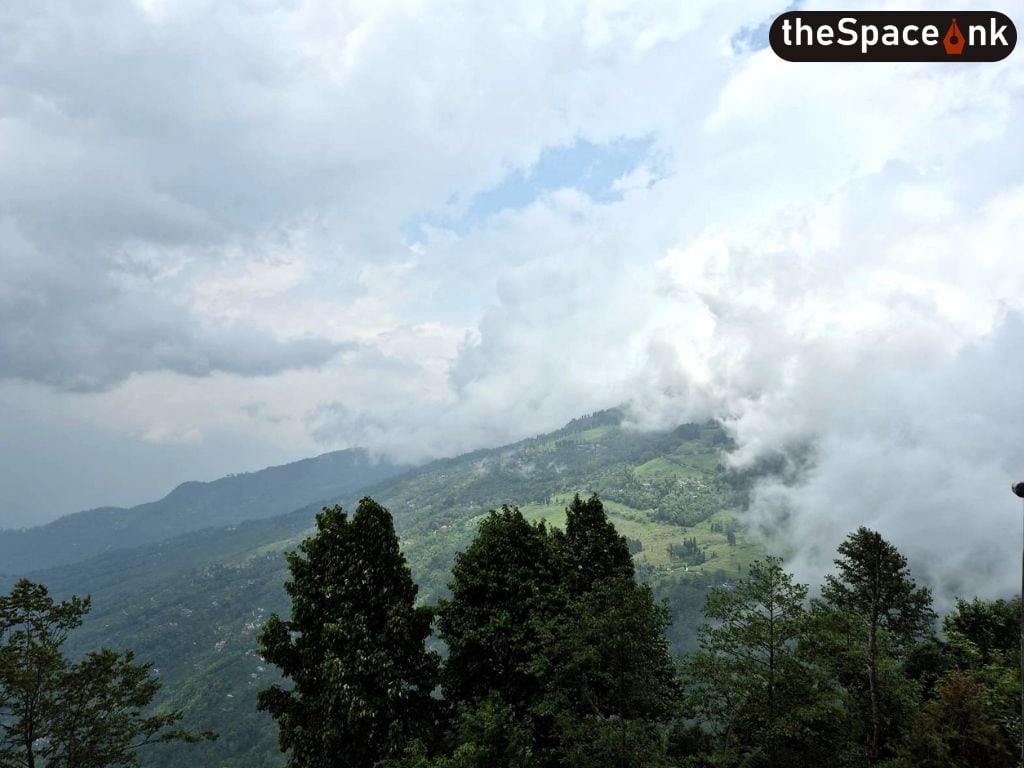
“AI can help you plan the journey — but it can’t smell the first rain over Darjeeling for you.”
“So, what would you tell a first-time traveller?” Musoon asked.
“Travel responsibly,” Misti said. “Don’t let the rush of a holiday make you forget you’re stepping into someone else’s home. Their rivers, streets, temples and markets are your holiday — but their everyday life.”
“And,” Bristi added, “make memories, not just reels. Eat local, buy a handicraft, talk to a shopkeeper. Every small choice you make becomes someone else’s livelihood.”
Musoon thought for a moment. “Then I’ll add my own line to the packing list — not just where I want to go, but how I want to travel.”
The sisters smiled.
“Now,” said Misti, “you’re ready for your first journey.”
Image Courtesy: AI generated by Author

Prantik Biswas loves to engage with people. He is a corporate IT professional and is based in Kolkata. He dabbles in creative writing and photography.