Thingyan and Poila Boishak in Myanmar
With the annual examination coming to an end, promotion to the new class ensured we welcomed our summer vacation with plenty of enthusiasm. We had two options to choose from—either cajole the elders to spend the vacation making a trip to Yangon, erstwhile Rangoon, or stay home, left to our own devices to make the vacation interesting.
Also Read: Memories from Myanmar: Durga Puja in Taunggyi
Invariably, we preferred a trip to Rangoon for many reasons. The most fashionable city, with its glittering trappings, departmental stores, all-night roadside pop-up markets teeming with people, and aromatic steaming bowls of street food wafting from the stalls—oh, for us it was a totally new planet. Admiring pretty, sophisticated teenagers in miniskirts with bird’s-nest hairstyles, boys dressing up like the Beatles, some with Elvis Presley hairstyles, floral Hawaiian shirts in shocking pink and blue, leather boots, and steel belts and chains, parading like models—whoa! A completely alien experience for us.
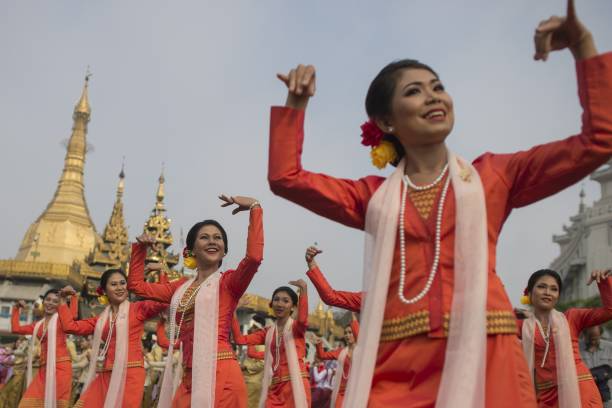
The next attraction was the Thingyan festival, the famous water festival of Myanmar, celebrated to usher in their New Year, which coincides with our Bengali Poila Boishak.
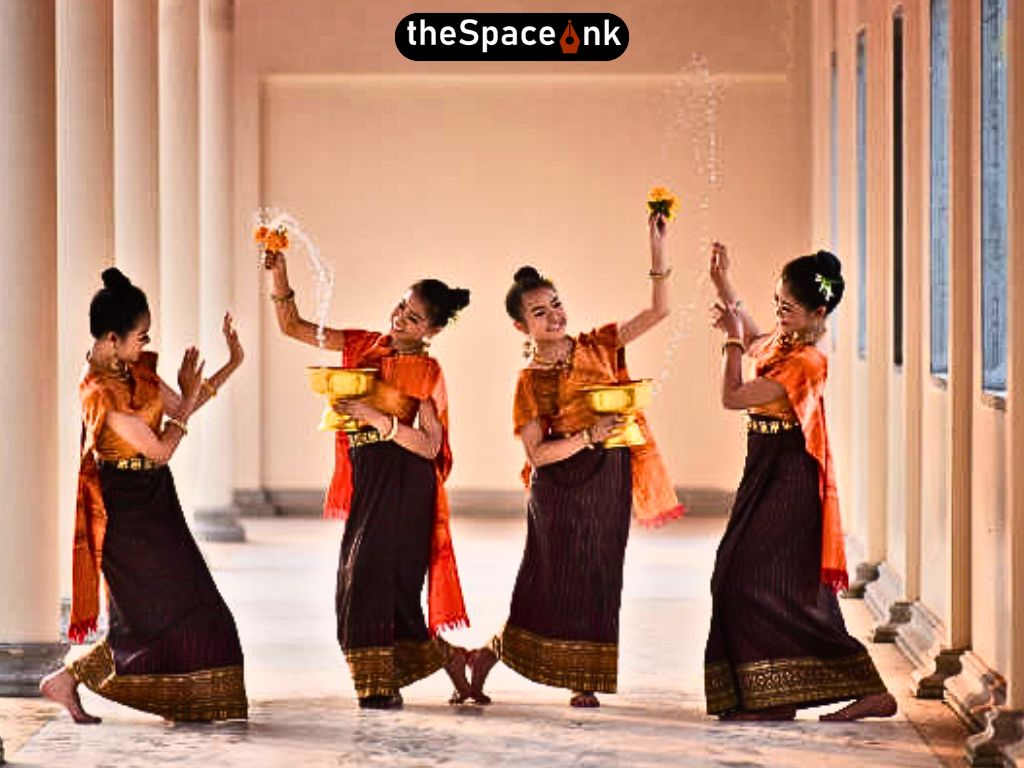
Myanmar is generally recognised as the country where the traditional Water Festival originated, spreading to neighbouring countries like Thailand, where they celebrate Songkran, Laos, and Cambodia. It evolved into a regional celebration of the New Year that involves splashing water to cleanse and purify for the year ahead. It’s a thrilling experience to see and participate actively in this water festival.
As soon as the vacation set in, our uncle would make us learn poems by Rabindranath Tagore. Mother and aunts would bring out their harmonium, carefully stored away after the Durga Puja function. They prepared us to perform Rabindra Sangeet and dance dramas like Chandalika, Dak Ghar, and Chitrangada.
As Bengalis, we followed our own rituals, like standing at a crossing (in the compound) and reciting, “Shotrur mukhe diye chhai, chhatu udiye bari jayee.” This was a ritual our grandmother made us observe, something we still maintain. We would then eat bowlfuls of chirey, muri, doi (beaten rice, puffed rice, sweetened curd), and sattu (powdered barley) mixed together.
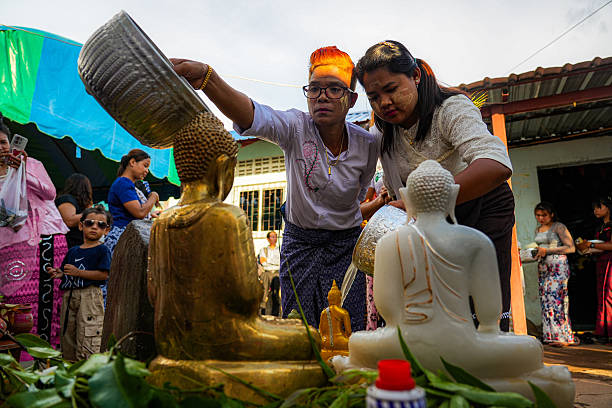
Once the ritual was over, we would run outside to join the crowd, splashing each other with scented water from silver bowls—first sprinkling it on Lord Buddha, then on family members and neighbours. Out on the streets, hundreds of people, holding hose pipes, drums of water, pails, and tumblers, splashed water everywhere. Nobody got angry, no foul words were exchanged, no hard feelings—whether young or old, male or female, everybody participated sportingly.
If someone was in a car, they had to be ready to get drenched when strangers opened the door and poured water through hose pipes attached to truckloads of water-filled drums. Young men would tease young girls; ladies dressed in silk traditional longyis stood at street corners offering glassfuls of watermelon juice and tamarind juice to one and all, regardless of caste or creed.
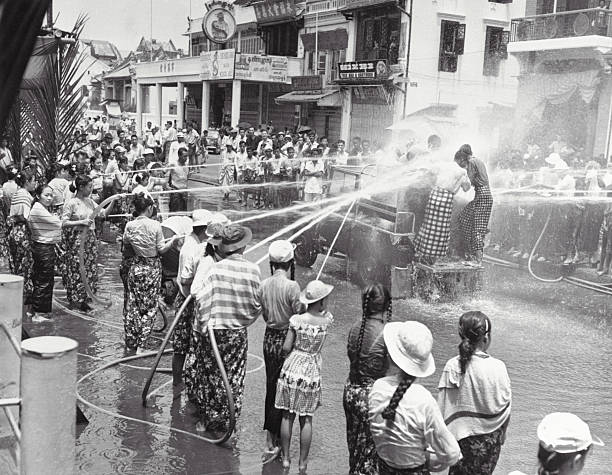
Makeshift stages were set up where girls performed group dances, children put up shows, and college boys broke into impromptu funny rhymes. By the end of the day, you would even see grandfathers chasing grandmothers with plastic mugs in hand—a funny but lovable sight.
That was our Poila Boishak celebration in Rangoon. Of course, Dida and aunts prepared summer special items like aam dal, jhumri alu bhaja, a light chicken curry, doi, and mishti available in Indian confectioneries.
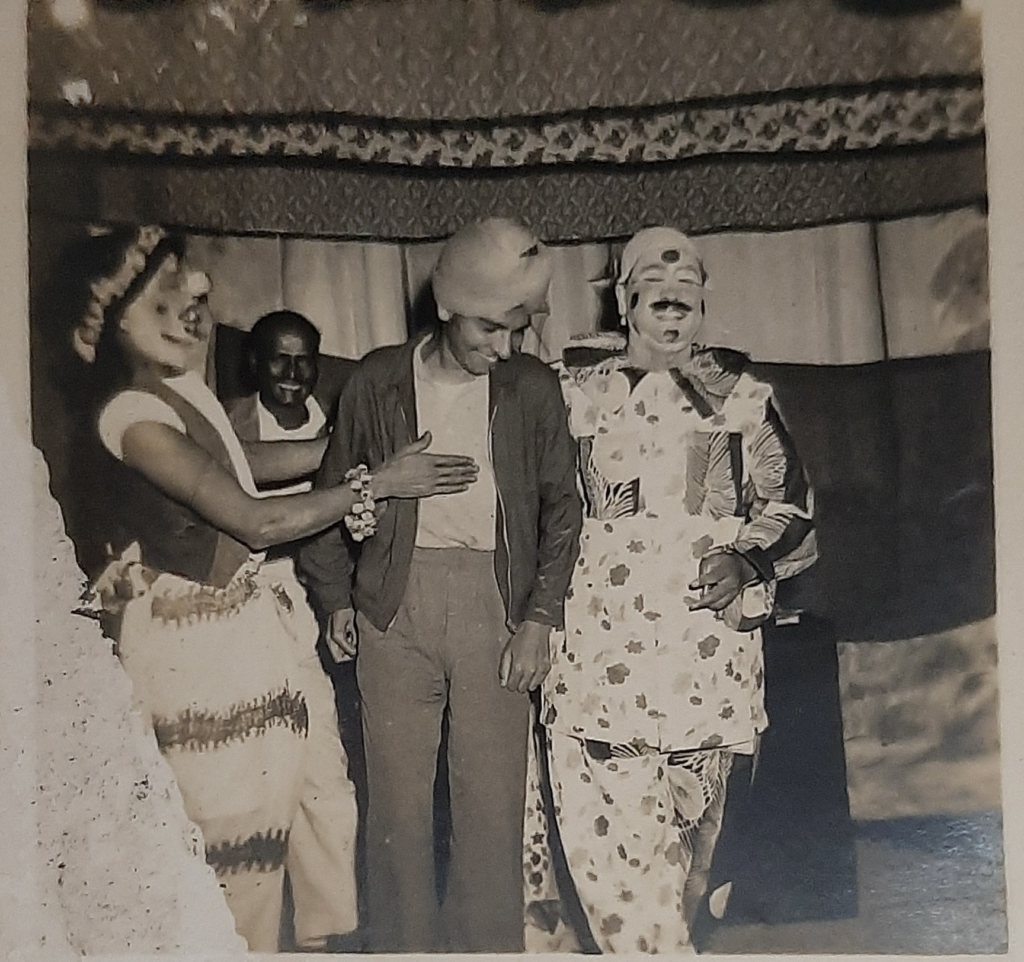
The year we stayed back home in Taunggyi, many miles away from Rangoon, our Poila Boishak celebration took on a different colour. Taunggyi is a tiny hill station nestled in a valley surrounded by hills, cherry blossoms, and pine forests. Amidst the locals, we had a handful of Bengalis, Nepalese, Punjabis, and Marwaris, all coming together to celebrate Baisakhi in their own ways. We Bengalis, however, preferred to do it differently.
Children and adults woke up to the sound of bamboo clappings, clanging brass cymbals, drums called “O SEE,” monks chanting prayers from distant pagodas, and people of all ages going up and down hill steps after offering scented water to Lord Buddha. The excitement was beyond words.
As soon as the vacation set in, our uncle would make us learn poems by Rabindranath Tagore. Mother and aunts would bring out their harmonium, carefully stored away after the Durga Puja function. They prepared us to perform Rabindra Sangeet and dance dramas like Chandalika, Dak Ghar, and Chitrangada.
My father always believed in having a sumptuous, typical Bengali lunch on Poila Boishak. The spread would include bhat, shukta, moong dal, narkel bora, rui machh with phool kopi, mutton jhol, tomato-khajur-amshotto chutney, bari-te-pata mishti doi, and my mother’s speciality—bhapa sandesh.
Also Read: Shwe Yin Aye- A Summer Delicacy from Myanmar
Lunch over, it was showtime for us—we went off to Durga Bari to perform. At night, exhausted, we would flop into bed after a light dinner with the leftovers.
The next day would bring a totally different set of activities. Bengali culture was shelved till May, when Rabindra Jayanti would once again be celebrated with aplomb. Meanwhile, we focused on the Myanmar festival of water to usher in the Burmese New Year.
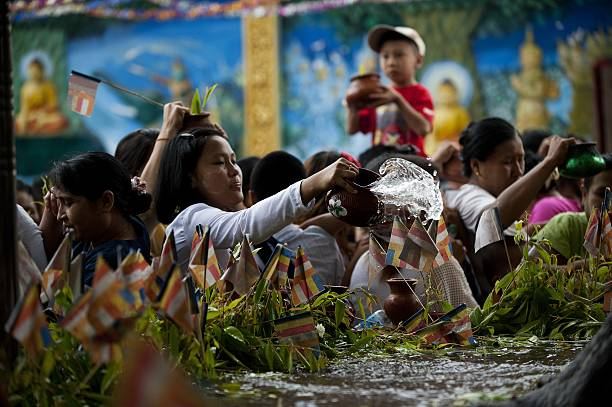
It was fun time for us—the high point of our summer vacation. Children and adults woke up to the sound of bamboo clappings, clanging brass cymbals, drums called “O SEE,” monks chanting prayers from distant pagodas, and people of all ages going up and down hill steps after offering scented water to Lord Buddha. The excitement was beyond words.
So Poila Boishak and the Thingyan festival became one wonderful celebration for us. Physically, I am in Kolkata, but in spirit, I return to Taunggyi or Yangon whenever I think of April and the Festival of Water I left behind. Sweet memories still linger on.
This ritual is so unique that, to this day, it has become a part of our family tradition here in Kolkata. The entire town would be out on the streets, lanes, and bylanes, splashing water on each other, shouting funny slogans, singing songs and parodies, dancing in groups, and distributing rice cakes and cold drinks to all and sundry—revellers enjoying to the hilt!
Also Read: Phena Bhat vs Congee
We had our own way of enjoying this festival too. We played as if there was no tomorrow! Taunggyi, being a hill station, was quite cold, and people were seen wearing warm clothes even in summer. Naturally, our parents worried that spending too much time in water-drenched clothes could be dangerous, so they chased us home after two in the afternoon.
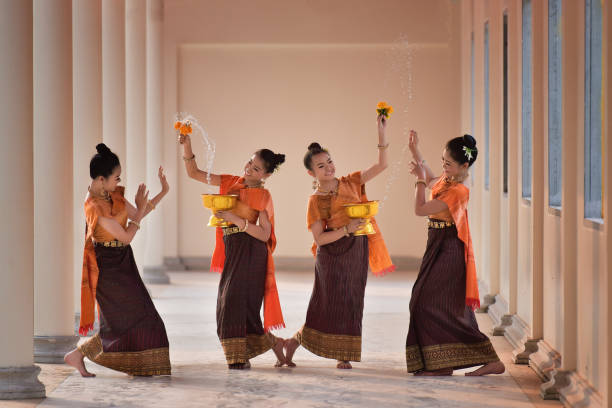
I cannot recall missing lunch—we were so busy running around with pails and tumblers of water that food was the last thing on our minds. Back home, after a proper bath and a hot evening meal of noodle soup, we were ready for bed. The excitement of the day left us so exhausted that within minutes we were fast asleep.
So Poila Boishak and the Thingyan festival became one wonderful celebration for us. Physically, I am in Kolkata, but in spirit, I return to Taunggyi or Yangon whenever I think of April and the Festival of Water I left behind. Sweet memories still linger on.
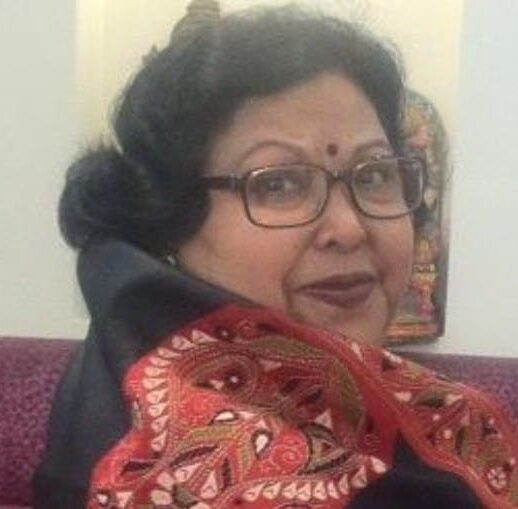
Image Courtesy: Author
Shwe Yin Aye

Chanda Dutt is a home-cook and Burmese cuisine expert based in Kolkata. Her pop-ups are quite popular among the food lovers in the city. She briefly ran a Burmese cuisine restaurant called Chanda's Khawksuey.