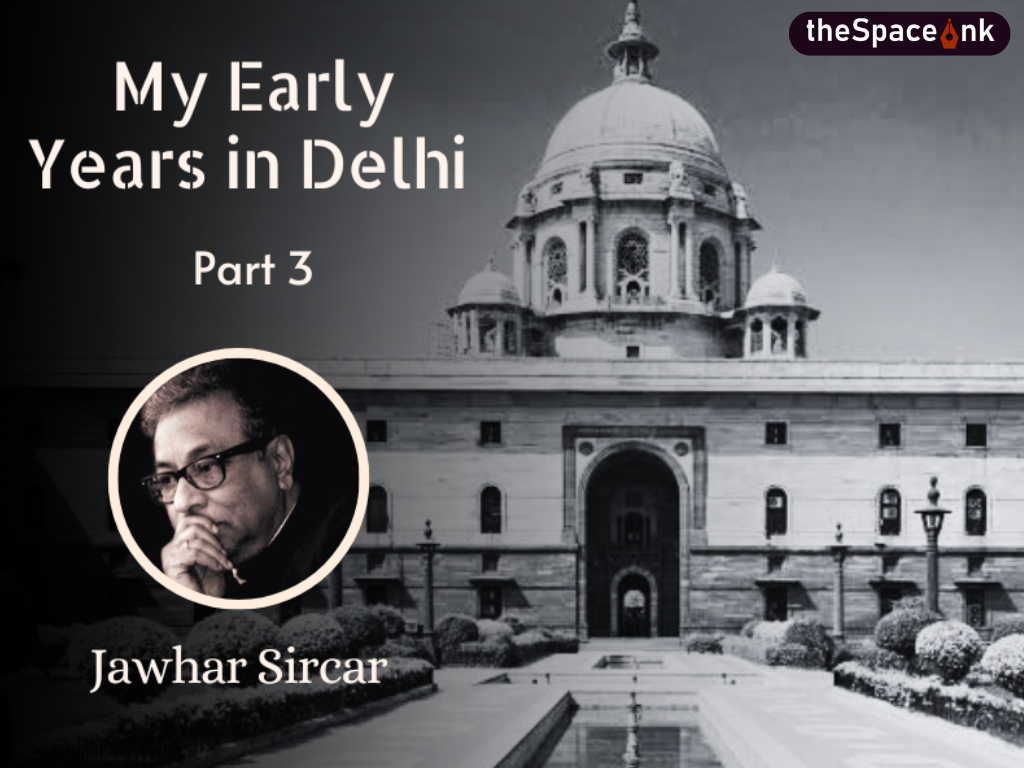
My Early Years in Delhi : Part 3
Many of minister’s political friends and juniors complained that I was ‘uncooperative’ when they asked me for certain favours. I was told by the more politically savvy Additional PS to our minister that several political persons used to get multiple openair tickets (and hotel charges) from different favour-seekers in Kolkata and elsewhere to travel to Delhi and convey their complaints or pleas or ‘deals’ to the minister directly. They then pocketed the proceeds of refunded air tickets and multiple hotel charges. One even carried a lady friend to Delhi, but I could not find out whether she stayed in the same room or the next. d
Also Read: My Early Years in Delhi: Part 1
To keep his flock together, the minister had no option but to sign vague letters to other ministers, requesting them ‘to look into these requests.
The duped ‘beneficiaries’ and the middlemen politicians, however, flaunted the minister’s letters around and treasured these. Obviously, I refused to oblige this category, and these party colleagues of the minister were quite annoyed with me. I must compliment the minister for standing by me and consoling me when senior leaders of his party had ‘tiffs’ with me. delhi
I discovered soon enough that, in Delhi, such letters were usually chucked into the wastepaper basket, unless the minister rang up his counterpart with a special plea.
After a year and a half, I had had enough of all this and felt that it was better for me to relinquish the PS’s post with all its perks and ask for a simple post of one of the two dozen Deputy Secretary (DSs) in the ministry. The minister was reluctant to let me go, but I located a Bengal cadre Tamil officer who was fed up with being bullied around as a Deputy Secretary. Since he had an honest reputation and spoke Bengali rather well, the minister finally agreed to let me go. delh
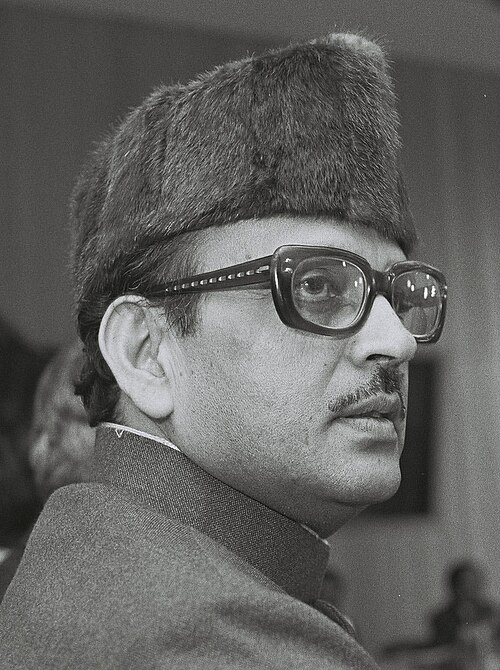
The Commerce ministry had a vacancy, and the Department of Personnel agreed to accommodate me — even though I had technically not come ‘on offer’. The political scene was heating up as Mr. V. P Singh had resigned from Mr. Rajiv Gandhi’s cabinet over the ‘Bofors’ issue and the BJP was busy stoking the Ayodhya Ram Janambhoomi issue. Every day in parliament was full of commotion and slogan-shouting against the government, but this was the atmosphere in which Mr Das Munsi thrived, for he could confabulate with all parties and work out solutions. di delhi delhi
Also Read: My Early Years in Delhi – Part 2
The shift from a PS to a DS was harsh indeed. No one was there to attend to my essential needs and the same guards who used to salute me whenever I got out of the car as PS, now told me to park my self-driven ordinary Fiat car far away. I finally found a small tree (more of a thinnish plant) under whose skeletal branches, I could park my car. It used to be hot like a pressure cooker every time I opened the door in the evening, and there no air conditioning in ordinary cars then.
By the way, the scooters of Delhi were giving way to tiny Maruti 800 cars and Delhi was full of them, in the 1986 to 1989 period. Many of them flaunted sayings like “Chunnu tey Munnu de Papa tey Mummy di Gaddi” (Chunnu’s and Munnu’s dad and mum’s car). So drastically has the picture changed, especially in last few years in Delhi (in the early part of the 2020s), that Chunnu and Munnu now have their own cars and mum, and dad have two each.
By the end of 1988, I moved to a small office room in the ministry that was right above the minister’s and the understanding was that whenever he wanted or needed my ‘advice’, I would have to drop all work and rush to him.
I used to wonder how much wealth has exploded in Delhi in these 30-35 years that every other person worth something is seen driving around in Mercedes, BMWs, Audis, Jaguars, and Lexuses — while the Uber rich sport Rolls Royces or Lamborghinis or Ferraris. And the better off middle class are in Toyotas (not Innova but Fortuner), high end Kias and Hondas/Hyundais. Obviously, much of this wealth is ill-gotten.
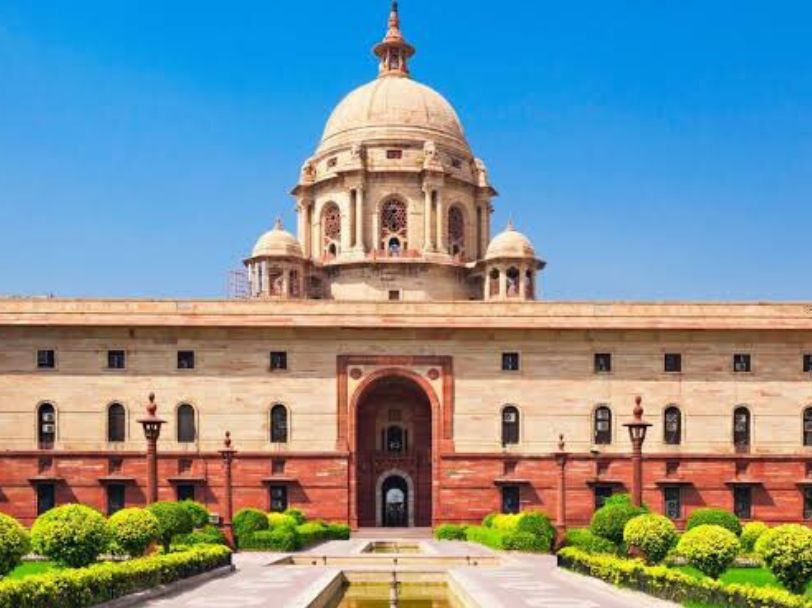
Getting back to 1988, it was both amusing and annoying that the same ‘administration chaps’ of the Commerce ministry who would run to attend to a faulty light or fan when I was PS, would often not even take my calls as DS. But life became more real. I drove my wife and young son to Sarojini Nagar market and did the weekly shopping, haggling all the time, that no District Magistrate ever does. Policemen would pull me up for the slightest fault in parking or taking a wrong turn at the traffic signal. After all, they knew that Delhi has more IAS or similar officers than stray monkeys and the latter commanded more fear or alertness.
But within a decade or two after the Liberalisation of the early 1990s, the pent-up economic energies were released and spread wealth all over the upper and better off middle classes — trampling down on everyone else.
I wish the Bengal cadre of the IAS and the IPS was more cohesive or helpful, especially to a raw newcomer like me. I found better mentors in the Joint Secretaries in the Commerce ministry, like Mr DP Bagchi of Odisha cadre or Mr JS Gill of Punjab cadre or even the very resourceful Mr JN Renjen, who I have already mentioned. My cadre had the reputation of giving miserly ‘assessment reports’ of officers’ performances — which ensured that very few could make the grade at the Centre. I remember most fondly the late Mr Ashok Chatterjee, JS in Defence ministry, was really caring and helpful to juniors in crises.
And this was the time when West Bengal still had some fairly respectable representation in the Central Secretariat.
The two or three secretaries in the Central government who were from the West Bengal cadre were up on Mount Olympus as far as we were concerned — very distant figures. I found more warmth in secretaries from other cadres like Mr Shiromani Sharma and HK Dar, than my own. But the meetings of the Presidency College Alumni were a delight and our seniors in the bureaucracy of other cadres more than compensated for the indifference of others that rankled us.
We had heard of the legendary Rays in North and South Block — AK, KK, HN and so on. I met one of them, Mr HN Ray, who had retired as Finance Secretary and then did a stint at the World Bank. They had a lovely, cosy house in Friends Colony, and it was a delight to drop in. He was so modest and gentlemanly that every time we visited him, my wife would lecture me non-stop on the way home how I should learn to be like him. I could never learn to be so polite. delhi
That reminds me of how droves of good students of Presidency and other top colleges of Kolkata had got through the IAS in the 1950s and 1960s. Every batch had quite a few from Kolkata but it was during the Naxalite period of 1967-1973 (much of which coincided with my college and university years) that this tradition was shattered forever. Bengalis from Bengal hardly ever make it to the IAS now — in IPS, the number is slightly better. Those few Bengalis who enter the IAS each year currently are invariably from Delhi or are Pravasis of other states.
Image Courtesy: Wikimedia Commons
Delhi
.

Jawhar Sircar is a former Member of Parliament. He retired from the Indian Administrative Service as India’s Culture Secy and was later Chief Executive Officer of the public broadcaster, Prasar Bharati. He is well-known for his articles on history, culture and politics and his columns appear in several leading Indian and foreign newspapers and magazines in English and Bengali. Sircar has also been the Chairman of the Centre for Studies in Social Sciences, Kolkata.