Chandrabati: Bengal’s First Woman Poet Who Reclaimed the Ramayana
In Bengali literature, Chandrabati arrives with a voice that refuses to be ignored. And four centuries later, millions remember her as the first known feminist poet of Bengal, but that label alone cannot capture her.
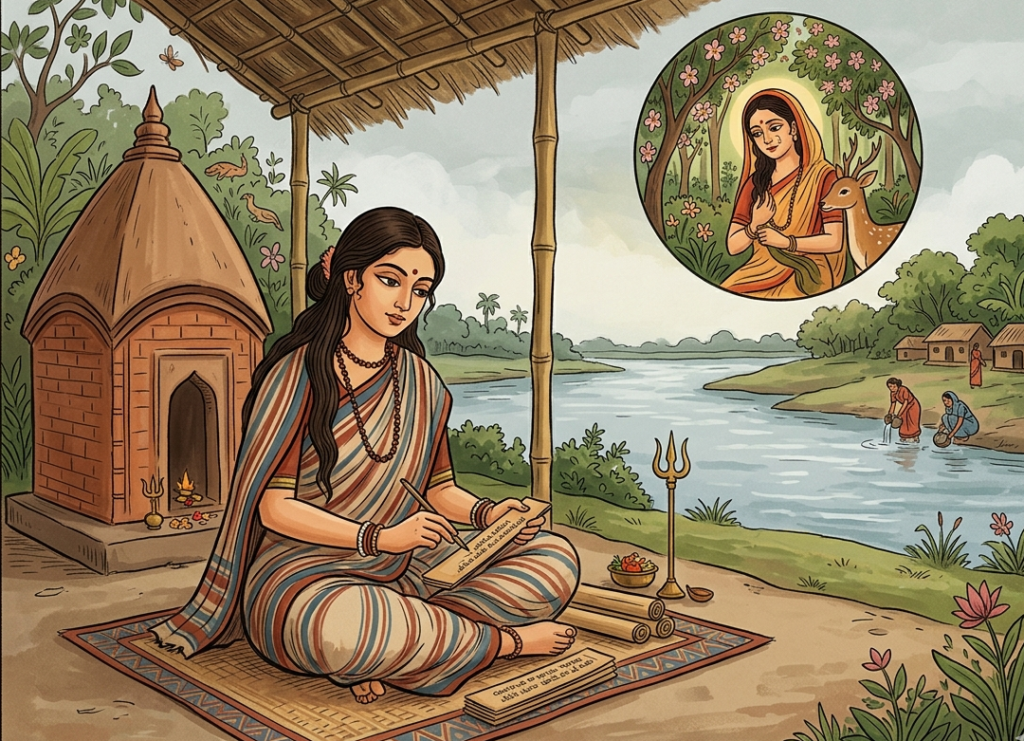
What we know of her life comes from Chandrabati, an early 20th-century ballad by Noyon Chand Ghosh. It lingers on heartbreak more than her writing. Love, betrayal, duty, devotion, and death. Yet, it carries her name across time. It shapes how later readers, scholars, and artists see her. Beyond the tragedy, another truth survives. Chandrabati rose above all odds to become a feminist writer who challenged how stories were told.
The Sounds of Early Life
Chandrabati was born around 1550 in Patuyari village, near the Fuleshori River in what is now Kishoreganj, Bangladesh. Her world was not made of courts or royal patrons. It was made of songs, rivers, rituals, and voices carried through open air. Her father, Dwij Banshidas Bhattacharya, was a poet.
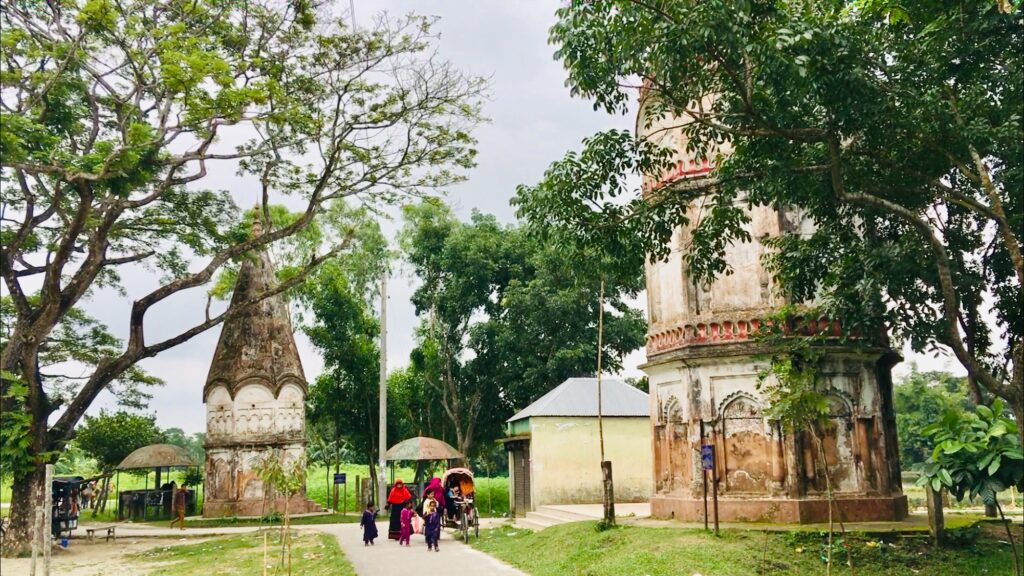
Her mother, Anjana Devi, held the rhythms of a religious home together. Chandrabati grew up surrounded by sound. Sacred verses. Folk songs. The speech of village women. She learned from texts, but she also learned from life. The river, the seasons, the work inside a home, the way women spoke when men were not listening. Her writing was infused with all of this.
Forging a New Path
As a child, she formed a bond with a boy named Jayananda, which grew into a promise. However, that future was not meant to be. On their wedding day, Jayananda left her. He ran away with Asmani, the beautiful daughter of a local qazi, changing his faith and marrying her.
Nabaneeta Dev Sen gathered scattered verses from villages in East Bengal. She brought the pieces together, resurrecting the fading tale. She completed the manuscript of Chandrabati’s Ramayan just a year before her passing, and it was published posthumously in 2020.
Chandrabati did not follow him. She did not accept another match. Instead, she chose silence, then voice. With her father’s consent, she built a small temple to Shiva by the river. She took a vow of celibacy. She turned inward, then outward through song. Her words began to reach other women. She called them directly. “Listen, my friends.” Not as a poet above them, but as one of them. Her pain did not remain private. She reshaped it. What broke her became the ground she stood on.
Also Read: Bengal Sketches – When One Festival Is Another People’s Mourning
Legends suggest that Jayananda returned years later, on a stormy night filled with regret. She refused to see him. Some say he left a final message and drowned. Her own death, around 1600, is uncertain. River, illness, disappearance. No one knows for sure. What remains clear is this. She chose herself.
A Ramayana Through Sita’s Eyes
Krittibas Ojha’s Ramayana (aka Sri Ram Panchali) is the Bengali remix of Valmiki’s Sanskrit epic; think of it as the Ramayana with local flavor, extra drama, and a generous sprinkle of folklore. Composed sometime between 1381 and 1461, this version made Lord Rama a household name in Bengal long before printing presses.
Chandrabati did something rare. She refused to accept a story everyone knew. Instead, she asked a simple question. What if the woman spoke? Her Sitayana stands out for presenting the Ramayana from a woman’s perspective, giving voice to Sita and upending a well-known story.
Chandrabati refused the storytelling from a century before. In her Ramayana, often called the Sitayana, she focuses on Sita’s life. Not as an ideal, but as a woman who feels, questions, and remembers. It moves month by month, shaped by the Bengali calendar. Each moment carries separation, grief, endurance. Rama fades into the background.
His victories matter less. His doubts matter more. His decision to send Sita away while she was pregnant is held up and examined. Through Sita, Chandrabati speaks about injustice. About how women are judged. About how silence is forced upon them. Sita is no longer distant. She speaks. She suffers. She resists. And in doing so, Chandrabati shifts power. The story no longer belongs to the hero. It belongs to the woman who was made to endure him.
Ballads for the People
Chandrabati composed songs for the people, giving voice to those who were not included at the time. Her songs lived in pala gaan, performed in gatherings and festivals. They moved from singer to singer, from memory to memory. In Molua, a woman stands against a powerful qazi and protects her home with wit and resolve.
The song includes descriptions of food, seasonal activities including Durga Puja, and the pressures faced by families in rural society. In Dasyu Kenaramer Pala, a bandit changes through devotion. These are tales from daily life. Women carried these songs. They sang them in homes, in courtyards, in shared spaces where stories could breathe and live.
Disappearance and Return
For a long time, Chandrabati’s words almost vanished, surviving only in fragments. In voices. In memory. Written records came late. Much was lost along the way. Her life story, forged by male voices, often overshadowed her writing. The poet faded behind the legend. Then came recovery.
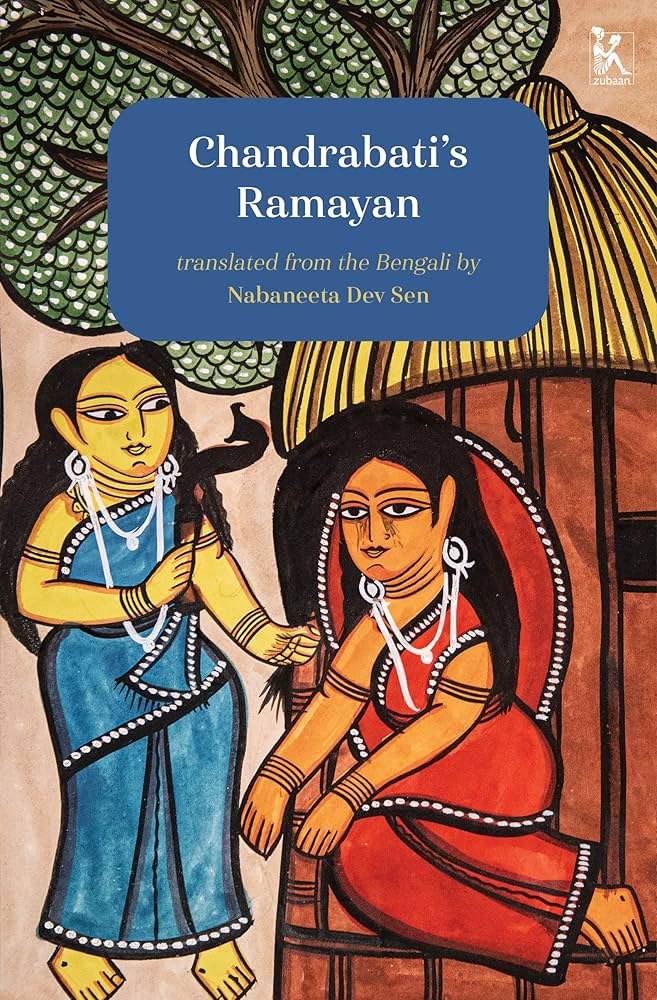
Nabaneeta Dev Sen gathered scattered verses from villages in East Bengal. She brought the pieces together, resurrecting the fading tale. She completed the manuscript of Chandrabati’s Ramayan just a year before her passing, and it was published posthumously in 2020.
Also Read: Bengal Sketches – Land of the Doria (Rivers): Bengal in Persian Shadows
Today, groups like the Gana Shanskritik Dol and Chandrabati Academy continue to search, preserve, and perform her work. The effort is ongoing. Much is still missing. But she is no longer silent.
Why Chandrabati Matters
Chandrabati did something rare. She refused to accept a story everyone knew. Instead, she asked a simple question. What if the woman spoke? Her Sitayana stands out for presenting the Ramayana from a woman’s perspective, giving voice to Sita and upending a well-known story. Beyond this, her songs capture everyday rural life in Bengal, including customs, relationships, and beliefs. Her work remains valuable to scholars studying gender, folklore, and regional traditions, and continues to challenge readers to see familiar narratives with fresh eyes.
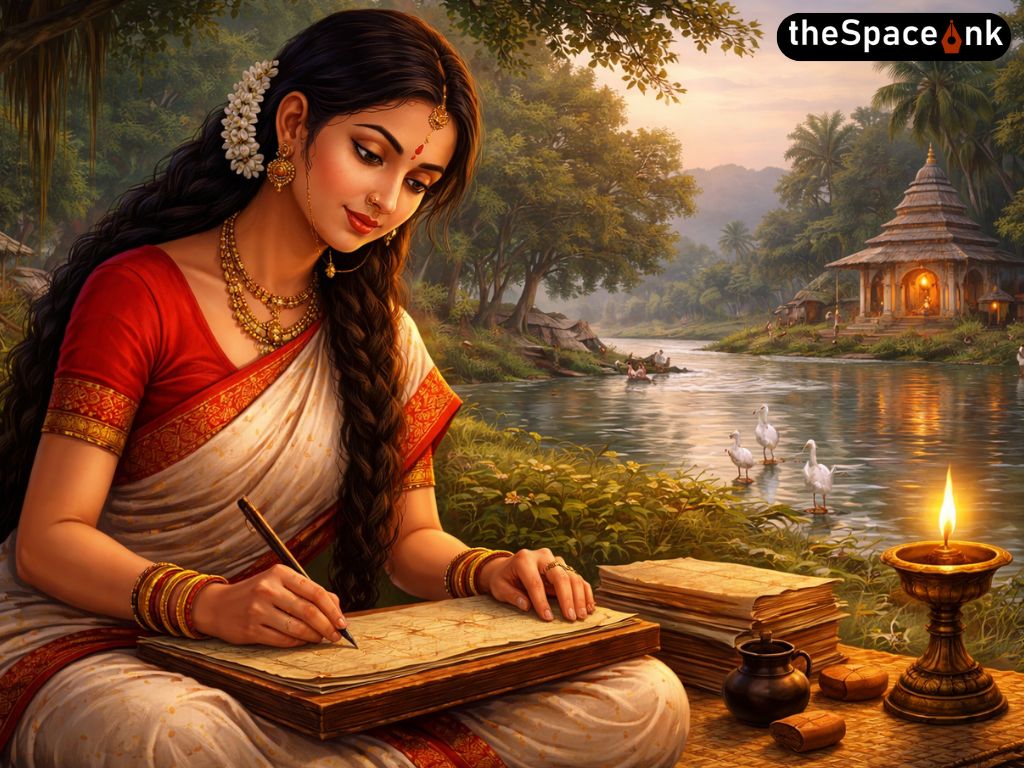
Image Courtesy: AI (Imaginary Image of Chandrabati), Wikimedia Commons, Amazon

Dr. Jamil is a passionate oncology commercial leader whose two-decade journey has been driven by a deep commitment to improving the lives of people with cancer. As Head of the Early Commercial Team at Merck Oncology and an Adjunct Professor at Columbia Business School, he shapes innovative pipelines while mentoring and inspiring future healthcare leaders. Beyond work, he is a soulful armchair historian of Bengal, a devoted Manchester City fan, and someone whose heart is forever tied to the culture, stories, and spirit of Kolkata.