The Letter
The old almirah had stood for decades in the corner of the bedroom, its once-dark varnish dulled by years of dust and monsoon damp. Meera had grown up watching her mother keep everything inside it — starched saris, winter shawls, old diaries, even faded train tickets tucked into corners like pressed flowers.
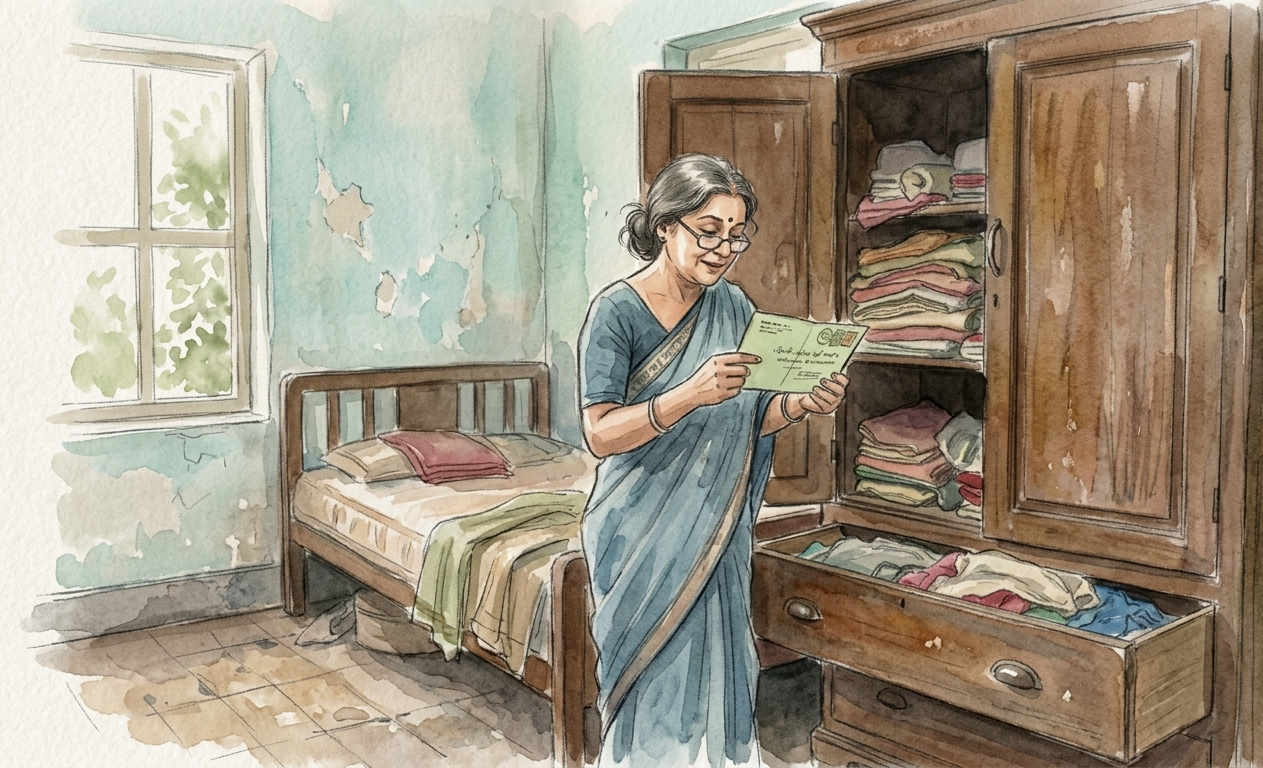
When the carpenter came one afternoon to fix its swollen drawers, he found a thin, pistachio-green inland letter lodged at the back. “Madam, see this,” he said, handing it over with mild curiosity.
Meera wiped her hands on her cotton sari and took it. The paper felt brittle and delicate — like a late-autumn leaf that could crumble if breathed upon. On the flap, in faint blue ink, was written: To Sulekha Banerjee, 65/6 Ganesh Chandra Avenue, Calcutta – 700013.
Her heart paused, as if something long forgotten had exhaled inside her.
It was her mother’s name — her old address — the city where she had spent her childhood.
She sat down on the edge of the bed. The ceiling fan whirred lazily above, stirring up the familiar afternoon torpor. Carefully, she unfolded the letter. The creases were permanent, the paper brittle yet strangely alive.
My dearest Sulekha, it began.
The handwriting was unmistakable — elegant, patient, each letter formed with the precision of someone who still believed that words carried weight. Her father, then a young man posted in Dhanbad, had written about his new office, about the persistent coal dust that clung to his clothes, about missing her evening tea and the smell of her Jabakusum hair oil after a bath. He had written about saving up to buy a small Murphy radio, and how he dreamt of bringing her there one day, once the quarters were ready.
Between the lines was something more tender than the words themselves — a quiet throbbing of hope, of life waiting to begin.
Meera closed her eyes. A faint scent rose from the paper — part sandalwood, part damp air, and something else she couldn’t quite name. Perhaps the memory of her mother’s room: the rustle of her saris, the smell of Cuticura powder and incense sticks.
“Ma, what’s that?” Arjun’s voice broke the stillness. He stood at the door, a tall boy in his early twenties, phone dangling loosely from one hand.
“A letter,” she said softly. “From your dadu to your didan. Long before you were born.”
The first thing she noticed was the absence of smell. The faint trace of sandalwood and time had been replaced by the chemical sterility of plastic. The paper no longer rustled when she turned it. The touch was smooth, hard — untouchable.
He came closer, peering over her shoulder. “Looks ancient. You should get it laminated, Ma. It’ll disintegrate otherwise.”
She smiled faintly. “Some things are meant to fade, Arjun.”
He shrugged. “Still — we can’t just let it rot.”
That evening, as she prepared dinner, she noticed the envelope was missing from her bedside table. Arjun had taken it, she realized — probably to the printing shop near the metro, the one that did lamination and photocopies.
The next evening, he handed it to her proudly. “See? Now it’s safe.”
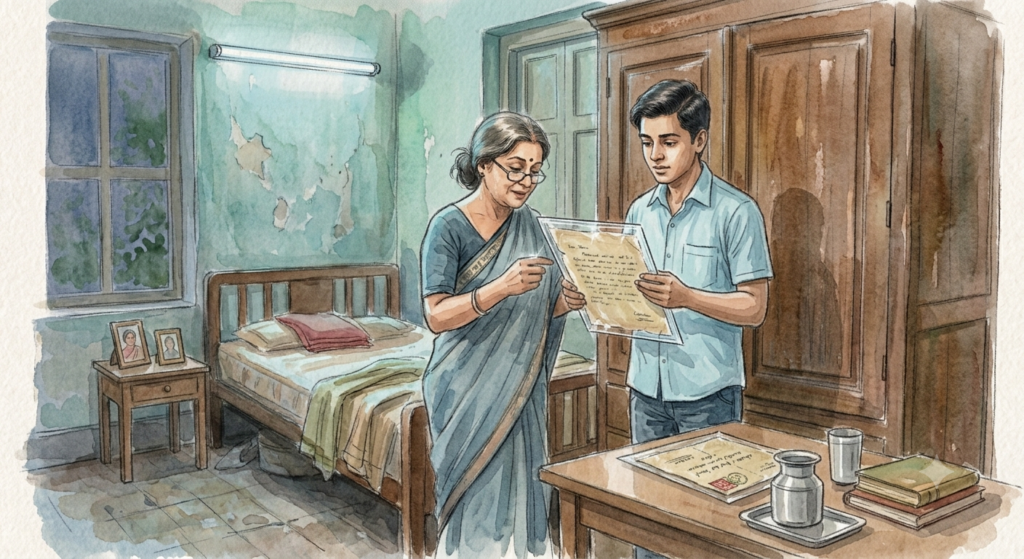
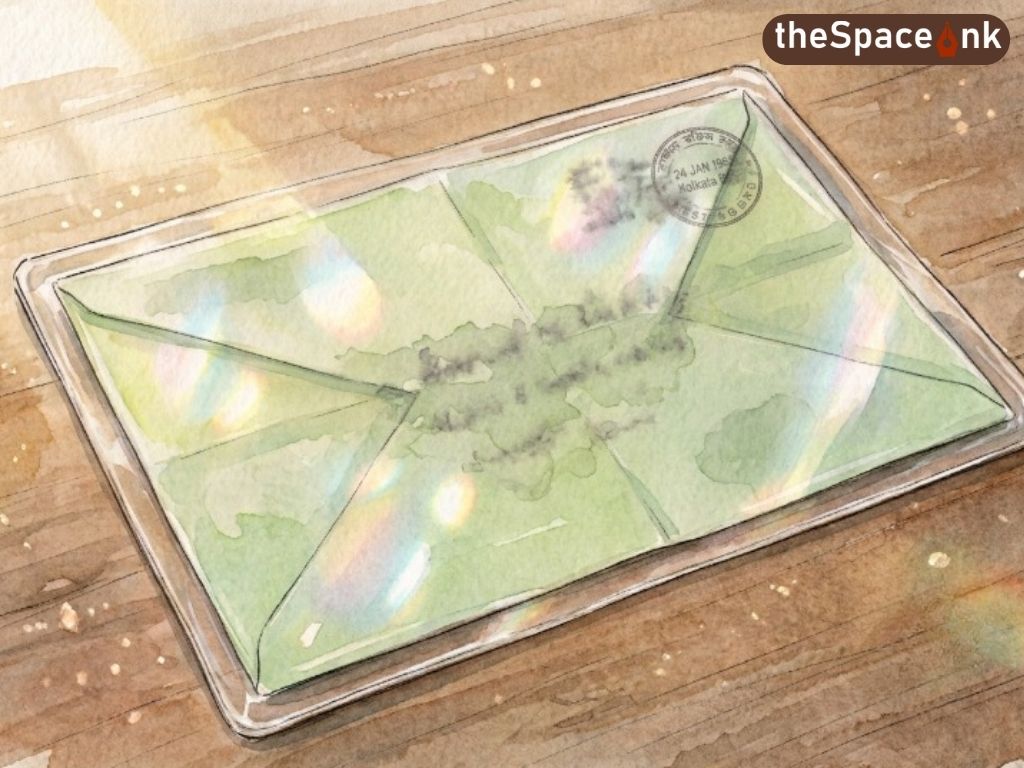
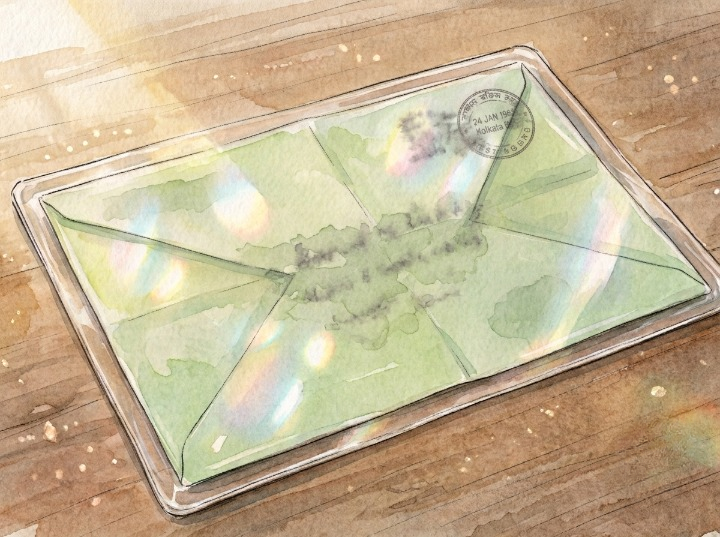
She took it from him. The paper was sealed in a perfect sheath of plastic, edges straight, folds frozen. It gleamed under the tube light, catching every reflection.
It was beautiful — and wrong. Something in her resisted the perfection of it.
The first thing she noticed was the absence of smell. The faint trace of sandalwood and time had been replaced by the chemical sterility of plastic. The paper no longer rustled when she turned it. The touch was smooth, hard — untouchable.
Still, she said nothing. She only nodded and placed it on the dressing table beside her mother’s framed photograph — her mother smiling faintly in that sepia way photographs used to capture smiles, as if aware they would be looked at long after the person was gone.
That night, Meera couldn’t sleep. The ceiling fan made its small metallic click with every turn. From the street below came the occasional bark of a dog, the clatter of a passing rickshaw. Her mind kept returning to the letter — to the weight of it in her hands before it was sealed, to the way the paper had trembled like a pulse.
Also Read: Karl Benz: The Man Who Got the World Rolling
She rose quietly, turned on the lamp, and sat by the table. The laminated letter lay there, reflecting her own face back at her. For a strange moment, she thought it looked like a body laid out behind glass — preserved, unreachable.
She held it up to the light. The words were clearer now, more legible than before. My dearest Sulekha. The ink had not faded. Yet the life inside it had gone — the living connection between hand and page, between paper and air.
Her parents’ world had been made of paper and waiting — letters sent by train, reaching after days, carrying news, longing, apology. The world she lived in now ran on screens and instant messages. Maybe that was progress, she thought — and yet, it felt like loss.
She placed the letter back on the table. A small lizard darted behind the curtain. Somewhere outside, the night guard blew his whistle. The world went on, efficiently preserved, laminated in its own way — its warmth sealed beneath convenience.
The next morning, she made tea and stood by the balcony. The neighbourhood stirred awake — a milkman’s cycle bell, a hawker’s call for vegetables, the rhythmic sweep of the cleaner’s broom. Ordinary sounds, everyday life — yet everything felt faintly translucent, as if wrapped in something that muffled its warmth.
Arjun came out, still half asleep. “Morning, Ma. Tea?”
“Yes,” she said, handing him a cup. “Arjun,” she added after a pause, “you did a good thing. It’ll last now.”
He smiled. “Exactly. You see?”
After a long time, she opened the drawer and placed the letter inside — beneath a stack of old diaries and a faded handkerchief. It would be safe there, she thought, but unseen.
She nodded, but her eyes lingered on the letter visible through the open door — glinting faintly in the sunlight, untouched by dust or decay.
When Arjun left for college, she sat by the table again. Her fingers traced the edges of the laminated sheet. The words were trapped inside, alive only in memory.
She thought of her mother’s careful way of folding saris, of her father’s handwriting, of all the things that had survived not because they were preserved, but because they were used, touched, lived with.
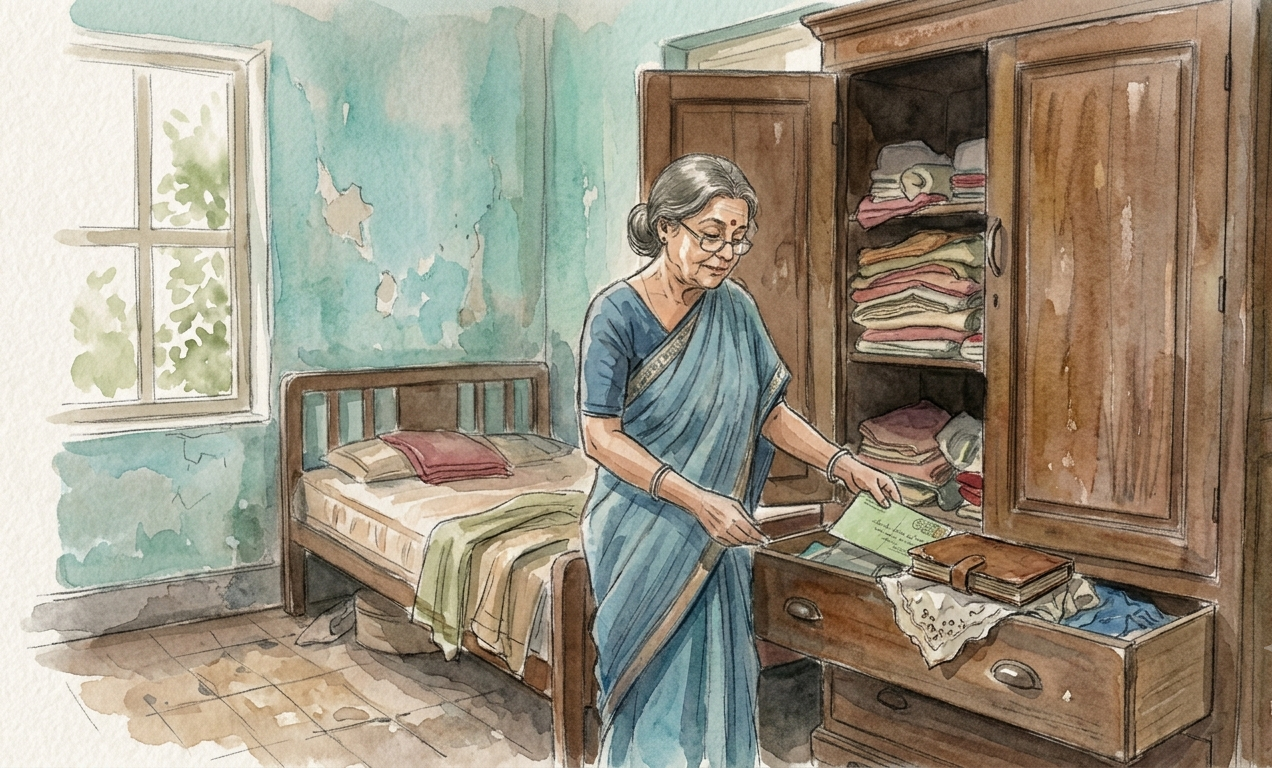
After a long time, she opened the drawer and placed the letter inside — beneath a stack of old diaries and a faded handkerchief. It would be safe there, she thought, but unseen.
By evening, as the first drizzle of the season darkened the windowpane, she felt something lift — a small release, like letting go of breath she hadn’t realized she was holding.
Outside, the city shimmered in wet light. Inside, the letter lay sealed — its words clear and lifeless, its memory alive elsewhere.
Image Courtesy: AI

A wanderer in words and wilderness, Koushik writes and translates to see the world — and himself — with mindful clarity.