The End of the River: A Bengali Wanderer in Bourne End
Part 2
The platform bench at the station was cold, and my feet were still burning from the desperate dash out of Bourne End at dawn. Having missed my breakfast for a quick cup of coffee, I gave in to the ache, kicked off my shoes, and sat cross-legged right there on the metal slats.
Then, right in front of a house called Blyton House, I found the road dug up for repairs, murky water pooling exactly the way the drainage overflow floods the main road back home in Entally, Kolkata. Seeing that small, unglamorous mess, something in me settled. Some things, it turns out, are the same everywhere.
A few Westerners glanced sideways at me. Let them look, I thought — you people can pull out a tissue and blow your nose like a trumpet in public, and no one blinks, but I sit with my feet up and suddenly I’m the spectacle. Still, I put my shoes back on before long — not because of the stares, but because I remembered my favourite travel writer, Bikraman Nair, who once sat exactly like this, shoes off, at Madrid’s Chamartín station. He dozed for a moment. When he opened his eyes, his shoes were gone. One does not forget the lessons of a veteran. I put mine back on at once.
The journey ahead was not a simple one. First to Maidenhead, then the Elizabeth line to Reading, then a small two-carriage train to Guildford — bouncing between the Great Western and Elizabeth lines like a ping-pong ball. From Guildford’s Friary bus station, an hour and a half more to Midhurst, then a local connection into West Sussex. I kept telling myself that the journey matters, not the destination. Of course, that didn’t always work!
Also Read: The End of the River: A Bengali Wanderer in Bourne End (Part 2)
By the time I reached Friary, I was dizzy with worry. The departure board flickered a message about the Midhurst bus, then swallowed it again. My map app was no comfort either — no further departures, it said. Sundays run no service here, and even the limited Saturday timetable seemed to have vanished into thin air. There were train alternatives, but it would have cost me some five thousand rupees extra.
I thought of Syed Mujtaba Ali’s account of his journey to Kabul, of his fellow passenger nervously winding and unwinding his turban out of anxiety. I had no turban, only a cap on my bald head, and taking it off and putting it back on in the cold seemed a poor substitute. Such is life, Kalida — I thought, sitting there with a face as glum as I could manage.
Also Read: Hidden ‘Kohinoor’ in the Heart of Prague
Eventually — I lost count of the minutes — the bus came. A village road, the bus winding gently through it, most passengers elderly folk with bags of vegetables or loaves of bread. At one stop, the doors opened with their little bell, and an old man showed no sign of moving until the woman beside him nudged him awake. He grumbled his way to the door, and as he stepped down, did not forget to say, loudly, “Thank-how” — English courtesy, delivered half-asleep.
Those loaves of bread put me in mind of food, as most things eventually do — and food, once I arrived, turned out to be its own small education.
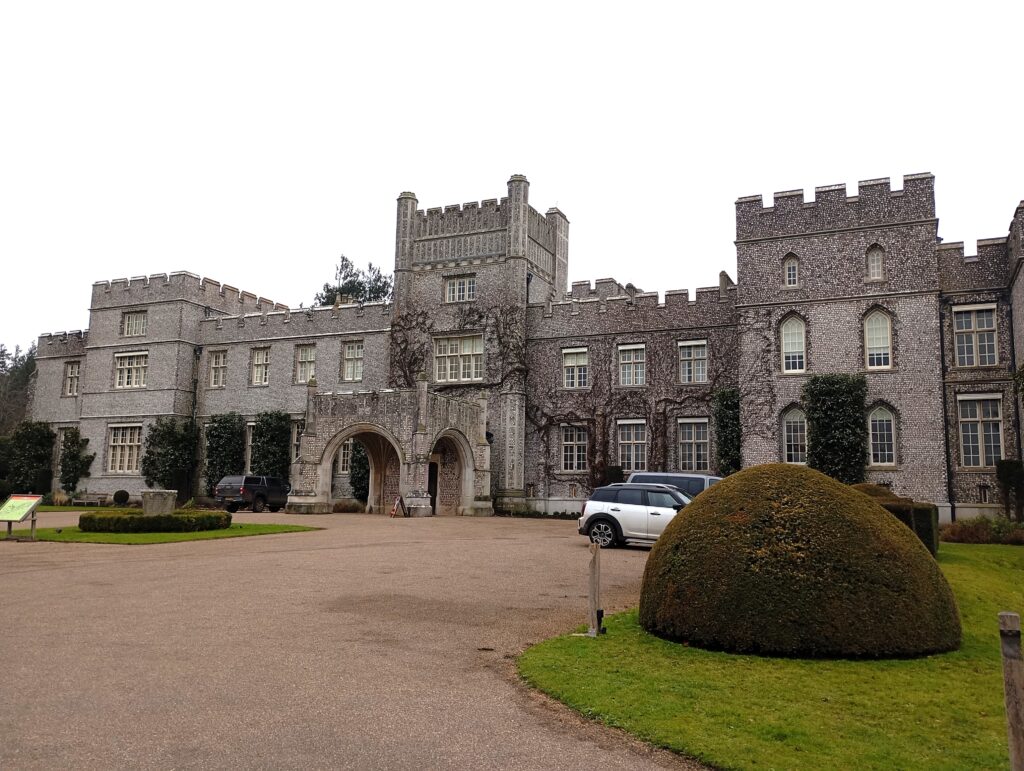
That first evening, tired from travel, I went straight to the West Dean college canteen, unable to decide what to order. I asked the young man at the counter what was good. He pointed things out cheerfully — beef here, duck there — and so on. I was really hunting for something closer to home, a bowl of rice with chicken curry perhaps.
I had heard that Nobel laureates sometimes queue with a tray at Trinity College, and this college, too, was no lightweight — Salvador Dalí himself had lived and worked here. Who knew if some quiet laureate stood behind me in the line, silently judging my choices? So, in a hurry, I settled safely for some greens, mashed potato, and something that resembled — Lord knows what it actually was — a cutlet.
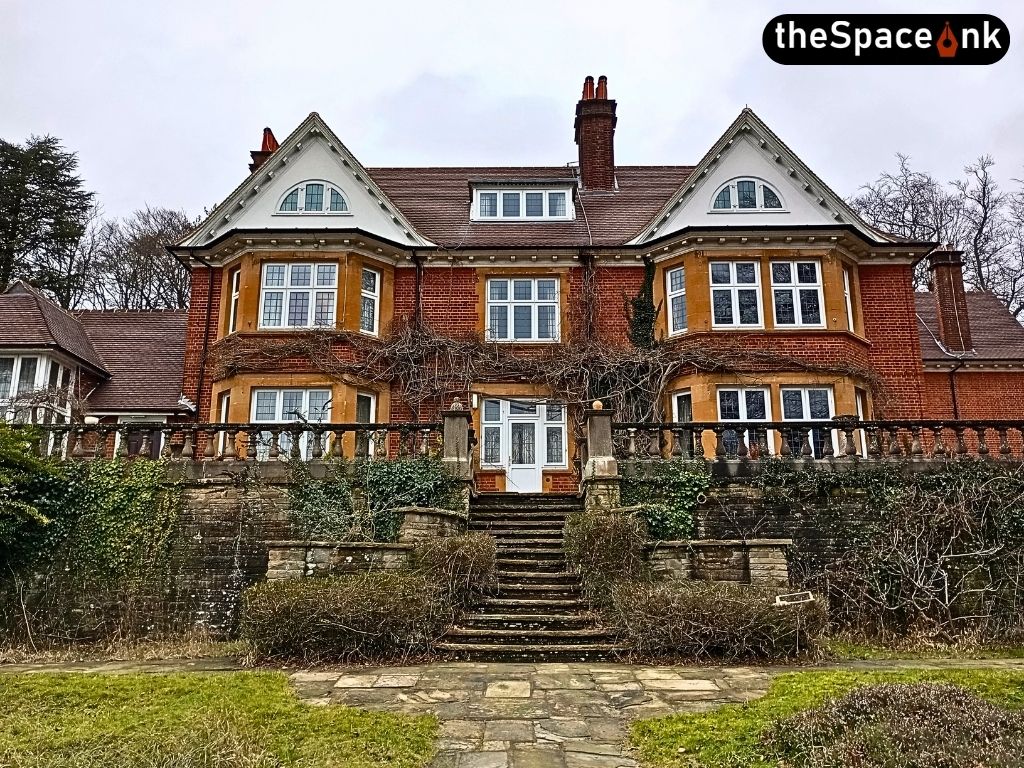
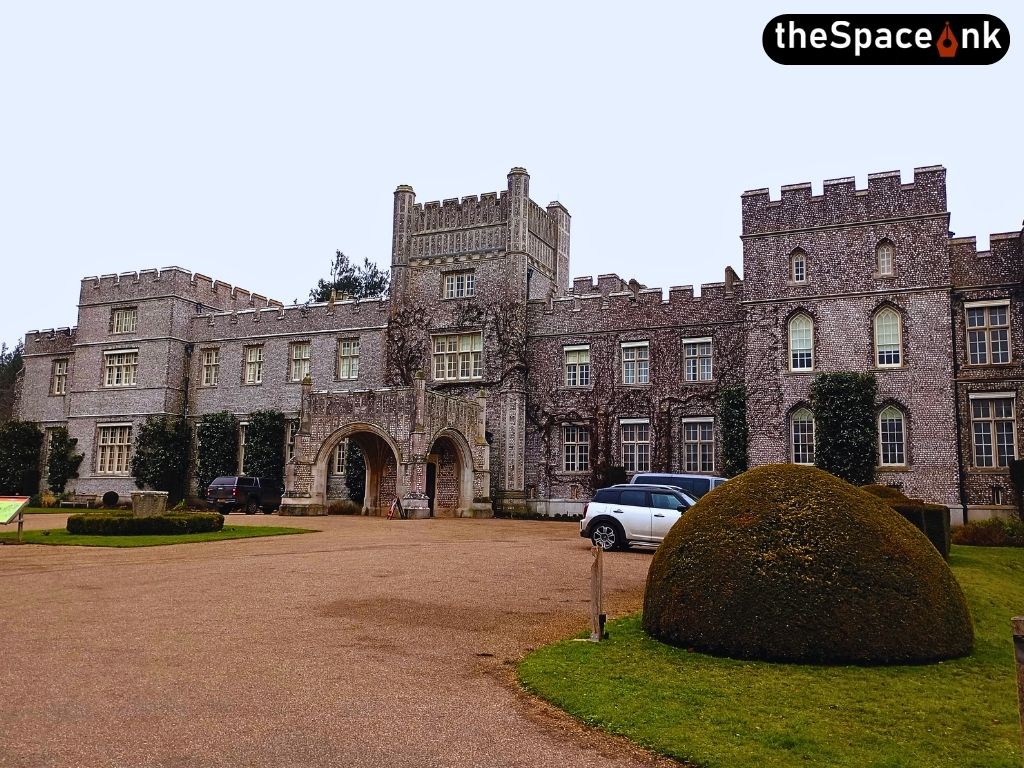
West Dean was founded on the estate of Edward James, an eccentric patron of the arts — friend and host to Salvador Dalí, among others — and, for a stretch of years, part of a Los Angeles social circle that included Aldous Huxley, Gerald Heard, and Christopher Isherwood.
Breakfast, the mornings after, was a different affair altogether — not a quiet one. From the moment you sit down, the chatter starts, and I daresay one learns more from it than from a lecture hall — and West Dean, I should say, is a serious college! Someone bites into their bacon and announces, “I had Angolan coffee last month — dreadful, absolutely dreadful.” Someone else, a vegan, describes, with real theatre, nearly fainting at the sight of chopped boiled egg hiding in a salad at a London restaurant.
Watching all this, I understood that Saraswati, goddess of learning, is simply not invited to the English breakfast table. Not that there’s anything wrong in that. I once read that whenever Gabriel García Márquez dined with Fidel Castro, the two men mostly discussed fishing — not the state of the world, not the future of communism, just fishing. Márquez wasn’t being innovative, I realised, sitting there at West Dean. He was only telling the truth.
Also Read: Books That Burst Out of Windows and Spiral Into Infinity- Part 1
After breakfast, I would sit in the hall outside the dining room, where the papers were kept, and hunt down The Guardian before anyone else could. One morning, page three carried a serious piece on scientists researching the smell of mummies. The English do have a sense of humour, I thought — analysing the odour of ancient, embalmed remains with a straight face. Such is the devotion of scholars. Syed Mujtaba Ali, indispensable once again, wrote that you cannot become a pandit without first making a proper pando — a mess — of things. This, surely, was exactly that.
But there is real devotion here too, of a gentler kind. In the studios around the college, someone is working clay with their hands, someone else restoring the delicate insides of an antique brass clock, someone kneading paper pulp into new shapes entirely. Nothing here is thrown away; everything old is coaxed back into use. This English tenderness for the past — I found it genuinely admirable. There may be other things worth admiring too, but this is what stayed with me, in the few days I had.
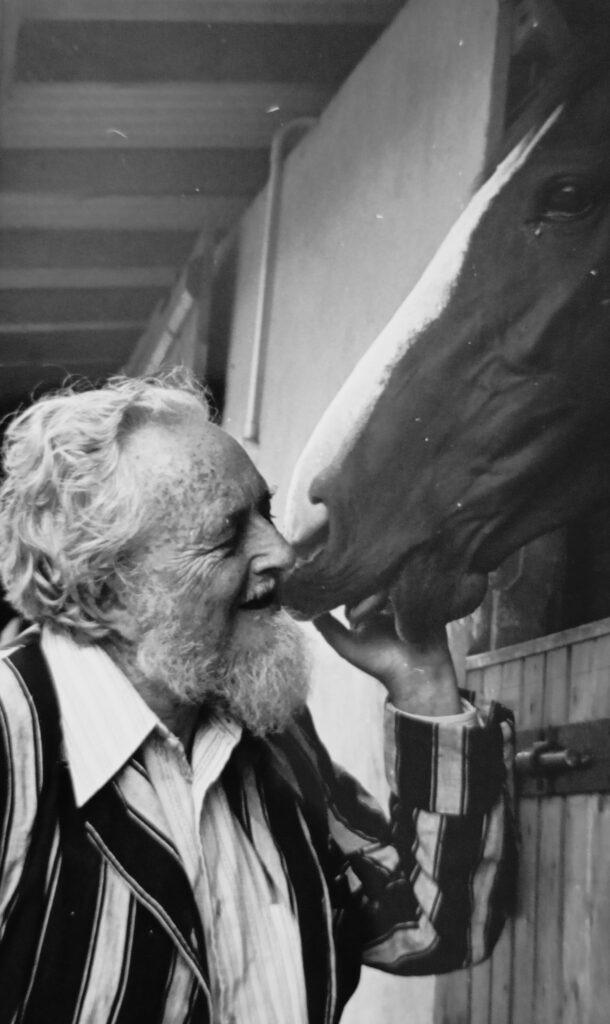
It was only later that I learned how deep the college’s own past runs, and how strangely it circles back to the very story I had come to England to trace. West Dean was founded on the estate of Edward James, an eccentric patron of the arts — friend and host to Salvador Dalí, among others — and, for a stretch of years, part of a Los Angeles social circle that included Aldous Huxley, Gerald Heard, and Christopher Isherwood. Those three writers, in their American years, grew close to Swami Prabhavananda and became devoted, in their own very English-Californian way, to the Vedanta he taught.
Also Read: Books That Burst Out of Windows and Spiral Into Infinity – Part 2
Isherwood and Huxley even worked with Prabhavananda on a translation of the Gita. I had travelled to England chasing one Bengali monastery’s story, and found, in details, that its shadow had reached this Sussex estate as well. During my week there, I was shown letters written by these very men, and works by Dalí himself. I was even allowed, on the strict condition that I take no photographs, into Edward James’s own bedroom — where a Picasso hangs on the wall, as if it were the most ordinary thing in the world.
My time in West Sussex was coming to an end. The next morning I would be on the road again. Looking back at those few days, I realised that travel does something strange to the mind. For a while, the machinery of ordinary life goes quiet. You notice small things again — the light on a field, a bird calling from somewhere unseen, an old clock being patiently repaired, a stranger saying “Thank-how” as he gets off a bus. Perhaps that is why we travel. Not always to see something extraordinary, but to become capable of seeing ordinary things again.
Green fields lay under a grey sky. English nature does not shout in colour the way ours does, but the silence more than makes up for it — birdcalls from every direction, the soft sound of leaves letting go. A quiet, endless stream of contentment seemed to move through the air, born entirely of that silence. Life would feel complete, I thought, if only I could reach out and touch it.
Several more towns awaited me, starting with Bath. But before I let Sussex go, one more memory pulls me back — not to Sussex at all, but to Bourne End, a few days earlier. I still remember that noon: I had gone to the post office to change some euros into pounds. On the way, the sight of a Union Jack gave me an odd, sharp twinge of unease. I had not come to England with the romantic, admiring gaze of a Nirad C. Chaudhuri; if anything, I had arrived a little wary of the place.
Then, right in front of a house called Blyton House, I found the road dug up for repairs, murky water pooling exactly the way the drainage overflow floods the main road back home in Entally, Kolkata. Seeing that small, unglamorous mess, something in me settled. Some things, it turns out, are the same everywhere.
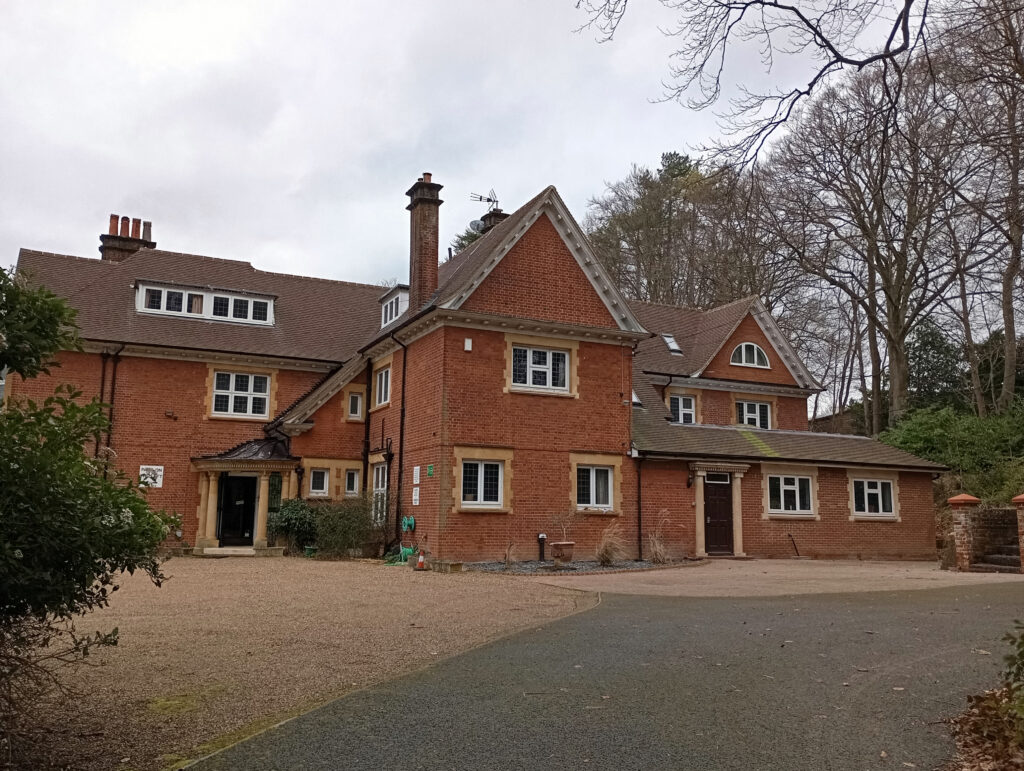
Green fields lay under a grey sky. English nature does not shout in colour the way ours does, but the silence more than makes up for it — birdcalls from every direction, the soft sound of leaves letting go. A quiet, endless stream of contentment seemed to move through the air, born entirely of that silence. Life would feel complete, I thought, if only I could reach out and touch it.
I stood a while before an old sundial at the Vedanta Center. The sky was heavy, but I knew, the way you know these things without evidence, that a ray of light was bound to break through the clouds before long.
Bath, Bristol, and London were still ahead of me — and with them, the story of J.J. Goodwin, the man whose life had really brought me to England in the first place. But that belongs to another telling. For now, this is where I’ll let the road rest: at a sundial in the English countryside, waiting, like the rest of us, for the sun.
Edward James image courtesy West Dean collection; rest photographs by author.

Pijus Ash is a freelance journalist with over two decades of experience. An avid reader by nature, he likes to pursue independent research. In addition to his passion for reading, Pijus enjoys traveling and frequently embarks on backpacking.