
When Justice Feels Too Slow: Why More People Are Accepting Encounter Killings and Mob Lynching
Picture this. A horrific crime is reported. A child has been brutally raped and murdered. A terrorist attack has claimed innocent lives. The horrific details swamp television screens and social media for days. Public anger reaches boiling point. People demand justice—instantly.
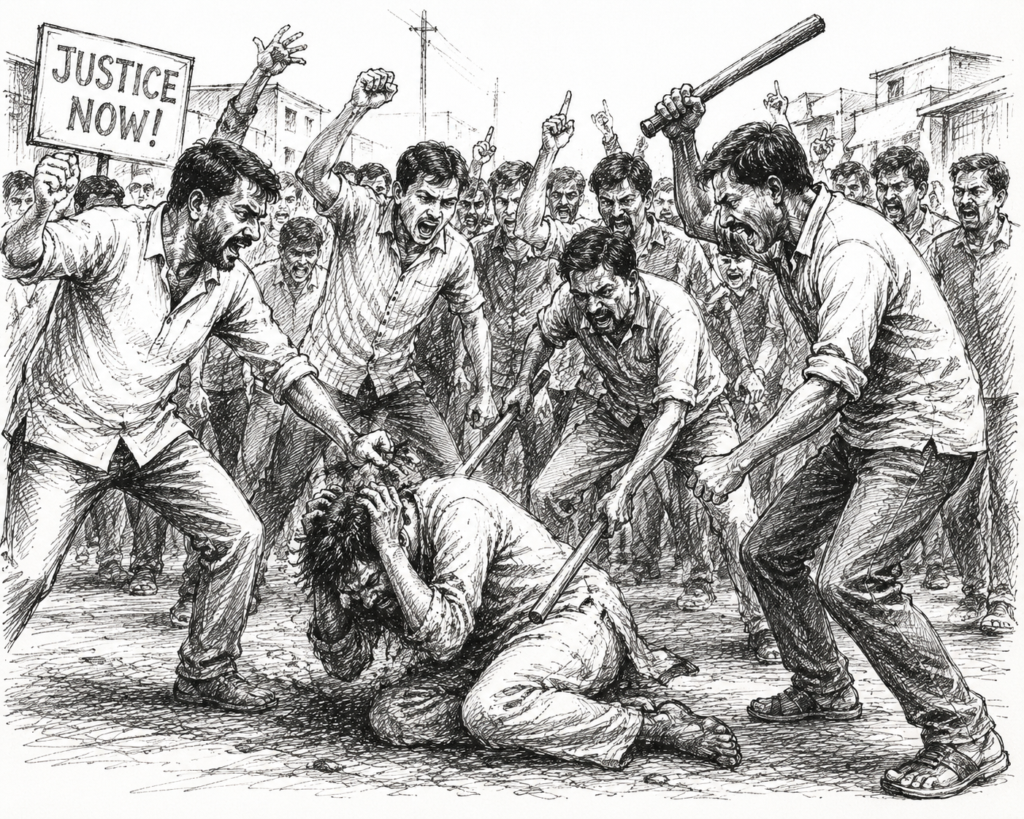
Political leaders and administrative heads promise prompt arrests and exemplary punishment. In no time, another headline appears. The accused has been killed in a police encounter. Or an angry crowd has lynched a suspect before the police could intervene.
What follows can be just as startling as the incident itself. Instead of widespread condemnation, there is often a jubilant celebration. Police officers are hailed as heroes. Social media fills with messages declaring that “justice has finally been done.” Not long ago, such reactions would have shocked much of society. Today, they are becoming ubiquitous.
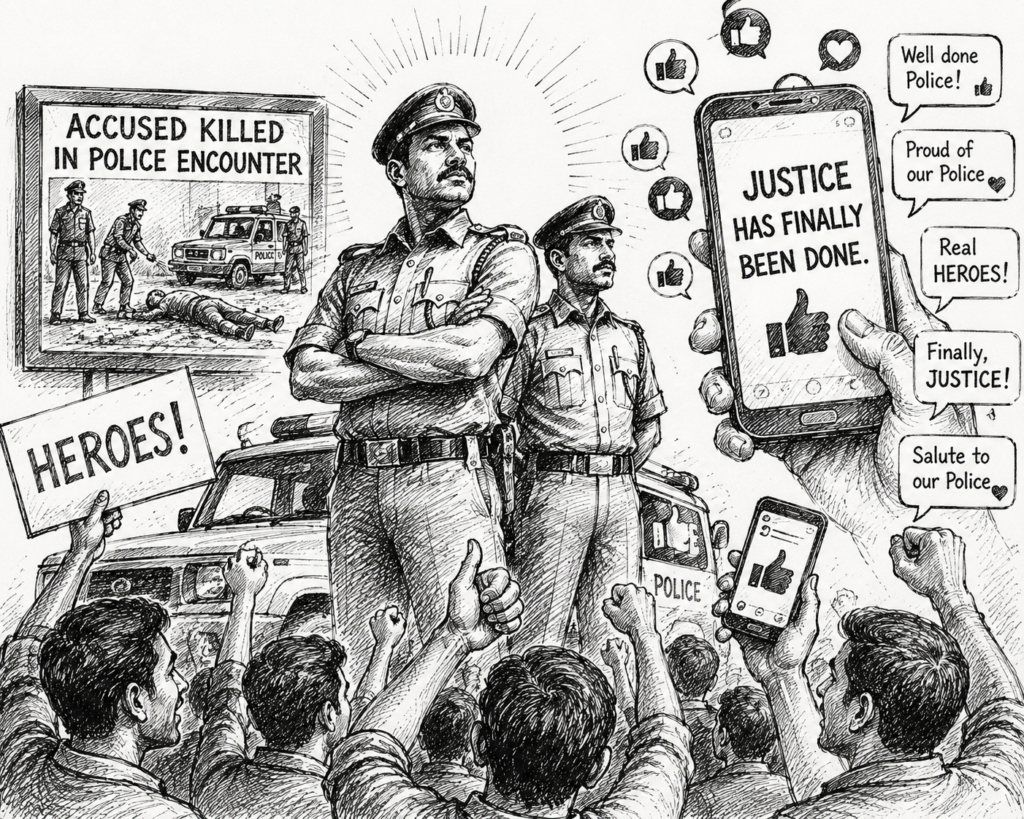
Why is this happening? Why are more and more people willing to accept—or even applaud—forms of punishment that bypass the courts altogether? There is no single answer. The growing acceptance of encounter killings and mob lynching is rooted in a toxic cocktail of frustration, fear, anger and, perhaps above all, a declining faith in the institutions meant to deliver justice.
For many people, the most frustrating issue is not the law itself but the time it takes for the law to work.
In many countries, criminal cases drag on for years. Investigations crawl at a snail’s pace, evidence is tampered with or destroyed, courts are overwhelmed, witnesses sometimes turn hostile or get killed, and appeals can stretch a case indefinitely. Victims’ families often find themselves reliving the trauma every time a hearing is postponed.
Against this background, it is a no-brainer that many people begin to lose confidence in the justice system. When a particularly gruesome crime occurs, many no longer ask whether the accused deserves punishment. Instead, they wonder whether punishment will eventually be meted out.
That frustration creates fertile ground for the germination of the idea of “instant justice.”
Few events provoke stronger emotions than heinous crimes against children or acts of extreme violence. When people hear about such cases, fury, horror and disgust subdue sorrow. These emotions are all too human. But they also influence the way we arrive at moral judgments.
History repeatedly reminds us that extraordinary or extrajudicial powers rarely remain limited to extraordinary cases.
Psychologists have long pointed out that when emotions run high, people become indifferent to legal procedures and more interested in seeing the offender severely punished as quickly as possible.
At such moments, due process can seem like unnecessary road bumps. Questions about evidence, investigation or trial may appear irrelevant if the public is convinced that the accused is guilty.
We live in a world where almost everything happens immediately. News reaches our phones within seconds. Food is delivered in minutes. Movies begin streaming with a single click.
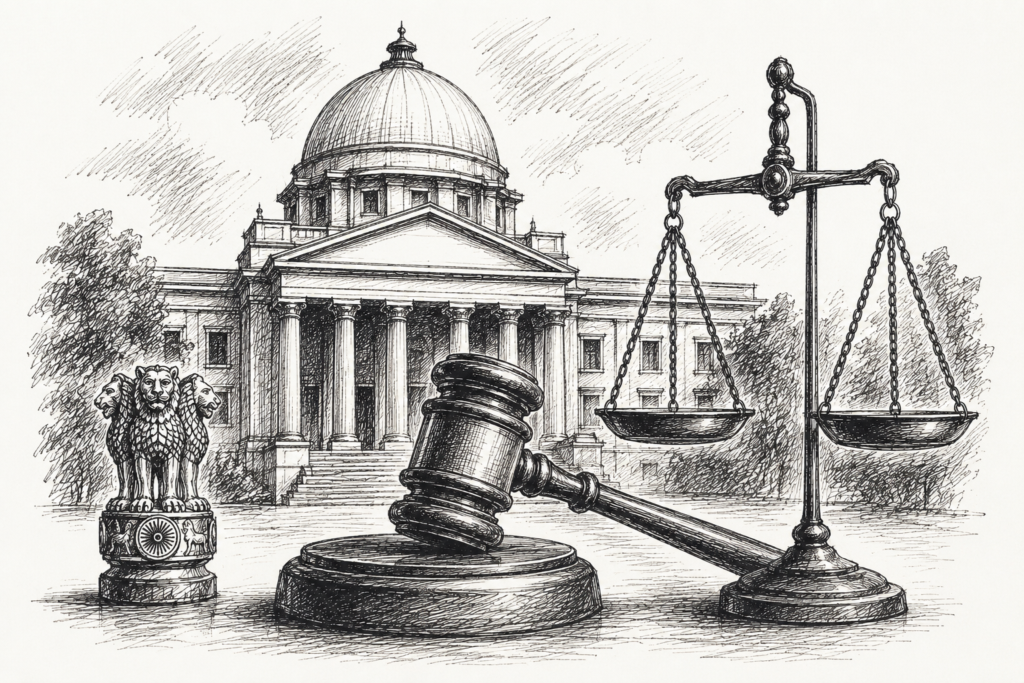
Justice, however, cannot work that way.A proper investigation takes time. Evidence has to be scientifically collected and verified. Witnesses need to be questioned. Courts have to hear both sides before deciding guilt and the quantum of punishment.
Yet, in an age accustomed to instant results, this careful process often feels unbearably slow. The gap between public expectations and the pace of the legal system has never been wider.
Television once shaped public opinion. Today, social media does it even faster. Within hours of a crime, millions of people have seen photographs, videos, emotional interviews and endless commentary. Hashtags trend. Opinions harden through confirmation bias. Anger spreads rapidly.
Also Read: Karl Benz: The Man Who Got the World Rolling
The problem is that facts often travel much more slowly than emotions. Rumours, edited videos and unverified claims circulate widely before investigators have established what actually happened. By the time official findings emerge, public opinion may already have delivered its own verdict. The courtroom, in effect, has shifted from the judge’s bench to the smartphone screen.
Supporters of encounter killings often make a simple argument: if criminals know they might be killed immediately, others will think twice before committing similar crimes.
It is an argument that appeals to common sense. The evidence, however, is less straightforward.
Once society accepts that legal procedures can be ignored in certain circumstances, the temptation to ignore them in other situations becomes stronger. The same methods may later be used against political opponents and dissenters, minority communities or innocent individuals caught in the wrong place at the wrong time.
Criminologists have concluded that what deters crime most effectively is not necessarily harsher punishment but the certainty of being caught and punished through the legal system. Efficient investigations, prompt trials and consistent convictions tend to have a stronger deterrent effect than occasional acts of extrajudicial violence.
In other words, a justice system that works well is usually a more effective crime-prevention tool than one that occasionally resorts to shortcuts.
There are crimes that seem almost impossible to forgive. The rape and murder of a child is one example. Acts of terrorism are another.
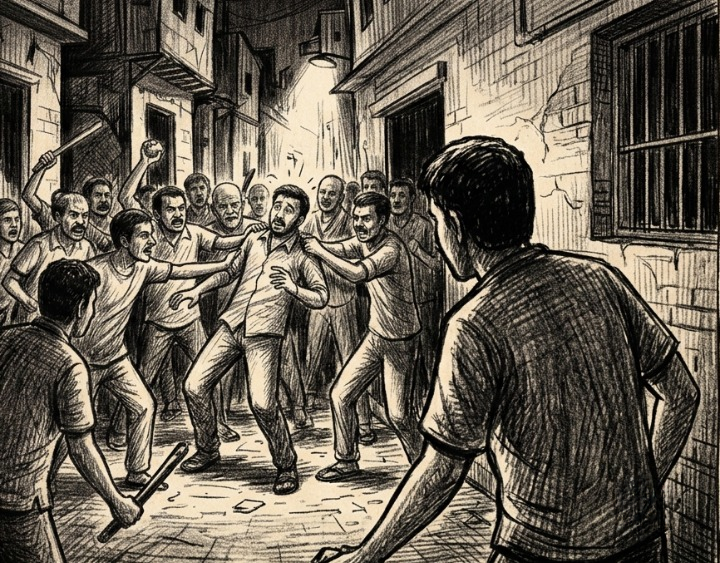
In such cases, many people feel that offenders have surrendered any claim to legal rights. The suffering of the victims appears so overwhelming that concerns about fair trials seem secondary. That reaction is understandable. But it also raises an uncomfortable question.
If society decides that some people no longer deserve the protection of the law, who decides where that line is drawn?
History offers countless examples of innocent people who were wrongly accused, falsely identified or convicted on unreliable evidence. Courts have corrected some of those mistakes—sometimes after many years. An encounter killing or a lynching leaves no room for correction.
Also Read: Beyond the Screen’s Horizon
The attraction of instant justice is easy to understand. Its long-term consequences are less obvious.
When police officers become judge, jury and executioner, or when crowds assume the authority to punish, the rule of law begins to unravel.
The danger is not limited to one case or one accused person.
Once society accepts that legal procedures can be ignored in certain circumstances, the temptation to ignore them in other situations becomes stronger. The same methods may later be used against political opponents and dissenters, minority communities or innocent individuals caught in the wrong place at the wrong time.
History repeatedly reminds us that extraordinary or extrajudicial powers rarely remain limited to extraordinary cases.
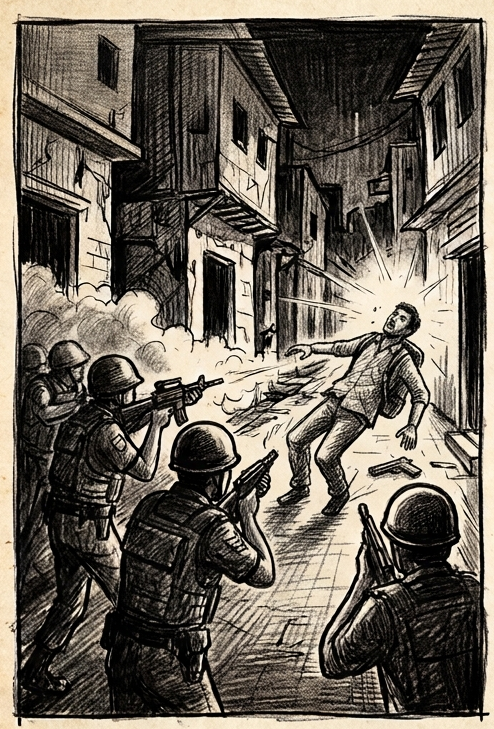
The growing acceptance of encounter killings and mob lynching should not simply be dismissed as a public appetite for violence.
More often, it reflects something deeper: frustration with a system that many people believe has become too slow, too complicated and too uncertain.
That frustration deserves to be taken seriously.
But the answer is not to abandon the legal process. It is to make that process faster, more efficient and more trustworthy.
A justice system that delivers timely verdicts, protects the rights of victims and holds offenders accountable leaves far less room for demands for instant justice.
Ultimately, this debate is about more than crime or punishment. It is about trust.
When people believe that the law will work, they are willing to wait for justice. When they stop believing, they begin looking elsewhere.
The real challenge for any democracy is to ensure that justice is not only done, but done quickly enough for people to continue believing in it—without sacrificing the principles that make it justice in the first place.
Image Courtesy: AI

A wanderer in words and wilderness, Koushik writes and translates to see the world — and himself — with mindful clarity.