

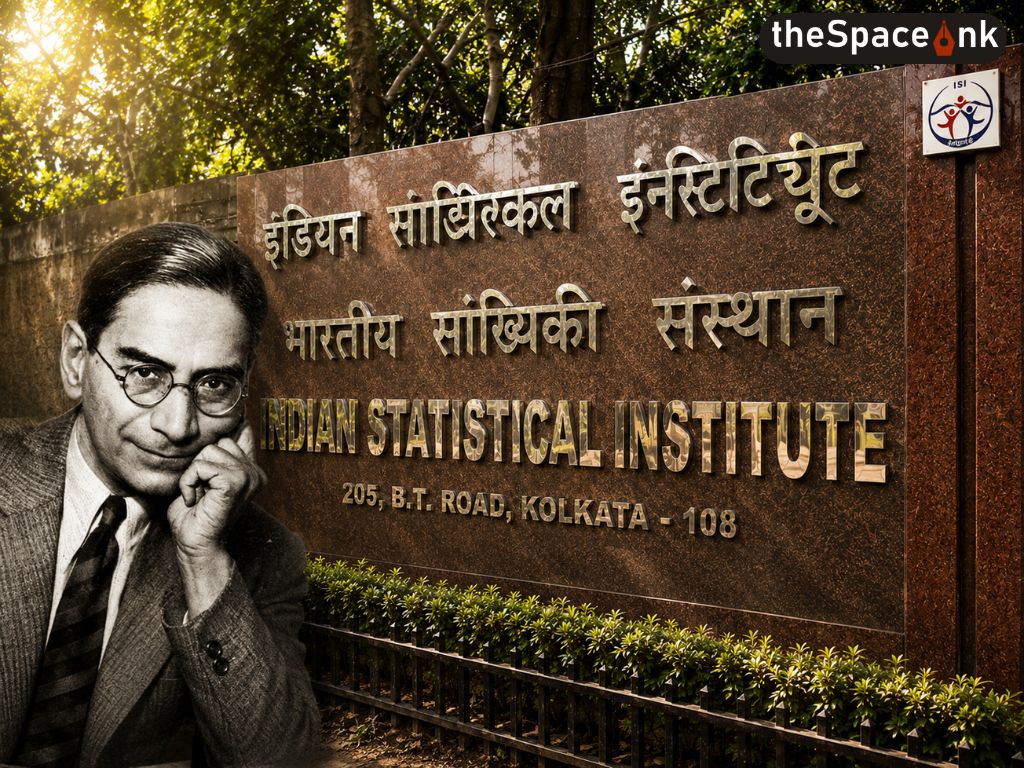
Professor Prasanta Chandra Mahalanobis, the Accidental Statistician Who Became the Father of Statistics of Modern India
Introduction:
Prasanta Chandra Mahalanobis was not just a scientist; he was a visionary who weaponised data to build a modern nation. In India, he is rightly celebrated as the “Father of Modern Statistics,” but behind the heavy academic titles was a man of immense wit, relentless drive, and fascinating quirks.
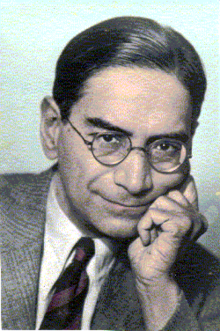
Perhaps the greatest twist in Indian scientific history is that Mahalanobis never formally studied Statistics. He went to the University of Cambridge to study mathematics and physics. Right before he was set to return to India in 1915, his departure was delayed because the boat was late due to World War I. To pass the time, he went to the King’s College library, where his tutor, W.H. Macaulay, introduced him to a bound volume of the journal Biometrica, edited by Karl Pearson.
In the 1920s, when Mahalanobis was a Professor of Physics at Presidency College, his true passion, the small, informal “Statistical Laboratory,” was set up in his bakery-cluttered office along with a few other young mathematicians.
Mahalanobis was so utterly fascinated by the concept of using Statistics to understand biological and social phenomena that he bought a complete set of Biometrica volumes to read on his sea voyage home. He arrived in India with a trunk full of Statistics journals and a completely altered destiny.
Founding of ISI:
To know about professor it is important to know his passion towards Indian Statistical Institute (ISI), one of the most remarkable stories in the history of global science. ISI was not just an institution he founded; it was his life’s canvas, a place where statistical theory was forged into a tool for nation-building. He started to build this global empire of Statistics in a single room inside Presidency College.
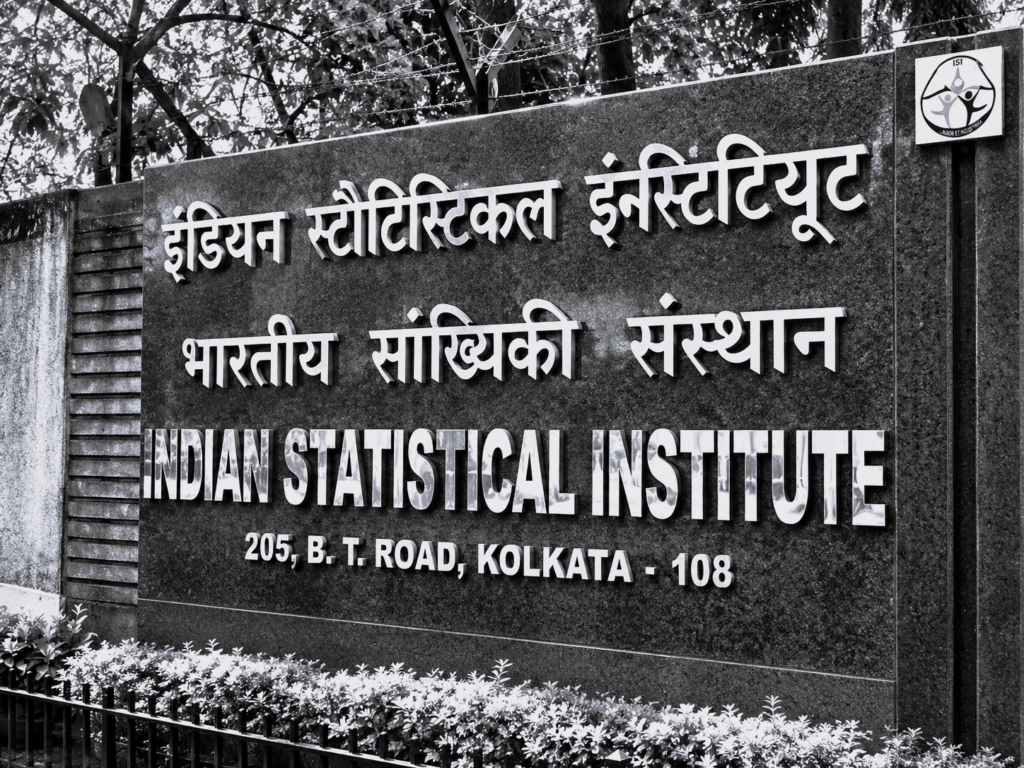
In the 1920s, when Mahalanobis was a Professor of Physics at Presidency College, his true passion, the small, informal “Statistical Laboratory,” was set up in his bakery-cluttered office along with a few other young mathematicians. On December 17, 1931, this informal group officially registered the Indian Statistical Institute as a non-profit scholarly society. For the first two decades, ISI operated directly out of the Physics department at Presidency College.
This early setup was entirely financed out of Mahalanobis’s own pocket. The early setup was so makeshift that Professor purchased the first mechanical calculating machines, paid for stationery, and even funded the salaries of his initial research assistants from his salary. The legendary statistician C.R. Rao later recalled that in the early days, the office looked more like a bohemian club.
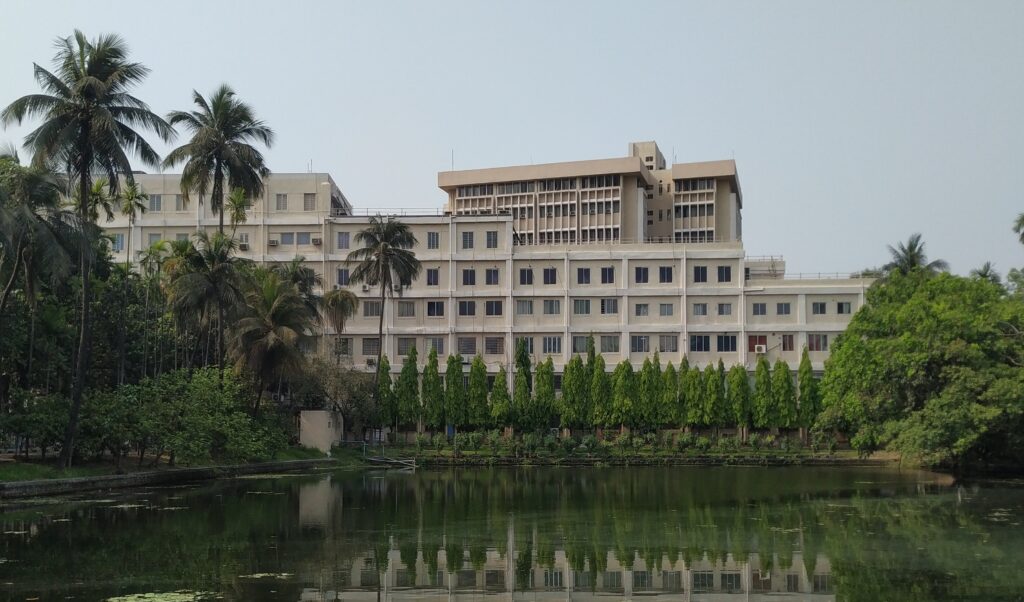
By the late 1940s, ISI had grown too large for Presidency College. Mahalanobis moved the institute to Amrapali, a sprawling property in Baranagar, North Kolkata. Under his leadership, this campus quickly evolved into a bustling intellectual crossroads where the world’s greatest minds congregated. Mahalanobis had a unique philosophy: Statistics could not thrive in isolation. It needed to interact with economics, mathematics, biology, and sociology.
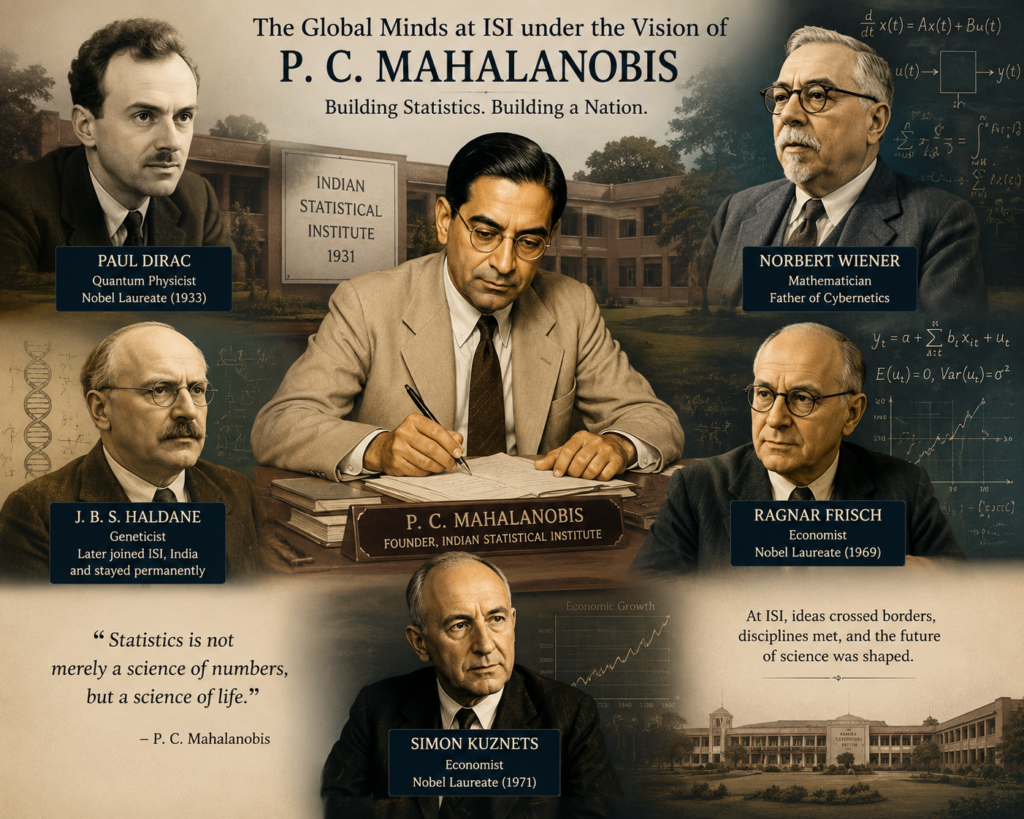
To foster this, he invited global giants to spend months at ISI, creating an unparalleled intellectual atmosphere. Quantum physicist Paul Dirac, mathematician Norbert Wiener (the father of cybernetics), geneticist J.B.S. Haldane (who eventually left the UK to join ISI permanently), and economists like Ragnar Frisch and Simon Kuznets all spent significant time at the Baranagar campus.
Mahalanobis had an extraordinary eye for spotting raw talent. He built a faculty and student body that would go on to fundamentally rewriting the rules of global Statistics. Prof. C.R. Rao was discovered by Mahalanobis, who joined ISI in the early 1940s. He went on to become one of the greatest statisticians of the 20th century, contributing foundational breakthroughs like the Cramér–Rao bound and the Rao–Blackwell theorem.
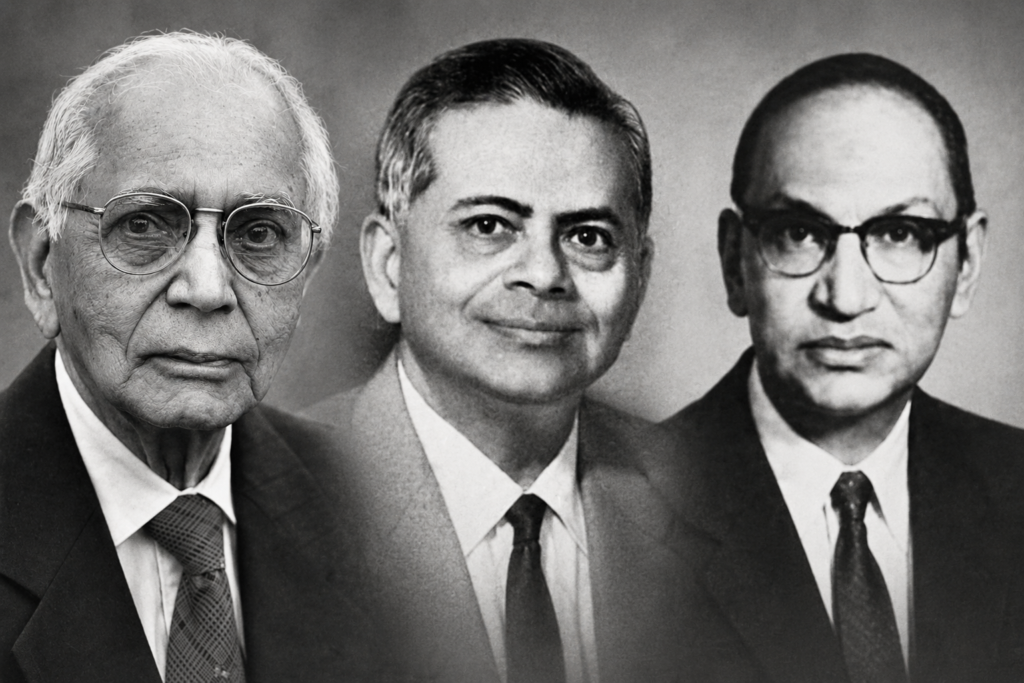
Along with C.R. Rao, geniuses like R.C. Bose (famous for design of experiments and coding theory) and S.N. Roy (multivariate analysis) formed the backbone of ISI, turning the institute into the undisputed global capital of Mathematical Statistics in the 1940s and 50s.
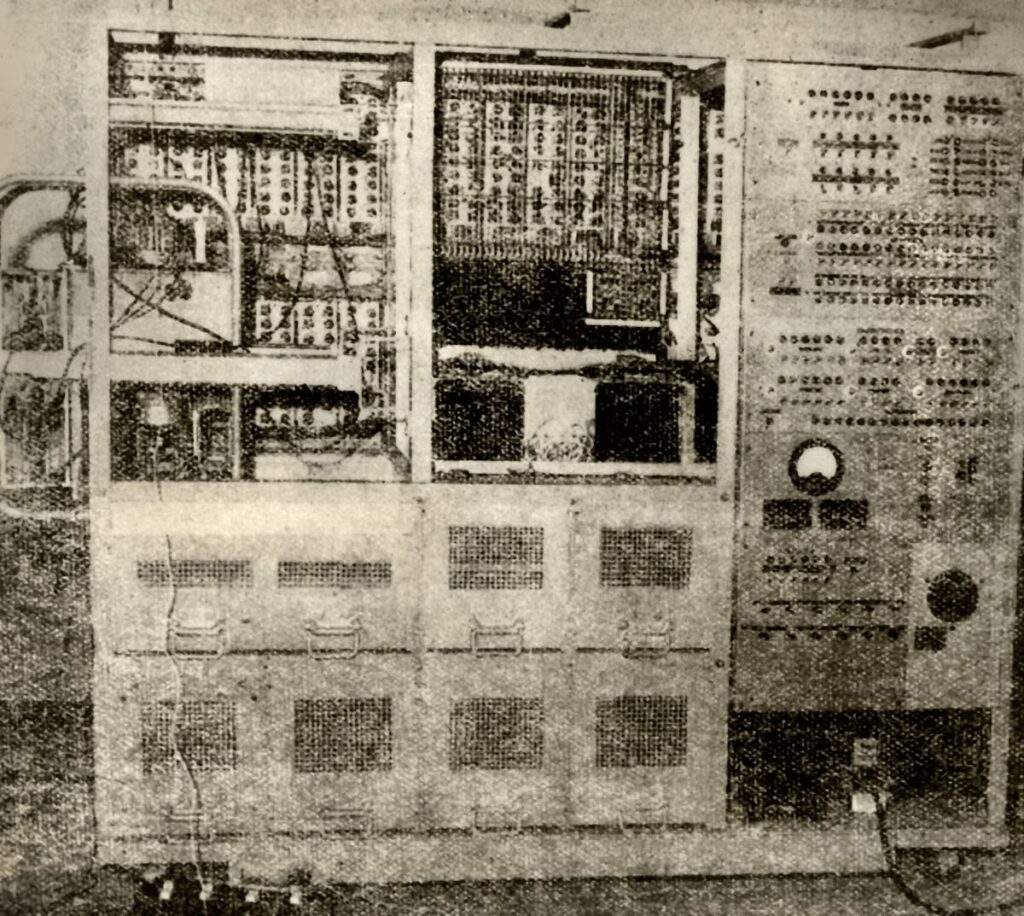
Mahalanobis recognized very early that the future of Statistics belonged to automated computing. Manually calculating complex multi-dimensional matrices for a nation of millions was becoming impossible. In 1953, ISI acquired a small analog computer, but Mahalanobis wanted a true digital powerhouse. In 1956, through his immense international clout and diplomacy, he managed to secure an HEC-2M electronic digital computer from the United Kingdom.
Mahalanobis fiercely believed that Statistics must serve the public good. Through ISI, he pioneered the National Sample Survey (NSS) in 1950, creating a comprehensive system to collect socio-economic data across rural and urban India—a feat Western economists thought was impossible in a developing nation.
The “Data Savior” of New India
1. Mahalanobis Distance (D²):
Introduced in 1936, this remains his most enduring mathematical legacy. It is a statistical measure of the distance between two points in a multi-dimensional space, accounting for correlations between variables. Originally developed for anthropological measurements (comparing human skull dimensions), it is now a foundational tool in cluster analysis, pattern recognition, and machine learning.
2. Large-Scale Sample Surveys:
Long before sampling was universally trusted, Mahalanobis proved that a scientifically chosen sample could yield more accurate results than a rushed, massive census. He revolutionized sample survey methodologies for estimating crop yields (especially jute and rice) using innovative pilot surveys and grid-sampling techniques.
Before Mahalanobis, large-scale sample surveys were virtually non-existent. In the late 1930s and 1940s, the British government wanted to assess the acreage and yield of the jute crop in Bengal. The traditional method of counting every single field was agonizingly slow and wildly inaccurate. Mahalanobis proposed a radical idea: Random Sample Surveys.
Also Read: Wilhelm Conrad Röntgen: That ‘Unknown’ Ray
The government was highly skeptical that sampling a tiny fraction of fields could accurately predict the yield of an entire province. To prove his point, Mahalanobis conducted a sample survey that took a fraction of the time and cost significantly less than the traditional census approach.
When the actual harvest data came in, Mahalanobis’s statistical sample was found to be far more accurate than the government’s full physical count, which had been plagued by human error and fatigue. This single experiment revolutionized agricultural planning globally and led to the creation of India’s National Sample Survey (NSS).
3. Architect of Indian Economic Planning: The Feld–Mahalanobis Model
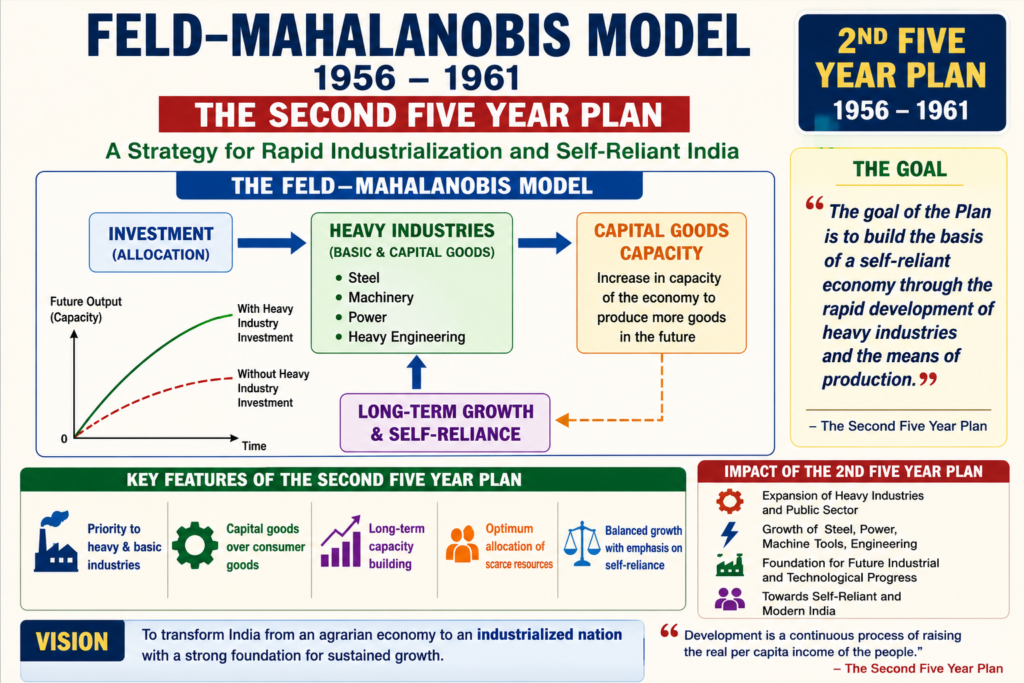
As a key member of India’s Planning Commission, Mahalanobis authored the draft of the Second Five-Year Plan (1956–1961). The plan shifted India’s economic focus toward rapid industrialization. It emphasized the development of heavy domestic industries (like steel, power, and machine manufacturing) to make the newly independent nation self-reliant.
4. Practical Statistics:
The incident took place during the turbulent aftermath of the 1947 Partition of India, when millions of uprooted refugees were streaming across the newly created borders. Amidst the chaos, the government faced a monumental administrative nightmare: they had no count of how many refugees were residing in the rapidly mushrooming, unauthorized camps, making it impossible to budget or allocate food rations and relief supplies.
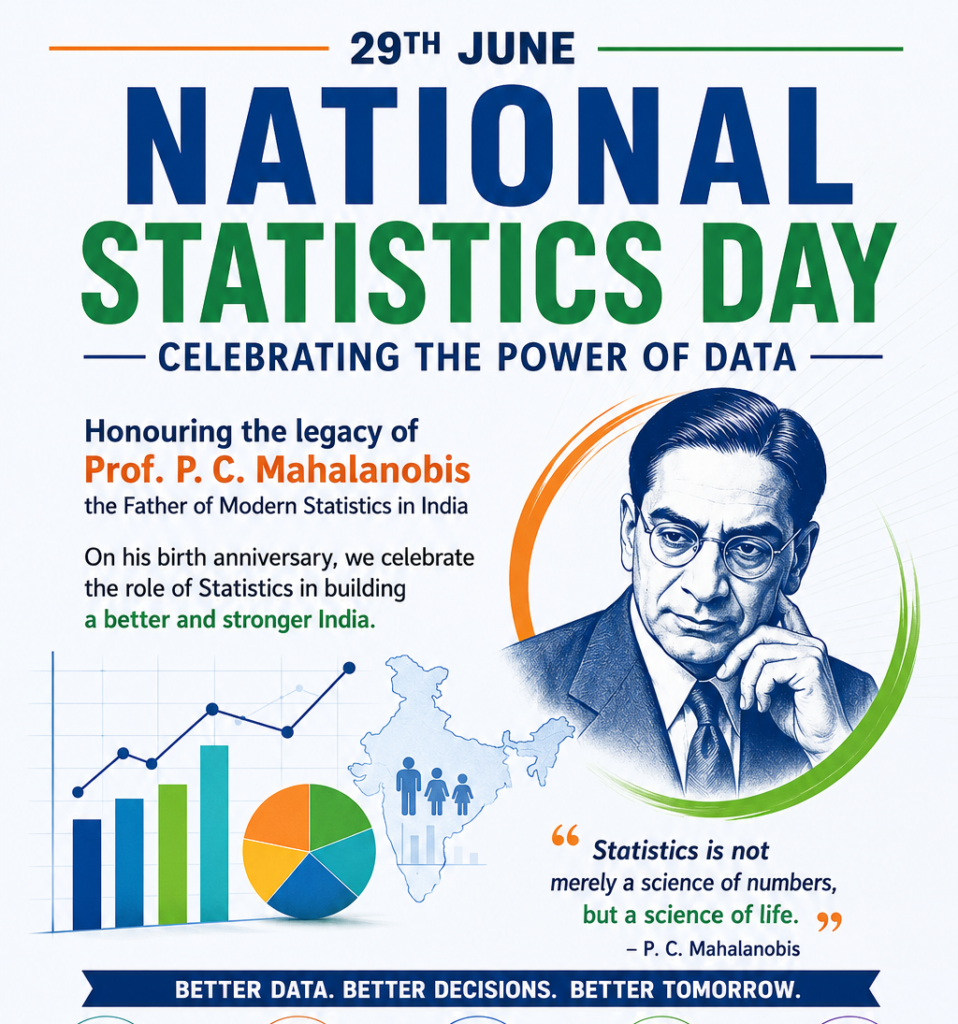
In recognition of his unparalleled contributions to the nation, the Government of India awarded him the Padma Vibhushan in 1968. To honor his memory, his birthday, 29th June, is celebrated annually across the country as National Statistics Day.
When bureaucratic headcounts failed or proved too slow, Mahalanobis stepped in with an ingenious, out-of-the-box solution using indirect estimation through a basic kitchen staple, viz. common salt. He bypassed the chaotic refugee camps entirely and went straight to the supply chain. He monitored the total volume of salt being dispatched from central government warehouses and wholesale markets into the specific border districts and refugee zones.
By taking the total amount of salt flowing into a region over a week and dividing it by the known, stable average weekly salt intake of a single human being, Mahalanobis derived a remarkably accurate, real-time estimate of the actual population breathing and eating within those camps.
Also Read: Yuri Gagarin: Off He Went!
This can be termed as pioneering “Big Data” thinking. Long before modern algorithms used proxy indicators (like analyzing night-time satellite lights or mobile phone pings to estimate population density), Mahalanobis demonstrated that a single, well-chosen proxy variable could reveal the ground reality of an entire population.
This specific application beautifully encapsulates the “Mahalanobian” philosophy: Statistics is not merely a theoretical exercise in mathematics, but a pragmatic, applied science meant to solve the most pressing crises of human governance.
Concluding Remarks:
Until his very last breath in June 1972, Mahalanobis lived and breathed ISI. Mahalanobis would sit in his study, surrounded by mountains of data, casually shifting between discussions on industrial steel production, complex econometric models, and the nuances of Bengali literature.
He effectively turned a Statistics institute into the economic engine of a newborn nation. He served as its Honorary Secretary and Director for forty years, refusing to take a single rupee as salary. He left behind an institution that proved to the world that post-colonial India could compete at the absolute frontier of modern science.
In recognition of his unparalleled contributions to the nation, the Government of India awarded him the Padma Vibhushan in 1968. To honor his memory, his birthday, 29th June, is celebrated annually across the country as National Statistics Day.
Image Courtesy: ChatGpt, Facebook, Wikimedia Commons, Wikimedia Commons

Dr. Bandana Dasgupta Sen did her PhD in Statistics from CU. She is recently retired as DG (Indian statistical Service) from Ministry of Commerce, GOI. Her passion is Reading books, listening to music and writing articles in English and Bengali.

5 Responses
Very well written
A master write up about a great Master, father of Indian Statistics and founder of internationlly famed an institution, ISI.The write up is clear and complete. Also an wonderful devotion to Master. Hats off.
Congratulations for this excellent piece on one of the greatest visionaries of modern India. ISI has always been an institution every inquisitive mind has looked up to be associated with. Wish many more articles on the other geniuses not properly recognised and remembered.
Excellent writing. Your writing will help even a common man about Professor P C Mahalanobis and about our beloved I S I and contribution of I S I to build the modern scientific India.
That’s wonderful write up. I appreciate content & coverage of the subject. It’s very useful to everyone whosoever be.
Regards,