The Truth in the Shadows: Revisiting The X-Files
Imagine an obscure division of the Federal Bureau of Investigation, located in a claustrophobia-inducing basement office in Washington, D.C. Fluorescent lights hum overhead; filing cabinets groan under the weight of forgotten reports; newspaper clippings and blurry photographs of supposed UFO sightings adorn the otherwise bare walls.
Outside, the city bustles with vigor and confidence, but down there, in the half-light, every certainty falters. Even the motto pinned above the desk—‘I want to believe’—seems less a declaration than a plea, the yearning of a curious mind trying to comprehend the myriad mysteries of the universe. Imagine all this, and you will have an inkling of what The X-Files is all about.
Also Read: The 100 Years of Battleship Potemkin – A Tribute and An Assessment
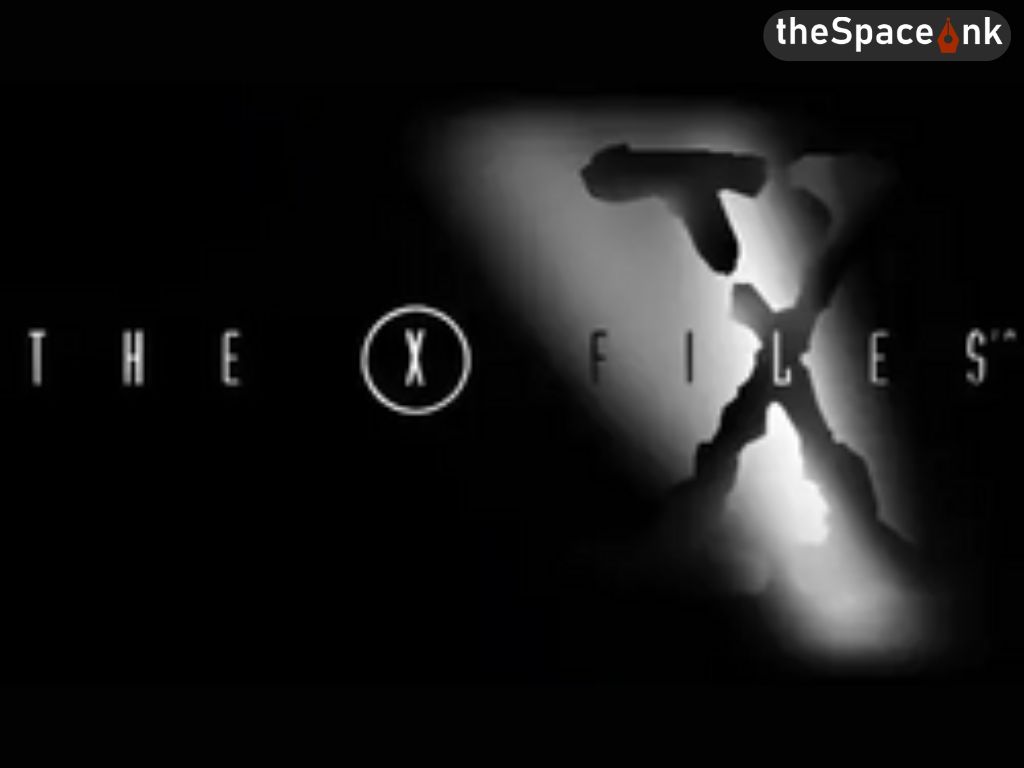
Created by Chris Carter, The X-Files premiered on the Fox Broadcasting Company in September 1993. From the outset, it introduced viewers to two dissonant characters who would go on to become one of television’s most celebrated duos: special agent Fox Mulder (played by David Duchovny), a brilliant profiler driven by childhood trauma and an unshakable conviction that the truth lies beyond what we see, and special agent Dana Scully (played by Gillian Anderson), a medical doctor and staunch skeptic primarily assigned to debunk her partner’s ‘outrageous’ theories. Together, they investigated cases deemed unsolvable or implausible—alien abductions, bizarre crimes, and elaborate cover-ups.

At its heart, The X-Files was a meditation on truth and the many layers through which it manifests itself. Mulder’s quest to uncover the fate of his missing sister, presumably abducted by aliens, functioned as the emotional engine of the series, propelling him (and the audience) deeper into a labyrinth of conspiracies involving shadowy organizations and colonizing extraterrestrials. Scully, meanwhile, operated as the perfect foil. Her rationalism challenged Mulder’s leaps of faith at every turn (though gradually her experiences eroded her over-reliance on purely empirical explanations). It was this dialectic—belief and doubt, intuition and ratiocination—that gave the show its pulse, not to mention its finest moments.
The so-called ‘Monster-of-the-Week’ episodes were self-contained excursions into horror and the supernatural, allowing the writers to run wild with their imagination. They offered viewers a parade of oddities, such as grotesque mutants slithering through sewers, cannibalistic shape-shifters lurking in ventilation ducts, and pyrokinetic psychopaths setting their victims on fire.
Atmosphere was one of The X-Files’ greatest strengths. Shot largely in the rain-soaked forests of Vancouver during the early seasons, the episodes enveloped viewers in a suffocating cloak of shadow and mist.
These perpetrators often functioned as metaphors for the vices plaguing late-twentieth-century civilization, viz. alienation, psychological aberration, and the corrosive effects of human cruelty. Some episodes were disturbing, others bittersweet, and a few outright terrifying. Yet they all strove to drive home one important point: the anomalies, the ‘others’, are no more frightening than society’s impulse to suppress or exploit them.
Running parallel to these stand-alone tales was the series’ central mythology—a sprawling narrative arc concerning aliens and a clandestine syndicate embedded within the highest echelons of power working hand in glove with them. The ‘little green men’ brought an overwhelming sense of cosmic dread to the table, while the faceless bureaucrats—epitomized by the omnipresent Cigarette Smoking Man—embodied institutional corruption and systematic manipulation of the masses.
Ironically, the human villains proved to be more vicious than their extraterrestrial counterparts, coldly pragmatic in their approach and willing to sacrifice countless lives in the pursuit of material gains (case in point: the episode where the hapless inhabitants of a town inflicted harm on one another due to being mind-controlled through subliminal instructions). The message it sent to the audience was disconcerting—threats to our existence might not only come from the stars but also from our own!

No great effort emerges in a vacuum. The X-Files drew significant inspiration from Kolchak: The Night Stalker, a short-lived yet influential 1970s series that followed the exploits of a news reporter investigating supernatural crimes. Like Fox Mulder, Carl Kolchak was the lone believer in a world eager to dismiss the inexplicable, where monsters hid in plain sight while institutions swept facts under the rug.
To this day, The X-Files remains a cultural landmark in the annals of American TV history. It arrived at a crucial juncture—when the United States was grappling with post-Cold War uncertainties and pre-millennial anxieties—and successfully distilled those undercurrents into engaging allegories. Its famous refrain, ‘The truth is out there’, encapsulated an entire generation’s suspicion of government-issued rhetoric.
Chris Carter openly acknowledged the debt, and the structural similarities between the two shows are unmistakable: episodic encounters with the paranormal, a protagonist marginalized for his convictions, and a persistent tension between official explanations and bare facts. Kolchak seamlessly blended pulp horror with crime procedural; The X-Files expanded the template into something more vast and meaningful. But the lineage is clear—a torch passed from one ahead-of-its-time show to another.
Atmosphere was one of The X-Files’ greatest strengths. Shot largely in the rain-soaked forests of Vancouver during the early seasons, the episodes enveloped viewers in a suffocating cloak of shadow and mist. They could not but shudder as Mulder and Scully’s flashlight beams fought to cut through the darkness of ignorance, while abandoned warehouses and rural backroads transmogrified into liminal spaces where reality itself thinned. The minimalist theme composed by Mark Snow, a haunting melody that seemed to drift in from elsewhere, helped further the show’s unsettling effect.
Also Read: Twin Peaks: Return to the Dream That Never Wakes
The series’ aesthetics were also enhanced by its tonal juxtapositions, bleak contemplations on existential insecurity unapologetically following episodes steeped in satire. It never shied away from experimentation, not even from parodying itself and indulging in playful pastiches. This elasticity was the game-changing feature of The X-Files. It proved to the audience that a network drama could be philosophically rich one week and teasingly tongue-in-cheek the next, without sacrificing either depth or coherence.
As the seasons progressed, however, the very expansiveness that fueled the show’s allure began to undermine it. The central conspiracy grew increasingly convoluted, the revelations partial and underwhelming. Subsequent to the seventh season, Duchovny reduced his involvement in the series. As a consequence, Mulder’s screen presence waned, and the show struggled to retain its emotional appeal. Ratings fluctuated; critics’ enthusiasm wavered. Yet amid these challenges, The X-Files managed to last four more seasons, ultimately totaling eleven. Add two feature-length films to the mix, and its longevity becomes all the more remarkable.

To this day, The X-Files remains a cultural landmark in the annals of American TV history. It arrived at a crucial juncture—when the United States was grappling with post-Cold War uncertainties and pre-millennial anxieties—and successfully distilled those undercurrents into engaging allegories. Its famous refrain, ‘The truth is out there’, encapsulated an entire generation’s suspicion of government-issued rhetoric. It taught us that the search for meaning often leads through corridors of doubt, and warned us of official bodies harboring agendas of their own.
Once, in a neglected basement buried beneath the bureaucratic machinery of the state (both literally and figuratively), two FBI agents dared to ask forbidden questions. Their inquiries saved lives and uncovered shocking truths, but the core dilemma troubling them was never fully resolved. It still lingers in our minds—if the truth is indeed out there, are we prepared to face it? Arts)
Photo Courtesy: Face Book, Wikipedia

Souvik Chakraborty, by profession a mid-level manager at Steel Authority of India Ltd., has, since his early days, been a voracious reader of both literary and popular fiction. Till date he has edited eight acclaimed anthologies in English, and a handful in Bengali as well. When not busy collating stories, Souvik likes to try his hand at penning poems and speculative yarns, and over the past few years, has contributed a number of short pieces to various renowned periodicals. He loves playing the guitar, and his hobbies include listening to rock music and watching thriller movies.