Joyful Roots of Spring: A Global Celebration of Renewal
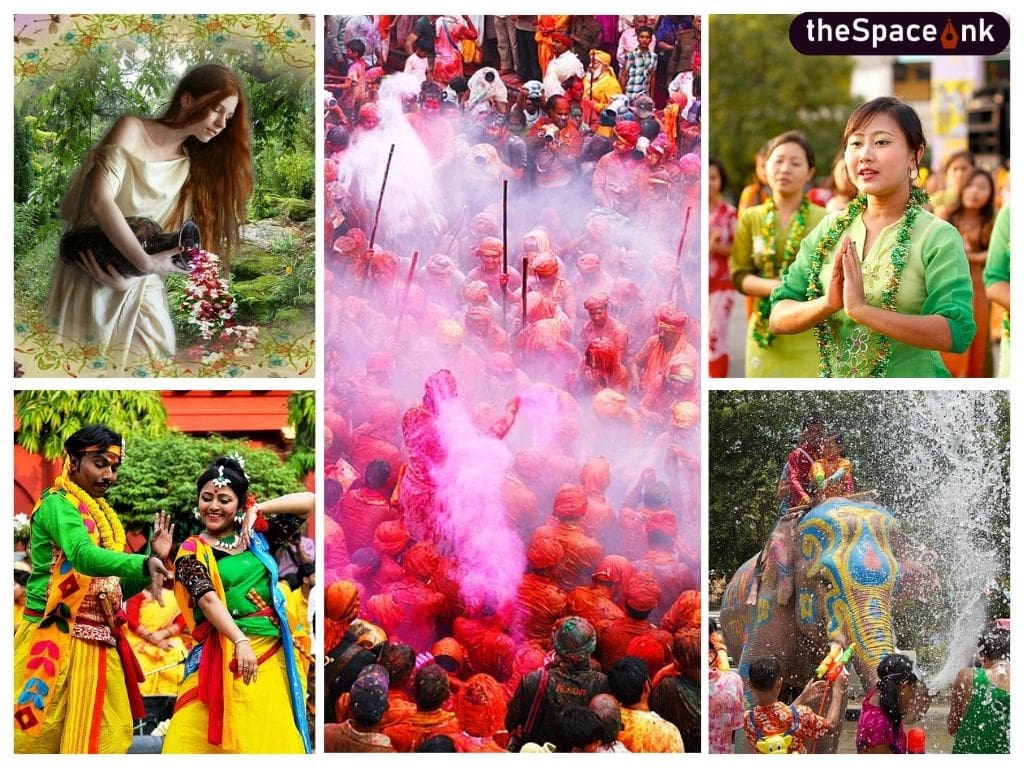
Imagine spring not just as a season, but as a triumphant, jubilant return. Our ancestors didn’t just observe the change in weather—they threw it a party, wrapped it in myth, and set the whole world to music! Ancient stories are filled with this dazzling comeback narrative. In glorious Greek tales, Persephone‘s annual ascent from the shadowy underworld is the signal for the entire earth to erupt in joy; her footsteps literally make flowers bloom, seeds leap from the soil, and life return in a riot of color and sound. Here, winter is a cosmic intermission, and spring is life’s grand, cheering second act.

A world away, early Indian mythology sings a brilliantly similar tune with the story of Kāma, the charismatic god of desire and creative energy. His revival after being turned to ash symbolizes spring’s powerful, undeniable spark—the thrilling return of the very force that fuels connection, art, growth, and love. It’s a celebration of the vibrant pulse that makes hearts beat and the world spin forward.
These captivating stories are far from mere decoration. They are humanity’s first, most poetic way of explaining the glorious, hope-filled cycle of death and renewal we witness each year. Long before formal calendars, our ancestors wrapped this profound truth in unforgettable narrative, giving direct birth to the incredible spring festivals that now paint our global calendar with color, light, and communal joy.
One of the very first recorded spring bashes was Mesopotamia’s Akitu, celebrated over 5,000 years ago! This spectacular New Year festival was a twelve-day marvel that masterfully blended essential farming rites with high cosmic drama.
From the frosty silence of winter to the vibrant, humming chorus of spring—this magnificent shift is one of humanity’s oldest and most beloved party themes! Across continents and centuries, civilizations have independently thrown festivals centered on renewal, fertility, purification, and pure, unfettered hope. While born in isolation, their symbols—eggs, budding flowers, leaping flames, cleansing water—speak a thrilling universal language. This language was shaped by our shared reliance on the land, our wonder at the skies, and our boundless, collective imagination.
Also Read: Karl Benz: The Man Who Got the World Rolling
It all started, quite literally, with the sun and the soil. The vernal equinox, that exquisite moment of perfect balance between day and night, was nature’s own brilliant starting gun. For early farmers, it was the signal to begin sowing the seeds of future harvests. This pivotal moment became a sacred, collective threshold—a chance to ritually hit the “refresh” button on nature, community, and spirit after winter’s introspective slumber. It was a time to sweep out the old, both physically and metaphorically, and make way for new beginnings.

One of the very first recorded spring bashes was Mesopotamia’s Akitu, celebrated over 5,000 years ago! This spectacular New Year festival was a twelve-day marvel that masterfully blended essential farming rites with high cosmic drama. The king would be ritually humbled to reaffirm his bond with the people and the gods, chaotic forces were symbolically defeated, and the sacred marriage of deities was reenacted to ensure a fertile and orderly year ahead. It set a powerful template: seasonal renewal was utterly inseparable from social and moral rebirth.

Then there’s the legendary Persian Nowruz, meaning “New Day,” a radiant festival of balance, clean slates, and sparkling homes that has shone brightly for millennia. Timed perfectly to the equinox, its preparations involve sprouting lentils (the sabzeh) as a living symbol of new growth, leaping over bonfires for purification, and visiting family with sweet hopes for the future. Its enduring, cross-cultural appeal is a testament to the timeless power of a celebration anchored in the sun’s reliable, hopeful dance rather than fixed dogma.
From the familial tables of Nowruz to the painted streets of Holi, the lyrical fields of Shantiniketan, and the watery lanes of Songkran, these celebrations form our planet’s oldest, most joyful shared heritage. They are a global chorus of rebirth, a testament that despite our advanced technology, our hearts still beat in harmonious time with the turning of the earth.
In pre-Christian Europe, spring was a heartfelt, earthy welcome back to the land’s vitality. Festivals for deities like Ēostre, a dawn goddess associated with rising light, shimmered with potent symbols of life’s resilience: eggs representing potential, hares embodying fertile energy, and blossoming branches brought indoors. When Christianity spread, these beloved symbols weren’t erased; they were thoughtfully woven into the profound tapestry of Easter, demonstrating the season’s spirit always finds a way to shine through. And let’s not forget the blazing bonfires—from Germany’s Walpurgis Night to the British Isles’ Beltane—crowning hillsides with flames meant to scare off winter’s last chill, bless livestock, and ignite a season of abundance and revelry.

India’s spring is a boundless, joyous symphony of color, faith, and sensory delight. Basant Panchami arrives first, washing the world in the sunny yellow of blooming mustard flowers and marigolds. It honors Saraswati, goddess of wisdom, linking seasonal renewal with an awakening of creativity, music, and learning. This connection was joyfully perfected by the poet Rabindranath Tagore at Shantiniketan, where he introduced the ‘Basanta Utsab’ (Spring Festival). Here, the traditional homage to Saraswati blossomed into a breathtaking outdoor spectacle of cultural renewal. Students and teachers, dressed in brilliant saffron and yellow, celebrate with songs, dance, and poetry composed by Tagore himself, transforming the academic groves into a living canvas of spring’s creative energy.

Then comes the explosive, democratic joy of Holi, perhaps the most iconic spring festival on Earth. Its origins are ancient, rooted in agrarian bonfires (Holika Dahan) that burn away the old. The following day explodes into a carnival of colored powder and water, where social norms are playfully inverted, and everyone is painted equal in a vibrant haze. From Bengal’s graceful Dol Jatra to Goa’s vibrant Shigmo and Manipur’s dynamic Yaosang, the subcontinent shows how a single seasonal impulse blossoms into countless local expressions of gratitude and fun.

Across East and Southeast Asia, spring often arrives with a literal and joyful splash! Festivals like Thailand’s Songkran, Myanmar’s Thingyan, and parts of India’s Sangken are vibrant, community-wide water festivals. While today they are epic street parties of laughter and drenched smiles, their roots lie in sacred ritual cleansing—gently washing Buddha images, sprinkling elders for blessings, and symbolically washing away the misfortunes of the past year to greet the new with purified hearts.

The beautiful, connecting truth is this: our spring festivals don’t stem from one single origin story. They are humanity’s many brilliant, parallel answers to the same delightful, universal phenomenon. Fire for transformation, water for purification, color for life, and music for collective joy appear again and again not simply through cultural diffusion, but because they instinctively feel like spring. They resonate with our very souls’ response to lengthening days and warming air.
Also Read: Beyond the Screen’s Horizon
From the familial tables of Nowruz to the painted streets of Holi, the lyrical fields of Shantiniketan, and the watery lanes of Songkran, these celebrations form our planet’s oldest, most joyful shared heritage. They are a global chorus of rebirth, a testament that despite our advanced technology, our hearts still beat in harmonious time with the turning of the earth. They remind us that, each year, we are all invited to join in this ancient, optimistic dance of renewal.
Image Courtesy: Wikimedia Commons, Wikimedia Commons, Wikimedia Commons, Wikimedia Commons, Flickr, Flickr, AI

A wanderer in words and wilderness, Koushik writes and translates to see the world — and himself — with mindful clarity.