(Story)
Meera was in the library when she heard the whispers and gasps. Then the rush of students toward the main office.
“What’s happening?” she asked Zara.
Zara’s eyes were wide. “It’s Ananya. Someone found out her story… is not hers.”
Meera’s stomach dropped. “What?”
Another announcement was made that afternoon in a special assembly. (Story)
“It appears,” the principal said, her voice echoing in the silent auditorium, “that Ananya’s story—apologies, the story submitted by Ananya was published in 1947 by one K. Ramanujan in a collection called Tales for Children. As such, the magazine has rescinded the award on grounds of plagiarism. I hope this becomes a lesson for all of you. Do not take what’s not yours. You may disperse now.” (Story)
Also Read: The Tale of a Story and its Teller (Part- 1)
Madam Principal walked away with a last glare at Ananya who stood beside her, head bowed. As soon as the teachers left, the entire hall broke into chaos.
Meera felt sick. She backed away from the crowd, her head spinning. (Story)
Ajji hadn’t made up the story. Ajji had heard it somewhere—maybe from her own grandmother, maybe from a book, maybe from a neighbor—and passed it on. That’s what stories did. They traveled. They belonged to everyone and no one. (Story)
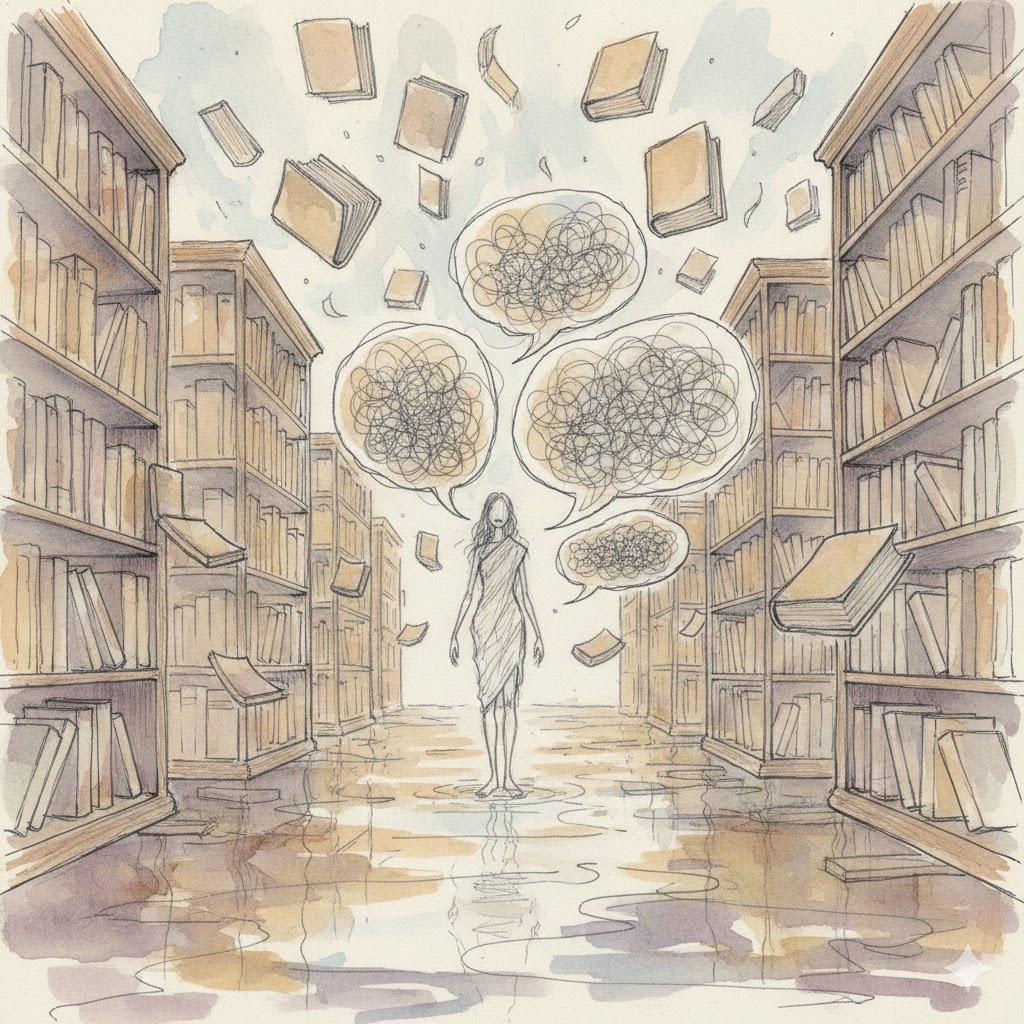
But Ananya had claimed it as her own. Had written “original work by Ananya Reddy” on the submission form.
And now everyone knew.
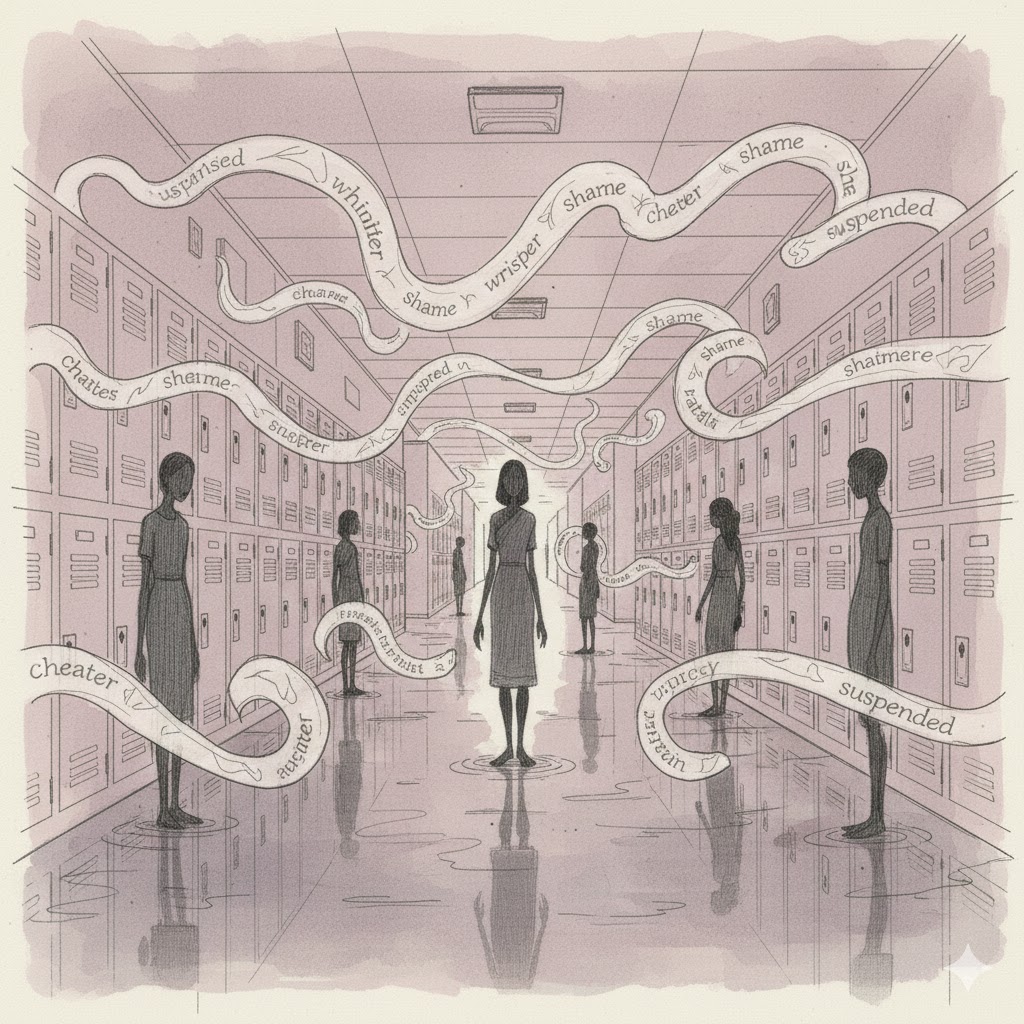
“So Ananya’s a cheater?”
“How could someone copy some old dead guy’s story? Doesn’t she have any shame?”
“I always knew she wasn’t that smart.”
“I think she’s getting suspended.” (Story)
Meera heard it all. In the corridors, in the bathroom, in the playground during PE.
As Ananya slowly walked off the stage, her eyes swollen and rimmed red. The whispers grew louder now that the teachers were gone, mixed in with taunts.
“Cannot believe her audacity. The idea is the most essential. Anyone can write dialogue. Such a cheater.”
“Maybe she cheats on her exams too.”
“Her parents will be so embarrassed and angry when they know.”
Meera felt… conflicted. (Story)
“Serves her right. The little liar got what was coming. Hey, did you know about it before? Is that why you weren’t clapping that day. You’re a good friend. If it were me, I would’ve told on her immediately.”
There was a vicious part of her that felt vindicated. See? This is where taking something that isn’t yours gets you. Alone and ridiculed.
But another part, the part that had urged her to keep quiet these past days, felt deep sorrow for her best friend. Because Ananya hadn’t known. She’d used Ajji’s story thinking it was just a family tale, not something already written and published.
And the way the other students were treating her… (Story)
“Serves her right. The little liar got what was coming. Hey, did you know about it before? Is that why you weren’t clapping that day. You’re a good friend. If it were me, I would’ve told on her immediately.” Zara said laughing mockingly.
“She didn’t lie,” Meera said quietly. “She didn’t know.”
“What?” Zara said but Meera didn’t pay mind to her next words as she ran up to the podium, bending the microphone to her level.
“Stop,” Meera said firmly, standing up and turning to face the group of students who’d been whispering. “All of you. Stop.” (Story)
They blinked at her.
“Ananya made a mistake,” Meera said, her voice carrying across the courtyard. “A bad mistake. But she’s not a cheater. She didn’t know the story was already published. I told her the story as my Ajji told me. She thought it was just an old tale that got passed down.”
“But she still took your grandmother’s story,” someone called out. “Without permission.”
“Yes, she did. And I’m angry about that. But that’s between me and her, not between you and her. So leave her alone.” (Story)
“Why are you defending her?” Zara asked, confused.
“Because she’s my friend,” Meera said. “And because being cruel doesn’t make anything better.”
The crowd dispersed slowly, some looking ashamed, others rolling their eyes.
Meera sat back down next to Ananya.
They sat in silence for a long moment.
“Thank you,” Ananya finally whispered.
“I’m still angry at you.”
“I know.” (Story)
“You took something that wasn’t yours. You didn’t ask. You used your writing skill—your speed, like the rabbit—to get ahead without thinking about anyone else.”
“I know,” Ananya said, her voice breaking. “And I was so excited about being good at something that I didn’t think about what it meant. About how it would hurt you. About how it wasn’t really mine to tell.” She wiped her eyes. “I was the rabbit. I ate all the berries. And now the tiger came.” (Story)
“I’m saying I’m still angry. I’m saying you need to actually apologize—not just feel bad, but understand why what you did was wrong. I’m saying we need to figure out how to fix this.”
“That’s not how the story goes.”
“It feels like it is.”
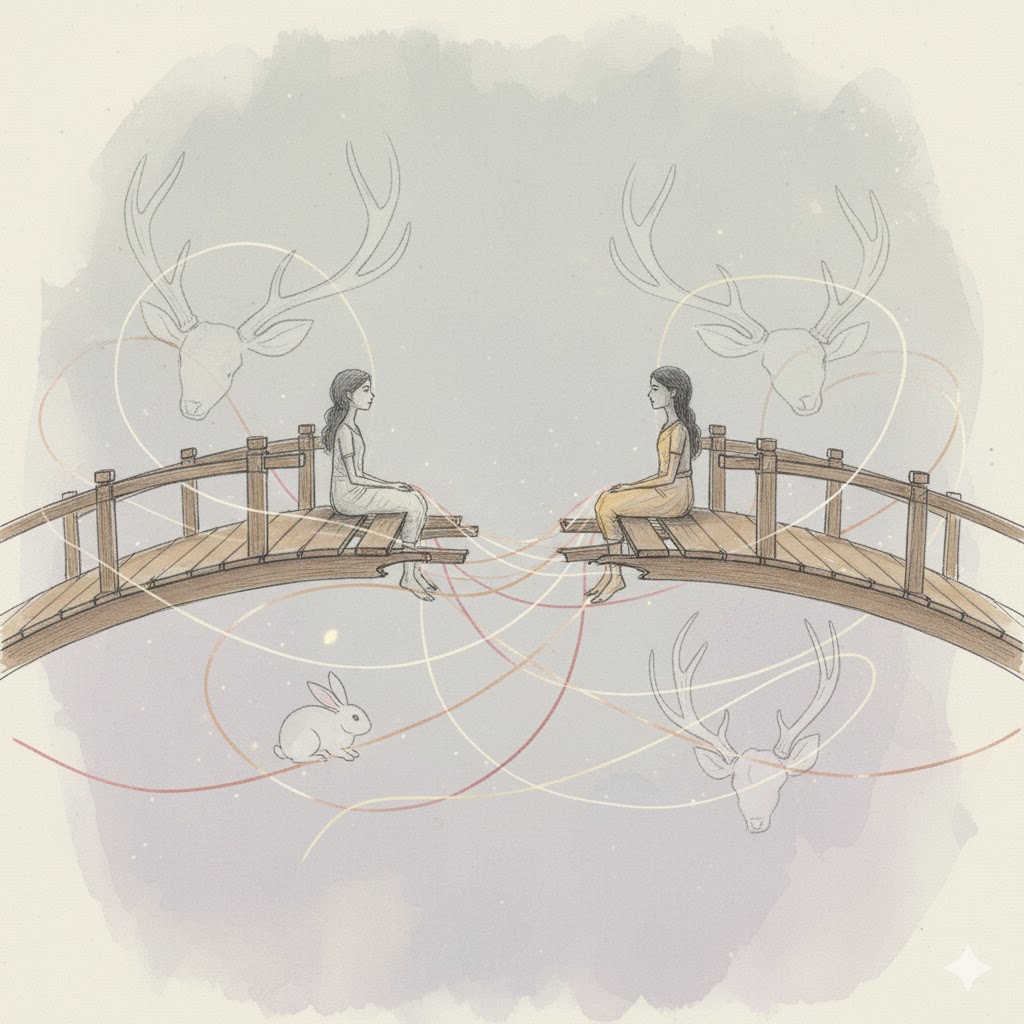
Meera was quiet for a moment. Then she said, “In Ajji’s story, the deer saves the rabbit. Even after the rabbit was selfish. Even after the rabbit ate all the berries.” (Story)
“Why?”
“Because they were friends. And friends don’t abandon each other, even when one of them messes up really badly.
Ananya turned to look at her, eyes wide. “Are you… are you saying…” (Story)
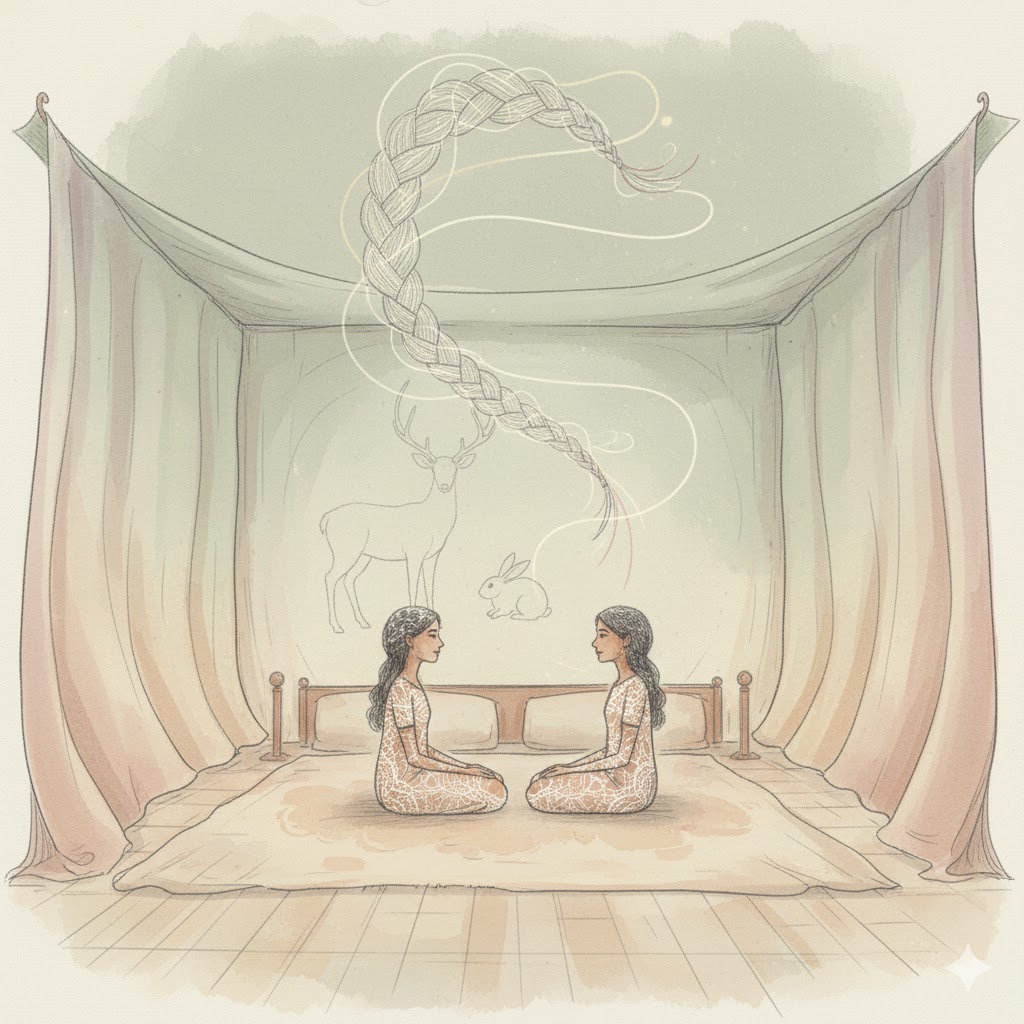
“I’m saying I’m still angry. I’m saying you need to actually apologize—not just feel bad, but understand why what you did was wrong. I’m saying we need to figure out how to fix this.”
“How?”
“I don’t know yet.” Meera took a breath. “But maybe we start by being honest. Really honest.”
It took time. (Story)
Ananya wrote a public apology in the school newsletter, explaining what had happened, taking full responsibility. She apologized to the competition organizers. She apologized to Meera’s family.
Meera’s mother was gracious about it. “Your Ajji told that story because it mattered,” she said to both girls. “Because the lesson was important. I think she’d be sad about how it happened, but glad that it’s still being shared.”
Gradually, the teasing died down. Other school dramas took over the gossip cycle.
And slowly, Meera and Ananya rebuilt their friendship. (Story)
“Indulgence is bad. Sharing is good. And friends—real friends—find their way back to each other, even when the path is hard.“
It wasn’t the same as before. The trust they shared would take time to rebuild. But there was also forgiveness. Given not in the face of just empty words but true regret. And understanding, that comes from the knowledge that people make mistakes, that intentions matter even when they don’t excuse actions, that friendship can survive betrayal if both people are willing to do the work.
One afternoon, months later, they sat together in Meera’s room.
“I’ve been thinking,” Meera said, “about Ajji’s story. Our story. K. Ramanujan’s story. However we want to call it.”
“What about it?” (Story)
“The rabbit ate all the berries because he was fast and he could. But after the tiger came and the deer saved him, he learned. He changed. The story doesn’t end with the rabbit being eaten or abandoned. It ends with both friends sharing and both of them being better.”
Ananya was quiet for a moment. “Do you think…do you think that’s us?”
“I think it could be,” Meera said. “If we want it to be.”
“I want that,” Ananya said softly. “I want to be the rabbit who learned. Who became a better friend.”
“Then be that,” Meera said simply. (Story)
Also Read: New Year Resolutions: A Kintsugi Paradox
And Ananya tried. Every day, in small ways—checking in before making assumptions, being honest even when it was hard, sharing credit and ideas and space.
It wasn’t perfect. But it was real.
And that, Meera thought, remembering Ajji’s voice, was what mattered most. (Story)
Indulgence is bad. Sharing is good. And friends—real friends—find their way back to each other, even when the path is hard.
Photos Generated by AI

Ishani is currently a student at Jogamaya Devi College. Having always had a passion for writing, she wishes to pursue it as a career in the future. Her interest in writing stems from countless hours of reading books of all genres, with a particular appeal to high fantasy and thrillers.