

Red-Pilled Realities: Mainstreaming of the ‘Manosphere’
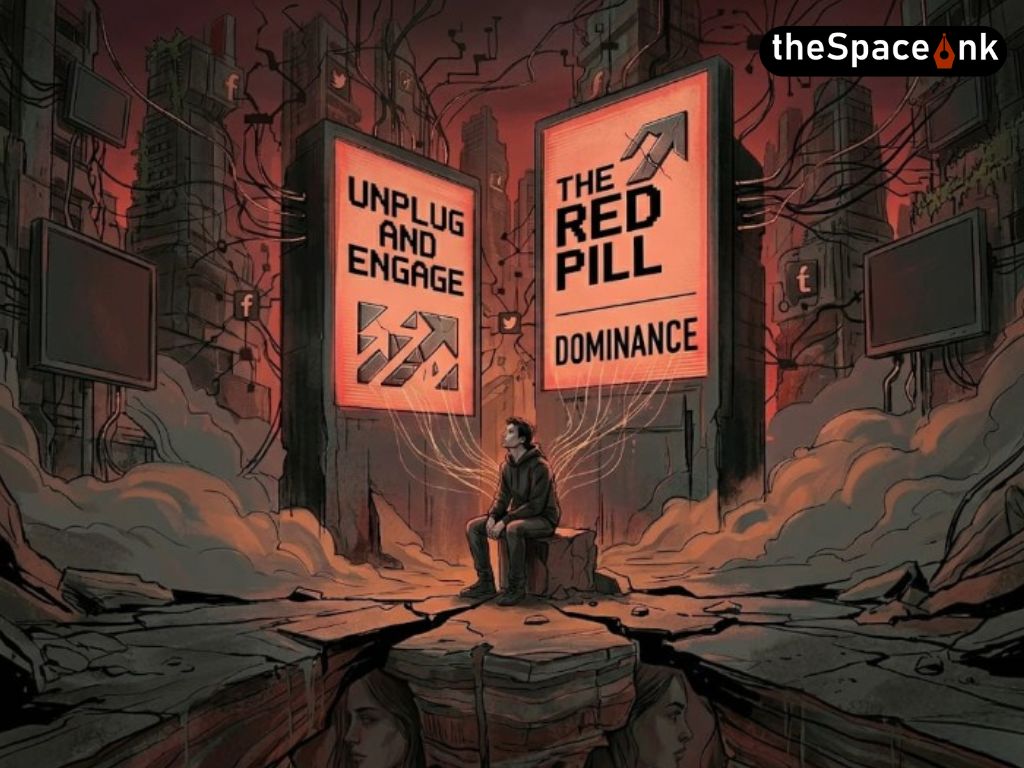
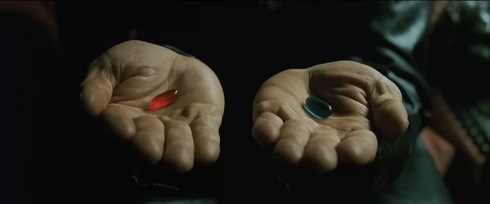
Hypermasculinity has quietly taken over the internet largely through social media platforms and algorithms. An example of this can be seen in the distortion of the “red pill theory” originally portrayed in the film The Matrix. In the film, taking the red pill means waking up to an uncomfortable truth about reality. However, in modern hypermasculine social media narratives, especially within manosphere discourse, being “red-pilled” signifies an alleged awakening to a hidden truth that women are inherently manipulative, feminism is rigged against men, and that the only way to survive is to reject mainstream ideas about gender equality altogether.
Within this framework, social, economic, and sexual dynamics are interpreted as being controlled by women and reinforced by feminism, which is viewed as privileging women while disadvantaging men. Consequently, red-pill adherents position themselves in opposition to dominant narratives of gender equality, promoting an alternative worldview that turns insecurity into ideology. Despite lacking broader social acceptance, it is upheld within these spaces as both rational and prescriptive for vulnerable young male audiences.
Two recent Netflix productions have brought this world into sharp focus. Adolescence, a fictional drama, shows what happens when a teenager fully absorbs these ideas. On the other hand, Louis Theroux: Inside the Manosphere goes a step further back, examining where these ideas come from and how they spread. The manosphere primarily targets young, digitally active men who are navigating insecurity, rejection, transition, or a lack of direction in life, offering them identity, validation, and acceptance into its worldview.

It suggests that the “manosphere” does not target men randomly; rather, it capitalises on their insecurity. Where Adolescence depicts the end result of toxic masculinity and red-pill ideology, Inside the Manosphere works backwards, investigating the conditions that produce such thinking and make young men susceptible to it.
The documentary, as the name suggests, provides an insider perspective into the “manosphere”, where misogyny, anti-feminist narratives, and “alpha-male” culture are actively promoted by influencers. Meanwhile, Adolescence depicts how such ideas can be internalised by a vulnerable teenager like Jamie, whose actions reflect not outright remorselessness, but a disturbing emotional detachment and an inability to fully comprehend the gravity of his crime.
Louis Theroux has long tackled subjects many people find uncomfortable to confront, and one of his recent works explores the prominent yet least discussed “manosphere” culture emerging in the digital space. In the documentary, hypermasculinity is not just explored as an identity or belief system; it is packaged, consistently performed, and sold to targeted audiences. The rise of influencer culture reveals how masculinity is not only constructed but also commodified, transforming it into a marketable product shaped by performance and profit. In this way, capitalist ideas of profit maximisation become closely linked to hypermasculine culture.

As a result, masculinity becomes something to be constantly demonstrated and consumed, where external markers of success outweigh emotional depth or individuality. What is ultimately being sold is not merely advice, but a sense of certainty, control, and belonging, especially to insecure or directionless young men. Performative masculinity and monetisation therefore intersect, creating an ecosystem where exaggerated gender ideals are continuously reinforced because they are not only socially influential but also economically profitable.
Also Read: The Sustainability of “Sustainable fashion”
However, although the documentary succeeds in mapping the internal logic of the manosphere, showing how it has exacerbated anti-feminist and hypermasculine ideas across digital spaces and how these ideas spread, it falls short in one important respect: it largely ignores women, who bear the direct consequences of these ideologies, and how their lives are affected and transformed by toxic and performative masculinity. The documentary’s most notable observation is that the manosphere is no longer confined to obscure corners of the internet; it has begun to permeate mainstream social life. As a result, attitudes shaped within these digital spaces increasingly influence how young people think, speak, and behave in real-world contexts.
This is powerfully illustrated in Adolescence. Although fictional, the series depicts how online ideologies are internalised by Jamie, shaping his perceptions of gender, rejection, and power. It demonstrates how beliefs originating within digital subcultures are no longer restricted to screens, but have translated into troubling real-world consequences.
When misogynistic or reductive views about gender are embedded within humour, casual conversation, or “self-improvement” content, they become less recognisable as ideological positions and more like common-sense understandings of “real” everyday life. Consequently, people end up absorbing and internalising these widely visible values without critically examining them.
The manosphere is actively reshaping a generation’s understanding of gender and relationships. Instead of nuanced, empathetic, and emotionally aware relationships, individuals may adopt overly simplified and hierarchical frameworks that prioritise dominance, status, power, and control. Over time, this affects not only personal relationships but also broader cultural norms surrounding masculinity and femininity.
The manosphere is no longer a marginal subculture, but a growing cultural force embedded within everyday life. Its ideas gain legitimacy not necessarily because they are widely accepted, but because they are widely circulated, making them harder to identify, challenge, and resist. An idea does not need to be widely ‘agreed upon’ to become influential; it only needs to be widely ‘seen and heard’ in this digital era, where everything is just a click away.

In the case of the manosphere, repeated circulation through social media — via reels, memes, and influencer content — creates a sense of familiarity. The more people encounter these ideas, the more they begin to feel “normal” or part of everyday discourse, even if individuals do not consciously endorse them. When misogynistic or reductive views about gender are embedded within humour, casual conversation, or “self-improvement” content, they become less recognisable as ideological positions and more like common-sense understandings of “real” everyday life. Consequently, people end up absorbing and internalising these widely visible values without critically examining them.
Also Read: Social Media- Banes and Boons
Although the manosphere, its rise, and its immediate impact on vulnerable young male audiences have been widely explored, the recipients of this process have often been overlooked in mainstream discussions. To develop a more holistic understanding of the spread of toxic masculinity and manosphere ideology, it is essential to also consider the experiences of those on the receiving end — particularly women — and how their lives, relationships, and sense of safety have been shaped and transformed by these dynamics. The manosphere is no longer a niche subculture, but a growing cultural force with real social consequences.
All Rights Reserved
Image Courtesy:

Atreyi Biswas is a student of Sociology from Kolkata, India. She has a keen interest in the prevailing social institutions and changing social relationships. Atreyi loves watching movies, documentaries, listening to podcasts, reading articles, short stories and exploring new things.





3 Responses
Very insightful piece of writing.
Very insightful piece. An amazing read.
This is an amazing essay!