

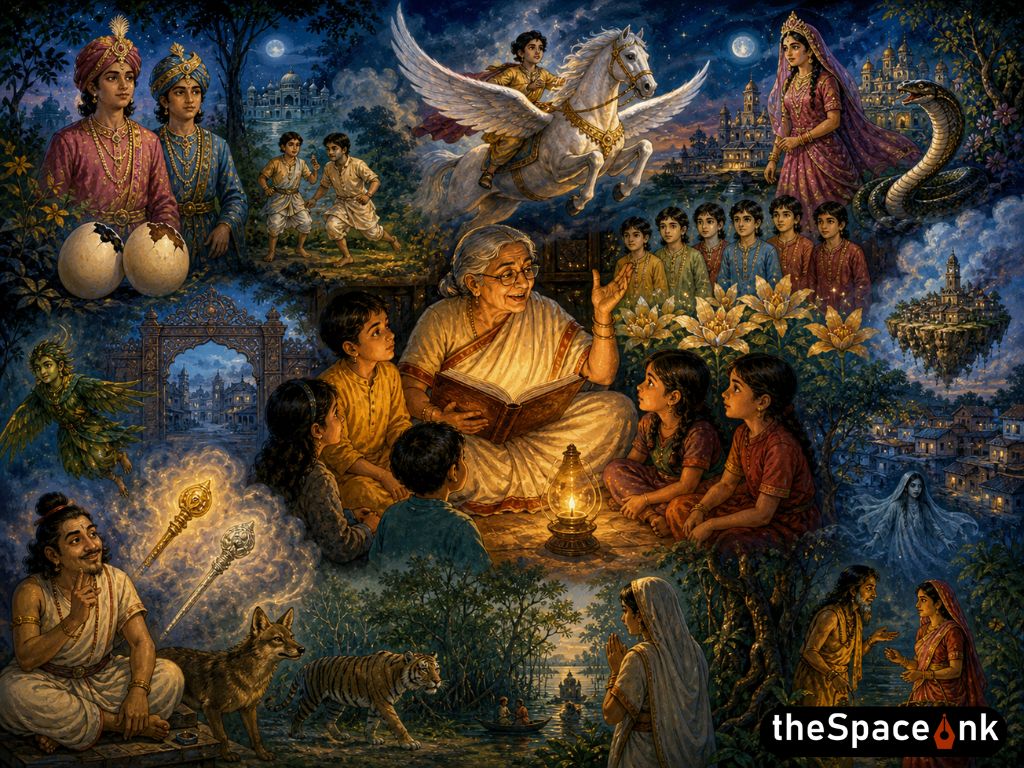
Bengal’s Wild Bedtime Tales
In the days before glowing screens filled our evenings, it was stories that created wonder. A dim lamp flickered, shadows leaned in, and a grandmother’s voice carried entire worlds on its breath. At the heart of that enchantment was Thakurmar Jhuli, quietly demonstrating that bedtime stories were never truly intended to induce sleep.

First compiled by Dakshinaranjan Mitra Majumder in 1907, this collection feels less like a conventional book and more like a gateway. Princes are born under extraordinary circumstances, demons hide in familiar forms, and logic wavers just when you think you comprehend. The tales bend, recur, and progress unexpectedly, giving the impression they were crafted to be told aloud rather than locked into written words.
Lalkamal and Nilkamal, brothers, were born into danger; one faced hardship, while the other had royal fortune. Betrayal shatters their fate, death does not end it, and they return, reborn from eggs, only to grow up swiftly enough to confront the very demons that molded them. It is a tale of survival that never pauses long enough to provide explanations.
Also Read: Bengal Sketches [1],[2],[3],[4],[5],[6],[7],[8],[9]
Dalim Kumar’s story begins with a fall, a prince tumbling from a flying horse into uncertainty. But instead of concluding there, it unfolds into a restless journey filled with monsters, strange lands, and quiet acts of courage. His misfortune transforms into momentum, propelling him through dangers that feel almost accidental, yet inevitable.
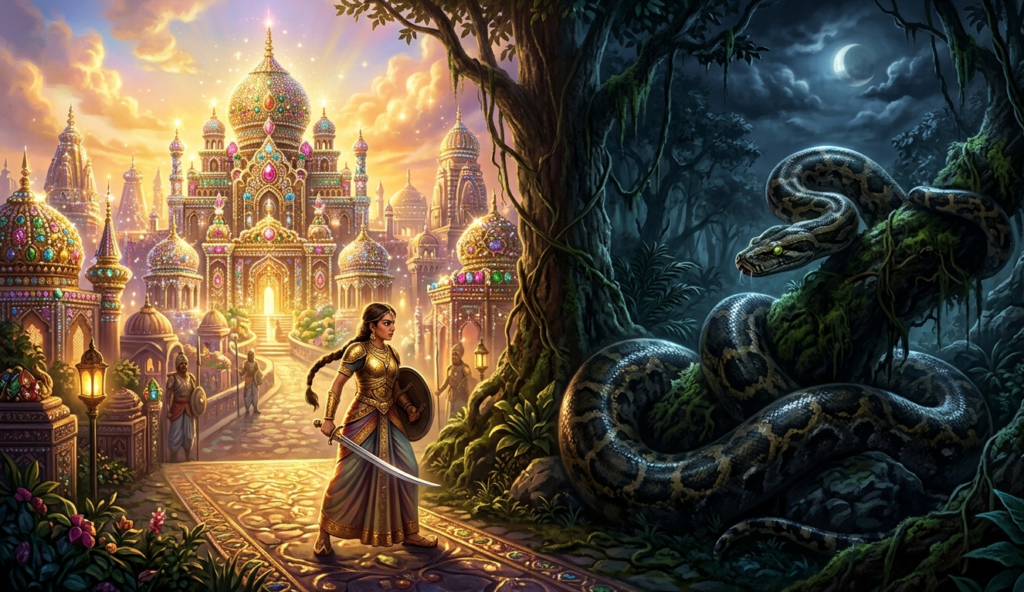
In Kiranmala, the world transforms into a luminous and perilous realm simultaneously. Jeweled kingdoms shimmer alongside dark forests where giant pythons coil and observe. A princess navigates trials that resemble fragments of dreams, rescues, disguises, sudden reversals; held together only by her unwavering resolve.
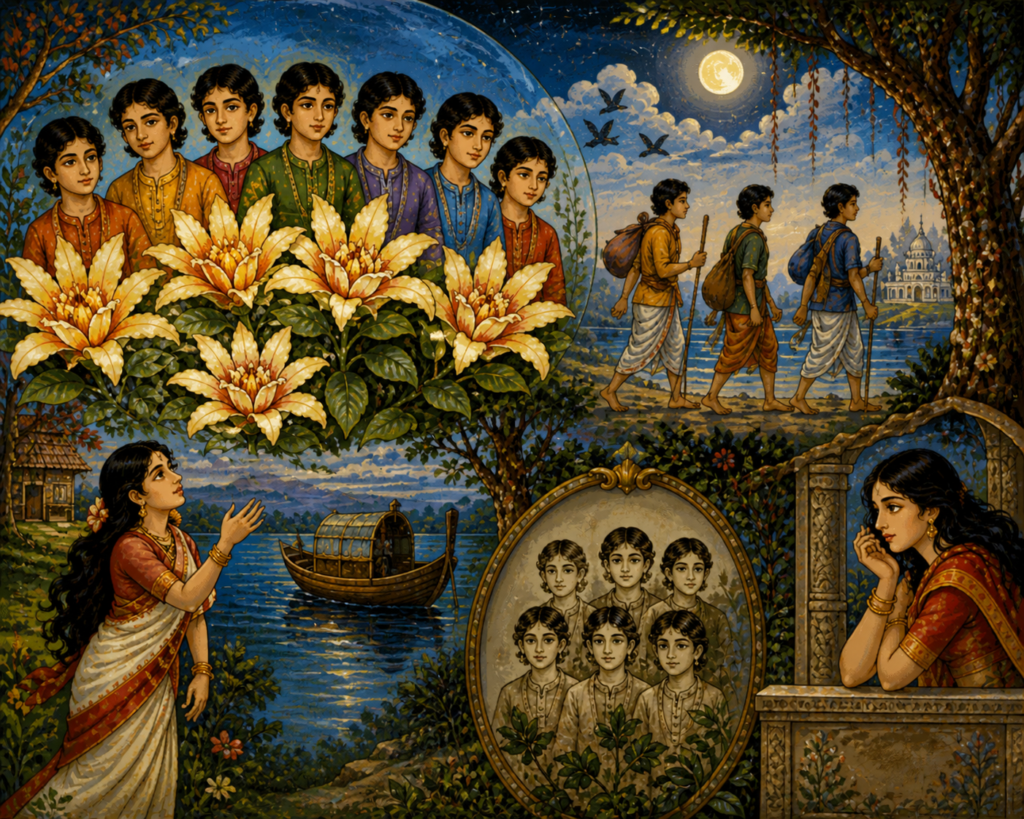
Saat Bhai Champa defies the constraints of a single narrative. Seven brothers disappear, changing into flowers, wanderers, or memories depending on the story. The aim was to evoke feelings, not maintain consistency.
And then there are the quieter strangenesses: Ghumonto Puri, where an entire town falls into an unnatural sleep; Byangoma and Byangomi, bird-like beings drifting through peculiar adventures; Boka Bamun, whose foolishness turns into lessons no one asked for; and tales like The Gold Wand and the Silver Wand, where wayward lives are nudged, sometimes harshly, toward responsibility.

A new perspective accompanies Lal Behari Day’s Folk Tales of Bengal, originally published in 1883 and republished in 2022. These stories feel closer to the ground, yet no less magical. They unfold like something told slowly, with pauses, as if the storyteller is remembering along with you. Here, stories like Life’s Secret carry the quiet dread of destiny, where no matter how far one runs, fate waits patiently. In Phakir Chand, there’s humor edged with unease, while The Indigent Brahman and The Match-Making Jackal reveal a world where wit often stands in for power.
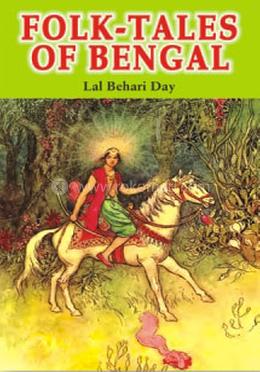
Then come the darker edges: The Ghost Brahman and A Ghostly Wife, where love and loss blur into haunting presences; The Story of the Rakshasas, thick with fear and confrontation; and The Evil Eye of Sani, where misfortune feels almost alive. In The Boy Whom Seven Mothers Suckled or The Boy with the Moon on His Forehead, wonder returns; but it carries a strange weight, as if miracles always come with a cost.
Bedtime stories are often soft and forgettable, but in Bengal, they were vivid and memorable. They stumbled, soared, frightened, and comforted all at once. And long after the lamp dimmed and the storyteller’s voice grew quiet, the stories did not sleep, they waited.
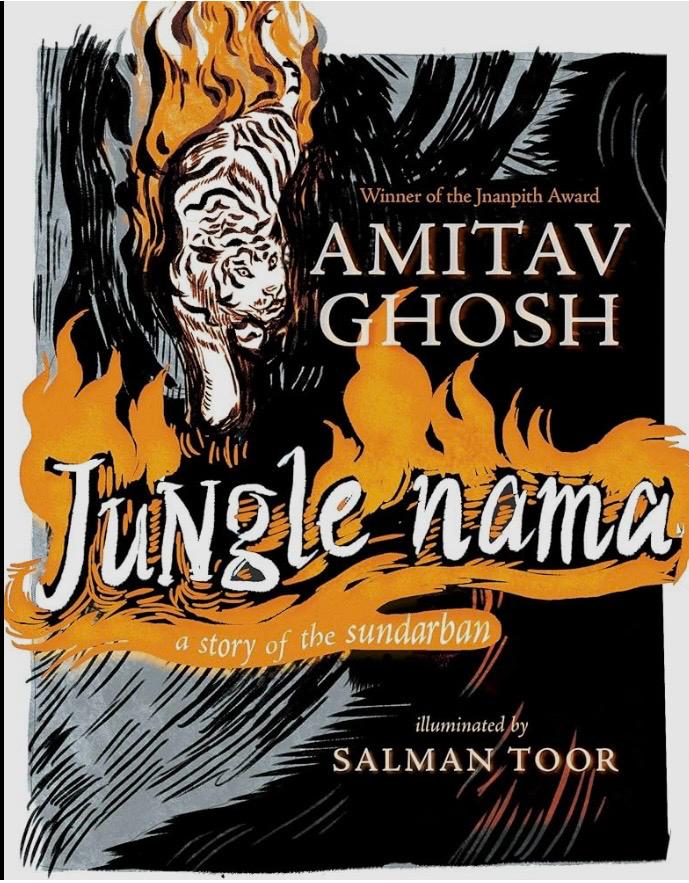
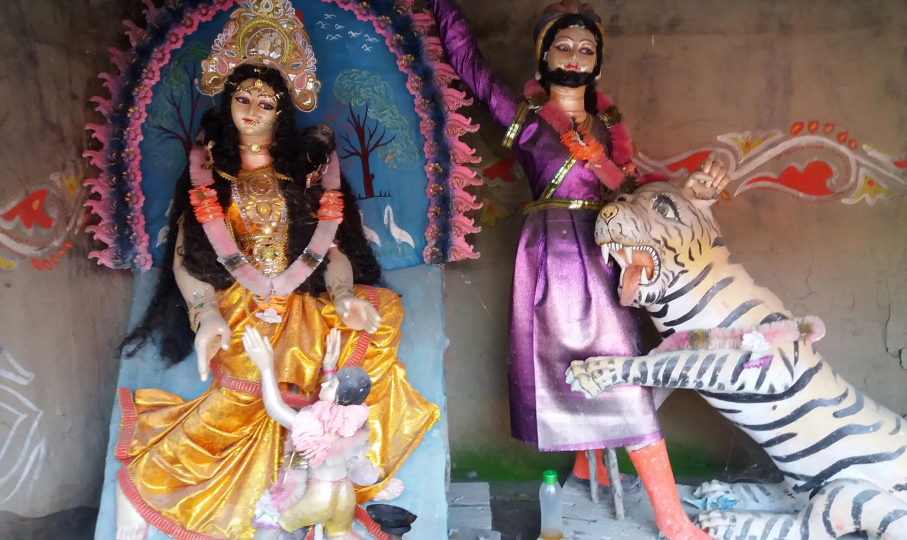
Beyond the books, the stories deepen into landscape and belief. In the dense, breathing wilderness of the Sundarbans, storytelling becomes survival and is beautifully captured by Amitav Ghosh’s Jungle Nama written in 2021, Bonbibi is not just remembered, she is relied upon. She stands between villagers and the silent hunger of Dakshin Rai, protecting honey collectors and wanderers alike. In the story of Dukhe, a poor boy survives not through strength, but through faith, his fear and belief inseparable.
Figures like Ola Bibi arrive in times of illness when fear spreads faster than answers. Mamdo Bhoot lingers at the edges, ghosts of unfinished lives, carrying warnings no one can ignore. These stories, shared across Bengal, blend jinns, sakchunnis, spirits, saints, and human longing into something that feels both intimate and vast.
This world is full of chaos and unforgettable moments. People hatch from eggs, princes arrive and depart, towns drift into sleep unexpectedly, and ghosts return not just to frighten, but to send messages. The stories linger, refusing tidy endings; they remain, like a voice’s faint warmth in a dark room.
As these tales unfold, patterns surface, masked identities, abrupt turns, delicate hopes, and an inexorable force greater than human intention. Acts of kindness are rewarded, though seldom with gentleness. Greed is punished, but the reckoning often comes too late. The supernatural is never far away, it quietly intertwines with daily life.
Bedtime stories are often soft and forgettable, but in Bengal, they were vivid and memorable. They stumbled, soared, frightened, and comforted all at once. And long after the lamp dimmed and the storyteller’s voice grew quiet, the stories did not sleep, they waited.
Images: AI, Wikipedia, Wikimedia Commons, Wikipedia, Environment & Society rokomari.com

Dr. Jamil is a passionate oncology commercial leader whose two-decade journey has been driven by a deep commitment to improving the lives of people with cancer. As Head of the Early Commercial Team at Merck Oncology and an Adjunct Professor at Columbia Business School, he shapes innovative pipelines while mentoring and inspiring future healthcare leaders. Beyond work, he is a soulful armchair historian of Bengal, a devoted Manchester City fan, and someone whose heart is forever tied to the culture, stories, and spirit of Kolkata.



One Response
What a beautiful nostalgic write up.
You are right, every bed time story I heard or read, had a lot of drama, rescue, fights against evil etc.
Feels like we were in defence even in our sleep.
Thanks for sharing.