Mystics, Metaphors and Margins: Notes from Bengal’s First Poetic subculture: The Charyapada
In ancient Bengal, wisdom was often conveyed through song rather than written texts. The Charyapada, a collection of mystical verses originating from the Vajrayana tradition of Buddhism, stands as one of the earliest lyrical expressions of spiritual realization in South Asia. Composed between the eighth and twelfth centuries, these verses encapsulate a vibrant era when the path to enlightenment could be sung beneath banyan trees or whispered on riverbanks. For centuries, the Charyapada remained a mere whisper in history, remembered only by scholars and monks but lost as tangible cultural artifacts. However, in the early twentieth century, a pivotal discovery in Nepal transformed everything.
The Rediscovery
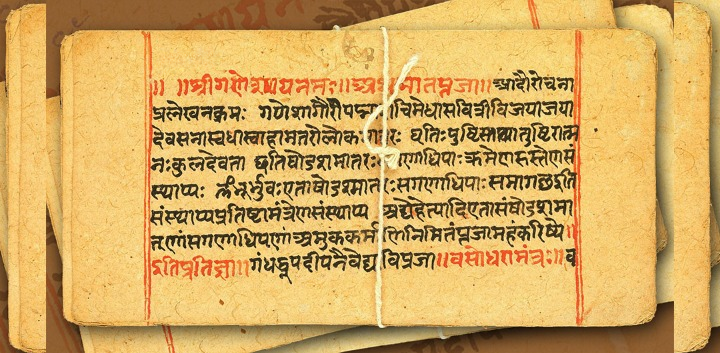
In 1907, Haraprasad Shastri, a scholar with a keen eye for overlooked manuscripts, embarked on research travels and arrived at the Royal Court Library of Nepal. There, amidst the vast collection of manuscripts, he stumbled upon a fragile palm-leaf manuscript written in elegant script. The verses within the manuscript carried the unmistakable cadence of eastern India, and Shastri realized he had uncovered a treasure, the long-lost Charyapada.
The manuscript contained forty-seven songs, although fifty are believed to have existed originally. Written in an early form of Abahatta, a transitional language between ancient Prakrit and modern eastern Indo-Aryan tongues, the verses shed light on the linguistic cradle of Assamese, Bengali, Odia, Maithili, and several others. Scholars describe Abahatta as the shared mother tongue from which these modern languages emerged, making the Charyapada the oldest surviving poetic document in that linguistic family.

The Language of Mystics
Each poem of the Charyapada is a song of realization; a meditation transformed into rhyme. The full title, Caryacaryavinishchaya, translates loosely as “Discourse on Acts and Non-Acts,” suggesting a manual on spiritual practice expressed through song.
The poets, known as Siddhacharyas or accomplished masters, were of the Sahajiya sect, an offshoot of the tantric variety of Mahayana Buddhism. They composed verses with striking directness and emotional intensity. Twenty-two names are traditionally associated with the collection, including Luipa, Kanhapa, Saraha, Kukkuripa, and Virupa. Most of them were wandering tantric practitioners who spoke less through doctrine than through metaphor. They found in verse a coded way to bridge the sacred and the ordinary, describing enlightenment through the language of fishermen, lovers, and laborers.
Also Read: Bengal Sketches [1],[2],[3],[4],[5],[6],[7]
Symbol and Society
Camels, boats, and rivers populate the Charyapada’s imagery. One poem speaks of a camel caught in a trap: a symbol for the struggle of consciousness bound by illusion. Another describes the body as a boat moving through the river of samsara, with the mind as its oar and the guru as its steersman. These are practical metaphors, born not in metaphysical abstraction but in the everyday language of agrarian Bengal.
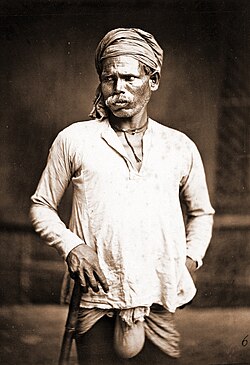
Remarkably, many verses in the Charyapada reference individuals from marginalized or outcast groups, including Doms, and Chandals. This inclusion suggests an early awareness of the region’s intricate social hierarchies and the spiritual equality advocated by Buddhist tantrics. Through this lens, the Charyapada unveiled an ancient Bengal that was both mystical and self-critical, capable of recognizing holiness even in the fringes of society.
One of the great mysteries surrounding the Charyapada is its sole surviving manuscript’s journey to Nepal. Scholars propose that while Bengal’s climate destroyed local palm-leaf copies, Nepal’s cooler air and monastic protection preserved this one. It was safeguarded either by a royal patron or by tantric monks who esteemed its esoteric teachings.
Across the Bengal delta, the ancient songs of the Siddhacharyas never truly died. Though once hidden on fragile palm leaves and nearly lost to silence, they survived in the voices of Baul singers; in Kushtia courtyards, beneath whispering trees, and on the stages of Shantiniketan. Carried by melody, memory, and devotion, they became living heritage and a bridge across centuries.
Although copies vanished from Bengal, the essence of the poetry endured. Fragments of its rhythm are believed to resonate in later Buddhist and Hindu songs of eastern India. However, by the nineteenth century, few were aware of these verses’ existence in written form. Shastri’s discovery marked not only the text’s revival but also the rediscovery of an entire spiritual vocabulary that significantly influenced early Bengali and Assamese thought.
For much of the twentieth century, the Charyapada resided in scholarly circles and museum archives. Its palm-leaf manuscript became an object of study rather than a source of sound. However, over the past few decades, the songs have been reborn through the voices of Baul and Fakir performers in Bangladesh and parts of West Bengal. These mystic musicians perceive the verses not as antiquarian poetry but as living experiences.

Through gatherings, workshops, and performances, Baul and Fakir singers have reintroduced the Charyapada into circulation. They adapt the ancient lines into melodies that resonate with modern audiences, seamlessly blending them with their devotional and philosophical repertoire. This revival has transcended academic boundaries, evolving into a people’s movement.
Returning to the River
In this new chapter, the Charyapada stands as a bridge between manuscript and music, between text and voice. Its rediscovery has come full circle, with communities once again singing what was long confined to dusty libraries. Scholars now collaborate with artists to interpret the songs, giving them historical depth while allowing creative freedom. Through these performances, the Charyapada reminds listeners of Bengal’s rich inheritance of tolerance and spiritual inclusion. Its verses celebrate a liberal and humane ethos where truth does not depend on birth or doctrine but on lived experience. The revival connects past and present in a way few academic texts ever manage; it transforms research into resonance.

The Living Legacy
Across the Bengal delta, the ancient songs of the Siddhacharyas never truly died. Though once hidden on fragile palm leaves and nearly lost to silence, they survived in the voices of Baul singers; in Kushtia courtyards, beneath whispering trees, and on the stages of Shantiniketan. Carried by melody, memory, and devotion, they became living heritage and a bridge across centuries. Now they do not return as faint echoes of the past but blaze alive and unbroken; the enduring heartbeat of a culture that still sings.
Images: AI, Wikiprdia, Wikipedia, Wikipedia, Wikimedia Commons, Facebook

Dr. Jamil is a passionate oncology commercial leader whose two-decade journey has been driven by a deep commitment to improving the lives of people with cancer. As Head of the Early Commercial Team at Merck Oncology and an Adjunct Professor at Columbia Business School, he shapes innovative pipelines while mentoring and inspiring future healthcare leaders. Beyond work, he is a soulful armchair historian of Bengal, a devoted Manchester City fan, and someone whose heart is forever tied to the culture, stories, and spirit of Kolkata.