

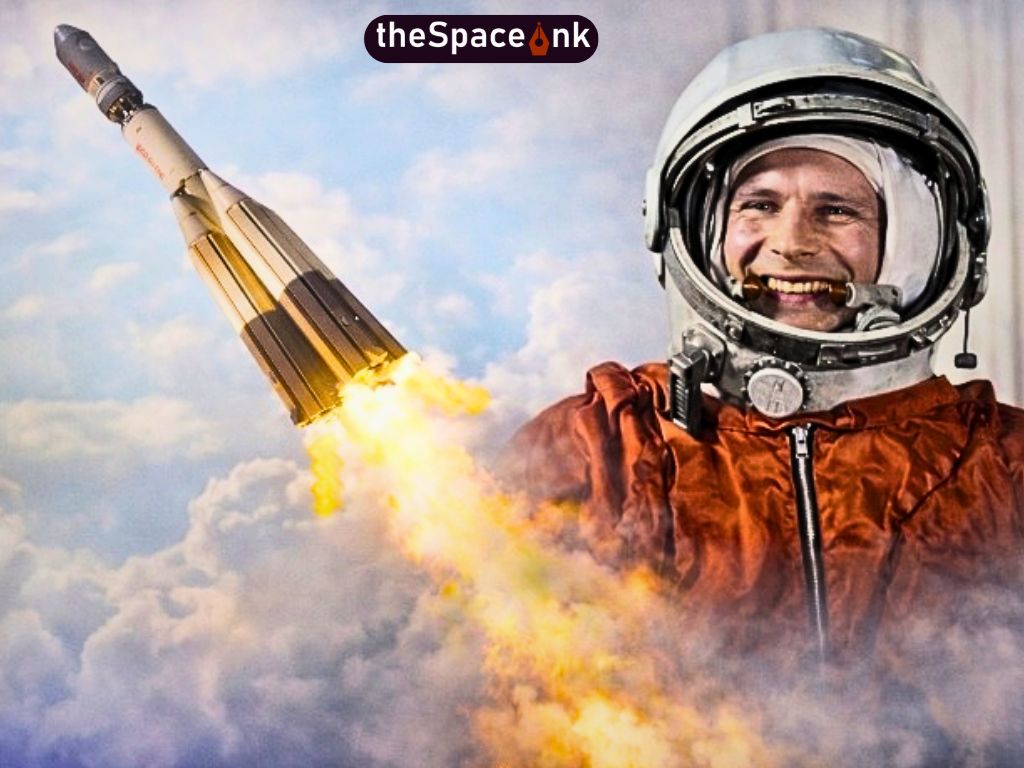
Yuri Gagarin: Off He Went!
Yuri Gagarin would have turned ninety-two this 9th March if his life was not cut short at thirty-four. He may not be the hero that he was to us about sixty years back but in the 1960s boys in erstwhile Calcutta were named after him. There is only one statue of him at the Birla Industrial and Technological Museum.
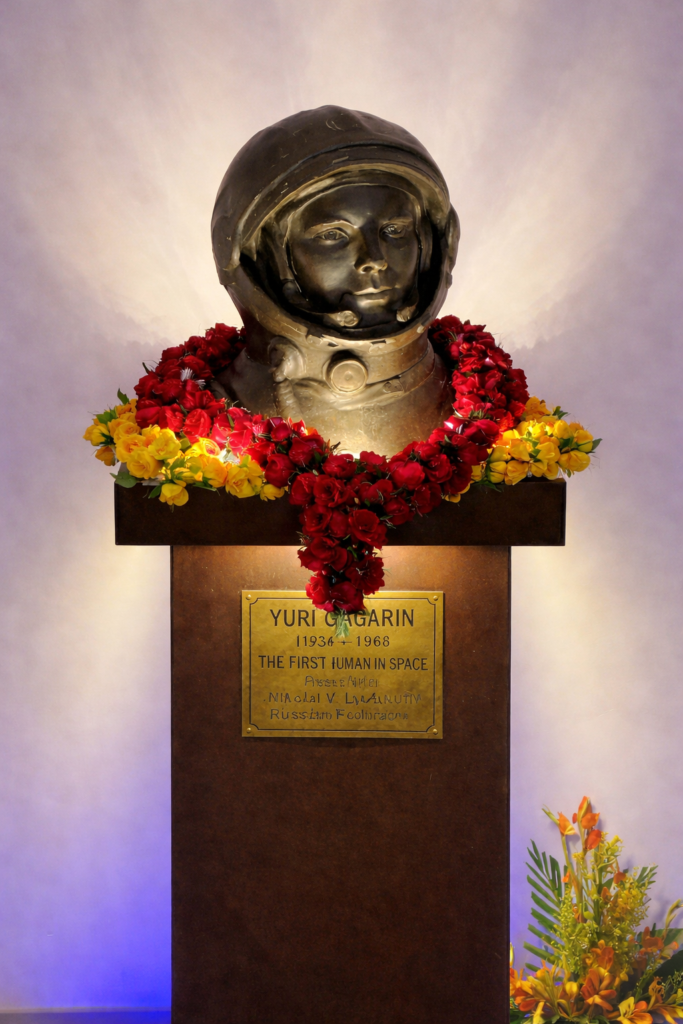
However, the rest of the world has hardly forgotten him. Streets, towns, and districts not only in Russia but all over the Soviet Republics and the Eastern Bloc bear his name, including, of course, the town of Gzhatsk in the western province near which he was born. A crater on the far side has his name. His statues and murals are there from USA’s NASA and UK’s Admiralty Arch to Jakarta’s Mataram Park.
12th April 1961 was the day of the Vostok 1 launch. Since 1991 this date is commemorated in Russia and other former Soviet republics as ‘Cosmonautics Day’. This day, initially also known as ‘Yuri’s Night’, has been declared as the ‘International Day of Human Space Flight’ by the United Nations.
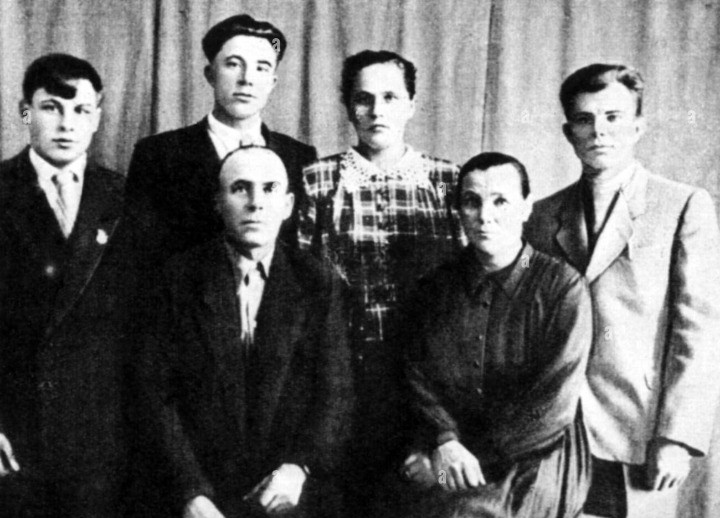
His life began in the village of Klushino, the third of four children, Valentin, Zoya, Yuri and Boris. Both his parents worked in a Sovkhoz, a directly state-owned farm. His mother, Anna Timofeyevna, was a dairy farmer and father, Aleksey Ivanovich, was a carpenter. It was, from all aspects of it, a happy and peaceful life in the Stalin Era till 1941. With the attack of Nazi Germany on the Soviet Union, their whole world broke down.
The Nazis captured Klushino on 18th October, burned down Gagarin’s school, along with 27 other houses, occupied their home, and forced all villagers to slave labour in the farms to feed the soldiers, sending those who refused to the concentration camp set up at Gzhatsk.
Also Read: India’s Small Step, Humanity’s Giant Leap
The Gagarins were allowed to build a 10 feet by 10 feet mud hovel on the land behind their home and there they had to live for 21 months till the end of the German occupation. During these months there were crisis moments, such as when a soldier tried to hang Boris from a tree or when Valentin and Zoya were sent to Poland for slave labour and they managed to escape to the Red Army. However, the parents thought the children were dead.
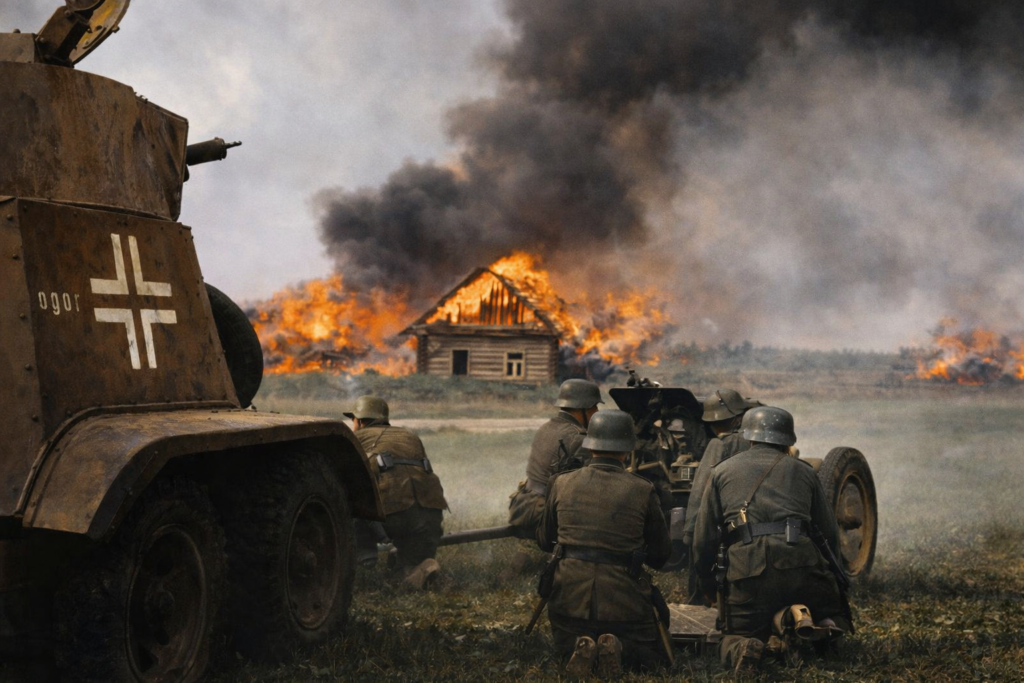
The father went into depression, refused to work any further, was beaten up severely and spent the remainder of the war in a hospital. Anna’s leg was gashed with a scythe by a soldier and she was also hospitalised at the same time. After the end of the occupation, the family was reunited. Aleksey became an orderly and helped the Red Army find buried mines.
The family moved to the town of Gzhatsk in 1946, where Yuri and Boris joined a school run by a single teacher, learning to read from a discarded Soviet military manual. Yuri was fascinated with airplanes from early on so his hobby became making airplane models.
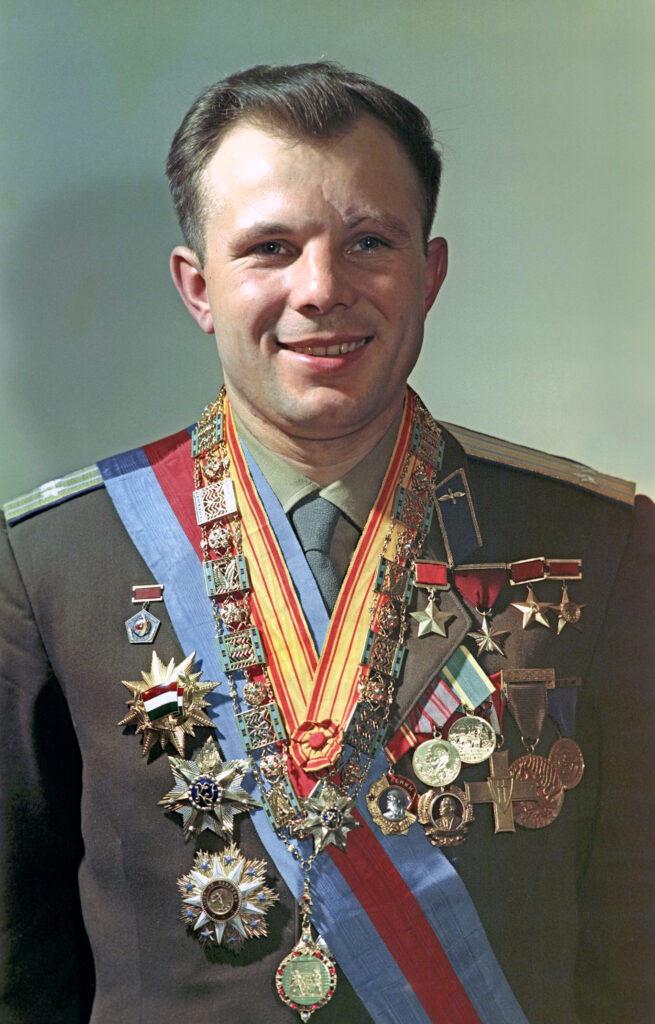
Gagarin was honoured with a twelve-mile parade of millions of people that ended at the Red Square with premier Nikita Khrushchev awarding him Hero of the Soviet Union, Order of Lenin, Merited Master of Sports of the Soviet Union, and the first Pilot-Cosmonaut of the USSR.
He joined a young workers’ school in the 7th grade when he was sixteen, simultaneously becoming an apprentice foundryman at a steel plant. After graduating from the 7th grade and the vocational school he studied tractors at an Industrial Technical School and volunteered at a local flying club on weekends for training as a Soviet air cadet. He was accepted to the Air Force Pilots School in Orenburg at age twenty-one. After two years of training he began solo flights from 1957 and became a lieutenant in the Soviet Air Forces.
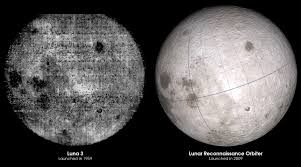
On 6th October 1959 the Luna 3 spacecraft photographed the far side of the Moon for the first time. Those never-before-seen images showed Gagarin where his true vocation lay. His intent to join the space programme was endorsed and forwarded by Lieutenant Colonel Babushkin. From among 154 pilots, 29 were chosen as cosmonaut candidates, which was further reduced to 20. Gagarin was among the first 12 approved on 7th March 1960.
Also Read: Unsung Women In Science: Victims Of Matilda Effect
His training included physical training closely similar to training for the Olympics. A month later they started participating in parachute training. Gagarin was accepted by the other trainees as the most focused, relentlessly demanding on himself when required. By the end of May an accelerated training group called the Vanguard Six was formed from which the astronauts of the Vostok programme would be chosen. Gagarin was the first choice for this group.
The Vanguard Six were subjected to several physical and psychological endurance tests. They were put in an isolation chamber and the air was slowly pumped out to check their endurance under oxygen starvation. They were made to experience both weight loss and high weight stress in centrifuges. Their psychological endurance was tested through isolation in a totally soundproof chamber.
After the training he was given a report in glowing terms by an Air Force doctor. He and his friends of the Vanguard Six were given the title of pilot-cosmonauts in January 1961. Then they were tested for ranking in mission readiness. On 8th April 1961, Gagarin was formally nominated as the primary pilot with Titov as the backup.
On the morning of 12th April the Vostok 1 was launched. At the launch Gagarin’s last words were, “Poyekhali!” or “Off we go!”, words which became symbolic of venturing into the unknown. His transit took him one round over the earth and brought him back to Kazakhstan.
He first became a deputy of the Soviet of the Union, the lower house, and then a member of the Soviet of Nationalities, the upper house of the Soviet parliament. He was elected to the Central Committee of the Young Communist League and became a Colonel of the Soviet Air Forces.
As soon as he reached ground through a parachute drop after ejection from the capsule at 23,000 feet, his historic journey became beset with problems. The biggest hurdle was placed by the International Aeronautics Federation, the authority for certification of any flight. According to their statutes a flight is successful only if it is brought down by the pilot, not when the pilot abandons it. Gagarin was forced to evade this question but the evasion was transparent, which made the Western media doubt the entire flight.
In the Soviet Union and the Socialist Bloc, as well as over a large part of the world, this event was celebrated with unprecedented joy. Gagarin was honoured with a twelve-mile parade of millions of people that ended at the Red Square with premier Nikita Khrushchev awarding him Hero of the Soviet Union, Order of Lenin, Merited Master of Sports of the Soviet Union, and the first Pilot-Cosmonaut of the USSR. The Academy of Sciences gave him the Konstantin Tsiolkovsky Gold Medal named after the pioneer of space sciences. He was soon awarded a host of other honours from different countries.
Gagarin quickly became an international celebrity. His speeches were lapped up by everyone, especially the youth, as was his charming smile that won him the name ‘The Cosmonaut Who Couldn’t Stop Smiling’.
His popularity caused the Federation to change its rule for space travel to include parachute landings and subsequently not only certify Gagarin’s flight but also to bestow the Gold Air Medal and De la Vaulx Medal upon him. All animosity and negativity fell off and he was seen to be the first ambassador to the cosmos and a cause for celebration for the entire mankind.
Gagarin quickly became an international celebrity. His speeches were lapped up by everyone, especially the youth, as was his charming smile that won him the name ‘The Cosmonaut Who Couldn’t Stop Smiling’. He first became a deputy of the Soviet of the Union, the lower house, and then a member of the Soviet of Nationalities, the upper house of the Soviet parliament. He was elected to the Central Committee of the Young Communist League and became a Colonel of the Soviet Air Forces.
Also Read: Karl Benz: The Man Who Got the World Rolling
After five years without flying duty, Gagarin tried to re-qualify both as a fighter pilot and for another space venture on Soyuz 1. The authorities were not willing to risk such a celebrity. Nevertheless, he was assigned to a backup status after his friend Vladimir Komarov on the Soyuz flight. After the tragic accident with Soyuz and the instant death of Komarov, Gagarin was permanently banned from any further space flights. He was also not allowed to fly solo.
Probably some of the adulation he received got into his head. He developed some drinking habits and was once caught by his wife, Valentina, in an affair. However, those were human failings in an otherwise excellent man and he quickly got out of his vices to lead a short but fulfilling life.
His death came on 27th March 1968 on a routine training flight with flight instructor Vladimir Seryogin when their plane crashed. The cause has remained undetermined but the closest understanding is that because of a mistaken report of the weather conditions from the ATC staff they flew into huge turbulence and also within a very short distance of a low-flying Sukhoi supersonic plane breaking the sound barrier. The resulting uncontrolled spin of their MiG-15 led to the crash.
As he looked from space he saw what no human being had ever seen. In his words, “I saw how beautiful our planet is. People, let us preserve and increase this beauty, not destroy it!” Unfortunately, we never listened!
Image Courtesy: Wikimedia Commons, Facebook, AI
Alokmay Datta was a Senior Professor at Saha Institute of Nuclear Physics, then a Raja Ramanna Fellow at the Central Glass and Ceramic Research Institute and finally an Emeritus Scientist at Department of Physics, Calcutta University. However, his interests lie beyond Physics or even beyond Science.
3 Responses
Reading pleasure. Informative article written in free flowing language.
Recalling my early days when Gagarin escaped from Earth towards Moon I was এ boy of 9 and he left us I read in class XI, school boy
Rest in peace,
School G.K classes started with memorising the names of Yuri Gagarin / Valentina Terescova / Neil Armstrong and the others – never went on to read their life stories – such a nice composition and a valuable input too