Ballad of the Moon Moon by Federico Garcia Lorca
Translated by Sarah Arvio
“Ballad of the Moon, Moon” (originally Romance de la luna, luna) is the opening poem of Federico García Lorca’s highly celebrated 1928 collection, Romancero gitano (Gypsy Ballads). Dedicated to his sister Conchita, the piece uses rich Andalusian folklore and mythic imagery to tell a tragic, dreamlike story about death and the loss of innocence.
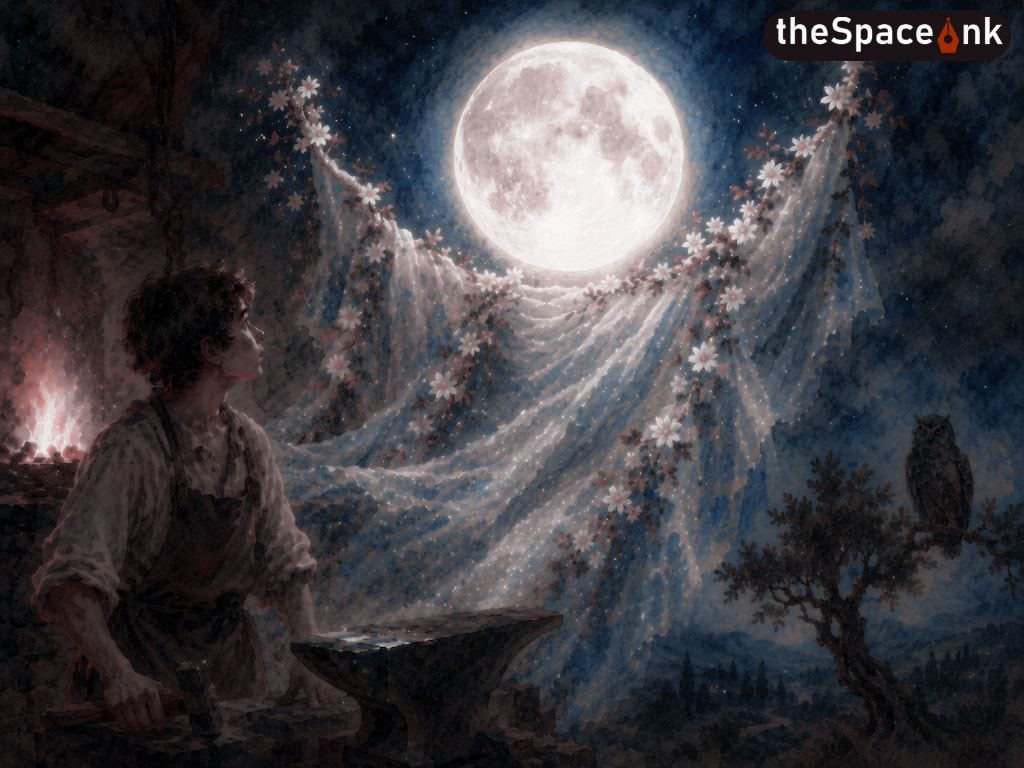
Moon came to the forge
in her petticoat of nard
The boy looks and looks
the boy looks at the Moon
In the turbulent air
Moon lifts up her arms
showing — pure and sexy —
her beaten-tin breasts
Run Moon run Moon Moon
If the gypsies came
white rings and white necklaces
they would beat from your heart
Boy will you let me dance —
when the gypsies come
they’ll find you on the anvil
with your little eyes shut
Run Moon run Moon Moon
I hear the horses’ hoofs
Leave me boy! Don’t walk
on my lane of white starch
Also Read: ‘The Collected Poems’ by Bertolt Brecht
The horseman came beating
the drum of the plains
The boy at the forge
has his little eyes shut
Through the olive groves
in bronze and in dreams
here the gypsies come
their heads riding high
their eyelids hanging low
How the night heron sings
how it sings in the tree
Moon crosses the sky
with a boy by the hand
At the forge the gypsies
cry and then scream
The wind watches watches
the wind watches the Moon
Image: AI

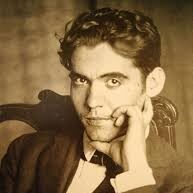
Federico García Lorca was a Spanish poet, playwright, and theatre director. He achieved international recognition as an emblematic member of the Generation of '27, a group consisting mostly of poets who introduced the tenets of European movements into Spanish literature.