(J.M. Coetzee)
He was a master of stark, philosophical fiction. He has profoundly shaped global literature, began his career not in a dusty library, but as a computer programmer in 1960s London? Or that he became the first author ever to win the Booker Prize twice, yet is famous for skipping award ceremonies? His journey from coding to literary canon is as compelling as his novels.
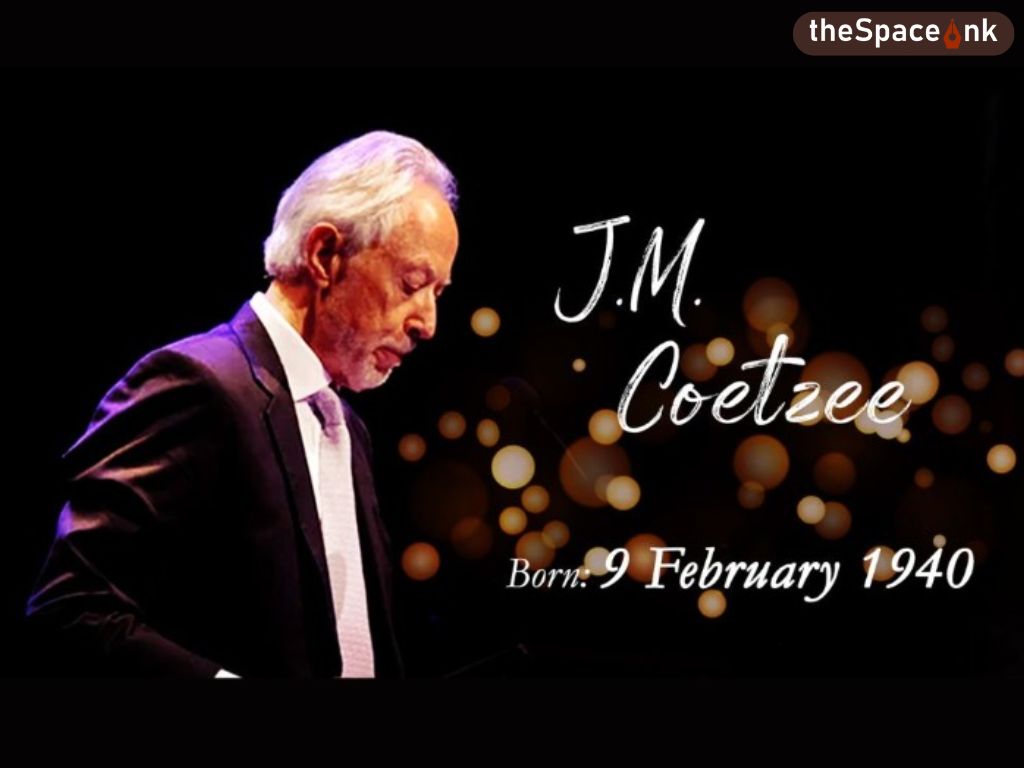
John Maxwell Coetzee was born in Cape Town, South Africa, in 1940. His childhood, later recounted in his memoir Boyhood, was split between Cape Town and the rural town of Worcester. His family spoke English at home, though they were Afrikaners, placing him in a cultural and linguistic borderland from the start—a theme that would deeply inform his writing.
He studied both English and mathematics at the University of Cape Town, earning honours degrees in each. Seeking escape from apartheid South Africa and conscription, he left for England in 1962. There, he worked as a programmer for IBM and later for a company involved in military tech, a soulless period he’d describe in Youth, his second memoir.
A Fulbright scholarship then took him to the University of Texas at Austin. Coetzee earned his PhD with a computer-aided analysis of Samuel Beckett’s prose, perfectly merging his technical and literary minds. After teaching in the U.S., an arrest at an anti-Vietnam War protest contributed to his denied residency application, forcing a return to South Africa in 1972.
Video: Emily Brontë: A Soul of the Moors
Coetzee began writing fiction in 1969 and published his first book, Dusklands, in 1974. This debut was audacious, linking American brutality in Vietnam with 18th-century colonial violence in South Africa. It set the stage for a career relentlessly examining power, guilt, and the body under oppressive systems.
His international reputation was cemented by a powerful trio of novels. Waiting for the Barbarians (1980) is a timeless allegory of empire and paranoia. Life & Times of Michael K (1983), a story of a simple man fleeing civil war, won his first Booker Prize. His masterpiece, Disgrace (1999), a stark tale of post-apartheid violence and shame, won his second.
Coetzee’s work consistently explores heavy, essential themes. He writes about the violence of colonialism and apartheid, not as a polemicist, but as a moral philosopher probing the soul’s frozen sea. His later novels, like Elizabeth Costello, often break from traditional storytelling into philosophical lecture and self-interrogation.
A profound concern for animal rights has become a major thread in his life and work. He has argued passionately that our treatment of animals is a vast, self-justifying “enterprise of degradation,” and sees changing human hearts as more crucial than legal battles. This ethics infuses books like Disgrace and The Lives of Animals.
Video: Remembering Virginia Woolf’s A Room of One’s Own
His trophy cabinet is the envy of the literary world. Beyond his dual Booker Prizes, he has won the Jerusalem Prize, the Irish Times International Fiction Prize, and France’s Prix Femina étranger. The pinnacle came in 2003, when he was awarded the Nobel Prize in Literature for “innumerable guises” portraying “the surprising involvement of the outsider”.
His personal life has been marked by both tragedy and transformation. His son, Nicolas, died in a tragic accident in 1989. Profoundly affected by the controversy around Disgrace in South Africa, he emigrated to Australia in 2002 and became a citizen in 2006. He now lives quietly in Adelaide with his partner, academic Dorothy Driver.
In his 80s, Coetzee remains a vital, challenging writer. His recent “Jesus” trilogy and 2023’s The Pole continue his exploration of displacement, language, and meaning. True to form, he shuns the public eye, letting his rigorous, unsettling, and brilliant work speak for itself.
So, who is J.M. Coetzee? He is the programmer who cracked the code of the human condition. He is the outsider who became a central pillar of world literature. He is a voice that compels us to confront painful truths, asking, as he once wrote, for “a way of speaking… that will bring enlightenment rather than seeking to divide us into the righteous and the sinners”.