

Celebrating Women Livelihoods
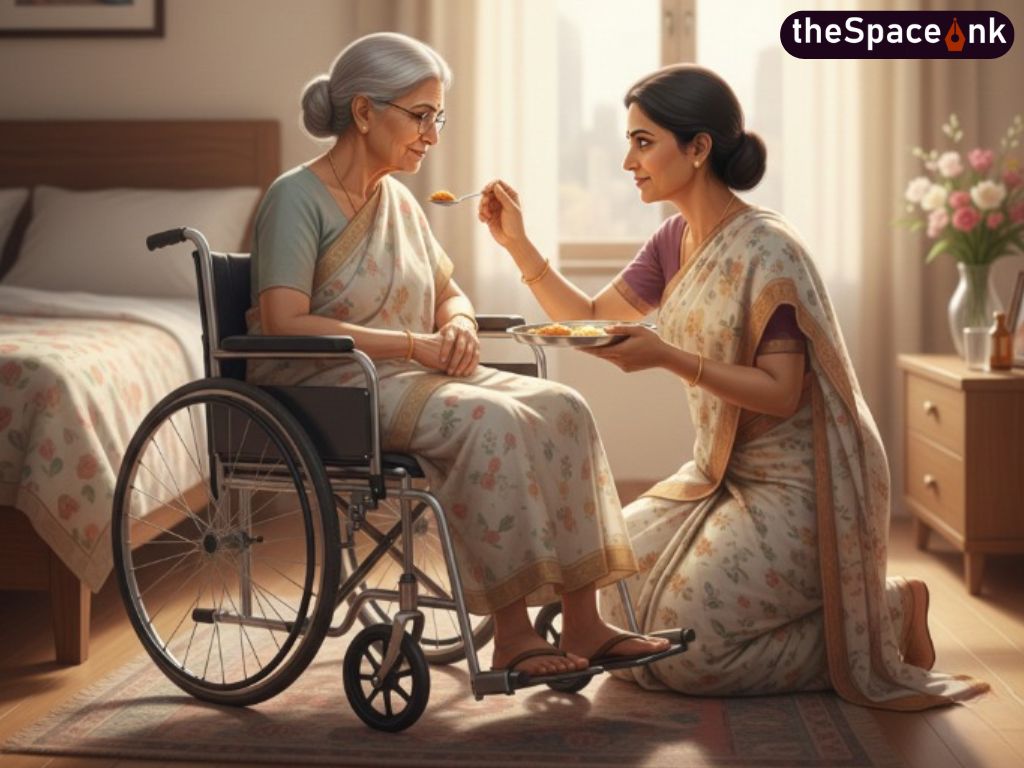
Let’s raise a toast to the battery of women caregivers that take care of our elderly as we lead our busy lives.
The caregivers twist your arms, they lie, they let you down, they ditch you at the last moment; they may even beg, borrow or steal. But the army of women caregivers (several men too who are paid a slightly higher wage than the women) are now the backbone of Kolkata’s geriatric care. It is a trend that has quietly taken over our homes and our lives totally.
Also Read: The Fine Arts of Criminology
They quietly and sometimes, not so quietly, serve. We just cannot do without them.
In the late seventies and early eighties, a quiet revolution took place among ordinary middle class and lower middle class women who left homes to work outside – to augment the family income. They rose at the crack of dawn, cooked meals and packed their own lunch before taking the local train or a bus to work.
The men sometimes helped. The children grew up with grandparents at home.
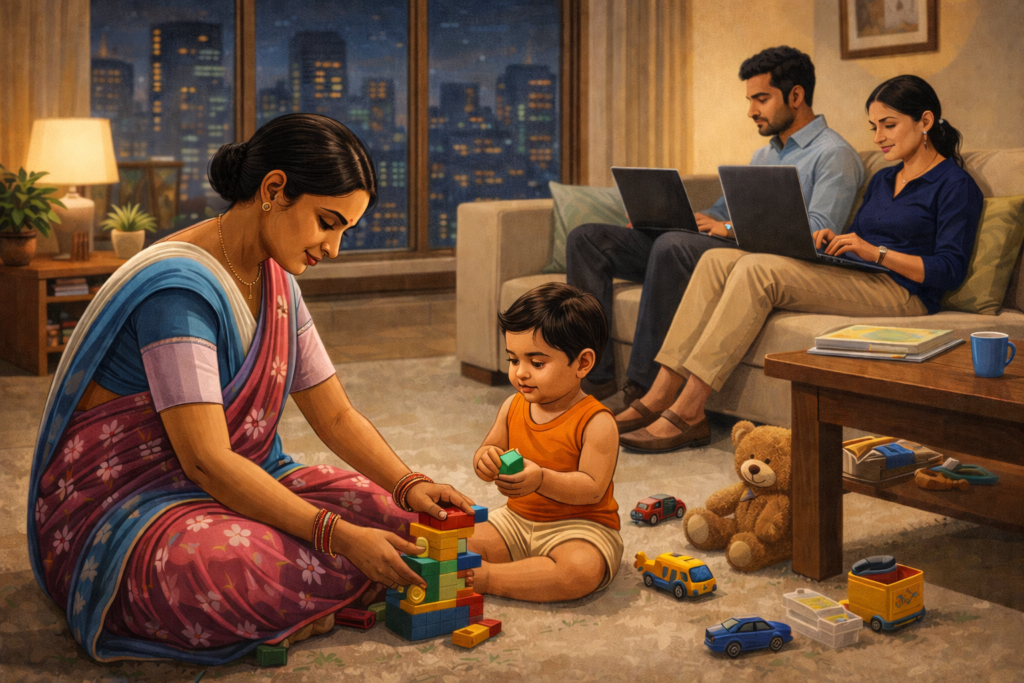
With more and more nuclear families becoming the norm than the exception, hired help for household chores, baby sitting and sundry other jobs created a huge demand for maids, many of them full time. In cities like Delhi, the wages were higher, especially in double income households, and many left from Bengal and Bihar to work in cities outside their own state.
The live-in maids ensured that the city women could continue with their high paying jobs as the former ran the households.
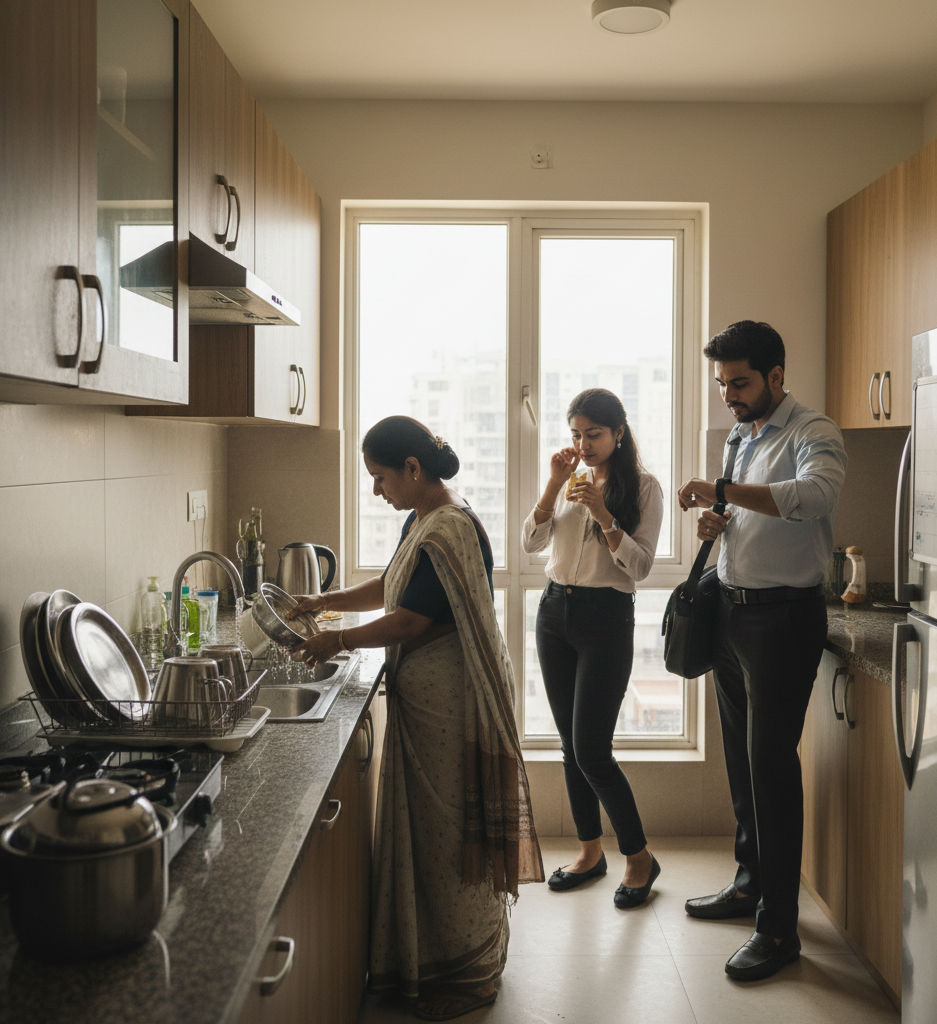
While all this was happening, more and more women across classes started joining the workforce more than ever. In sectors like media, fashion and merchandizing, there was an overwhelming presence of women. And the women who were only homemakers also wanted to do “something” other than cooking and raising kids.
For cleaning and washing there was always a provision for help. But they wanted more time to pursue their interests, their passions, instead of being stuck with tedious housework, which is a thankless job anyway.
An hour or more of commute on the local train, she rises at dawn to cook for an entire family before setting off. She returns late again to cook dinner. Making about Rs 450 per day, she is the main breadwinner. The Centre that employs them is expected to get a quick replacement so they too are hard pressed for workers.
So a demand for new service jobs was created: mainly highly paid cooks, chauffeurs for driving the lady and full timers for households that entertained a great deal – reminiscent of the memsahib days – white and brown.
But gradually that older generation started retiring and in a city like Kolkata, their children were staying separately or outside it. Till that time they lived active lives, it was fine but the moment they got infirm or one spouse passed away, the problems arose. And this is where a new breed of caregivers stepped in. What was once expected of the bahus to do was no longer working because several men and women were choosing not to marry, and there are fewer grandchildren around to even give company to their grandparents.
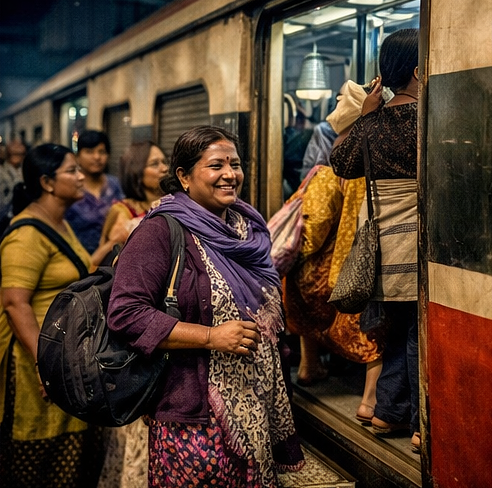
Who are these caregivers to fill the vacuum? We are talking about women you will see on buses and trains in the evenings not returning from work but coming to work for their night shift. The day shift maids/nurses has ended and this is the time for night help, especially in instances where critical care is required for the elderly.
“I make roughly between Rs 12,000 and Rs 14,000 for an 11-hour shift (which used to be 12 hours a year ago), after the Centre takes its commission (approximately 10 per cent),” says Sonali Marjit. She commutes from Ranaghat to Lake Town every morning. The days she does not work, she does not earn.
The changing family dynamics have demanded different life styles and revised roles. Old age homes or assisted living are becoming popular in a country where hired help have always done our dirty work.
They carry their own lunch or dinner which is often quite frugal – a bit of spinach tossed with a fried egg and rice. Tea with “tiffin” is offered by generous households. And just as you settle down to a pattern, something happens in their lives and a last-minute replacement has to be arranged.
“My husband is mentally disturbed,” says Sandhya. She takes Thursdays off to get psychiatric medication for him from the OPD in a clinic near her house in Naihati, from where she commutes daily, without a break.
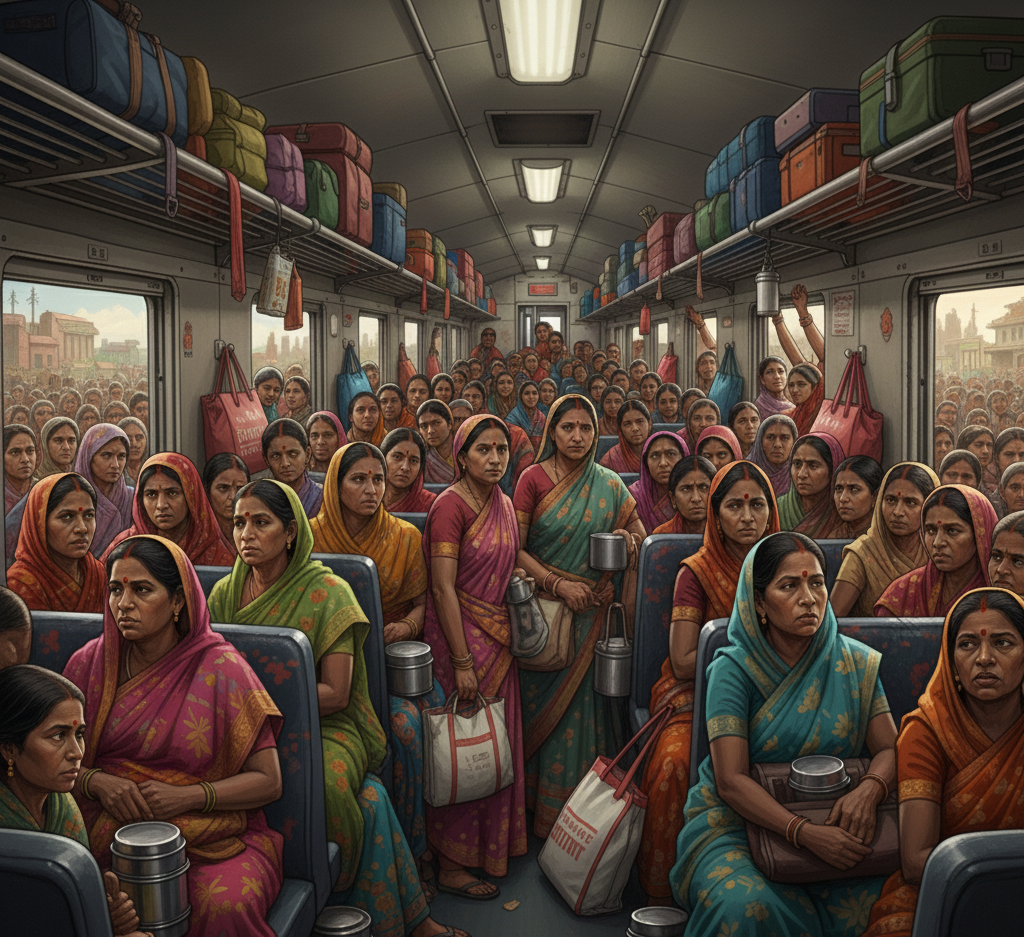
After an hour or more of commute on the local train, she rises very early in the morning to cook for the entire family before setting off. She returns late again to cook dinner. Making about Rs 450 per day, she is the main breadwinner. Her son is dependent on part-time jobs.
The Centre that employs this help is expected to get a quick replacement when they cannot report for work. So these agencies too are hard pressed for staff.
Also Read: Personal Recollections of Chinese New Year
The work is not easy. Taking care of old and difficult patients is challenging. The charges for maids and nurses vary, because the latter are trained to check pressure and to handle other medical equipment (oxygen, Ryle’s tube etc.) in case of critical cases. Today, for parents of children living abroad, agencies can set up an entire hospital room at home complete with a ventilator and full-time nurses.
Trained nurses for whom the rates are double are available, so are trainee nurses who are preparing to take the nursing examination. They are the young women who may come on a bike with a backpack and are indeed a smart lot. Young trainee nurses or trained full-time nurses can make over Rs 50,000 a month in a city where rates are still cheaper than metros like Delhi and Mumbai.
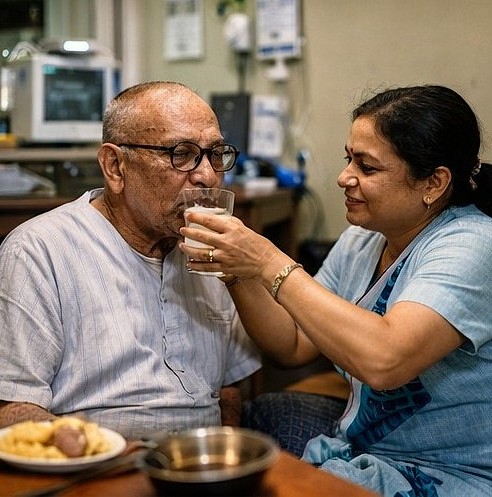
One such young nurse is Purnima Pal who takes care of her parents as her father cannot work anymore due to an accident. She has bought him a scooter and has booked a flat as well. For her relaxation, she uses AI to make visuals when not ordering beautiful clothes and make-up online.
The old being taken care of complain that the caregivers talk back, are rough and are constantly on their mobile phones. The constant chatter on the phone when not watching funny reels is a nuisance but it is difficult to ban the phone when every member of the family roams around with one!
The ayah centres with names like Snehar Porosh ( a touch of affection), Mayer Anchal, Matri Sadan, etc. You will find more such names in graffitis and posters sharing space with numbers of massage parlours and de-addiction clinics.
“One elderly ‘client’ requested to be given a deaf and mute caregiver,” laughs a Centre in-charge. “None of the maids last more than a month in certain households but we are not to find any fault with the clients because they pay,” he adds.
“We had no other option but to install CCTV,” recalls Anindita Sarkar who lives abroad. “We can monitor things from the USA,” she says.
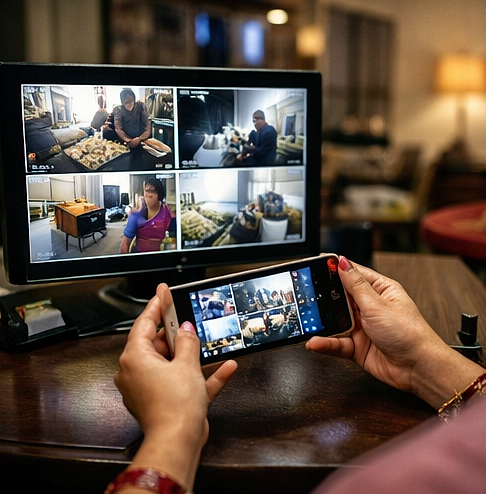
No amount of reasoning that it is the duty of the help to be vigilant, patient and gentle cuts any ice.
“In this holy month of Ramadan, Mumtaz Bibi wanted Rs 100 every day for fruits and dates, but she left when she found the household was predominantly fish and not meat eating,” says another client’s daughter.
In another household, Kalpana Mondol wouldn’t start work till she got “aadesh” or orders from her Borothakur. No one knew what that meant as she stood silently in the doorway. Suddenly she started howling and clutched the feet of the old lady patient’s son and asked him to give her the orders to work! recounts an agency owner. Obviously it would not have been very prudent to employ her, he agreed.
Also Read: Kafkaesque to Kalia
The agencies try to do background checks but this kind of labour being in the unorganized sector they plead helplessness.
The ayah centres with names like Sneher Porosh, Mayer Anchal, Matri Sadan, etc. are mushrooming by the day. You will find more such names in graffitis and posters sharing space with the contact numbers of massage parlours and de-addiction clinics on the city’s walls.
The centres are hard pressed for manpower because many leave to be employed directly, bypassing the centre, and some go outside the state to make better money (sometimes for short durations).
Also Read: The Great Indian Proposal Letter
The changing family dynamics have demanded different lifestyles and revised roles. Old age homes or assisted living are becoming popular in a country where hired help has always done our dirty work. With freebies on offer by the government (cash released to build homes), paid work is looking less attractive in a city that is known for huge unemployment.
Till they become footnotes in the history of labour similar to the faithful family retainers of days gone before, funny, sad and frustrating stories rule, with occasional happy ones. Till a new order is established even in an unorganized labour scenario such as this one, these “shift” caregivers continue to serve.
Come rain, come hail.
Some names changed on request.
Photo Courtesy: AI

For a living, Manjira Majumdar has traversed the world of reporting, feature writing and editing. Today an independent journalist, she likes writing essays, fiction and translating from Bengali to English.



2 Responses
Excellent piece of work 👌🏻
Very nice in depth feature on a little known world of care givers. Reminds me of a weekly column named “How the other half lives” which “The Statesman” of Kolkata used to publish in the late 70s & early 80s. The stories of people like rag pickers, circus workers etc. used to fascinate me.
Thank you very much. The next time I visit my lonely elderly relatives in Kolkata, I will make it a point to interact with their care givers.