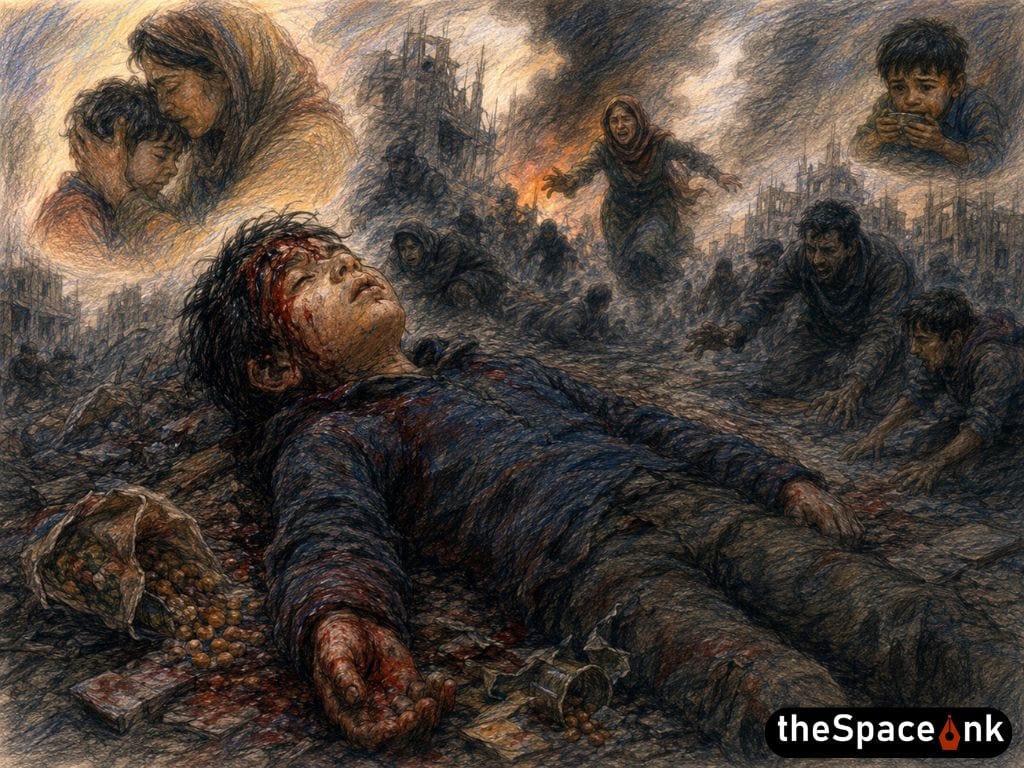
A dying boy relives tender childhood memories amid war and hunger, hoping his starving brother survives by taking the food he gathered.
War persists through systems that normalize continuation, diffusing responsibility, shaping narratives, and quietly preparing conditions, justifications, and acceptance for future conflicts.
War persists by diffusing responsibility, unevenly distributing costs, amplifying internal fractures, and making interruption politically costlier than continuation for all actors involved.
Moral language once unified war aims; now fragmented motives, institutional processes, and conflicting pressures blur purpose, shifting costs onto uninvolved global populations.
Twenty-five years ago, Indian homes experienced the Kargil War through the brave and unprecedented firsthand wartime reporting of Indian journalists.
Post war, family in Afghanistan sells their 10-year-old child to 56-year-old man to stave off starvation — for a few months.