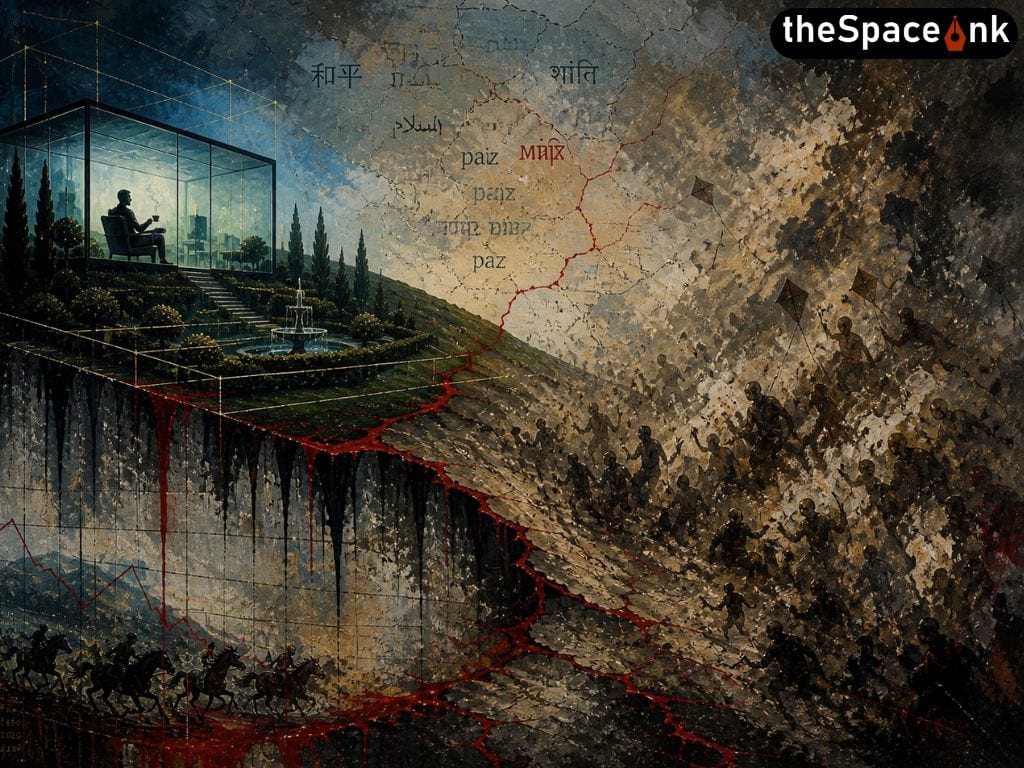
Power thrives on division, erasing borders, fueling chaos—yet when the world burns, no walls protect; humanity resists, reclaiming identity and voice.
War persists through systems that normalize continuation, diffusing responsibility, shaping narratives, and quietly preparing conditions, justifications, and acceptance for future conflicts.
War persists by diffusing responsibility, unevenly distributing costs, amplifying internal fractures, and making interruption politically costlier than continuation for all actors involved.
Moral language once unified war aims; now fragmented motives, institutional processes, and conflicting pressures blur purpose, shifting costs onto uninvolved global populations.