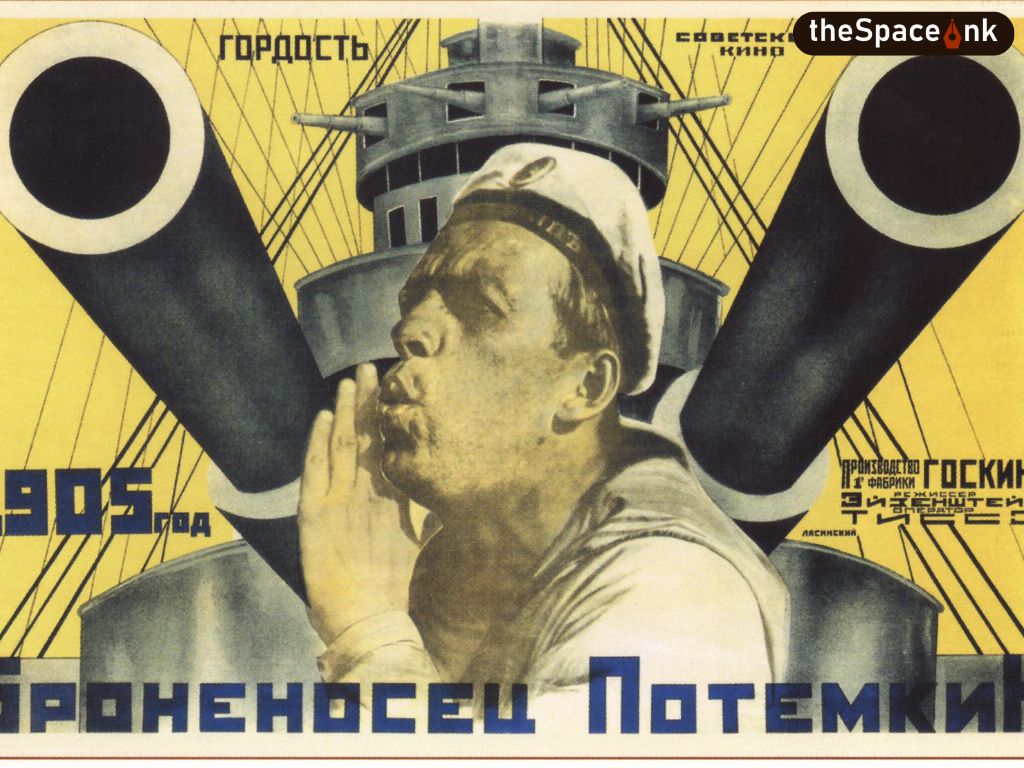
(Battleship Potemkin
It was seven years after the First World War that the film Battleship Potemkin was made in 1925. A classic silent film, made at a time when the world was still in post war turmoil, and the first phase of the October Revolution had already taken place in Russia in 1917.
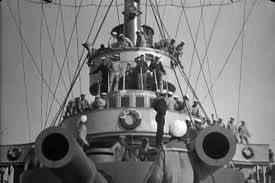
The subject that the young Russian director Sergei Eisenstein chose was the 1905 mutiny of the Russian sailors on the battleship named Potemkin belonging to the Imperial Russian Navy. The rebellion was over serving rotten meat in their borscht or soup. After the uprising, the officers were thrown overboard as the sailors took control.
Battleship Potemkin is primarily known for its innovative film language. It has influenced subsequent filmmakers in ways and magnitude that cannot even be described in a few sentences. It became a template for filmmakers world-wide.
The successful, if not the violent mutiny, had its resonance in the power seized by the common man in the Socialist Revolution shown through Eisenstein’s development and masterful use of montage; simply put, it is the deliberate juxtaposition of short disparate shots to generate an emotional or intellectual idea in the viewer’s mind.
This was particularly illustrated in the Odessa Steps sequence. By violently cutting between the relentless rhythmic steps of the Tsarist soldiers and the panicked suffering of the unarmed civilians during the Revolution, Eisenstein created an almost psychological experience of horror and conflict. The famous baby carriage scene was part of this. This greatly impacted the audience, where the individual tragedy is magnified into a collective, revolutionary feel.
Also Read: The Great Indian Proposal Letter
Battleship Potemkin is primarily known for its innovative film language. It has influenced subsequent filmmakers in ways and magnitude that cannot even be described in a few sentences. It became a template for filmmakers world-wide. Studied extensively by the students of serious cinema, it is a text in every film school syllabus.
This is one film, which has been pardodied, homaged, and re-imagined in countless global films, including those made in Hollywood, as well as in television serials. Essentially, any modern action sequence that was rapid and of non-linear editing to create chaos, confusion or an overwhelming force, is partly influenced by Eisenstein’s Battleship Potemkin.
Editing came to be recognized not only as a means of continuity in the story-telling but a perfect powerful tool for ideological expressions as well.
Martin Scorsese who consider the film a masterpiece and a fundamental landmark in cinema, mostly for its revolutionary editing and the powerful montage (especially the Odessa Steps sequence), called it “a benchmark for cinematic storytelling and revolutionary art.”
Also Read: Remembering Munshi Premchand
His opinion was that its complex techniques and ability to evoke emotion as essential viewing solidified its status as a cornerstone of film history.
Brian De Palma, another film maker used the famous pram scene in the Odessa steps in Battleship Potemkin in his 1987 film The Untouchables. Directors such as Hitchcock and Spielberg came under its spell for not just individual powerful shots but the heady mix of shot, angles, rhythm and ideas.
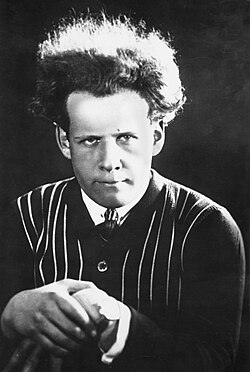
Sergei Eisenstein was born in January 1898 to a Jewish father who converted to the Russian Orthodox Church to which his mother Julia belonged. His parents later separated and Sergei grew up to be an atheist.
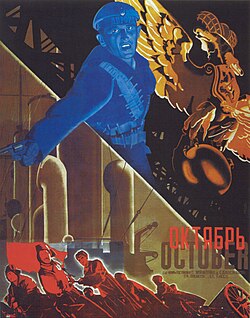
Although trained in engineering and architecture, Eisenstein joined the Red Army to participate in the Russian Civil War. His father held views entirely opposite to his. The filmmaker was first associated with the stage and exposed to the Japanese theatre of Kabuki. Gradually he moved to cinema and he made Strike, his first full-length feature film to be followed by Battleship Potemkin in the very same year. His other films are October – The Ten Days That Shook The World and Ivan the Terrible.
But as we celebrate the hundred years of Battleship Potemkin, in retrospect it is ultimately a cold academic exercise that serves ideology over art. The message entirely overpowers the human element. The characters are not developed individually but as mere as tools. It works like a collective protagonist to drive the propaganda forward and fails to connect the viewer organically. Its relentless focus on effect makes the film feels less like a dramatic story and more like a cinematic sermon.
We remember him today because Eisenstein proved with Battleship that manipulative editing can create a highly charged emotion in viewers that is powerful and abiding. And propaganda films often adhere to that.ine Arts)
Photo Courtesy: GoodFon.com, Wikipedia, Wikipedia, Picryl

For a living, Manjira Majumdar has traversed the world of reporting, feature writing and editing. Today an independent journalist, she likes writing essays, fiction and translating from Bengali to English.