A Personal Encounter with Michelangelo
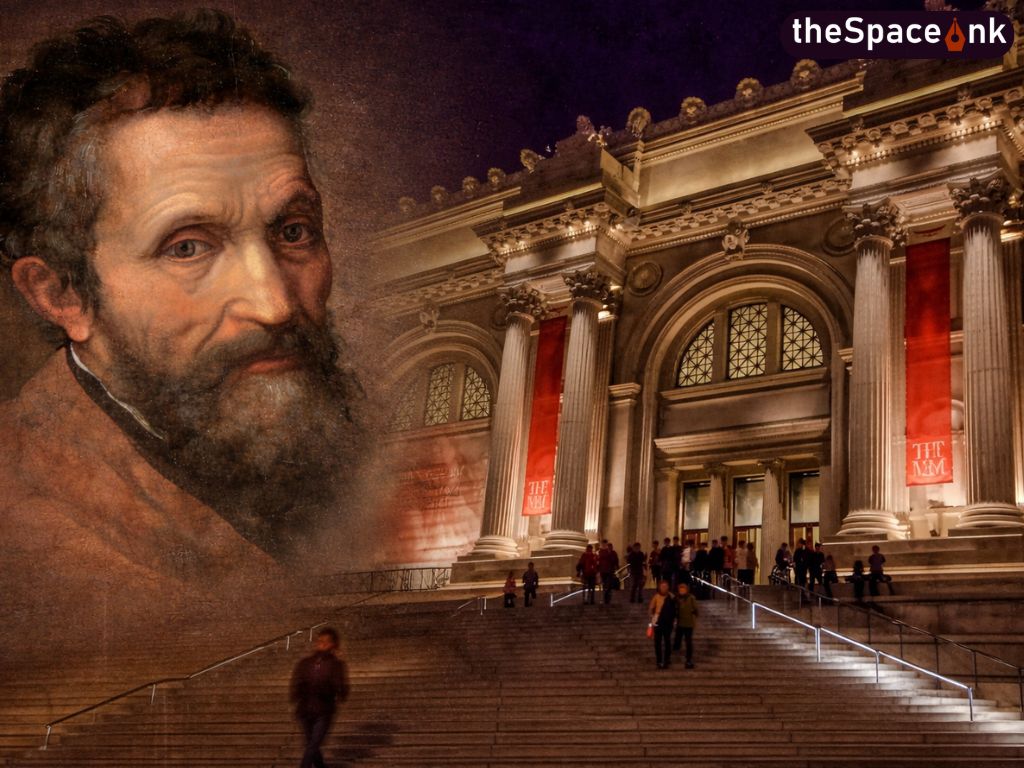
A Piscean artist, born more than five centuries ago on March 6th, still keeps us awestruck with his creations. Even now, across the vast distance of time, his work commands reverence, wonder, and tears. What follows is the story of reliving a lifetime experience—my visits to an exhibition in Manhattan that brought me face to face with genius, grief, and the infinite reach of human hands.
Also Read: A Life Well-Lived: Alice Munro (1931-2024)
There are mornings when I wake in my Lincoln Square apartment and count my blessings. The privilege of living in New York means I can walk twenty minutes north and stand before five centuries of genius.
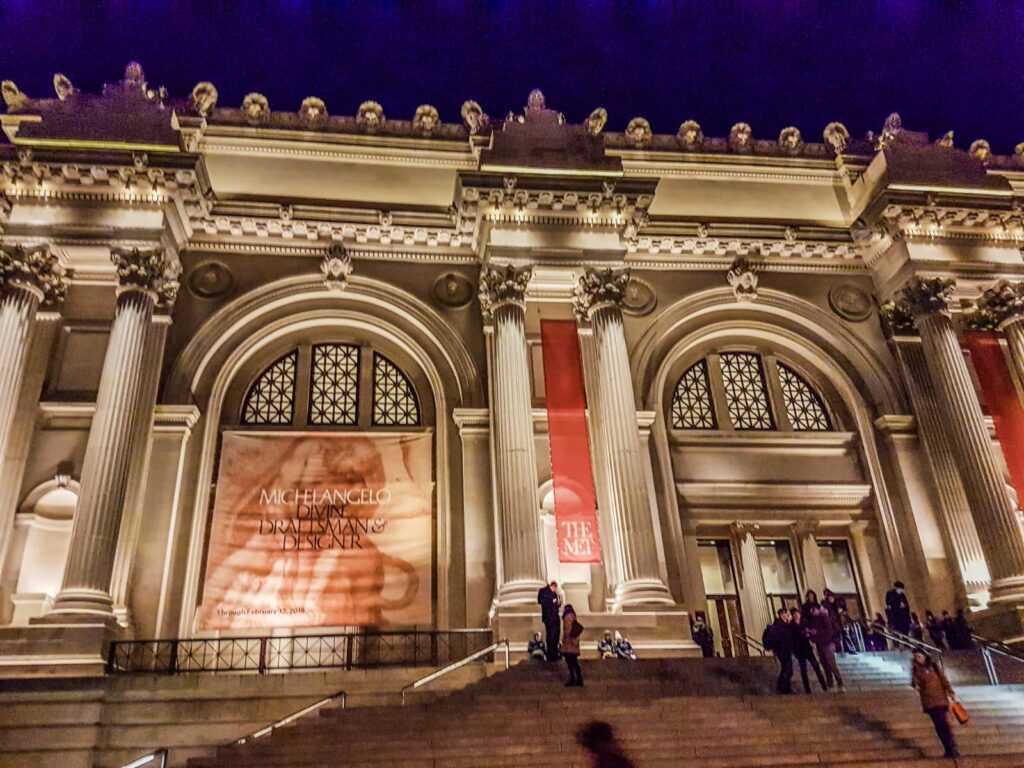
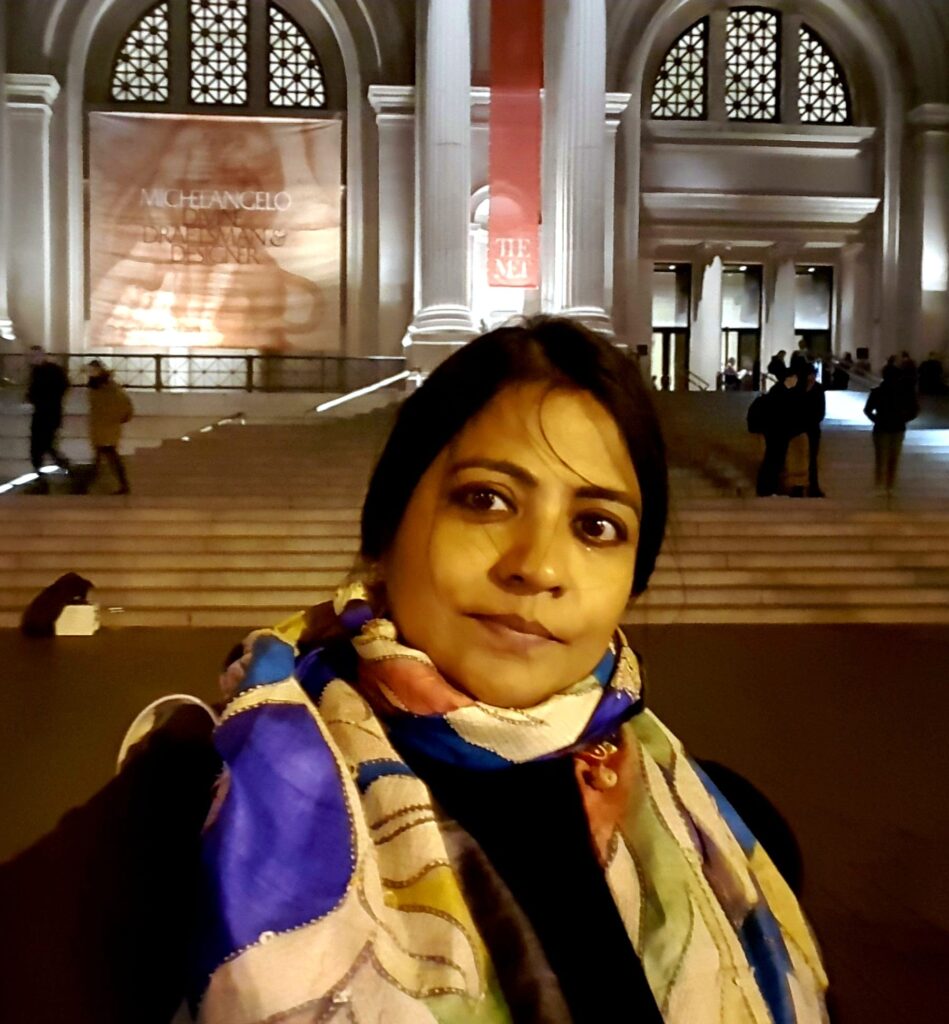
In the winter of 2017, I went to the Met’s “Michelangelo: Divine Draftsman and Designer” exhibition twice. The first time alone, with curiosity and a notebook. The second time carrying something heavier—memory.
The exhibition (November 13, 2017 – February 12, 2018) was eight years in the making by Dr. Carmen C. Bambach, curator at the Met’s Department of Drawings and Prints. She assembled the largest gathering of Michelangelo’s drawings ever: 133 drawings, three marble sculptures, his earliest painting, an architectural model—over 200 works from fifty collections across the US and Europe. Once-in-a-lifetime.
The exhibition sprawled across galleries like a life unfolding on paper and stone. You saw his thinking, his doubts, his obsessive reworking of a single shoulder muscle, a draping fold, the turn of a torso. You saw the man before the myth.
Michelangelo Buonarroti, born March 6, 1475, in Caprese, near Florence, was called “Il Divino”—the divine one—even during his lifetime. He lived eighty-eight years, dying wealthy and famous in Rome on February 18, 1564. Sculptor, architect, poet. He embodied what his contemporaries called disegno—a term encompassing both drawing and conceptual design, the intellectual foundation of all the arts.
He moved through the High Renaissance like a storm. Leonardo da Vinci, twenty-three years his senior, was already celebrated when young Michelangelo arrived in Florence. They competed for the same commissions, painting rival battle scenes on the Palazzo Vecchio walls (neither finished). Then Raphael, eight years younger, charming where Michelangelo was abrasive, whose graceful harmonies seemed to mock Michelangelo’s turbulent intensity.
They worked simultaneously in the Vatican—Michelangelo painting the Sistine Chapel ceiling while Raphael decorated the papal apartments. The rivalry was fierce, sometimes bitter. Raphael painted Michelangelo’s face into The School of Athens as the brooding philosopher Heraclitus—a portrait and a provocation.
Standing in the Met’s galleries that winter, I understood: the rivalry fueled him. Competition sharpened his vision. The High Renaissance was not a gentle flowering but a crucible.
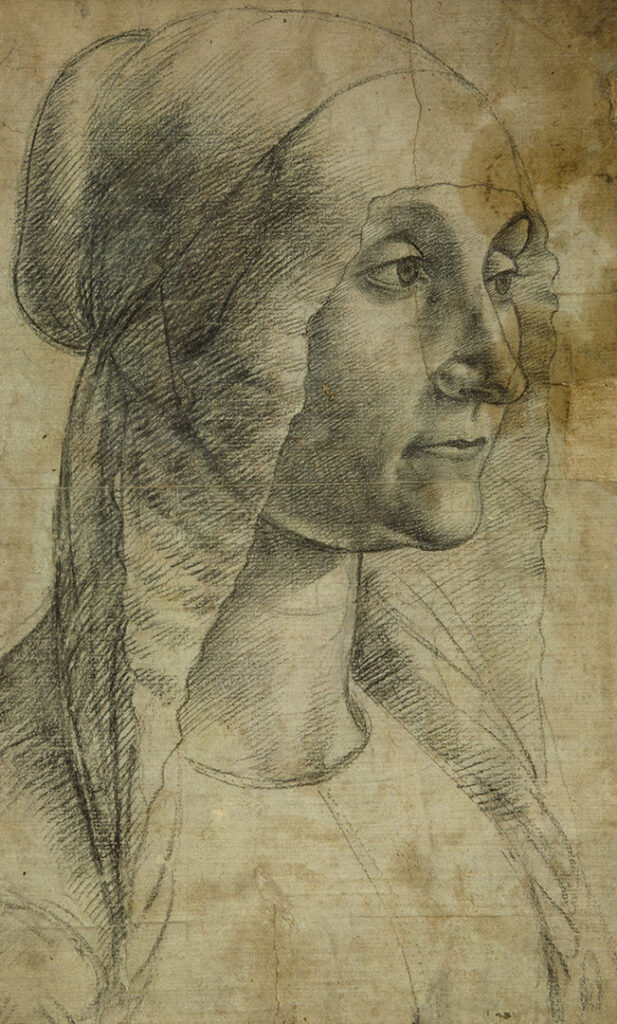
The Cartoon of a Woman in Bust Length, rendered in black chalk, showed Michelangelo at his most intimate—sketching not for posterity but for understanding. The woman wasn’t idealized; she was real, present, breathing.
On my second visit, standing before that sketch, I heard my uncle’s voice.
He’d shown me that art wasn’t something remote, locked behind velvet ropes. Art was alive—a conversation across centuries. He’d taken me to exhibitions when I was young, pointing out details I’d never have noticed. “See how the light falls?” he’d say. “See how the artist made you look there first?”
By 2017, he’d been gone for years. But in that gallery, I swore I could hear him beside me, narrating the journey.
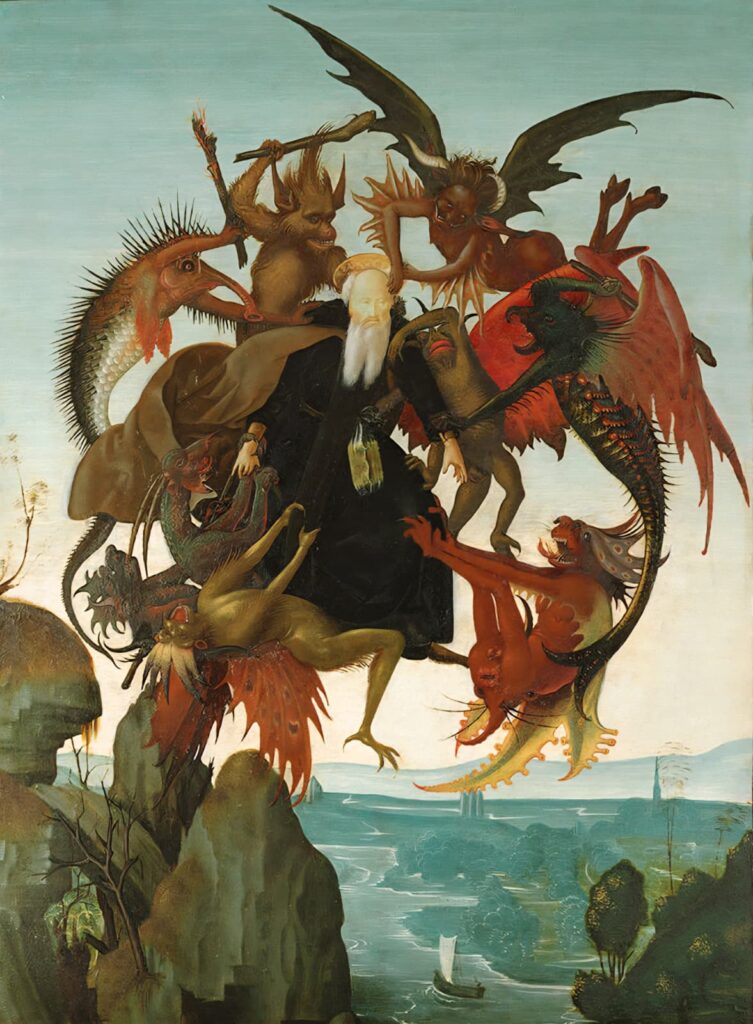
The Torment of Saint Anthony—Michelangelo’s earliest known painting, created when he was barely thirteen—showed a boy trying to paint like a master. Even as a child, Michelangelo understood that the body was architecture.
“He was only thirteen,” my uncle would have said. “Thirteen, and already he saw the world in marble.”
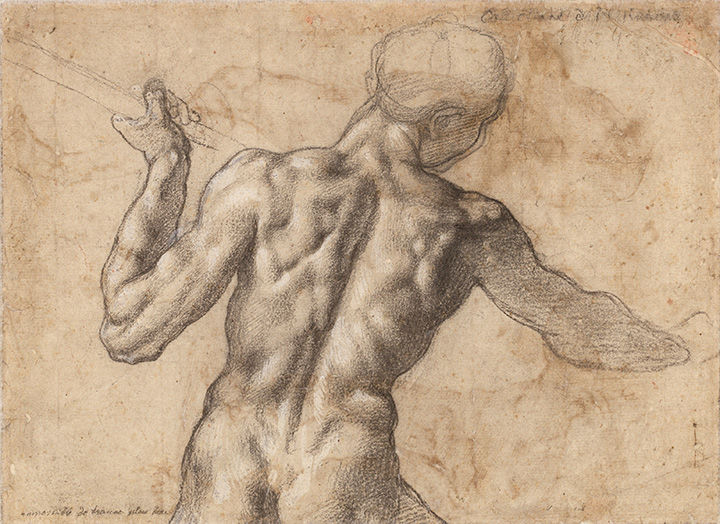
But it was in the preparatory studies where Michelangelo truly revealed himself. The Study of the Torso of a Male mapped every rib, every tendon, every shadow with the precision of a surgeon and the reverence of a priest.
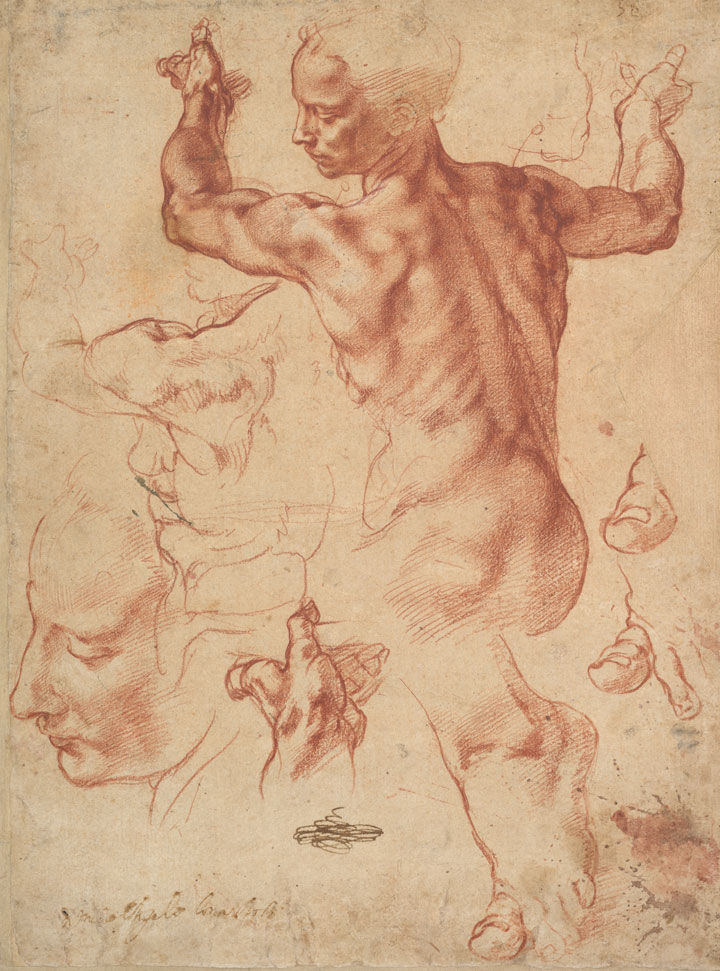
The Studies for the Libyan Sibyl offered the process laid bare. You saw the sibyl in fragments: her twisted torso from multiple angles, her feet in careful detail, her arms in that impossible contortion that would eventually grace the Sistine Chapel ceiling. The studies showed a male model whom Michelangelo would later transform into the sibyl’s feminine form. He understood that strength had no gender, that divinity wore many faces.
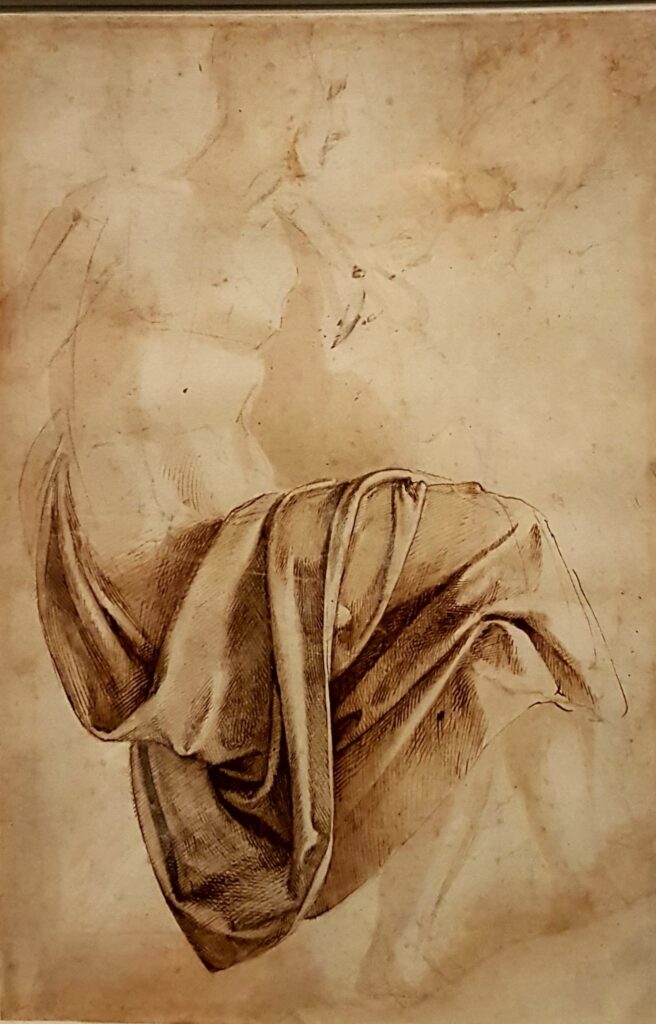
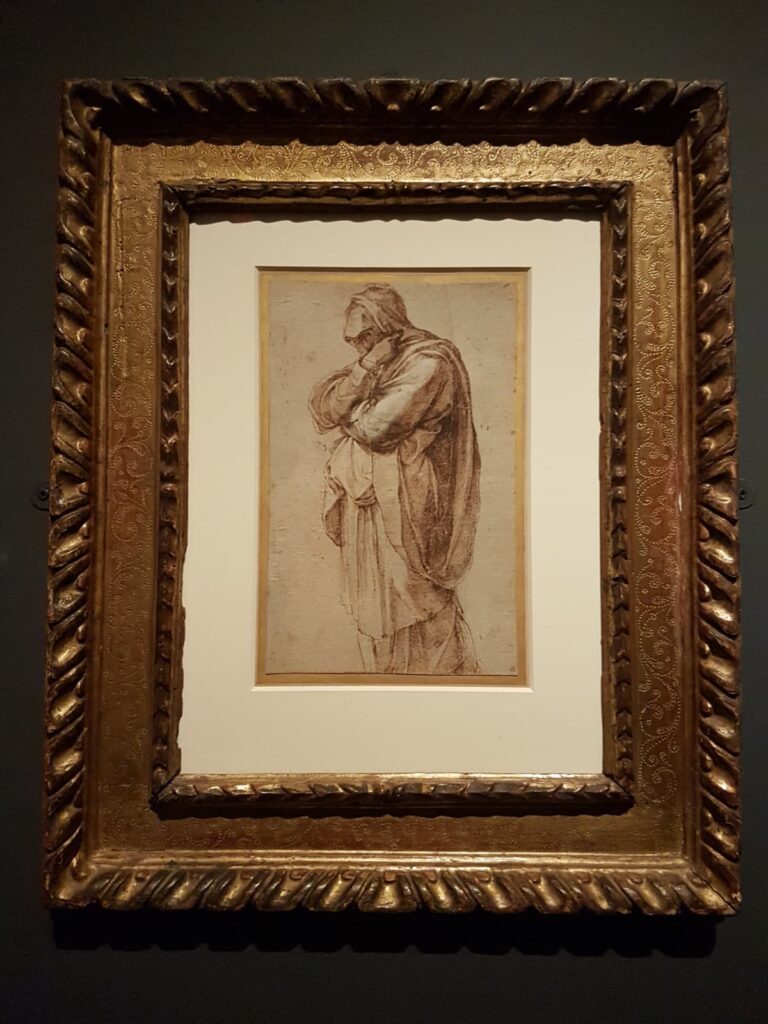
The Drapery Study for the Erythraean Sibyl was pure technical mastery. Fabric became liquid architecture. But it wasn’t just technique—there was something devotional in the way he rendered cloth, as if every wrinkle contained theology.
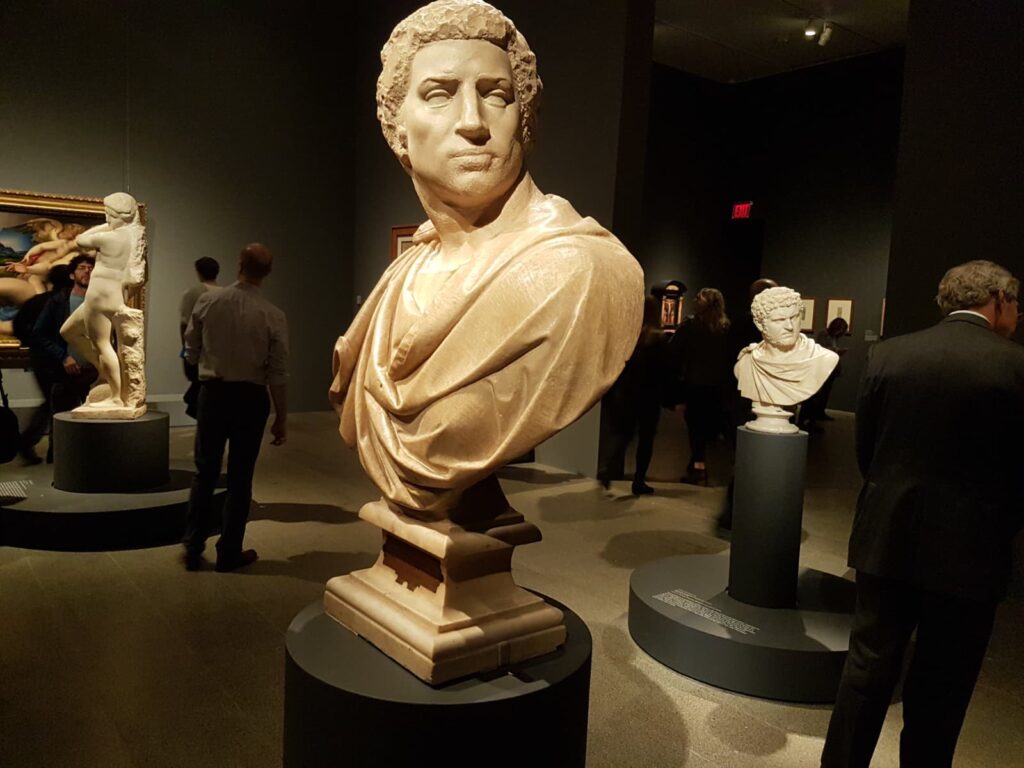
Then there were the sculptures. The Brutus stood in stern profile, Rome’s most famous tyrannicide captured in marble. His expression wasn’t heroic triumph but weary determination. Michelangelo knew that kind of burden.
The Apollo existed in that liminal space of the unfinished—one leg still locked in stone, as if the god was still emerging from rock into godhood. Michelangelo often left works incomplete, not from failure but from something deeper. Perhaps perfection lived in the potential, in the moment before the final chisel stroke.
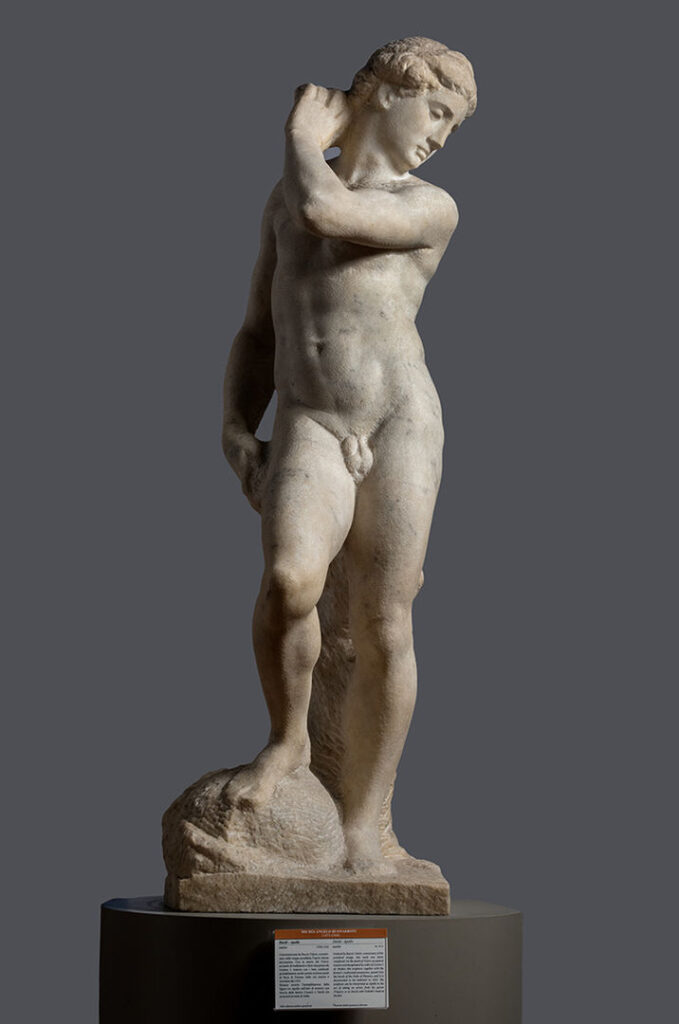
Standing before these unfinished pieces, I was somewhere else entirely. Eleven years old again, holding my uncle’s hand in a museum, listening to him explain why Caravaggio painted shadows the way he did, why Rembrandt could make light feel holy.
“Art is proof,” he’d told me once, “that humans are capable of touching something eternal.”
Also Read: Woodland Still Life: Discovering Abraham Mignon of the Golden Dutch Era
Michelangelo understood this kind of longing. His sculptures were full of it: bodies straining toward divinity, toward perfection, toward something just beyond reach. The Pietà, the Dying Slave, the unfinished Rondanini Pietà he worked on until days before his death—all of them monuments to yearning.
This was what the exhibition taught me: Michelangelo wasn’t divine. He was devastatingly human.
He was anxious, perfectionist, difficult. He slept in his clothes and boots. He fought with popes and patrons. He wrote bitter poetry about back pain from painting the Sistine Chapel. He was lonely. He was afraid of death. He worked until his hands bled because work was the only thing that made sense.
But through that very human struggle, he created things that transcend flesh entirely.
Walking out of the Met that second time, I felt strangely light. My uncle had given me the tools to see beauty, to understand that art is a bridge between the mortal and eternal. Standing before Michelangelo’s work—his doubts and revisions and impossible triumphs—I understood that the bridge runs both ways.
Michelangelo reached toward heaven through marble and paint. But he did it with human hands, using human eyes, fueled by human longing. His genius wasn’t that he was above us—it’s that he was exactly like us, only more so. More driven, more obsessed, more willing to chase perfection knowing he’d never quite catch it.
Years have passed since that winter. But the gift remains—the gift of living in New York, of having access to centuries of human striving condensed into a few city blocks. I can walk from my apartment to the Met and stand in conversation with the dead—with Michelangelo, with my uncle, with everyone who ever tried to make sense of beauty and grief and the terrible, gorgeous fact of being alive.
I count my blessings. I count them still.lark)
Image Courtesy: Mousumi Duttaray (Author), THE MET
All Rights Reserved

Mousumi was raised in Kolkata but now call New York her home. She pursued her PhD from Indiana University Bloomington and currently works as a Marketing & Consumer Data and Design Analytics professional. She is Co-founder and Director at MDRK Partners. She loves to read, cook, take photos on her phone and travel.