


Asha Bhosle: The Original Gangster of Playback
On one side of the mortal remains of Asha Bhosle, wrapped in a flowery shroud, sat Usha Mangeshkar. On her long, gloomy face, crow’s feet set on her brow, dark and deep. She was the veritable image of India—a country in mourning—that day. A country, which had grown up with Asha Tai’s songs from even before Independence, lost her feisty queen of hearts.

What can be written about someone who was the Original Gangster of today’s sea of influencers with something as intangible as a mere voice for eight decades? Precisely, eight generations that cried, laughed, erupted in joy, fell in love, felt incredibly sexy and intimate just by listening to her sing. She was that kind of a rare and precious single malt that you taste once, yet the aftertaste lingers a lifetime. And you yearn to go back to it every single time you are with yourself.
When she embarked upon the film industry, it was dominated by legendary singers like Geeta Dutt, Shamshad Begum, not to mention her sister, Lata. Starting out with low-budget films and songs rejected by other singers, her first solo Hindi film song was in Raat Ki Rani (1949). She received reasonable recognition singing in Sangdil (1952), followed by her first lead in Chham Chhama Chham under music director OP Nayyar, who was the first to notice the spark in her voice.
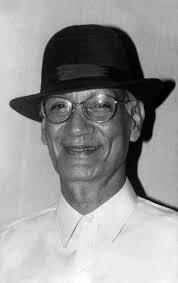
Their journey spanned 20 years, from 1954 to 1974. In 1954, Asha sang ‘Bol Pardesiya’ for him, followed by ‘Leke Pehla Pehla Pyar’ with Mohammad Rafi and Shamshad Begum. Later, the collaboration produced such gems as ‘Sar Par Topi Laal’, ‘Ik Pardesi Mera Dil Le Gaya’, ‘Aaiye Meherbaan’, ‘Aao Huzur Tumko’, ‘Main Pyar Ka Rahi Hoon’, ‘Deewana Hua Badal’, ‘Yeh Hain Reshmi Zulfon Ka Aandhera’, ‘Kajra Mohabbatwala’, ‘Isharon Isharon Mein’ and many more.
However, it was not until Naya Daur (1957) that she made her breakthrough. Her extremely popular duets with Mohammad Rafi like ‘Saathi Haath Badhana’ and ‘Uden Jab Jab Zulfein Teri’ made her a bankable singer.
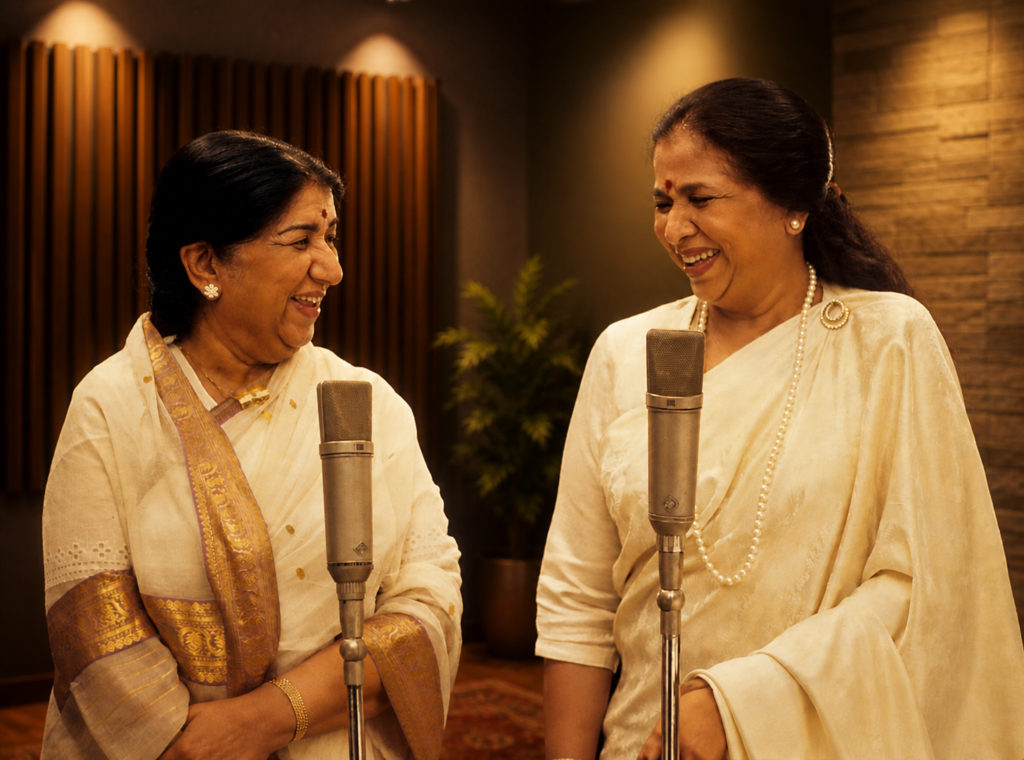
However, Asha realized early on that it was impossible to get a foothold of her own with her ‘Lata didi’ dominating the scene with her golden, honey-glazed voice. She somehow had to step out of Lata’s shadow if she were to make her mark. This was easier said than done, as Lata was fiercely competitive, leaving little space for others as the reigning supremo.
Rebellious as she was, Asha charted a different path for herself. Challenging, both for her and her times, she turned to westernized and more contemporary beats. Eventually, aided by God-gifted talent, relentless hard work, and grit, she carved a niche for herself. Society criticized her, but she remained indomitable.
In 2011, the Guinness World Records recognized her as the most recorded artist in music history. She was also honored with the Dadasaheb Phalke Award, Padma Vibhushan, multiple National and Filmfare Awards, and numerous state recognitions.
Thus were born immortal songs like the intensely lyrical ‘Chura Liya Hai’, ‘Abhi Na Jao Chhod Kar’, ‘Aage Bhi Jaane Na Tu’, ‘Katra Katra Jeene Do’, ‘Radha Kaise Na Jale’, ‘Tu Tu Hai Wahi’, ‘Kahi Aag Lage Lag Jaave’; the playful ‘Jaane Jaan Dhoodta Phir Raha’, ‘Chhod Do Aanchal Zamana Kya Kahega’, ‘Le Gayi Le Gayi’, ‘Kehdoon Tumhe’; the feisty ‘Dum Maro Dum’, ‘Yeh Mera Dil Yaar Ka Diwana’, ‘O Mere Sona Re’, ‘O Haseena Zulfonwali’, ‘Yeh Ladka Hai Allah’, ‘Jawani Jaane Man’, ‘Parde Mein Rehne Do’, ‘Raat Akeli Hai’, ‘Zara Sa Jhoom Lu Mein’;
the sensual ‘Piya Tu Ab Toh Aaja’, ‘Tanha Tanha Yahan Pe Jeena’; the luxurious ‘Do Lafzon Ki Hai’; the intoxicating ‘In Aakhon Ki Masti Ki’, ‘Dil Cheez Kya Hai’; and the haunting ‘Mera Kuchh Saman’, ‘Aao Huzur Tumko’… the list is endless.
How did she stand out? While Lata had an incredibly mellifluous voice, Asha’s was far more nuanced. Her range across lower and higher octaves was effortless and astonishing. If Lata was perfect for sad and romantic songs, Asha celebrated life with all its complexities. If Lata exuded purity, Asha embodied a deeply sensuous expression.
Thus, the way she effortlessly morphed into multiple genres while stepping into the shoes of her heroines through her voice remained unparalleled. SD Burman once advised her to closely study the heroines she sang for—their figure and body language included.
From Madhubala to Karishma Kapoor, from Zeenat Aman to Aishwarya Rai, from Jaya Bhaduri to Kajol, from Helen and Parveen Babi to Urmila Matondkar—each heroine found a complete voice in Asha. Yet, a closer look reveals that it was Asha’s rendition, more than the on-screen performance, that etched those songs into collective memory.
In spite of tragedies—losing her second husband and collaborator RD Burman, her daughter Varsha, and her son Hemant—Asha went on to record over 12,000 songs in more than 20 languages. From Hindi, Marathi, and Bengali to Tamil, Malayalam, Kannada and beyond, she refused to be confined to one genre. She moved seamlessly across cabaret, ghazals, folk, devotional, semi-classical, and Rabindra Sangeet.
Her bond with Bengal was profound. Having read Tagore (especially Gora) and Saratchandra Chattopadhyay, she felt deeply connected to the culture. She once said, “I believe in destiny and the philosophy of Karma.”
That destiny brought her to Bengal, where she gifted timeless songs like ‘Gunjone Dole Je Bhromor’, ‘Chokhe Naame Brishti’, ‘Aamar Din Kaate Na’, ‘Chirodini Tumi Je Aamar’ and many more—songs that still echo in solitude and memory. Even in Rabindra Sangeet, she left a distinct imprint.
An incident illustrates her brilliance. In the 1970s Bengali film Fariyaad, which featured dialogue-based songs, Suchitra Sen initially insisted on recording the dialogues herself. Music director Pulak Bandopadhyay persuaded her to first listen to Asha’s version. Upon hearing it, Suchitra admitted Asha had delivered the dialogues better than she ever could. The song—‘E Chhuri Jaane Bhanumotir Khel’.
Like her music, her culinary skills were equally celebrated. Mark Manuel recalled visiting her home, where Asha personally supervised everything—from buying ingredients at the market to preparing marinades by hand. The kitchen, like her music, had its own rhythm under her command.

Today, her dream restaurant ‘Asha’s’ stands as an award-winning chain across the UAE, the Gulf, and the UK.
It was only natural that such a voice would transcend India. Her global presence was cemented when Cornershop released ‘Brimful of Asha’ in 1997, topping the UK charts. The same year, she earned a Grammy nomination for Legacy with Ustad Ali Akbar Khan. Her duet with Brett Lee also became widely popular.
In 2011, the Guinness World Records recognized her as the most recorded artist in music history. She was also honored with the Dadasaheb Phalke Award, Padma Vibhushan, multiple National and Filmfare Awards, and numerous state recognitions.
She called herself the ‘last Mughal’ of the film industry—not because she ruled it, but because she endured and overcame every challenge. In her final phase, she spoke of letting go and moving on, peacefully and on her own terms. She kept her word.



One Response
A glowing tribute to a multi-faceted talent, well rendered.